Latest from Coffee House

Latest from Coffee House

All the latest analysis of the day's news and stories

Get ready to flee socialist America

Peter Thiel, as is his wont, caused a stir last week when he expressed doubts that a Republican could win the White House in 2028. In an interview in Berlin on the MD Meets podcast, the billionaire cofounder of Palantir said he was still a “Vance partisan,” but he cautioned that a debate over whether Marco Rubio or J.D. Vance would be the better nominee was less important than the threat of socialism. “If Democratic Socialists take over the Democratic party that’s a much bigger deal,” Thiel said. “That is the end of America.” The PayPal godfather has already packed for the Pampas Thiel, who is a friend of mine,


socialist america flee

In pictures: The Nixon Revival

On Wednesday night, The Spectator welcomed readers and guests to our new home in NoMad for our first New York event, The Nixon Revival: why he matters again. US editor Freddy Gray chaired a lively discussion between Conrad Black, Daniel McCarthy and former Nixon staffer Geoff Shepard on the legacy of America’s 37th president — and why, more than half a century since Watergate, "Tricky Dick" is finding admirers on the American right. The discussion was livestreamed on the night and has now been edited to watch on demand, exclusively for Spectator subscribers. Watch it in full here. Before and after the conversation, readers mingled over drinks and rosé courtesy of Château Léoube, with the party spilling out on to The Spectator’s rooftop terrace overlooking Manhattan.

The right has a woman problem

The right has its own unwritten rules of political correctness. There are forbidden words, and while they might not be met with censorship, they do elicit eye rolls. One proscribed term is “misogyny.” It also happens to be the most accurate description of the right’s mood and trajectory these days. The right’s response to this trend has been to downplay it, or even deny that it is happening at all. But ignoring it will not make it go away. Political discourse often operates like a ratchet: the intensity around a given topic is constantly turned up, but the mechanism is not designed to dial back.

right women

Can superintelligence save Trump?

Donald Trump’s greatest strength is his indefatigability. The grumblings within his administration grow louder. Inflation is stubborn, the price of oil too high, the Democrats ahead in the polls for all the key Senate election races. Yet the President is out and about, doing what he perhaps does best, which is campaigning. "Pretend I’m running, please. If we don’t win, they’ll end up impeaching me," Trump told a rally in Oklahoma yesterday. His aim is to turn the midterms into another presidential-style contest, and he’s right that the name Trump continues to be the key factor in American politics, something far more potent than the Republican party brand. As ever, though, the Donald divides opinions – and according to some surveys, his net approval rating is -23.

Inside the murky world of Tether

In July 2014, three aspiring entrepreneurs – Reeve Collins, Craig Sellars and Brock Pierce – launched a startup from a Santa Monica bungalow. Its product, Realcoin, was a dollar-pegged cryptocurrency: a digital token that, unlike volatile Bitcoin, could be used for everyday transactions. When the trio pitched it to Silicon Valley’s big investors, they were laughed out of the room. This could have made for a classic startup origin story, were it not for the cast behind it. Their résumés betray the whole venture as a pipe dream.

Americano Presents

Is libertarianism dead? Daniel McCarthy vs Robby Soave

How to save Britain’s train stations

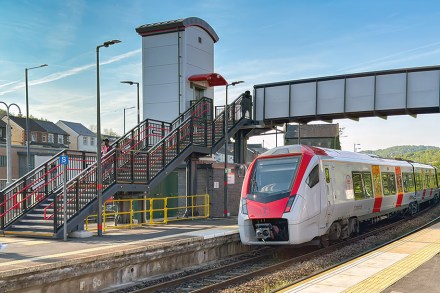
As a more philosophical alternative to ‘You don’t have to be mad to work here, but it helps’, you occasionally see workplace posters which read: ‘Price. Speed. Quality. Pick any two.’ Unless you work on public infrastructure in the UK, of course, where the sign presumably ends: ‘Why not consult some lawyers and avoid all three?’ In 1922 Trumpington, in South Cambridge, briefly had its own railway station. This was built to bring visitors to the Royal Agricultural Society’s show, which ran for five days, after which the station was demolished. Nearly a century later, it was sensibly decided that South Cambridge deserved a new, more permanent station. It took six years of planning before building work started. The station opened last month at a total cost of £228 million.

What kills more: heat or cold?

From our UK edition

Absolute mayor Andy Burnham wants more devolution and elected mayors. Do voters want that? – Since 2001 there have been 55 referendums on whether to establish the post of elected mayor. Only in 17 cases was there a majority in favour. – The towns and districts keenest on having an elected mayor were Middlesbrough (84% in favour), Croydon (80%) and Mansfield (70%). – The areas least keen on an elected mayor were Guildford (81% against), Bath (79%) and West Devon (77%). Ratings game Which attracts the biggest TV audience in Britain: Wimbledon or the World Cup? – England’s opening match in this World Cup, vs Croatia, attracted a peak audience of 15.4m. England’s quarter-final defeat to France in 2022 had an audience of 19.4m. – This compares with the 8.

Treasure Britain’s last railway dining car while you still can

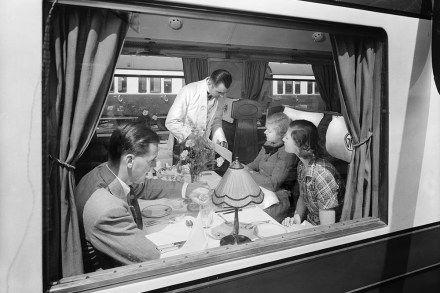
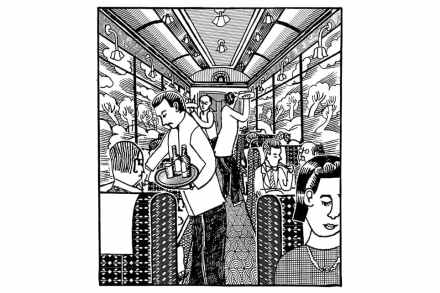
The 17.48 from Paddington does not, on first sight, seem exceptional. Over-hard seats, over-bright lights and a scrum at the ticket barriers: none of these is special. The modern Hitachi trains are solid but dull. Only Isambard Kingdom Brunel’s great arching iron roof adds splendour to the scene. But pause by coach L on the daily London to Carmarthen express and you might notice a small miracle. This train is one of the very last in Britain to carry a proper dining car. To its immense credit, GWR, the route’s operator, cooks and serves decent meals on six services a day: three at lunchtime and three in the evening, on its lines from London to Wales and the West Country.

Which royals have appeared in court?

From our UK edition

Political frenemies Nigel Farage accepted Robert Jenrick into Reform UK in spite of having previously called him a ‘fraud’ (for boasting about securing hotels for migrants when in government and then campaigning against them in opposition). Some more political make-ups: — David Cameron called Nick Clegg his ‘favourite joke’ before forming a coalition with him in 2010. — Donald Trump chose J.D. Vance as his running-mate in 2024 in spite of Vance having called him ‘America’s Hitler’ and a ‘really bad person’. — George H.W. Bush served as Ronald Reagan’s vice-president between 1981 and 1989 in spite of having previously accused him of ‘voodoo economics’.

What it means to be English

From our UK edition

How can you ever put your finger on the comfort, the joy, the absurdity, of being English? Not, perhaps, through some attempt at definition: but in a hundred moments linked by that invisible thread, Englishness. Such a moment occurred for me last Friday. The place was Kidderminster in Worcestershire, the occasion the re-opening of the heritage Severn Valley Railway to Bridgnorth in Shropshire, at the lovely station from which the line, formerly Great Western Railway (GWR) and closed by British Rail in the 1960s, runs. If scripture doesn’t specifically mention steam engines, they are implicit in the psalmist’s rapture Let’s not be sentimental about Kidderminster.

My memories of the royal train

From our UK edition

It is the most civilised way to travel anywhere in the kingdom. Which is why I am so distraught that the King has cancelled it. This week His Majesty has agreed, reluctantly I can be sure, to decommission his royal train. The decision was announced by the Keeper of the Privy Purse, James Chalmers. Mr Chalmers brings to the Royal Household all the romance and lyricism you’d expect of a chartered accountant who spent 39 years at PwC, including time as something called a Global Assurance Leader. He justified the decision on the basis of the need for ‘modernisation’ and ‘fiscal discipline’. This is not so much letting daylight in upon magic as strangling it with a spreadsheet. It is a tragedy.

The BBC’s Israel problem

From our UK edition

Intrepidly, the BBC dared recently to visit Dover, Delaware – source, it implied, of starvation in Gaza. I listened carefully as its State Department correspondent, Tom Bateman, hunted down the Gaza Humanitarian Foundation in the state which, he explained, is ‘a corporate haven for those who like privacy’. Brave Tom did not find much, but that only proved to him that ‘The main ingredients of this aid are its politics’. The foundation’s chairman says he is a Christian Zionist which, for the BBC, is almost as bad as saying you are a neo-Nazi. The portentousness aside, it is reasonable to ask tricky questions of the American/Israeli organisation which claims it can solve aid in Gaza.

Will renationalising the railways lead to a better service?

From our UK edition

Domestics policy Brigitte Macron, wife of Emmanuel Macron, was seen to push him in the face as the doors to their plane opened on arrival for a visit to Vietnam. The French President claimed they were just joking. It will kindle memories of awkward moments between Donald Trump and his wife Melania, as well as the incident in June 2019 when police were called to the south London home of Boris Johnson’s then-girlfriend Carrie Symonds after reports of a heated argument, apparently about wine being spilled on a sofa. – It is increasingly hard for politicians to keep their domestic disputes private.

Will Labour’s rail replacement service leave travellers stranded?

From our UK edition

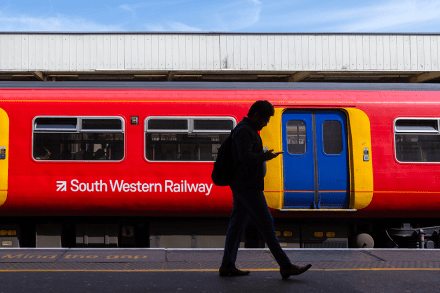
By spooky coincidence, on Saturday night I watched an old episode of Slow Horses in which a passenger died mysteriously on a replacement bus between High Wycombe and Oxford Parkway – and on Sunday I woke to reports that the first service of the new era of rail renationalisation, the 5.36 from Woking to Waterloo, had also featured a replacement bus. Nobody died, but it wasn’t a good omen. Nor was it quite the ‘turning point for the future of our railways’ that Transport Secretary Heidi Alexander declared. South Western Railway’s return to state hands this week was in fact the fifth major passenger franchise to go that way – four having already failed under the previous government.

Stop scoffing food on trains!

From our UK edition

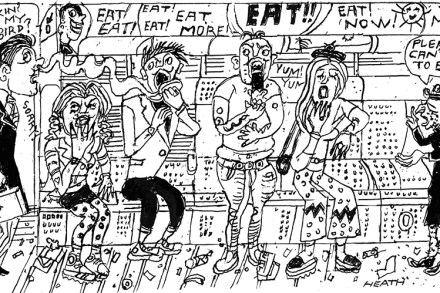
I’m on the 10.45 slow train to Ipswich. It’s not even lunchtime, yet everyone around me is already gorging on food. The corpulent man opposite is posting fistfuls of cheesy Doritos into his gaping maw, washing them down with cheap lager. A woman is noisily chomping her way through a limp burger that reeks of dirty vegetable oil. On my right, I’m greeted by the unmistakable whiff of Greggs meat pie, an unholy stench best described as ‘care-home carpet’. By the time we reach Colchester, the entire carriage sounds and smells like a student refectory, with competing crisp packets and loud slurping noises adding to my sense of despair at the awfulness of humankind. There is no longer much escape from the tyranny of ‘food-on-the-go’.

Portrait of the week: prisoners are freed, Ted Baker closes and train drivers announce strikes 

From our UK edition

Home Emergency measures, known as Operation Early Dawn, were brought in to ease prison overcrowding. Defendants would be summoned to a magistrates’ court only when a space in prison was ready for them, the government said, and would be kept in police holding cells or released on bail while they awaited trial. The measures at first affected the north and the Midlands. By the beginning of the week, 472 people had been charged with offences arising from the recent public disorder; 300 had appeared in court in the preceding week. Donna Conniff, aged 40, the mother of six children, was jailed for two years for throwing a brick at police during a disturbance in Hartlepool.

Letters: the Tory party has gone mad

From our UK edition

Right is wrong Sir: Katy Balls’s article ‘Survival Plan’ (4 May) starts from a false premise. The problem is not Rishi Sunak, but the current Conservative party’s underlying ethos. With Brexit, the lunatics took over the asylum. The ‘Get Brexit Done’ single-issue election resulted in a Conservative party, cabinet and parliamentary majority sharing populist right-wing views and convinced that the country supported them in all their beliefs. Although Brexit has clearly failed and Boris Johnson has been disposed of, many of the underlying convictions associated with the Brexit philosophy remain. The obvious demonstration of this was the disastrous election of Liz Truss as leader despite the common sense warnings of Sunak at the time.

Do many women want to be train drivers?

From our UK edition

Hold your wine glass steady: the BBC has news for you. This week it splashed the news that train drivers in the UK are ‘overwhelmingly middle-aged white men’. The story was accompanied by a picture of a black woman driving a train – under the supervision of a white man, it might be noted – as though to signal that this glass ceiling too can be smashed. Personally I would expect train drivers to be overwhelmingly middle-aged, white and indeed male. Most of the UK is white and half of the UK is male. And the male half of the species tends to be more train-oriented. You don’t see many single women standing at the end of Reading station noting down train numbers in a little book. There may be hardwired reasons for this.

Why your summer holidays might be doomed

From our UK edition

The first LNER train I booked on Sunday from Durham to London was cancelled due to ‘action short of a strike’. I hadn’t heard the phrase before, but I instantly admired it. It’s so impressively confusing. With a strike, you know whose side you’re on. You can look up the salary of a train driver, for instance, discover that it’s £70,000 after only a few years of training, and become icily indifferent to their plight. But action short of a strike? What is it? ‘Action short of a strike’ turns out to be an ingenious way of screwing your boss while still getting paid Action short of a strike, ASOS, turns out  to be an ingenious way of screwing your boss while still getting paid.

The case for ‘premium economy’ train carriages

From our UK edition

A few years ago I wrote here about the unexpected symbiosis between economy passengers and business travellers on commercial flights. Largely unnoticed by people in either cabin, those buying each class of air ticket are unintentionally helping out their fellow travellers at the other end of the plane. Precisely because the two classes of passenger have wildly different priorities (the people at the front are sensitive to time, productivity and comfort; the people at the back are more sensitive to price), it benefits both groups to share the same aircraft. Why? Well, put simply, leisure passengers do not much care whether a flight to Miami operates daily, weekly or even fortnightly, since they are most likely going away for one or two weeks.

Abolish the railways!

From our UK edition

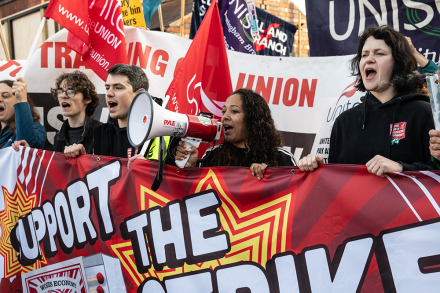
As the country is held hostage once again by the rail unions, it’s time for the nation to ask itself: does it need trains at all? The last time anyone dared ask this question was 60 years ago when Dr Richard Beeching boldly closed more than 2,000 stations and 5,000 miles of track. The time has come to finish the job and shut down the rest of Britain’s viciously expensive, underperforming and fundamentally inefficient rail network. The economic reasons for doing so are irrefutable, no matter how the railroad anoraks might sputter. Originally private, then nationalised, then privatised again, then morphed into an odd hybrid in which tax subsidies are higher than ever, British railways are hideously expensive, uncomfortable and unreliable.

I’ve written the perfect book

From our UK edition

I met a Canadian couple for lunch in Edinburgh. They were from Vancouver – he a judge, she an opera singer – and had won me at a charity auction. I do this several times a year. It’s a painless way of helping good causes. Of course it’s a very one-sided blind date: they know more about me than I do about them, at least to start with. But the conversation always flows easily and I’ve met some fascinating characters. After the lunch, a drink at Inspector Rebus’s favourite watering hole, the Oxford Bar, was part of the deal. It too has character to spare. Speaking of which, I also sometimes offer charities the prize of becoming a character in a forthcoming book.

The pernicious creep of Big Nanny

From our UK edition

Waiting at a coach station recently, in the space of seven minutes I was cautioned three times by the disembodied voice of Big Nanny. No smoking or vaping was allowed. Cycling was prohibited. Pedestrians were directed to use only the designated crossings. I almost wished I’d opted to travel by rail, but then I remembered that Big Nanny rides on trains too. In a quieter era of rail travel the only announcements, apart from service cancellations, used to be the one about refraining from urination when the train was in the station, and advice not to poke your head out of the window of a moving carriage. Which some dimwits nevertheless did with tragic consequences and so removed themselves from the gene pool. Now, though, Train Nanny never shuts up.

Women-only train carriages insult us all

From our UK edition

Sooner or later, somewhere in the UK, we’ll have trains with women-only coaches. It’s an idea which keeps rolling around, and though the train people complain — it’s unworkable, unenforceable — it makes no odds. It’s too seductive an idea for a progressive politician. Jeremy Corbyn was tempted by it back in 2015, and now the Scottish transport secretary, one Jenny Gilruth, is considering it. She often feels unsafe on trains, she says, because they’re ‘full of drunk men’, especially the train to Fife, which is her constituency. ‘I just want our railways to be safe places for women to travel.’ I’ve nothing against ladies’ coaches in principle. In my mind’s eye they look appealing.

Boris’s rail betrayal is no surprise

From our UK edition

A promise made is merely a promise waiting to be broken. If events complicate life for all governments it is nevertheless apparent some governments are more likely to abandon their promises than others. And by now no-one should be surprised that a government led by Boris Johnson finds it easier to jettison its pledges than to honour them. It is the nature of the creature. Today it happens to be High Speed Rail, but yesterday it was something else and tomorrow it will be another thing altogether. The Prime Minister’s inconstancy is his constancy.

Who cares who runs the railways? We just want them to run on time

From our UK edition

The long-awaited review of the railways by former British Airways executive Keith Williams chugged past the platform of public debate without creating much stir. Politicos noted that it had become ‘the Williams-Shapps Plan’, indicating an urge on the part of Transport Secretary Grant Shapps, in Tony Blair’s words, to be personally associated with eye-catching initiatives — in this case, especially those that have nothing to do with the issue of whether British holidaymakers will be allowed to fly abroad this summer. But the review’s core proposal — a new public body called Great British Railways that will control tracks, timetables and fares, and contract with private operators to run trains — provoked little controversy.

How the Great British Bake Off inspired Great British Railways

From our UK edition

‘Why didn’t they call it Very British Railways?’ asked my husband. Unwittingly (as in most of his remarks), he had put his finger on something odd about the new name for the nationalised rail structure, Great British Railways. It follows the model of Great British Bake Off. In 2013, the Oxford English Dictionary noticed the tendency in a quotation from a magazine published in 2006: ‘The Great British queuer is a bit of a myth.’ In that construction a reference to Great Britain is ‘used punningly, as though great rather than Great British were the modifier’. In the 19th century, the same joke was deployed in the phrase Great British Public. It had the ironic implication that the public was not so great.

Perhaps it is time to nationalise our failing railways

From our UK edition

We mustn’t abandon the railways to market forces, many on the left asserted when British Rail was broken up and privatised in the 1990s. They needn’t have worried. A quarter of a century on and we have yet to see a market force take to the tracks. Wasn’t the whole purpose of privatisation supposed to be to transfer financial risk from the taxpayer to private finance?  Instead, as soon as the Covid crisis struck, while other industries were offered loans, furlough payments and business rate relief but were otherwise left to fend for themselves, the rail industry was propped up as if nothing was wrong. The government simply suspended the franchise system and paid the industry directly to lug fresh air around the country.