


As a more philosophical alternative to “You don’t have to be mad to work here, but it helps,” you occasionally see workplace posters which read: “Price. Speed. Quality. Pick any two.” Unless you work on public infrastructure in the UK, of course, where the sign presumably ends: “Why not consult some lawyers and avoid all three?”
In our despair over HS2 we should not forget that the UK has also seen remarkable transport successes
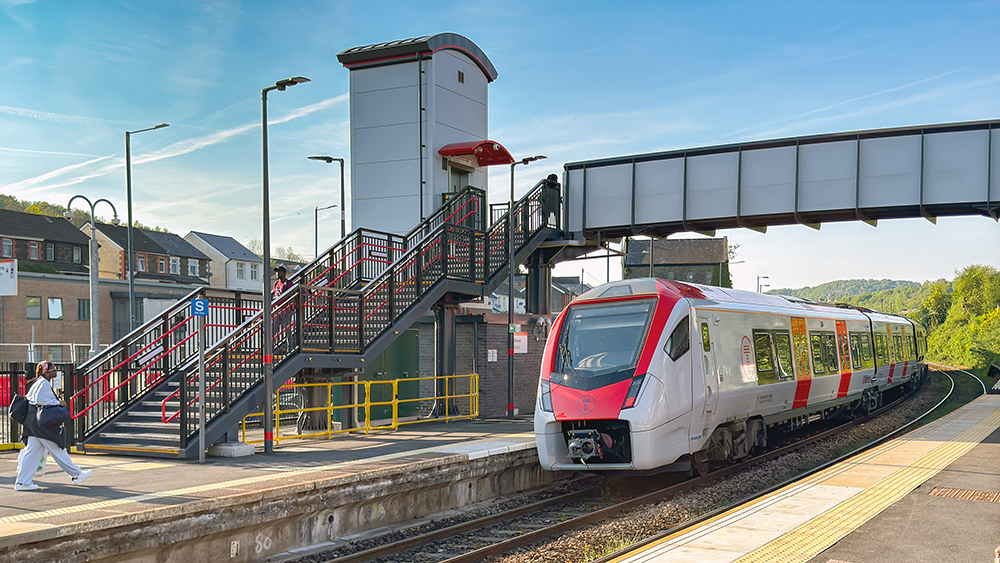
In 1922, Trumpington, in South Cambridge, briefly had its own railway station. This was built to bring visitors to the Royal Agricultural Society’s show, which ran for five days, after which the station was demolished. Nearly a century later, it was sensibly decided that South Cambridge deserved a new, more permanent station. It took six years of planning before building work started. The station opened last month at a total cost of £228 million.
To its credit, the building is a tad more attractive than the new Thanet Parkway station, but then so is the station at Auschwitz. Thanet Parkway, however, as its name suggests, does have one virtue. You can actually park there. South Cambridge station has space for 1,000 bicycles, but a total of five disability parking spaces for cars. Nothing else. Actually, scratch that. The station does not really offer any provision for disabled drivers. That’s because five spaces are so few that no one can set off to the station from home confidently expecting a disabled space to be available. Which means that in practice it might as well not have any spaces at all.
Questions were duly raised in the House of Lords. The reply cited something called “environmental impact studies” – a formulation that encompasses any manner of contrived and cherry-picked variables to allow ideologically motivated bureaucrats to mark their own homework. Given that Cambridgeshire contains no natural features of any interest whatsoever, it isn’t altogether clear to me what such a study would involve. (In 1083, the local population were forced to build Ely Cathedral simply to have something interesting to look at.)

Yet “intermodality” – the ease of switching from one form of transport to another – provides the best return on transport investment. As Mark Bostock, the brains behind the high-speed railway HS1, explained: “Connectivity beats speed every time.” Hence you need railway car parks to be big, since if drivers are unsure there will be space for parking, a station is virtually useless. (If they had the wit to do so, rail companies could make a fortune selling pre-reserved parking spaces at a premium.) But here’s the real question. Why are so many transport decisions taken using theoretical models when there is an abundance of real-world evidence to show what works? In our despair over HS2, we should not forget the UK has seen remarkable transport successes, providing reliable clues to what passengers want: HS1, London Overground, the DLR, Lumo trains, London City airport, even the Heathrow Pod all provide lessons that could be applied elsewhere. Yet little of the learning from HS1 carried over to HS2.
One obvious finding is that well-served stations located outside a city, with abundant parking are popular despite the high prices charged to park there. Why drive into the center of a congested city just to take a train straight out again? Why is intermodality ignored? One eminent expert explained it to me on condition of anonymity: “Train people are obsessed with trains, bus people are obsessed with buses, Tube people are obsessed with the Tube: they all secretly despise other modes of transport.”
Observing existing behavior is always more valuable than theoretical expertise. For all capitalism’s faults, money acts as a truth drug. You can only find out what people really want when you make them pay for it.





Comments