The Spectator

Letters: What will I do without Gentleman’s Relish?

Lessons in education Sir: I read Michael Gove’s thought-provoking piece (‘Revenge of the Blob’, 29 August) with great interest. It prompted me to reflect on my 26 years’ experience in various teaching and leadership roles in the English education system. This has convinced me that, despite changes of government, political persuasion, and evolving theories of pedagogy and school improvement, two fundamental truths remain constant. First, the quality of teaching makes the single greatest difference to young people’s achievements and, ultimately, their life chances. This is particularly true for disadvantaged pupils and those with additional needs. Second, the quality of school leadership is fundamental to the ethos, culture and expectations of a school.


His Love

The carpet’s lost beneath his books and piles of ancient Country Lifes or Daily Telegraphs, he’s hooked on printed paper (to his wife’s despair) but happy now, he cuts out clippings, trimmed with Stanley knife. He drops them in a box but draws them out at later date, sorting them by subject, then puts them in the post with great delight. His daughter and two sons have come to learn this is their fate to get these clips, and have begun to see that’s how his love is done.

Livestream: Quite right! Live from Reform UK Conference

Watch the live recording of Quite right! from inside Reform UK Conference. The Spectator’s editor, Michael Gove, sat down with special guest Danny Kruger. They discussed Reform’s ambitions for government, the challenges facing Britain’s economy and what it would take to turn the party’s political agenda into a reality.

Portrait of the week: Burnham heads to Kyiv, energy bills rise and Meghan and Harry return

Home Andy Burnham made his first foreign trip as Prime Minister, to Kyiv. ‘Despite Russia’s outrageous threats to my country,’ he said, ‘we will continue our support for Ukraine.’ He said he would supply information about British-made components of the Anglo-French Storm Shadow missiles to help Ukraine build its own version. Ukraine gave Britain a trove of secret battlefield intelligence. Andrey Kelin, the Russian ambassador to Britain, had, it was found, left in July and not been replaced. Iranian hackers shut down a British power station for four days. New 10p coins went into circulation, with the King’s head and a capercaillie as tails.

How have Eurostar passenger numbers changed?

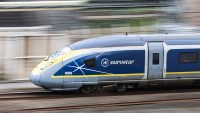
Made to run A robot at the Robotic Olympiad in Beijing bettered Usain Bolt’s 100 metres record by 0.19 seconds. – It has taken a century, however, for reality to catch up with fiction. The term ‘robot’ comes from a play, R.U.R., written by the Czech writer Karel Capek. The title stood for Rossum’s Universal Robots, a company which manufactured machines to replace humans in factory production. It was derived from Robotnik, a Czech term from a slave or drudge. Channel passengers Virgin Trains won permission from the Office of Rail and Road to run up to 20 services through the Channel Tunnel, taking on the current monopoly operator Eurostar. How have Eurostar passengers numbers changed over the years?

Letters: The C of E is making all the wrong choices

People power Sir: Quentin Letts’s article (‘Plastic parsons’, 22 August) underlines the dire state of the Church of England today. How can the Church grow when its leaders are more and more removed from its flock? The problem is in the way the Church is managed. When confronted with increasing costs and lower revenue, dioceses cut the number of vicars and force parishes to merge to form benefices of ten or more parishes, each overseen by one or two salaried priests. Instead, perhaps we lay members of parishes should push back. Every diocese has many ordained clergy among its ranks. Each diocese should be required to allocate these ordained clergy to parish churches where they can continue to perform their diocesan duties as well as being a parish vicar.

Portrait of the week: barbecues are banned, Burnham is fooled and Farage wins Clacton

Home The temperature reached 38.1ºC at Kew Gardens, Surrey. In the West Midlands a wildfire at Stourbridge burnt down 19 houses and damaged 18. The government sent out a loud siren sound and a message to all mobiles in England and Wales warning of a ‘very high risk of wildfires’. So-called Statutory Guidelines temporarily banned the sale of disposable barbecues. More than 8,000 South East Water customers in Kent found supplies disrupted. A burst water main cut off travel by road between Heathrow’s terminals. Two passengers were seriously injured when three carriages of a train from London Victoria to Eastbourne were derailed and fell onto their sides near Lewes. A train from Southend to London Liverpool Street was derailed at Wickford.

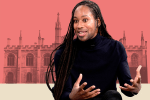
Jason Arday’s tragic death is no reason to silence the press

Physicians and the Samaritans warn against attributing suicide to a single cause. Doing so simplifies a complex tragedy. Those who take their own lives tend to do so because of an array of biological and social factors; pointing to a single spark, campaigners fear, can lead others experiencing similar pain to see suicide as the only way out. This advice does not seem to have registered with those politicising Jason Arday’s tragic death, which many are assuming was a suicide although that is yet to be confirmed. The pinning of blame for Arday’s death began swiftly after the news broke last Friday. Arday’s supporters have suggested he died because of the press coverage of his case.

Letters: universities have always been a little crazy

Universities’ challenge Sir: I have spent more than three decades in academia and so Lara Brown (‘Alma madder’, 15 August) struck a chord. The craziness is not a new phenomenon. In the mid-1990s my employer, Thames Valley University, offered a half-module in kite-flying. Students spent half a day each week on Hampstead Heath, learning how to fly their silk and bamboo contraptions. I have often wondered how the students used the transferable skills they gained in later life. More recently, I was taken to task by a bureaucrat for not stating my preferred pronouns in my email signature block. When informed it was ‘university policy’, I capitulated. Thereafter, my preferred pronoun was ‘Dr’. I assumed this was acceptable, as I was troubled no further.

How often do eclipses occur?

Star turn Britain experienced a solar eclipse but not the total eclipse visible in Iceland and Spain. How often do eclipses occur? – During the decade 2021-30 there have been, or will be, 22 eclipses visible somewhere on Earth. Of these, 6 were or will be total eclipses in some locations. – The average location on Earth could expect to experience a partial eclipse every 2.6 years and a total eclipse every 374 years. – However, eclipses are more common above the Arctic Circle (once every 2.2 years) than at the Equator (2.8 years).

Nigel Farage’s hollow victory

Nigel Farage’s victory in the Clacton by-election is a hollow one. The major parties boycotted the contest: of the Reform leader’s 33 opponents, the most prominent was a screenwriter with a bin on his head. This by-election was not forced on Farage by the parliamentary investigation into undeclared donations – this can resume as soon as he returns to the Commons – but called as an attempt to regain momentum after a difficult patch for Reform. That gambit has failed. In August last year, Reform was riding high. Opposing an unpopular Labour government and a Conservative party in disarray, Farage capitalised on historic victories in the local elections and deep public anger at ‘uniparty’ failures over small boats and living standards.

Letters: Cambridge University is not a victim

After Arday Sir: Lara Brown scathingly condemns Cambridge University’s acceptance of Jason Arday’s credentials (‘The fabulist’, 8 August). That it did so comes as no surprise, given the modish progressivism that pervades academia. However, the sheer extent of its gullibility in taking Arday’s claims at face value is startling, and the reputational damage that will follow is hardly undeserved. Cambridge University is not a victim here. Our sympathy should be with the qualified black teachers and students for whom it is already hard enough to make headway. They will now have to contend with the inevitable shadow over their legitimacy cast by the Arday farce.

Letters: ‘The voice of a beleaguered Middle England’ – readers say goodbye to Rod

My all-time hero Sir: I was gutted to learn of the early death of one of my all-time heroes (8 August). Rod Liddle’s was the voice of a beleaguered Middle England, standing for the long-established Christian values of common sense, integrity, fairness, respect for all, and many other aspects so fundamental to this country’s traditional way of life. Rod never took prisoners: he just demolished their arguments with the supremely elegant and simple language. Richard LongfieldWeston Patrick, Hampshire A true wordsmith Sir: A friend speaks for all Liddleites when he writes: ‘Anyone who can think up the word “wankpuffin” is irreplaceable.’ RIP. J. C.H. MounseyMinchinhampton, Glos In Rod we trust Sir: Thank God for Rod.

London: A celebration

Albanian gangsters with rice flails and Uzis, Ukrainian pimps with high-cheekboned floozies, Jamaicans with handguns, Somalis with knives — just some of the people enriching our lives. Jew-hating Imams from Rabat and Homs, Stockpiling their basements with ricin and bombs, Rich Saudi princes with cowering slaves, Slovakian hooligans, Romanian knaves, A fat lady from Lagos looking quite glum With five kilos of gak stashed away up her bum, Levantine maniacs beating up gays, Young girls from Thailand whose skills quite amaze, Grim Kurdish separatists from the shores of Lake Van, Strange Russian men with a nuclear tan, From Romford to Ruislip a myriad show Of cultural diversity — so mind how you go.

How much water is lost to leaks?

Diverse academia Jason Arday was heralded as Cambridge’s youngest-ever black professor when appointed professor of sociology of education in 2023. How many ethnic-minority staff are there at UK universities? – In 2024/25 there were 244,755 academic staff working in British universities. Of these, 26% were recorded as being of ethnic minority. In the same year, 16% of the UK population identified as ethnic minority. – Of 23,900 professors, 14% were ethnic minority. – Between 2023/24 and 2024/25 the number of professors of ethnic minority increased by 4%, while the number of professors who are white rose by 1%. – While HESA statistics subdivide ethnic minorities into ‘black’ and other groups, they are only listed in bands to the closest five.