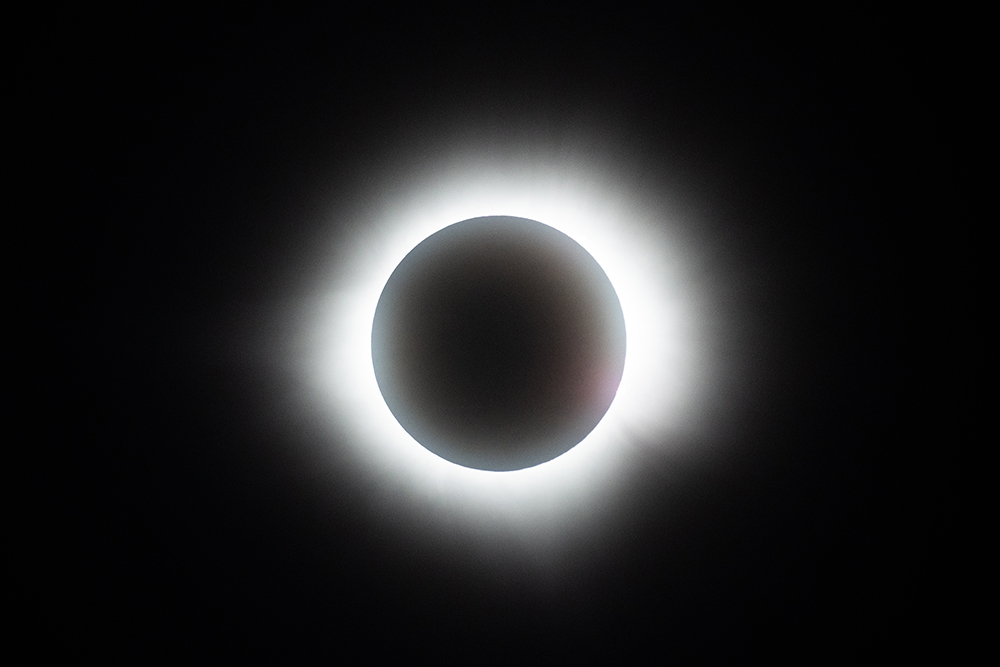
Star turn
Britain experienced a solar eclipse but not the total eclipse visible in Iceland and Spain. How often do eclipses occur?
– During the decade 2021-30 there have been, or will be, 22 eclipses visible somewhere on Earth. Of these, 6 were or will be total eclipses in some locations.
– The average location on Earth could expect to experience a partial eclipse every 2.6 years and a total eclipse every 374 years.
– However, eclipses are more common above the Arctic Circle (once every 2.2 years) than at the Equator (2.8 years).
– Total eclipses are a little more common in the northern hemisphere than in the southern because the Earth is further away from the sun in the northern summer, and therefore the sun appears smaller in the sky at the time of maximum daylight.
Sized up
A boat carrying a record 230 migrants crossed the Channel. At what point do we stop calling them ‘small’ boats? (Average number of migrants per boat)
August 2018 3
July 2019 11
July 2020 11
July 2021 27
July 2022 41
July 2023 52
July 2024 59
July 2025 62
July 2026 72
Source: Home Office
Dry run
Has the south-east of England become more prone to drought over recent decades? (Average rainfall in mm)
1991-2020
June 53.68
July 53.66
August 63.07
1961-1990
June 54.48
July 48.32
August 58.53
Source: Met Office
Poor houses
Some 2.36 million households in England, 9.4% of the total, are defined as living in ‘fuel poverty’. Where, and in what sort of housing, do they live?
– 17.2% of privately rented homes are in fuel poverty, compared with 6.5% of owner-occupied homes.
– The highest proportion of fuel-poor households are found in converted flats (15.8%) and the lowest proportion in detached houses (6.6%).
– The most fuel-poor regions are the West Midlands (10.9%) and London (10.3%). The least are the south-east (7.8 %) and the north-east (8.2%).
Source: Department for Energy Security and Net Zero






Comments