The Spectator

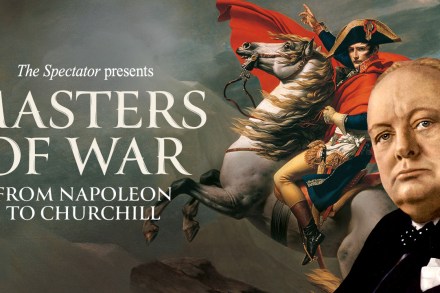
Livestream: Masters of War

From Napoleon’s conquests across Europe to Lord Salisbury’s diplomacy during the height of the British Empire and Churchill’s wartime strategy, our panel will explore how history is shaped disproportionately by great figures making crucial decisions at moments of crisis. On Thursday 15 October at 7pm, The Spectator’s editor Michael Gove and assistant editor Madeline Grant sit down with Andrew Roberts, just days after the publication of his latest book, Napoleon and His Marshals, to explore the legacy of some of modern history’s greatest and most controversial wartime leaders. You can watch the livestream of this event here on the night or anytime after.
Britain needs to get a grip on AI

We remember the empty hysteria induced by warnings over the millennium bug. We have borne the burden of exaggerated predictions of climate apocalypse from scientists in the grip of confirmation bias. All too recently we endured lurid over-estimations from academics of what the final Covid variants might bring. So it is tempting to dismiss all future warnings of technological Götterdämmerung as the overwrought fever dreams of nerds who have read too much Isaac Asimov. Is artificial intelligence really going to take over the world and kill us all? Are we going to be frozen to death by our smart meters and then incinerated by our microwaves?

Which prime ministers have sporting achievements?

Premier sports Andy Burnham took part in the Great North Run, a half marathon, finishing in 1 hour 57 minutes. Some other prime ministers who competed in office: – Edward Heath captained his sailing boat, Morning Cloud, on the 600-mile Fastnet Yacht Race, finishing in 14th place but helping Great Britain to regain the Admiral’s Cup. – Alec Douglas-Home took part in charity cricket matches while PM, having played first-class cricket for Oxford University and Middlesex in his younger days. – Keir Starmer continued to put in the occasional match for a five-a-side football team in Kentish Town. Party favours Reform received two record-breaking donations totalling £72 million in 48 hours.

Letters: Why Douglas Murray should attend the St Paul’s rave

The need for Mammon Sir: Douglas Murray is right to wince at Sadiq Khan’s gloating over the partnership at St Paul’s with the nightclub Fabric (‘Would Sadiq Khan back a rave in a mosque?’, 12 September). But the decision to host club nights is simply about cash. Since the government scrapped the Listed Places of Worship Grant Scheme, historic churches now face an extra 20 per cent VAT bill on all maintenance. The National Churches Survey reveals that 39 per cent of them have roofs at risk or in urgent need of repair. Cathedrals cannot fund seven-figure restoration projects through the Sunday collections alone. Cathedrals have always had multiple uses.

Portrait of the week: Britain sanctions Jewish settlements, Dover protests erupt and the AfD wins big

Home Ed Miliband, the Foreign Secretary, set out in the Commons new restrictions on buying goods made in Jewish settlements in the Israeli-occupied West Bank. The government, he said, ‘agrees’ there is ethnic cleansing in areas of the West Bank, carried out by ‘settler terrorists’. France, Canada, Denmark, Spain, Finland, Ireland, Iceland, Norway, Poland, Portugal and Sweden would impose similar sanctions. Israel announced as a ‘counter-measure’ the closure of the British consulate in Jerusalem. Hundreds of protestors, dressed in black and wearing face coverings, blocked roads at Dover on Saturday, some chanting: ‘Stop the boats.

How full are Britain’s care homes?

Before 9/11 11 September will always be remembered for the attacks on the World Trade Center and Pentagon 25 years ago. What else has happened on 9/11 through the ages? AD 9 Barbarians defeat the Romans at the Battle of Teutoburg Forest. 1297 William Wallace defeats the English at the Battle of Stirling Bridge. 1609 English explorer Henry Hudson arrives on Manhattan Island. 1852 Buenos Aires declares independence from the Argentine Confederation. 1857 The Mountain Meadows Massacre, when Mormons attacked a convoy of wagons driven by settlers travelling from Arkansas to California, killing 120. 1954 Hurricane Edna makes landfall in New England, killing 29. 1976 TWA flight 355, hijacked after taking off from LaGuardia airport, arrives in Paris.

2766: Letters latent – solution

Within seven unclued lights were spelled out the letters spelling RHYTHMS (23D): LANYarD (28A), KURDaitchA (41A), LAwyeR (5A), PRIVAteeRSMAN (1D), aitchBONE (19D), SUPRemE (20A) and NECessITARIAN (12D), suggested by ‘stots’ (in 30D), ‘cord’ (36D), ‘avenger’ (15D), ‘brief’ (40A), ‘mariner’ (33A), ‘cut’ (7D), ‘greatest’ (14A) and ‘determinist’ (24A). RHYTHMS is to be shaded.

Letters: ignore the farming doomsters

Despoiling Suffolk Sir: There can be few better summaries of government attitude to Britain’s countryside than James Vitali’s: ‘Something to vandalise or extract from, but not to value’ (Diary, 5 September). Here on East Suffolk’s Heritage Coast, the arrival of Sizewell C – along with the imminence of net zero’s offshore land connections – are transforming an area of outstanding natural beauty into a degraded landscape of stripped-out woodland, destroying thousands of trees and literally miles of hedgerows. The effect on wildlife is incalculable. Despite the area also being designated of Strategic Scientific Interest, there is no defence.

Livestream: Wealth Tax Debate

On Tuesday 8 September, Arthur Laffer, economist, former adviser to Ronald Reagan and the architect of the Laffer Curve, went head-to-head with Aaron Bastani, co-founder of Novara Media and author of Fully Automated Luxury Communism, in the definitive debate over whether the UK should adopt a wealth tax. The debate was chaired by The Spectator’s economics editor and host of Reality Check Michael Simmons. Britons face a daunting reality: house prices have risen tenfold since 1980, consumer prices are up 30 per cent in just three years, debt is hurtling past 100 per cent of GDP and the richest 1 per cent hold almost a quarter of Britain’s wealth. Many point to a wealth tax as the solution to making the rich pay their fair share.

School bulletin: The latest news from across the country

And ever the twain shall meet Liaisons between Harrovians and Downe House girls at socials – on and off campus – have long been commonplace but the match is now official. From this month, the two single-sex boarding schools will form a structural partnership whereby they will retain their distinct identities and traditions but there will be a new programme of joint academic, co-curricular and social activities. ‘This partnership is also an investment in our staff and in educational excellence,’ says Emma McKendrick, Downe House’s headmistress of nearly 30 years. ‘For all who work at our schools there will be opportunities to share knowledge, technology and resources.

What’s your favourite school in fiction?

Ian Rankin It has to be Marcia Blaine School for Girls as depicted in my favourite novel, Muriel Spark’s The Prime of Miss Jean Brodie. It was closely based on the Edinburgh school that Spark herself attended. She was ‘the class dreamer’ and would later refashion the school, its pupils and teachers to create a perfect short novel about friendship, growing up, dangerous charisma and betrayal. Stephen Fry          There’ll always be a soft spot for Greyfriars School in my heart. The common room where the Fat Owl of the Remove, Billy Bunter, ‘frowsts’ and thinks of cake. Growing up, another favourite was the title school in The Fifth Form at St Dominic’s by the now sadly forgotten Talbot Baines Reed.

School portraits: Snapshots of four notable schools

St Leonards, Scotland St Leonards is a coeducational day and boarding school for pupils aged four to 18 in the heart of St Andrews. It is Scotland’s only school to offer the full International Baccalaureate continuum, taking pupils from the primary years programme through to the diploma. The results are impressive. This year, 88 per cent of higher-level grades were awarded at 7-5, equivalent to A*-B at A-level, while pupils achieved an average diploma score of 35 points – roughly equivalent to three As. Headmaster Simon Brian says pupils leave not only with strong results but ‘the skills and attributes needed to genuinely flourish at university and in life beyond’. Fees start at £7,466 per term for day pupils and £14,933 for boarders.

How great is the Bayeux tapestry really?

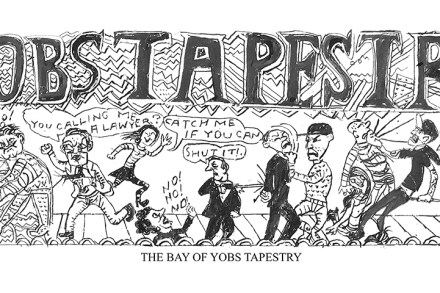
Stitch in time Some facts and figures on the Bayeux tapestry, which is going on display at the British Museum this month: — It is 230ft long and depicts 58 individual scenes. There are 626 people, 190 horses and 35 dogs. — There are many theories as to where and by whom it was embroidered, from the Loire Valley to Canterbury, or even Barking, Essex. — It was not recorded as being in Bayeux until 1476. — Some 40,000 people signed a petition to try to stop it being transported to London. — Technically it is not a tapestry at all as it is embroidered. Poll position How common are autumn elections? Until the 1970s, autumn elections were more common than spring ones. Since 1918, election day has fallen in every month except January, August or September.

Portrait of the week: Keir Starmer leaves, borrowing costs soar and King Harald dies

Home Andy Burnham, the Prime Minister, said that anyone convicted of unlawful killing would be excluded from the early release scheme intended to stop the collapse of prisons; the change would prevent the release of PC Andrew Harper’s killers. To make room, prison laundries would be turned into cells. Sir Keir Starmer left the Commons by being granted the office of Crown Steward and Bailiff of the Chiltern Hundreds, in place of Josh Simons. In his first address in the Commons as Prime Minister, Mr Burnham said he would ‘stand firm in providing what help we can to enable Ukraine to defend itself’. Turning to energy, water and devolution, he said: ‘The government I lead will be relentless in giving people and places what they were promised ten years ago, ownership and control.

Mark Carney is the true King of the North

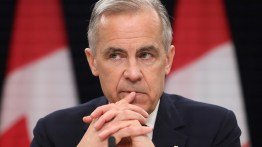
Mark Carney never much liked Brexit. As the Bank of England’s governor during the 2016 referendum, Carney was limited in how political he could be but he still managed to brand a Leave vote the ‘biggest domestic risk to financial stability’ Britain faced, one that would leave us relying on the ‘kindness of strangers’. Since returning to Canada as its Prime Minister, he has not become more complimentary. The referendum, he said in May, had been a ‘dangerous bluff’; the UK was still trying to undo what people didn’t think they were voting for, but which they ended up having. Yet for someone so antipathetic, Carney is performing a remarkable Brexiteer tribute act.

2765: Some beef – solution

Triplets related to WELLINGTON were WW2 bombers (4A, 13, 26), boots (11, 27, 32 and NZ cities (1D, 12, 31). Apologies again that this puzzle is a repeat. As a consequence there are no winners this week.