The Spectator

Portrait of the week: The US withdraws its bombers, Kemi promises a ‘Britannia shield’ and Christa Pike survives her execution

Home Andy Burnham, the Prime Minister, said there were ‘strong indications’ that Iran played a part in the events at RAF Fairford. The United States withdrew all its bombers from Fairford, which President Donald Trump of America said had been because of ‘some threats’. A dual Iranian-British man aged 27 and a 22-year-old British national were arrested in Westminster on suspicion of the preparation of terrorist acts in connection with Fairford. Two Iranian nationals appeared in court charged with plotting ​acts of terrorism involving the use of a homemade bomb to attack the Jewish community in Manchester at the behest of a figure believed to be based in Iran; the court was told both men had come to Britain from Europe ​in boats.

Kemi Badenoch knows the right way forward

Last year’s Conservative party conference was a difficult one. Reform UK was leading the polls; the local election results had been as painful as the general election the year before; and the story at conference was not Kemi Badenoch’s successes, but speculation over Robert Jenrick’s attempts to replace her. Adversity, however, proved her friend. The past year has seen Badenoch’s leadership blossom, with confident public appearances, a by-election victory in Aberdeen and Jenrick’s fortuitous exit to Reform. This week, she stood up in Birmingham as a leader truly in command of her party – and with a plausible route back into government. There are still a great many obstacles to overcome.

Letters: Don’t worry about AI novels

A right old mess Sir: Although Andy Burnham seems to be turning to Old Labour, what he is really turning against is Thatcherism and the shift towards neoliberalism. Your editorial (‘The return of Old Labour’, 3 October) rightly identifies low growth, ballooning government debt, high energy costs, low investment, inadequate preparation for technological change, uncontrolled migration and invertebrate defence as current concerns. All can be attributed to governments since 1980. It is no good saying that government itself is unequal to the task. Who has been responsible for this? A winter is coming all right. What is less clear is whether the right has renounced its faith in false gods and has the ideas and people to solve the problems it has lumbered us with.

Livestream: Free Speech Debate

Join us here on Monday 12 October at 7pm for the livestream of the Free Speech Debate. Britain has been a bastion for freedom of expression for centuries – but can the country still claim that title today? There are now countless examples of free speech being suppressed: from arrests for social media posts and the ‘shadow banning’ of online accounts, to sackings for expressing opinions at work and the shutting down of public protests. Many argue that there are legitimate boundaries to free speech that must be enforced to prevent ‘harm’ – but where should the line be drawn? Join us to debate the motion: This house believes Britain no longer has free speech.

Watch: The Nixon Revival

From our US edition

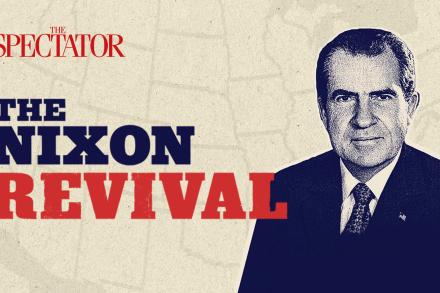
The Spectator held its first event in Manhattan on Wednesday September 30 — and you can watch the full discussion above. Known to many as “Tricky Dick,” Richard Nixon has often had his legacy reduced to the scandal that brought his presidency crashing down: a break-in at the Democratic National Committee headquarters, a criminal cover-up, then his resignation. But what if his story is far more complicated? Why has J.D. Vance described Nixon as a “new icon” for young conservatives? And why do some Gen Zers now see him as an “America First” populist pioneer?

Portrait of the week: the end of the triple lock, odd happenings in Gloucester and Pope Leo in France

Home Andy Burnham, the Prime Minister, announced the end of the pensions triple lock from 2030, when the link with earnings would be broken. Wearing a suit but no tie, he told the Labour party conference: ‘I will make a break with the direction of the past 40 years.’ He said that houses would be confiscated if left unoccupied or if rented out but not well maintained. He said he would ‘repeal Margaret Thatcher’s ideological ban on public ownership of water companies’; he would reduce electricity prices by establishing the Great British Grid, a publicly owned company. He tearfully promised a National Care Service, after a review by Baroness Casey of Blackstock. Ties with the EU would be explored and electoral reform would be in the next Labour manifesto.

Andy Burnham begins the long march left

When the Social Democratic Party was launched in 1981, its prospectus was dismissed witheringly by the liberal thinker Ralf Dahrendorf as a plan for ‘a better yesterday’. Andy Burnham has gone one better. He plans to rerun Labour’s last term in office. But this time with feeling. The Prime Minister’s address to his party conference was many things – fluent, passionate, moving, politically effective. But one thing it was not: forward-looking. The quality of the delivery invited comparison with Tony Blair but, unlike Blair, our current PM was not promising modernisation. He was instead seeking to revisit the Blair years and pursue the road not taken by Labour in 1997 – the long march left.

burnham

Here today

Power seems immutable A never-ending dance Entirely indestructible Each blow the merest glance Yet what was indisputable Now looks much more like chance.

Which old rockers are still touring?

Orange prize What is so special about the Garvaghy Road to Ulster Unionists? The area around Portadown attained significance for loyalists thanks to the Battle of the Diamond in 1795 when Protestant and Catholic forces clashed at a road junction. Twelve years later, Orangemen started their annual march from Portadown to the church at Drumcree, returning via the Garvaghy Road, which was then in the countryside. It wasn’t entirely peaceful then, with a Protestant magistrate remarking in 1835 that the Orangemen had gone out of their way to pass by a Catholic chapel, stirring up the locals. But the march became more of a flashpoint after a council estate inhabited mostly by Catholics was built along the Garvaghy Road in the 1960s.

Letters: Brits should love Canada

Fire is a leveller Sir: It was disappointing to read Fin Taylor’s Diary (26 September) in which he reflected upon feeling a ‘tinge of satisfaction’ at the California wildfires. He made the rather sweeping statement that Californians believe they live beyond the laws of nature, and that those affected are so rich that it is of no consequence. In fact, the fires at Pacific Palisades affected the whole community. Near to us, a children’s day centre, largely used by low-income families, was completely lost. Our local Ralph’s supermarket burned to the ground with dozens of jobs lost. Landscapers, gardeners, waiters, domestic workers all lost their livelihoods. Whether a billionaire or working for $20 an hour, the merciless devastation touched everyone.

Monet’s Broom

If he’d had students, he’d have said always have a broom at hand to sweep out all the readymade images of your subject which come to mind; he’d have said this is the hardest part, harder than putting paint on canvas. He’d have said the broom’s handle should become smooth from use and the day you think you don’t need it is the day memory has won. Look at the results of his encounter with that iris – he’s eighty-four and it’s as though he’s never looked at one before.

Andy Burnham should call an election now

So far, Andy Burnham’s premiership has been characterised by compromise and obfuscation. When choosing his Chancellor, instead of picking Shabana Mahmood on his party’s right or Ed Miliband on the left, he went with the reassuringly un-ideological John Healey. Rather than committing to spending 3 per cent of GDP on defence, he postponed any decision until a spending review next year. His broader agenda for his premiership will only be revealed in a ‘Ten-Year Plan’ in November. For a country confronted by as many challenges as Britain, this is an appalling lack of clarity. A reckoning with reality is required. https://www.youtube.com/watch?v=XQnfP-jOET8&t=1387s One thing that Burnham has been clear about is an early election – he has ruled it out.

Portrait of the week: Earl Spencer’s accusations, Burnham meets Trump, the AfD’s advance

Home Earl Spencer, the brother of Diana, Princess of Wales, said in a book that the King had told him after her death: ‘We’ll forget her soon enough.’ Buckingham Palace responded: ‘The pain of fraternal grief can cloud reason, affect judgment and colour memory in ways others do not recognise, even many years after such a loss.’ The Duke of Sussex was reported to be in talks to make a documentary about the Princess, his mother. Andy Burnham, the Prime Minister, flew off to New York, where he told President Donald Trump that Britain would defend the Falklands, but agreed to look again at the Chagos agreement, which Mr Trump declared ‘terrible’.

Which countries have compulsory voting?

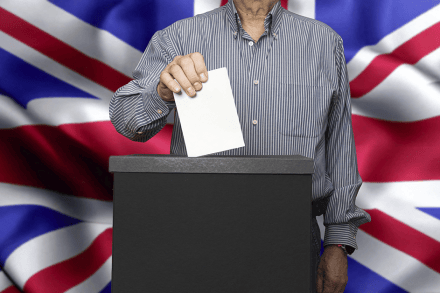
Poll positions Lord Kinnock called on Andy Burnham to make voting compulsory. Around 24 countries have some kind of compulsory voting, including: – Australia, where it was introduced in 1924. Turnout increased to about 90%.– Belgium, where in theory repeat offenders can be banned from voting for ten years (which rather defeats the object).– Greece, where until 2000 non-voters could be refused passports.– Egypt, where you can in theory be jailed for not voting.– Luxembourg, which has the power to hit offenders with €1,000 fines.

Letters: Why should non-Christians care about the Bible?

Reform’s high bar Sir: Michael Gove’s concerns about Reform lacking the talent and an adequate policy framework to ‘prove their credentials for government’ should probably reflect on Starmer’s Labour party in opposition (‘Can Reform reform?, 19 September). Vagueness, bland generality and virtue signalling was all that was offered at the same stage. Reform’s proposals are a model of specificity, realism and genuine conviction in comparison. We should not be overcritical of differences within the Reform leadership. Previous governments have accommodated Foot and Healey; Clarke and Tebbit; Benn and Jenkins, et al. Debate on policy and principles should be seen as healthy, and Kruger and Yusuf are entitled to disagree.