The Spectator

Letters | 13 December 2017

Returning jihadis Sir: Coping with those who pose a terrorist threat to the UK but cannot be prosecuted for a criminal offence has been a perennial problem since 9/11 (‘Bring jihadis to justice’, 9 December). Despite various initiatives, the number of potential attackers has continued to grow. The latest twist to this story is the return of jihadists to the UK from Syria and Iraq. We should assume that anyone returning from Isis-held territory in Syria/Iraq poses a continuing risk. Wherever possible they should be prosecuted. But criminal cases are hard to build, given the fog of war and the problems of gathering evidence from Isis-controlled territory.

Barometer | 13 December 2017

Christmas splurge How much extra do households spend at Christmas? — £500, according to the Bank of England. Over the course of December our spending on food increases by 10%, alcoholic drinks by 20% and books 35%. — £645, according to OnePoll (2016), including £117 spent on a partner’s gift. — £796, according to YouGov (2015), including £159 on food and drink and £596 on gifts.   Festive waste How much do we throw away over the Christmas period? — 1 billion Christmas cards. — 83 sq km of wrapping paper (enough to plaster the whole of Brighton and Hove with festive greetings). — 125,000 tonnes plastic packaging.

Portrait of the year | 13 December 2017

January ‘No deal for Britain is better than a bad deal for Britain,’ Theresa May, the Prime Minister, declared in a speech at Lancaster House. Britain would leave the single market and customs union on leaving the European Union, she said. The Supreme Court ruled that only by an Act of Parliament could Article 50 of the Lisbon Treaty trigger Britain’s departure. Mrs May held the hand of President Donald Trump as they walked down a declivity at the White House; she asked him to make a state visit in 2017, but it was not to be. Mr Trump suspended entry to America for people from Iraq, Iran, Libya, Somalia, Sudan, Syria and Yemen. A man shot dead 39 people in an Istanbul nightclub.

The Spectator’s Christmas appeal: donate internships, not money

Perhaps the most insightful piece of political analysis since the turn of the century came from the Queen in a speech to the United Nations a few years ago. She first addressed the UN in 1957 and returned in 2010 to reflect on what she had learned in the interim. She had seen prime ministers every week and dined with presidents from all over the world — but what struck her was how seldom their schemes translated into real progress. ‘Many sweeping advances have come about not because of governments, committee resolutions, or central directives,’ she pointed out, ‘but instead because millions of people around the world have wanted them.’ Politicians run the government, not the country.

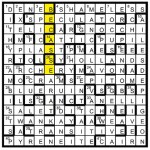
to 2337: millefeuille

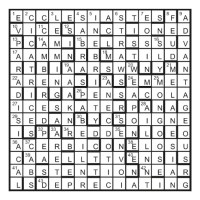
Links with NAPOLEON were his battles WAGRAM (10) MARENGO (14) JENA (36); card games BACCARAT (1A) PATIENCE (26) BRAG (30A); and gold coins DUCAT (16) EAGLE (22) BEZANT (30D). EBON (17) and AT PAR (35) made BONAPARTE. Millefeuille/Napoleon are cream cakes.   First prize Martin Dey, Hoylandswaine, S.

Have you heard a convincing ghost story?

  Anthony Horowitz  Novelist   I have never really believed in ghosts, but I actually had a personal experience which I still find hard to explain. I was walking beside the river Kwai in Thailand with my wife. We had been told that a steam train travelled across the famous bridge once a week as a memorial to the POWs who had died — and we were keen to photograph it. So we were shocked when, quite suddenly, we heard it approaching, an hour earlier than had been expected. We both heard it quite clearly; the heavy panting of the locomotive, the rattle of the wheels. Very quickly, we ran up the slope, annoyed with ourselves. The engine got closer and closer. But when we reached the top, there was no train there.

Christmas quiz – The answers

Weird world 1. Cannabis 2. Che Guevara 3. Tesco 4. Asda 5. Beauty and the Beast 6. Georgia 7. France (President François Hollande) 8. China 9. Donald Tusk, the President of the European Council 10. Kirstie Allsopp I’ll say 1. Theresa May 2. Philip May, the Prime Minister’s husband 3. Sir Michael Fallon, according to Andrea Leadsom, when she complained of cold hands 4. Angela Merkel, the Chancellor of Germany, to Donald Trump when they met for the cameras in the White House. He didn’t 5. Donald Trump, of Kim Jong-un, the ruler of North Korea 6. John Bercow, the Speaker of the House of Commons, in opposing an address being made during a state visit by President Trump, either in Westminster Hall or the Royal Gallery in the Lords 7.

Best Buys: One year fixed-rate ISAs

Fixed rate ISAs are a good way of making sure you have some cash put to one side for a rainy day – but as with everything, you need to make sure you get the best possible deal. Here are the best one year fixed-rate cash ISAs on the market at the moment. Data supplied by moneyfacts.co.

‘The first 100 days will be radical’ – John McDonnell on the Corbyn coup and its consequences

John McDonnell looks exhausted, slumped in his parliamentary office chair. Nobody said the revolution would be easy. Do he and Jeremy Corbyn have any catchphrases, I ask, to gee themselves up when battered by the right-wing press, the pundits or the moderates in their own party? ‘This will send the Daily Mail wild, OK,’ he says. ‘It’s Gramsci: “Pessimism of the intellect, optimism of the will.” ‘No matter how bad it gets, determination is what you need. We’re doing something we’ve been working for for 30, 40 years of our lives. And this opportunity has come. We didn’t expect it. But now it’s come we’re making the most of it.

Returning jihadis must be brought to justice

At first sight, the evidence presented in David Anderson’s report into the four terror attacks committed between March and June sounds damning. The security service, MI5, had had three of the six attackers on its radar. The Manchester bomber Salman Abedi, who murdered 22 people, had come to the attention of MI5 in 2014. As recently as the beginning of this year, he had been implicated in criminal activity, which MI5 officers now admit might have led to his attack being thwarted had it been investigated. Khuram Butt, one of the attackers at London Bridge, had been under investigation for two years, yet still he and his two accomplices were allowed the space to plot and carry out their attack, in which they murdered eight people.

Letters | 7 December 2017

The Carlile report Sir: The Bishop of Bath and Wells tells us (Letters, 2 December) that nobody is holding up publication of the Carlile report into the Church of England’s hole-in-corner kangaroo condemnation of the late George Bell. Is it then just accidental that the church is still making excuses for not publishing it, and presumably for fiddling about with it, more than eight weeks after receiving it on 7 October? The church was swift to condemn George Bell on paltry evidence. It was swifter still to denounce those who stood up for him, falsely accusing them of attacking Bell’s accuser. Yet it is miserably slow to accept just criticism of itself. Somehow, I suspect that, had Lord Carlile exonerated the apparatchiks involved, his report would long ago have been released.

Portrait of the week | 7 December 2017

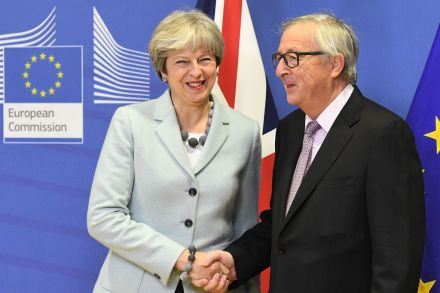
Home Theresa May, the Prime Minister, was thrown into a political crisis, along with the negotiations for Brexit, during a protracted lunch in Brussels with Jean- Claude Juncker, the President of the European Commission. At first, smiles and Mr Juncker’s special cheerful tie had suggested that Britain had paid enough and said enough to be allowed at an EU summit on 14 December to enter into trade talks. But the Democratic Unionist Party, which lends the Conservatives a parliamentary majority, had got wind of a phrase in a text already agreed between Dublin and the EU proposing ‘continued regulatory alignment’ on both sides of the Irish border.

Barometer | 7 December 2017

Border skirmishes What did the border between Northern Ireland and the Republic used to look like? — In 1923 a Common Travel Area between the UK and what was then the Irish Free State established free movement. Passport checks began in the second world war and ended in 1952, though some customs checks continued. The first attempt to control the border came in 1970, when 51 back roads were closed with spikes. But people kept stealing the spikes. Thereafter, there was no official barrier on most of the 200 cross-border roads but patrols were in place and people were expected to cross at 20 crossing points. These were removed after the Good Friday agreement in 1998.   Leftovers The East of England Co-op is to trial selling some food past its sell-by date more cheaply.

to 2336: IRRELEVANT

The action that results in 6, 10, 29D and 30 is HAIR-RAISING (7, defined by 5). RAISING A HARE (39) results in 13.   First prize Norma Jacobs, Linton, Wetherby, W. Yorks Runners-up Mrs E.

We need to bridge Britain’s productivity gap

The UK has a big productivity problem. Our slowdown since the financial crisis has been more severe than in other developed nations. We rank third-last among the G7 — ahead of only Canada and Japan — and we’re falling further behind our competitors: France, Germany and the USA. This matters, because increased productivity is the key to improving living standards. Without it, businesses underperform, we fall behind competitors and, ultimately, our ability to increase pay, invest in public services and improve living standards is limited. Government sets the agenda for productivity in areas like skills, infrastructure and research and development.

Could investing in website names make you an internet millionaire?

With the savings of the nation languishing around 1%, it’s no surprise that UK consumers are turning to increasingly creative ways to make their money work that little bit harder. Even with the arrival of a plethora of savings-focused banks such as RCI Bank, the savings horizon remains bleak for those yearning for the good old days of a 5% savings rate with FSCS protection. This backdrop has helped to fuel the rise of more consumer-friendly and increasingly mainstream financial investment opportunities. This includes everything from investing in property, via firms like LendInvest, and Kuflink, investing in corporate bonds via firms like WiseAlpha, or even investing in personal loans via peer lending firms like Zopa and RateSetter.

Ignore the motorheads telling us that we all need new cars

The motorheads are at it again. The Society of Motor Manufacturers and Traders (SMMT), the UK auto manufacturers lobby group, lobbed another rusty torque wrench at the government this morning, announcing that UK new car registrations are down 11.2 per cent year-on-year. The decline is led by a collapse of nearly a third in sales of diesel-engined cars. Inevitably, some blamed the fall on ‘uncertainty caused by Brexit'. The SMMT itself doesn’t take this tack: instead it points the finger at ‘months of confusion and speculation about the government’s air quality plans and its policies towards diesel cars’. Its suggested remedy is no surprise: ‘fleet renewal is the fastest way to improve air quality’, it says.