Best Buys: Buy-to-let 5 year fixed rate mortgages
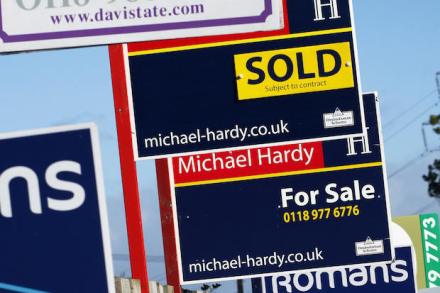
Buy-to-let property is still a popular investment choice for those who can afford it. Here are the best 5-year fixed rate mortgages on the market at the moment. Data supplied by moneyfacts.co.
‘Productivity’ is one of those ‘economicky words’ (as Philip Hammond described them in the budget last week) that economists and politicians get excited about but leaves many people cold. Yet since last week’s downgraded forecasts from the Office of Budget Responsibility, it is a word we keep hearing in the news. And rightly so. As Tom Danker from the Productivity Leadership Group told a Spectator event in the City on Thursday, ‘productivity is about prosperity’. The wisdom of economists and politicians isn’t always held in high regard these days. And little wonder. Ten years on, we’re still suffering the effects of the financial crisis that most of them didn’t see coming.
Proven lawyers Sir: Andrew Watts says that for ‘lawyers in politics, the elimination of risk becomes the highest aim of government. It is not, and should not be’ (Legal challenge, 25 November). Well, up to a point. The last two British prime ministers who were lawyers were Margaret Thatcher and Tony Blair, both barristers. Mrs Thatcher’s despatch of the task force to the south Atlantic in 1982 was fraught with risk, as were other defining steps of her time in office. Blair’s premiership will largely be remembered for the invasion of Iraq, a move that could not be described as one from which all risk had been eliminated.
Pit stopped After complaints from the Durham Miners’ Association, a rugby club at Durham University cancelled a pub crawl in which members were to dress as coal miners or ministers from Mrs Thatcher’s government. — Attitudes towards the 1984-85 miners’ strike were not always so censorious. In 2001, the conceptual artist Jeremy Deller staged a re-enactment of the Battle of Orgreave, involving 800 re-enactment enthusiasts as well as 200 miners who had been there on the day. Staged at Orgreave itself, it was filmed and shown on Channel 4 with few complaints. Ups and downs Which industries saw the biggest rises and falls in real-terms productivity (i.e., greater than inflation) since 2007? CPI inflation over the period was 25.9 per cent.
There will be howls of outrage in some quarters if it is confirmed that the government has offered the EU a ‘divorce’ bill of up to £50 billion (over several years). Some on the leave side of the debate insist that the bill should be zero. They ask: does the EU not owe us some money for our share of all the bridges we have helped build in Spain and railway lines in Poland? But it was never realistic to think we could leave the EU and maintain good relations with the bloc without paying a penny — even if a House of Lords report did seem to suggest that this would be legally possible. We are in the process of creating a new relationship with the EU, not ending it altogether.
Home The engagement was announced of Prince Henry of Wales, aged 33, and the Los Angeles-born Meghan Markle, an actress aged 36. They are to marry at St George’s Chapel, Windsor, in May. Ms Markle scotched rumours that she might be a Catholic, declaring herself a Protestant preparing to be baptised into the Church of England and receive Confirmation before the wedding. Though Ms Markle is divorced, she has been allowed to marry in a church service. The couple told the broadcaster Mishal Husain in a televised interview that they were attempting to cook a chicken one day last month when the prince went down on one knee to propose. During the interview, Prince Harry said: ‘The corgis took to you straight away.
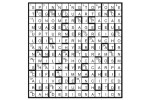
The unclued lights are COMPUTING terms. First prize D.A.
From ‘Comrades of the great war’, The Spectator, 1 December 1917: Eventually all will be over, even the shouting; and some five million heroes will become to the general eye merely plain men with their living to earn… The real force, we are convinced, that will carry the ex-sailor and ex-soldier with ease and content back to civil life is possessed by the men themselves, in that bond of comradeship which, even more than discipline and esprit de corps, has brought them through ordeals endured only, endurable only, because no man was in that pit alone; which has prompted glorious deeds by land and sea, because each dared not for himself only but for all.
There will be howls of outrage in some quarters if it is confirmed that the government has offered the EU a ‘divorce’ bill of £50 billion or so. Some on the leave side of the debate have insisted that the bill should be zero. They ask: does the EU not owe us some money for our share of all the bridges we have helped build in Spain and railway lines in Poland. But it was never realistic to think that we could leave the EU and maintain good relations with the bloc without paying a penny – even if a House of Lords report did seem to suggest that that would be legally possible. We are in the process of creating a new relationship with the EU, not ending it altogether.
A Royal engagement is dominating the headlines once again. Here is how The Spectator has marked royal engagements over the years, from Prince Albert's 1839 proposal to Queen Victoria, through to Prince Charles popping the question to Diana in 1981: 30 November 1839: Queen VictoriaNow that it is certain the Queen has done with declining and is going to conjugate, Speculation, like a tasked schoolboy, is once more turned down to discover the potential, the imperative, the conditional, and all the other moods of the political future... All things are possible through marriage; and Prince Albert’s present sigh conjugal putting every affair, as has been said, in the potential, may cause even the welfare of an entire nation to be translated in some unforeseen manner.
THE PROBLEM The number of Britons aged 75 and over is projected to rise by 89.3% by mid-2039. In 2014, their number stood at 5.2 million; the estimate for 2039 is currently 9.9 million. Britons aged 50-74 account for more than half (53%) of new cancer cases and the elderly (75 and above) for more than a third (36%). THE COST OF LATE DIAGNOSIS Early-stage cancer treatment is significantly less expensive than treating the disease at an advanced stage. STAGE 1 CANCER (The cancer is relatively small and contained within the organ it started in.) Colon: £3,373Rectal: £4,449Ovarian: £5,328Lung: £7,952 STAGE 4 CANCER (The cancer has spread from where it started to another body organ.
With Robert Mugabe’s departure goes one of the caricatures of late 20th-century Africa: the tinpot dictator who brutalises his opponents, impoverishes his people yet manages to extract enough wealth from a decaying economy for a fleet of Rolls-Royces and a private jet to speed him off to private medical appointments in Singapore. But his long-overdue resignation should not be allowed to detract from what is going on elsewhere in sub-Saharan Africa. Zimbabwe, which did not stand out for its rottenness in the early years of Mugabe’s rule, now finds itself surrounded by either functioning democracies or fairly benign regimes with some element of democracy. Aside from Zimbabwe, African economies have grown consistently this century, averaging 5.
The medium is the message Sir: In his piece about the tech-savvy Labour party, Robert Peston writes: ‘A party’s values and messages matter. But in today’s digital Babel, they are probably less important than how the message is presented and to whom it is communicated’ (‘Corbyn 2.0’, 18 November). Some of your readers may remember the late Marshall McLuhan who in the 1960s coined the phrase ‘The medium is the message.’ I’ve always thought this to have been prescient for its time and it has become ever more pertinent. It is an enormous downside to the digital age that the means of transmitting data is more important than its content.
Enduring love The Queen and Prince Philip celebrated their 70th wedding anniversary. They are not the first public figures to reach this milestone — former US president George H.W. Bush and his wife Barbara did so in 2015, while the UNO Center for Public Affairs has calculated that around 40,000 American couples have been married for at least as long. The Queen and Duke have some catching up to do with some of their own subjects, too. Karam and Kartari Chand married in the Punjab in 1925, moved to Bradford in 1965 and in December 2015 celebrated their 90th wedding anniversary before Karam died ten months later, aged 110. Kartari celebrated her 105th birthday earlier this month. When building boomed Philip Hammond wants Britain to build 300,000 new homes a year.
Home The cabinet, including Boris Johnson and Michael Gove, agreed that the European Union would have to be offered something like £40 billion in the fond hope that at the summit on 14 December it would agree to start talking about a trade agreement. Michel Barnier, the EU negotiator, made a speech reminding the City that ‘The legal consequence of Brexit is that UK financial service providers lose their EU passport.’ He also stressed the unresolved Irish border question. Arlene Foster, the leader of the DUP, criticised the Prime Minister of Ireland: ‘You shouldn’t play about with Northern Ireland, particularly at a time when we’re trying to bring about devolved government again.
Philip Hammond began his first Budget, in March, by playing down its importance — for his big ideas on fiscal policy, he suggested we would have to wait until the autumn. It was a wait which was very nearly extended to eternity as he narrowly avoided losing his job in a post--election reshuffle. We found out this week that it was a bluff: he doesn’t have many big ideas, just a selection of small ones. Which, under the circumstances, is something of a relief. The Chancellor is getting better at telling Britain’s story, boasting about record employment and how the best-paid 1 per cent pay 27 per cent of all income tax. He didn’t say why (that tax rates for the best-paid were reduced), nor did he double down on more tax cuts that could have stimulated growth.
Four types of CAKE (37) were given UPSIDE-DOWN (5): 10D, 20D, 31D and 33D. Four other types of cake were TIPSY (14), i.e. anagrams: 26A (éclair); 40A (Madeira); 7D (Sachertorte); 30D (Dundee).
Mishal Husain: Let’s start with that economic picture. Do you agree with what the OBR said about growth; essentially that we’ll be poorer for longer, and about productivity? John McDonnell: I have to, based upon the information that they’ve arrived at that judgement. I think it’s something that we’ve been pointing out for a number of years now; that if you don’t invest in your economy, inevitably that will impact upon productivity, and that will impact upon growth, and, importantly, that will impact upon people’s wages. The prediction now from The Resolution Foundation is that average annual pay is going to be £1,000 lower in 2022 than it was forecast in the March 2017 budget, so it’s going to hit all of society.
From 12 July 1828: The Chancellor made his financial statement on Friday, in a style of candour and clearness which pleased all men. Its substance was this: that the state of the revenue is flourishing; that there will neither be new taxes imposed nor old ones reduced; and that the sinking-fund shall be limited to three millions: not the real, but the desired actual surplus of revenue, which it is not in future years to exceed. The expenditure of 1828 is, in round numbers, 32 millions for the permanent charges, and 18 millions for the military establishments, the latter being one million less than the amount of last year.
Philip Hammond began his first Budget, in March, by playing down its importance — for his big ideas on fiscal policy, he suggested we would have to wait until the autumn. It was a wait which was very nearly extended to eternity as he narrowly avoided losing his job in a post--election reshuffle. We found out this week that it was a bluff: he doesn’t have many big ideas, just a selection of small ones. Which, under the circumstances, is something of a relief. The Chancellor is getting better at telling Britain’s story, boasting about record employment and how the best-paid 1 per cent pay 27 per cent of all income tax. He didn’t say why (that tax rates for the best-paid were reduced), nor did he double down on more tax cuts that could have stimulated growth.