The Spectator

A price worth paying

From our UK edition

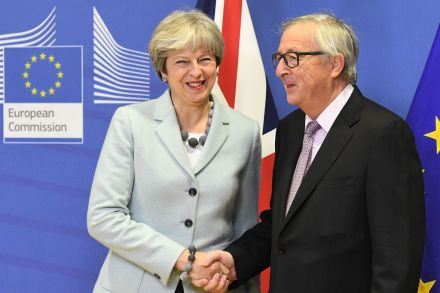
There will be howls of outrage in some quarters if it is confirmed that the government has offered the EU a ‘divorce’ bill of up to £50 billion (over several years). Some on the leave side of the debate insist that the bill should be zero. They ask: does the EU not owe us some money for our share of all the bridges we have helped build in Spain and railway lines in Poland? But it was never realistic to think we could leave the EU and maintain good relations with the bloc without paying a penny — even if a House of Lords report did seem to suggest that this would be legally possible. We are in the process of creating a new relationship with the EU, not ending it altogether.

Portrait of the week | 30 November 2017

From our UK edition

Home The engagement was announced of Prince Henry of Wales, aged 33, and the Los Angeles-born Meghan Markle, an actress aged 36. They are to marry at St George’s Chapel, Windsor, in May. Ms Markle scotched rumours that she might be a Catholic, declaring herself a Protestant preparing to be baptised into the Church of England and receive Confirmation before the wedding. Though Ms Markle is divorced, she has been allowed to marry in a church service. The couple told the broadcaster Mishal Husain in a televised interview that they were attempting to cook a chicken one day last month when the prince went down on one knee to propose. During the interview, Prince Harry said: ‘The corgis took to you straight away.

Never alone

From our UK edition

From ‘Comrades of the great war’, The Spectator, 1 December 1917: Eventually all will be over, even the shouting; and some five million heroes will become to the general eye merely plain men with their living to earn… The real force, we are convinced, that will carry the ex-sailor and ex-soldier with ease and content back to civil life is possessed by the men themselves, in that bond of comradeship which, even more than discipline and esprit de corps, has brought them through ordeals endured only, endurable only, because no man was in that pit alone; which has prompted glorious deeds by land and sea, because each dared not for himself only but for all.

Even at £50 billion, the ‘divorce’ bill from the EU is a price well worth paying

From our UK edition

There will be howls of outrage in some quarters if it is confirmed that the government has offered the EU a ‘divorce’ bill of £50 billion or so. Some on the leave side of the debate have insisted that the bill should be zero. They ask: does the EU not owe us some money for our share of all the bridges we have helped build in Spain and railway lines in Poland. But it was never realistic to think that we could leave the EU and maintain good relations with the bloc without paying a penny – even if a House of Lords report did seem to suggest that that would be legally possible. We are in the process of  creating a new relationship with the EU, not ending it altogether.

Royal engagements: A Spectator history, 1839 – 2010

From our UK edition

A Royal engagement is dominating the headlines once again. Here is how The Spectator has marked royal engagements over the years, from Prince Albert's 1839 proposal to Queen Victoria, through to Prince Charles popping the question to Diana in 1981: 30 November 1839: Queen VictoriaNow that it is certain the Queen has done with declining and is going to conjugate, Speculation, like a tasked schoolboy, is once more turned down to discover the potential, the imperative, the conditional, and all the other moods of the political future... All things are possible through marriage; and Prince Albert’s present sigh conjugal putting every affair, as has been said, in the potential, may cause even the welfare of an entire nation to be translated in some unforeseen manner.

Cancer diagnosis – the shortfall and the opportunity

From our UK edition

THE PROBLEM The number of Britons aged 75 and over is projected to rise by 89.3% by mid-2039. In 2014, their number stood at 5.2 million; the estimate for 2039 is currently 9.9 million. Britons aged 50-74 account for more than half (53%) of new cancer cases and the elderly (75 and above) for more than a third (36%). THE COST OF LATE DIAGNOSIS Early-stage cancer treatment is significantly less expensive than treating the disease at an advanced stage. STAGE 1 CANCER (The cancer is relatively small and contained within the organ it started in.) Colon: £3,373Rectal: £4,449Ovarian: £5,328Lung: £7,952 STAGE 4 CANCER (The cancer has spread from where it started to another body organ.

Hope in Zimbabwe

From our UK edition

With Robert Mugabe’s departure goes one of the caricatures of late 20th-century Africa: the tinpot dictator who brutalises his opponents, impoverishes his people yet manages to extract enough wealth from a decaying economy for a fleet of Rolls-Royces and a private jet to speed him off to private medical appointments in Singapore. But his long-overdue resignation should not be allowed to detract from what is going on elsewhere in sub-Saharan Africa. Zimbabwe, which did not stand out for its rottenness in the early years of Mugabe’s rule, now finds itself surrounded by either functioning democracies or fairly benign regimes with some element of democracy. Aside from Zimbabwe, African economies have grown consistently this century, averaging 5.

Letters | 23 November 2017

From our UK edition

The medium is the message Sir: In his piece about the tech-savvy Labour party, Robert Peston writes: ‘A party’s values and messages matter. But in today’s digital Babel, they are probably less important than how the message is presented and to whom it is communicated’ (‘Corbyn 2.0’, 18 November). Some of your readers may remember the late Marshall McLuhan who in the 1960s coined the phrase ‘The medium is the message.’ I’ve always thought this to have been prescient for its time and it has become ever more pertinent. It is an enormous downside to the digital age that the means of transmitting data is more important than its content.

Portrait of the week | 23 November 2017

From our UK edition

Home The cabinet, including Boris Johnson and Michael Gove, agreed that the European Union would have to be offered something like £40 billion in the fond hope that at the summit on 14 December it would agree to start talking about a trade agreement. Michel Barnier, the EU negotiator, made a speech reminding the City that ‘The legal consequence of Brexit is that UK financial service providers lose their EU passport.’ He also stressed the unresolved Irish border question. Arlene Foster, the leader of the DUP, criticised the Prime Minister of Ireland: ‘You shouldn’t play about with Northern Ireland, particularly at a time when we’re trying to bring about devolved government again.

Being boring

From our UK edition

Philip Hammond began his first Budget, in March, by playing down its importance — for his big ideas on fiscal policy, he suggested we would have to wait until the autumn. It was a wait which was very nearly extended to eternity as he narrowly avoided losing his job in a post--election reshuffle. We found out this week that it was a bluff: he doesn’t have many big ideas, just a selection of small ones. Which, under the circumstances, is something of a relief. The Chancellor is getting better at telling Britain’s story, boasting about record employment and how the best-paid 1 per cent pay 27 per cent of all income tax. He didn’t say why (that tax rates for the best-paid were reduced), nor did he double down on more tax cuts that could have stimulated growth.

to 2334: sweet variations

From our UK edition

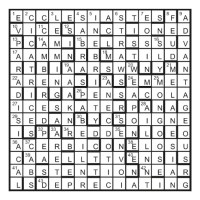
Four types of CAKE (37) were given UPSIDE-DOWN (5): 10D, 20D, 31D and 33D. Four other types of cake were TIPSY (14), i.e. anagrams: 26A (éclair); 40A (Madeira); 7D (Sachertorte); 30D (Dundee).

John McDonnell’s Today interview, full transcript

From our UK edition

Mishal Husain: Let’s start with that economic picture. Do you agree with what the OBR said about growth; essentially that we’ll be poorer for longer, and about productivity? John McDonnell: I have to, based upon the information that they’ve arrived at that judgement. I think it’s something that we’ve been pointing out for a number of years now; that if you don’t invest in your economy, inevitably that will impact upon productivity, and that will impact upon growth, and, importantly, that will impact upon people’s wages. The prediction now from The Resolution Foundation is that average annual pay is going to be £1,000 lower in 2022 than it was forecast in the March 2017 budget, so it’s going to hit all of society.

Revenues past

From our UK edition

From 12 July 1828: The Chancellor made his financial statement on Friday, in a style of candour and clearness which pleased all men. Its substance was this: that the state of the revenue is flourishing; that there will neither be new taxes imposed nor old ones reduced; and that the sinking-fund shall be limited to three millions: not the real, but the desired actual surplus of revenue, which it is not in future years to exceed. The expenditure of 1828 is, in round numbers, 32 millions for the permanent charges, and 18 millions for the military establishments, the latter being one million less than the amount of last year.

Philip Hammond is not the man to take the battle to Jeremy Corbyn

From our UK edition

Philip Hammond began his first Budget, in March, by playing down its importance — for his big ideas on fiscal policy, he suggested we would have to wait until the autumn. It was a wait which was very nearly extended to eternity as he narrowly avoided losing his job in a post--election reshuffle. We found out this week that it was a bluff: he doesn’t have many big ideas, just a selection of small ones. Which, under the circumstances, is something of a relief. The Chancellor is getting better at telling Britain’s story, boasting about record employment and how the best-paid 1 per cent pay 27 per cent of all income tax. He didn’t say why (that tax rates for the best-paid were reduced), nor did he double down on more tax cuts that could have stimulated growth.

Live: Autumn Budget 2017

From our UK edition

Philip Hammond avoided any disasters in his second budget of 2017. Here are the headline announcements: Growth forecasts downgraded: Britain's economy is now expected to grow by 1.5 per cent in 2017, down from the prediction of 2 per cent made in March Stamp duty scrapped for first time buyers on homes costing up to £300,000 £3bn set aside for Brexit preparations Millenials' railcard confirmed; National Living Wage up; VAT threshold for small businesses maintained; £2.8bn more for the NHS; 100 per cent council tax on empty homes; target to build 300,000 new homes by 2020s Tobacco duty up; beer and wine duty frozen; No fuel duty rise for petrol and diesel cars next year Annual borrowing is £49.

Barometer | 16 November 2017

From our UK edition

No. 2 iron English Heritage launched a crowdfunding campaign for repairs to Abraham Darby’s 1779 bridge at Ironbridge, Shropshire. This is often called the first iron bridge in the world but in fact one was built ten years earlier to carry the Great North Road over the River Ure in North Yorks. While Darby’s bridge was built to show off its iron structure, the Ure bridge’s cast-iron beams were disguised by stone paving slabs. As the main road from London to Scotland, it bore far heavier loads than the Darby bridge — until 1945 when it finally collapsed. Carbon culprits Global carbon emissions are predicted to rise by 2 per cent this year — the first increase for several years. Which countries are, officially, the worst offenders? Qatar 45.4 Curacao 37.

Letters | 16 November 2017

From our UK edition

Chairman May Sir: Theresa May is the only politician with a mandate to lead, yet doesn’t seem capable of leading (‘Stop the rot’, 11 November). More than at any time for decades, the country needs leadership. This seems like an intractable problem but the solution is simple. Theresa May should stop trying to be both chairman and CEO and relinquish the latter job to someone with the energy, ideas and conviction she lacks. There is an obvious candidate: Michael Gove, the only member of the government who seems to relish governing and one of the leading figures in the Leave campaign. He should be made Deputy Prime Minister and given full authority for policy in three key areas: preparing for Brexit, getting houses built and shoring up Universal Credit.

The next Iraq war

From our UK edition

After the most intensive street-by-street combat since 1945, Isis’s so-called caliphate is no more. Last weekend, the Iraqi government won what should be the final battle and is now preparing to say that the war is ended. The jihadis still have the odd redoubt — but they have been forced out of Mosul and Raqqa after an intensive coalition campaign led by America and Britain. Donald Trump is unlikely to emulate his predecessor-but-one by appearing in front of a banner saying ‘Mission Accomplished’. Theresa May probably won’t deliver such a statement either. Indeed, the war against Isis has barely been mentioned by either politician, even though our involvement has been larger than expected.