The Spectator

Live: Autumn Budget 2017

Philip Hammond avoided any disasters in his second budget of 2017. Here are the headline announcements: Growth forecasts downgraded: Britain's economy is now expected to grow by 1.5 per cent in 2017, down from the prediction of 2 per cent made in March Stamp duty scrapped for first time buyers on homes costing up to £300,000 £3bn set aside for Brexit preparations Millenials' railcard confirmed; National Living Wage up; VAT threshold for small businesses maintained; £2.8bn more for the NHS; 100 per cent council tax on empty homes; target to build 300,000 new homes by 2020s Tobacco duty up; beer and wine duty frozen; No fuel duty rise for petrol and diesel cars next year Annual borrowing is £49.

Barometer | 16 November 2017

No. 2 iron English Heritage launched a crowdfunding campaign for repairs to Abraham Darby’s 1779 bridge at Ironbridge, Shropshire. This is often called the first iron bridge in the world but in fact one was built ten years earlier to carry the Great North Road over the River Ure in North Yorks. While Darby’s bridge was built to show off its iron structure, the Ure bridge’s cast-iron beams were disguised by stone paving slabs. As the main road from London to Scotland, it bore far heavier loads than the Darby bridge — until 1945 when it finally collapsed. Carbon culprits Global carbon emissions are predicted to rise by 2 per cent this year — the first increase for several years. Which countries are, officially, the worst offenders? Qatar 45.4 Curacao 37.

The next Iraq war

After the most intensive street-by-street combat since 1945, Isis’s so-called caliphate is no more. Last weekend, the Iraqi government won what should be the final battle and is now preparing to say that the war is ended. The jihadis still have the odd redoubt — but they have been forced out of Mosul and Raqqa after an intensive coalition campaign led by America and Britain. Donald Trump is unlikely to emulate his predecessor-but-one by appearing in front of a banner saying ‘Mission Accomplished’. Theresa May probably won’t deliver such a statement either. Indeed, the war against Isis has barely been mentioned by either politician, even though our involvement has been larger than expected.

Portrait of the week | 16 November 2017

Home As the European Union (Withdrawal) Bill faced 470 amendments in its examination by a committee of the whole House, David Davis, the Brexit Secretary, promised that Parliament would be able to have a final take-it-or-leave-it say on the Brexit agreement, which would become law by an Act of Parliament. He said: ‘It’s a meaningful vote, but not meaningful in the sense that some believe meaningful [to be], which is that you can reverse the whole thing.’ A government amendment announced by Theresa May would incorporate in law the moment at which Britain would leave the EU: 11pm GMT on 29 March 2019. EU citizens who become British do not lose the right to bring a foreign-born spouse to the UK, the European Court of Justice ruled; British citizens do not enjoy this right.

to 2333: Unchangeable

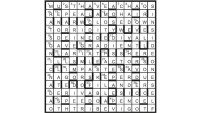
Answers to clues in italics are SET IN STONE (38). Resulting entries at 1, 2, 14, 25 and 43 (in which the types of stone are rag, agate, opal, pit and metate) are defined by 19, 42, 33, 20 and 6A. First prize Stephen Saunders, Midford, Bath. Runners-up Tim Hanks, Douglas, Isle of Man;Mrs N. Twickel, Shipston-on-Stour, Warwickshire.

Books of the Year | 16 November 2017

Daniel Swift I spent too much of this (and last) year reading anaemic updatings of Shakespeare plays: pale novels which borrowed plots and missed points and, oddly, always misunderstood the minor characters. After these, Preti Taneja’s We That Are Young (Galley Beggar Press, £9.99) came as a relief and a surprise. Her novel is big, beautiful, and most of all bold: a rewriting of King Lear, transplanted to modern day Delhi, which is both a dazzlingly original reading of the play and a full novel in its own right. A masterpiece, and by a long way my book of the year. Graham Robb Mike Lankford’s genial and sassy biography Becoming Leonardo: An Exploded View of the Life of Leonardo da Vinci (Melville House, £19.25) has none of the stuffiness of that exhausting genre.

Does Theresa May’s zombie government even want to survive?

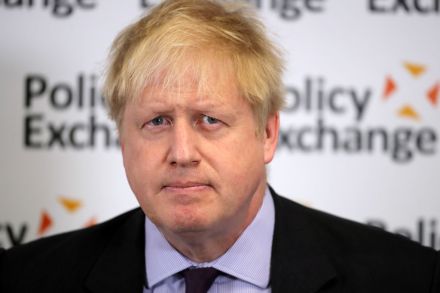
Dealing with a hung parliament was never going to be easy, but no one quite foresaw the decay which now seems to have set in to Theresa May’s government. The best that can be said for the Prime Minister is that the past week’s events have weakened her rivals within the Conservative party. No one is talking up Priti Patel as a potential rival any more and a challenge from Boris Johnson is now highly unlikely, following his loose words about a British woman incarcerated in Iran — which the Iranian regime may use as a pretext to increase her sentence. Like John Major, the Prime Minister benefits from the feuding in the Cabinet and is kept in place by the fear that a leadership challenge would see the party rip itself apart.

Letters | 9 November 2017

Rules for romance Sir: Lara Prendergast describes a floundering generation desperate for reliable love but with no real idea how to find it (‘Sexual reformation’, 4 November). Our culture has forgotten the basic principles of forming successful relationships. My daughters apply three simple guidelines on choosing boyfriends wisely. One, does he fight for you? Men’s commitment is linked to willingness to sacrifice. He needs to show that he will put himself out for you. Two, is he marriageable? I’m not saying marry straight away. But he needs to have characteristics such as kindness and generosity. And three, can he make decisions? Commit to things and stick at them? Does he decide, rather than slide?

Stop the rot

Dealing with a hung parliament was never going to be easy, but no one quite foresaw the decay which now seems to have set in to Theresa May’s government. The best that can be said for the Prime Minister is that the past week’s events have weakened her rivals within the Conservative party. No one is talking up Priti Patel as a potential rival any more and a challenge from Boris Johnson is now highly unlikely, following his loose words about a British woman incarcerated in Iran — which the Iranian regime may use as a pretext to increase her sentence. Like John Major, the Prime Minister benefits from the feuding in the Cabinet and is kept in place by the fear that a leadership challenge would see the party rip itself apart.

Portrait of the week | 9 November 2017

Home An air of crisis hung over the government. Priti Patel, the International Development Secretary, was told to fly back immediately from Africa after a series of secret meetings with Israeli political figures was revealed. Sir Michael Fallon had already gone as Defence Secretary, to be replaced by someone called Gavin Williamson, an MP since 2010 and Chief Whip since last year. Sir Michael’s departure followed a complaint that Andrea Leadsom, the Leader of the House, was said to have made to the Prime Minister about a remark some years ago — when she had said she had cold hands, he said: ‘I know where you can put them to warm them up.

Books of the Year | 9 November 2017

A.N. Wilson Elmet by Fiona Mozley (John Murray, £10.99). It is difficult to convey the full horror of this spellbinding first novel. The young author, a medievalist, presumably knows the no less violent Njál’s Saga. Elmet, though set in the modern age, concerns timeless protagonists who have contrived to live outside the normal modern settings. Dad is an ex-prisoner, who earns his living as a prize-fighter — at illegally organised, very bloody bare-knuckle fights. Somehow he and his children manage to build a house on land belonging to a sinister figure called Mr Price, without any bureaucrats from the local planning office materialising to ask what he is up to. Price wants his revenge, and when his own son meets a bloody end, he exacts it.

Gordon Brown’s memoirs show he is good at blowing his own trumpet – but nothing else

Gordon Brown has pitched his memoirs as the honest confessions of a decent man. He failed to win the one general election he fought, he asserts, due to a personality that was unsuited to an age of Twitter and emotional displays. His is the Walter Mondale response to failure — the former US vice president said of his defeat in the 1984 presidential election: ‘I think you know I’ve never really warmed up to television, and in fairness to television, it’s never really warmed up to me.’ Admitting to poor media skills is not genuine self-examination on the part of Brown, more an attempt to shift the blame for his failures on to something he considers trivial.

Letters | 2 November 2017

Equality of outcome Sir: Rod Liddle exposes some deep flaws in the way children are prepared to play their part in adulthood (‘The kids aren’t all right’, 28 October). But one in particular merits further analysis. He is right to say that teachers’ imperative is to raise the D grade students at GCSE to a C, as a school is judged on the number of A-C grade passes it secures. So all the best teachers and all the extra resources are focused on the D grade children. An A grade student who could, with a bit of help, achieve an A* and thus begin their journey to Cambridge is ignored, and if he or she achieves only a B, that is a tick in the box; a success.

Barometer | 2 November 2017

Lynx on the loose — A Eurasian lynx escaped from a zoo in Wales, pre-empting plans to introduce six of the animals to Kielder Forest in Northumberland. The animal was once native to Britain, becoming extinct around the year 700, earlier than the wolf (possibly 1290) or the brown bear (around year 1000). — However, in continental Europe and near-Asia, numbers have been growing since a low of 700 between 1930 and 1950. There are now believed to be 50,000, spread from Uzbekistan in the east to Germany in the west. Of the smaller Iberian lynx, restricted to Spain and Portugal, numbers fell to 100 in 2002 but now stand at about 400. Collaring white collars Gordon Brown said more bankers should have been jailed for actions related to the banking crisis.

Portrait of the Week – 2 November 2017

Home A great ferment of accusations of sexual impropriety was made against people in Parliament and out of it. Bex Bailey, a Labour party worker, said she was raped, not by an MP, at a party event in 2011 and a senior Labour official discouraged her from reporting it. Jared O’Mara MP had the Labour whip withdrawn while claims were investigated that he had called a woman he met ‘an ugly bitch’. Tulip Siddiq, a Labour MP, said that cases of sexual misconduct cases at Westminster could run into hundreds. Sir Michael Fallon, the Defence Secretary, was even driven to apologise publicly for putting his hand on the knee of Julia Hartley-Brewer during dinner 15 years ago, although she said that she had not been ‘remotely upset or distressed’.