Stephen Daisley

Stephen Daisley

Stephen Daisley is a Spectator regular and a columnist for the Scottish Daily Mail

Salmond’s return is a headache for Sturgeon

When he was acquitted on sexual assault charges at the High Court in Edinburgh last March, I predicted: ‘Alex Salmond is back from the dead and he will have his revenge’. The past 12 months has seen a relentless onslaught against Nicola Sturgeon and the SNP establishment and anyone who thought that would culminate in the equivocal findings of two inquiries (one clearing Sturgeon, the other damning her) will have been disabused this afternoon. Salmond has announced his return to politics in time for May’s Holyrood elections, under the banner of an outfit calling itself the Alba Party. The party will stand only on the regional list and is pitching itself as an effort to help secure an ‘independence supermajority’.

Sturgeon suffers courtroom blow over church lockdown rules

The Scottish government has suffered a major reversal in court over its Covid-19 regulations. The Court of Session has found its blanket ban on public worship to be unlawful. In January, Nicola Sturgeon closed places of worship across Scotland ‘for all purposes except broadcasting a service or conducting a funeral, wedding, or civil partnership’. She said at the time that, while ministers were ‘well aware of how important communal worship is to people… we believe this restriction is necessary to reduce the risk of transmission’. Canon Tom White, parish priest of St Alphonsus in Glasgow's east end, and representatives of other Christian denominations, sought judicial review.

How Unionists are playing into SNP hands

There is a chance pro-Union voters in Scotland are about to shoot themselves in the foot, but every time I try to pry the gun away I’m met with outrage and incredulity. The source of the consternation is All for Unity (previously known as Alliance for Unity), or rather my insistence on pointing out some facts they would rather I didn’t. AfU is standing on the regional list in May’s Holyrood elections, hoping to capture the hardcore anti-SNP vote and those frustrated with the mainstream pro-Union parties. AfU urges Unionists to vote tactically to send a group of anti-independence MSPs to Holyrood. I have pointed out the flaws in this proposition a couple of times now. My problem with AfU is simple: what it says isn’t true.

What we still don’t know about the Salmond affair

The inquiry into the Alex Salmond affair has concluded that Nicola Sturgeon misled parliament and potentially breached the ministerial code. If you could swear you heard the exact opposite yesterday, that’s because you did. On Monday, the Scottish Government’s independent adviser James Hamilton released the findings of his inquiry into whether Sturgeon breached the code. He considered four potential violations: Sturgeon’s unminuted, belatedly reported meetings and phone calls with Salmond; whether she intervened in the sexual harassment investigation against him; her omission of a meeting with a Salmond representative from a statement to parliament; and her government continuing to oppose Salmond in court in spite of the advice of counsel.

Sturgeon’s survival now seems certain

James Hamilton’s inquiry has found that Nicola Sturgeon did not breach the ministerial code. The former Irish prosecutor, who serves as the independent adviser on the code, was tasked with reviewing the Holyrood First Minister’s actions in relation to the Alex Salmond affair. Hamilton considered four allegations: That Sturgeon’s failure to record meetings and phone conversations with Alex Salmond and others (held between March 29 and July 18, 2018) breached the code’s provisions that ‘meetings on official business should normally be arranged through Private Offices’ and ‘a private secretary or official should be present for all discussions relating to government business’.

What will Alex Salmond do next?

The Scottish Parliament goes into recess on Wednesday ahead of devolved elections on 6 May. That gives Nicola Sturgeon three days to see off her opponents (inside the SNP as much as outside) before the campaign begins proper. Before she gets there, we will have to face the publication of the Holyrood inquiry report. This is the SNP-chaired parliamentary panel tasked with investigating the SNP government’s mishandling of sexual harassment allegations against former SNP first minister Alex Salmond. Sturgeon’s government launched an internal investigation into Salmond, her one-time mentor turned nemesis, that was ruled by the Court of Session to be ‘unlawful’, ‘procedurally unfair’ and ‘tainted by apparent bias'.

George Galloway is toxic to the Unionist cause

My mob originates, we have come to assume, from somewhere in Ireland, though exactly where we don’t know. Humza Yousaf, justice secretary in the Scottish government, was born in Glasgow to immigrant parents — one from Pakistan, the other from Kenya. We were contemporaries at university (Glasgow), I became a journalist around the time he became a politician (SNP, alas), and while I’ve long been impressed by his abilities, his smiley-sinister Hate Crime Bill confirms him to be a nightmarish fusion of Judith Butler and Mary Whitehouse. What has never occurred to me is the notion that Yousaf is less Scottish than me. If anything, I wish he’d tone it down a bit.

Was the civil service compromised by the Salmond affair?

The fallout from David Davis’s intervention in the Alex Salmond affair is all about the messages. The texts which the veteran Tory says he was given by a ‘whistleblower’ contain disturbing conversations between senior SNP and Scottish Government staffers. They raise questions about party involvement in a government investigation, the alleged ‘interference’ of Nicola Sturgeon’s chief of staff, and what the First Minister knew and when. The motivations behind these exchanges will be picked over by those convinced Salmond was the victim of a conspiracy, those convinced the Scottish Government fouled up but had good intentions, and a small smattering of Scots patiently waiting for the Holyrood inquiry to put all these matters to rest. Bless.

Scottish Tories must be more than the party of no

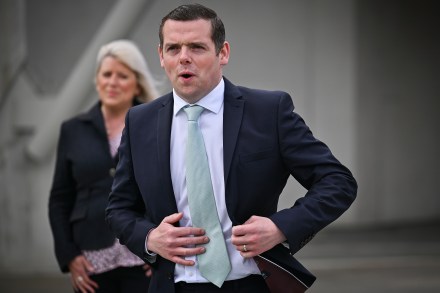
Among the many challenges facing Scottish Tory leader Douglas Ross has been the question of definition. It is difficult to define yourself in the best of times, let alone in the middle of a pandemic. When, on top of this, your seat is in Westminster, and not the devolved parliament on which the Scottish media focuses their resources and priorities, it’s harder still to penetrate the public consciousness. No matter how often you try to get yourself in front of a TV camera, you can still feel like the Invisible Man. Ross used his speech to the Scottish Conservative conference to narrate who he is and what he believes.

Will Boris Johnson take responsibility for the Union?

Even for a virtual party conference, Boris Johnson’s speech to the Scottish Tories was a muted affair. As might be expected, the Prime Minister talked up the strength of the Union as demonstrated by the Covid-19 pandemic. Almost 2 million Scots had received a jab thanks to the 400 million vaccine doses secured by the Treasury’s deep pockets — proof, he said, of ‘the United Kingdom’s collective strength’. He took time to praise UK Armed Forces personnel, 500-strong at present, who are spread across 80 Army-established vaccination centres throughout Scotland. This of course was a reminder that the British Army had been there to pick up the slack when the Scottish Government failed to meet its first big vaccination target at the end of January.

The SNP’s radical assault on freedom of speech

When Humza Yousaf first proposed his Hate Crime Bill, I compared it to the late, unlamented Offensive Behaviour Act. Similarly rushed through Holyrood by the SNP, it sought to rid Scottish football of sectarian behaviour by, among other things, criminalising the singing of certain songs at matches. The Act didn’t specify which songs and so it was left to the discretion of a police officer overhearing a chant to decide whether or not it would be offensive to a reasonable person. Astonishingly enough, this didn’t work out and such was the fan and legal profession backlash that the Act was eventually repealed — in the teeth of SNP opposition. The Hate Crime Bill was, in part, their revenge and it was of a nuclear variety.

Ruth Davidson’s exit reveals Scottish Tories’ independence secret

Ruth Davidson has used her final speech to the Scottish Conservative conference to appeal to pro-Union voters. In a video streamed on the first day of the event, the former party leader said Scotland had passed ‘peak Nat’ and that, while the SNP was bound to emerge as the largest party after the May 6 devolved elections, the Tories could still deprive Nicola Sturgeon of an overall majority. This was imperative, she said, so that the Scottish Government could be ‘held in check’. She contended: If there’s no check on an SNP government after May, they will put their obsession with securing a second independence referendum above Scotland’s national interest.

The SNP cares more about power than principles

Defeats in politics sometimes appear to be victories at first, and victories to be defeats. The SNP has survived a vote of no confidence (VONC) at Holyrood, as it was always going to. The Nationalists were home and dry before the debate was even called thanks to the backing of the Greens. The Conservatives tabled the motion against John Swinney, Nicola Sturgeon’s deputy, after he ignored two votes in parliament requesting that he hand over the Scottish government’s legal advice to the Alex Salmond inquiry. Only when the possibility of a VONC was raised did he hastily release some of the documents. Obstruction has been a hallmark of the SNP government’s approach towards the inquiry.

Nicola Sturgeon is fighting for her political life

The Alex Salmond inquiry has seen its most remarkable day yet. Three pivotal documents have been released to the Holyrood committee probing a Scottish government internal investigation into sexual misconduct allegations against Scotland’s former First Minister. The Court of Session has already declared that investigation to have been ‘unlawful’, ‘procedurally unfair’ and ‘tainted by apparent bias’ and Salmond has been acquitted on 13 counts of sexual assault in a separate criminal trial. He claims that key figures around Nicola Sturgeon, his protege-turned-adversary, conspired to imprison him.

Can Anas Sarwar save Scottish Labour?

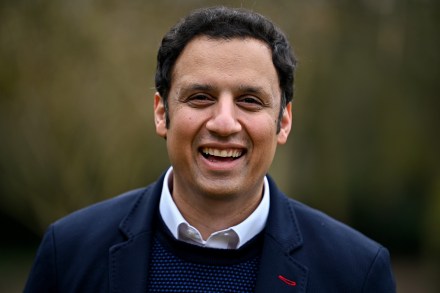
Sixty-eight days out from the next Scottish Parliament election might seem an ill-advised time to change the leader of Scottish Labour. This morning, Glasgow MSP Anas Sarwar was unveiled as the winner of a low-key internal election, defeating Labour’s Holyrood health spokeswoman Monica Lennon by 58 per cent to 42 per cent. The leadership was spilled after the abrupt ‘resignation’ in January of left-winger Richard Leonard following three forgettable years of drift and decline. Labour last won a Westminster election in Scotland in 2010 and a Holyrood one in 2007; in the 2019 European Parliament elections, it came fifth and just 1.1 per cent away from finishing behind the Greens. The polls do not suggest much cheer is on the way on 6 May.

The Scottish establishment is playing into Salmond’s hands

The most remarkable — and chilling — day in the history of Scottish devolution ends the only way it could: Alex Salmond has pulled out of an appearance before the Holyrood inquiry. The road to his withdrawal began on Monday evening with the publication of a key document in the long-running inquiry. The submission, in which Salmond alleges that Nicola Sturgeon broke the ministerial code, was uploaded to the Scottish parliament website ahead of an evidence session by Salmond on Wednesday. However, the Crown Office contacted Holyrood authorities and demanded they remove or redact the submissions. The parliament complied, replacing it with a further-redacted version.

Scottish Tories are wrong to oppose voting for prisoners

The Scottish Tories don’t mean to be the way they are. Sometimes they just can’t help it. They are being that way again over plans to let some prisoners vote in the forthcoming Scottish parliament elections. I am not convinced those elections should be going ahead at all in the middle of a pandemic but, if they are to, there are good reasons for prisoners to be enfranchised. The Tories intend to force a vote at Holyrood on Wednesday against allowing those serving custodial sentences of less than 12 months to participate in the May 6 election. MSPs voted last February to extend the franchise in order to comply with a series of judgments from the European Court of Human Rights, beginning with 2005’s Hirst v United Kingdom (No 2).

The SNP’s education ‘stitch-up’

For anyone who assumes the SNP government’s secrecy and obstruction is limited to inquiries into itself and its past leaders, the fate of a major report into Scottish education is an instructive tale. Curriculum for Excellence (CfE), introduced in 2010, was the SNP’s grand idea for better learning in Scottish schools. Its ‘progressive’, ‘child-centred’ philosophy was contentious among teachers but was eagerly bought into by educationalists, educrats and teachers’ unions. Dissenters were generally caricatured as stuffy old reactionaries who wanted children bolted down in rows, facing a blackboard, as an authoritarian dominie catechised them in the rote memorising of formulae, dates and rules.

Will we ever get to the truth in the Salmond inquiry?

The Spectator’s legal action in the Alex Salmond affair has prompted the Holyrood inquiry to rethink its approach. The magazine went to court to argue the media’s right to publish and the public’s right to read evidence from Salmond which the inquiry is refusing to publish.  A redacted version has already appeared on The Spectator website. Lady Dorrian agreed yesterday to amend an order against reporting information relating to the criminal trial against Salmond, which cleared him of 13 charges of sexual assault. The Sturgeon government’s separate sexual harassment probe into the former First Minister has previously been ruled ‘unlawful’ and ‘tainted by apparent bias’ by a Scottish court.

The ICC is playing politics by targeting Israel

Sovereignty, that old-new friend, is in vogue again thanks to Brexit and the advances made by nationalists across Europe and the United States. Those of us who lament these developments should not regret the reassertion of national sovereignty, for it is intimately linked to democracy and self-determination and provides domestic legitimacy for the kind of liberal, cooperative world order we wish to see. If you want a strong international community, you need to have strong, confident nation-states in which people believes their country can be active in the world without losing its sense of self.