Stephen Daisley

Stephen Daisley

Stephen Daisley is a Spectator regular and a columnist for the Scottish Daily Mail

Tala Halawa and the progressive media’s anti-Semitism blindspot

The tale of Tala Halawa has an ever-mounting horror to it: each sentence is more disturbing than the last. First we learn that this BBC journalist proclaimed during the 2014 Israel-Gaza war that ‘Israel is more Nazi than Hitler’ and that ‘Hitler was right’. Then we encounter her assertion that ‘ur media is controlled by ur zionist government’ and her sharing on Facebook the same image that saw MP Naz Shah suspended from the Labour Party in 2016, an image that advocates the ‘transportation’ of Israel to the United States to end ‘foreign interference’ in the Middle East.

Why is a Jewish lecturer being investigated for mocking Corbyn?

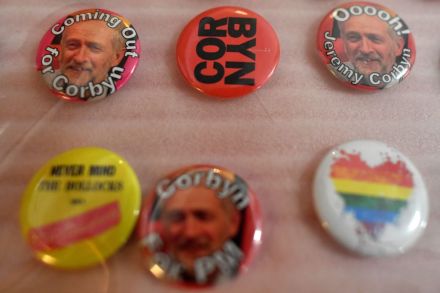
It’s a tale worthy of Kafka. Dr Pete Newbon, a lecturer in humanities at Northumbria University, is being investigated by his employer for making fun of Jeremy Corbyn. Dr Newbon tweeted a picture of the former Labour leader reading to a group of schoolchildren from Michael Rosen’s We’re Going on a Bear Hunt. Only the image had been photoshopped to show Corbyn holding the Protocols of the Learned Elders of Zion instead. This is what is generally known as ‘satire’. Corbyn’s social media enthusiasts piled on the academic and began bombarding Northumbria University on Twitter, knowing of course that the sort of people who populate higher education PR would be panicked into action by the fear of trending on Twitter.

In praise of Kate Forbes’s Christian faith

Politics tends to attract people who consider themselves and their every mundane word and deed an example of great bravery. Like journalism and entertainment, it is an industry constructed around the pleasing myth that, whatever level you’re working at, you are engaged in the business of saving the world. Yet few politicians say much today that is courageous, or even all that original. When every dissenting view, colourful remark, or provocative thought brings with it the threat of cancellation, you have to console yourself with the fiction that saying the same thing as everyone around you is a courageous feat. So when I say that Kate Forbes has done something courageous, I say it because she has done something no one around her is doing.

Sturgeon’s new cabinet reveals a dearth of talent

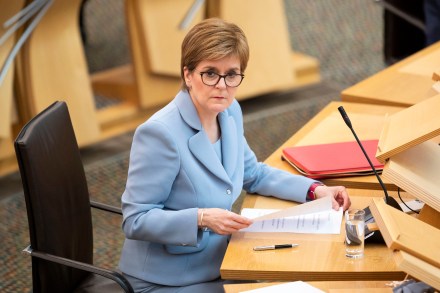
Nicola Sturgeon’s cabinet reshuffle is an object lesson in making a very limited talent pool go a long way. John Swinney, who has been education secretary since 2016, has been shifted into a new brief in charge of the Covid recovery. Swinney’s tenure at education won’t be fondly remembered, presiding as he did over the SNP’s fundamentally flawed Curriculum for Excellence, a stubborn attainment gap between the richest and poorest pupils, a long-running teacher shortage and the 2020 exams fiasco. Any other minister in any other government would have been sent on his merry way long ago but Swinney is too valuable an ally for Sturgeon, having proved his political worth most recently in the Holyrood inquiry into the Sturgeon-Salmond affair.

Don’t compare Israel to Hamas

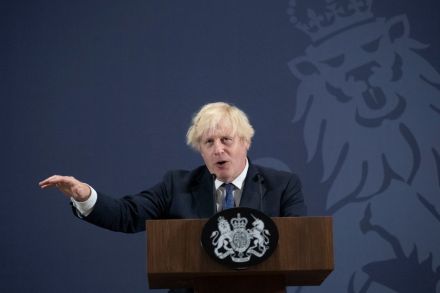
No, not this time, Boris. The Prime Minister’s ‘both sides’ response to the terrorist attacks on Israel underscores how Western political elites — left, right and centre — lose all critical reasoning when it comes to one tiny strip of land in the Middle East. Israel is under assault from Hamas, the Islamist mafia that runs Gaza like 19th-century Sicily. This follows tensions over the policing of holy sites during Ramadan; a spate of violent street incidents between Israelis and Palestinians; marching and incitement by the Israeli far-right; Palestinian rioting in Jerusalem; and Arab-Israeli rioting outside the capital.

How Douglas Ross proved me wrong

Douglas Ross’s first Holyrood election as Scottish Tory leader ended with the party losing two constituencies but its overall seat tally remaining at 31. The Moray MP was not a hit on the campaign trail. Robotic, shouty, angry — pick your well-worn adjective. He was eviscerated daily by a hostile press and any number of commentators lined up to say all manner of uncharitable things about him. I was one of them. Yet the results are there for all to see. Ross lost the commentariat but won the voters. The electorate had better buck up its ideas sharpish.

The SNP has no mandate for a second referendum

Tom Bradby got them started. On Friday night, the News at Ten anchor opined that ‘if the SNP can assemble a pro-independence majority’, he couldn't see ‘how it would be credible to deny them another referendum’. In fact, ‘it would make an absolute mockery of the principle of democratic devolution’.  We can expect much more of this now that the Scottish Parliament elections are over. While the SNP fell short of a majority, pro-independence parties combined crossed the 65-seat mark thanks to the Scottish Greens, a nationalist party. Nicola Sturgeon says this represents a mandate for another referendum.

No SNP majority, now what?

13 min listen

Scotland will have a pro-independence majority at Holyrood, but the SNP has fallen short of an overall majority. What does this mean for the party, its leader Nicola Sturgeon, and the campaign for a second independence referendum? Katy Balls speaks to James Forsyth and Stephen Daisley. James Forsyth: ‘In a way, this is why this (election) is a bad proxy for the question of independence opinion in Scotland, because there are obviously three sizeable, pro-Union parties in Scotland: Tories, Labour and Liberal Democrats. And on the pro-independence side, there's the SNP, there are the Greens, who are interestingly, a poll during the campaign suggested that most Green voters weren't actually in favour of independence.

Jackie Baillie victory deals blow to SNP majority hopes

It's a funny old business, politics. The SNP's number one target in the Holyrood election was Scotland's most marginal seat, Dumbarton. Held by Labour in 2016 by just 109 votes, the Nationalists put everything into unseating the incumbent Jackie Baillie.  It is no exaggeration to say Baillie is a hate-figure for Scottish nationalism. She is moderate Labour, staunchly pro-Union, pro-Trident (the Clyde Naval Base is in her constituency), and was a member of the Holyrood inquiry, during which she distinguished herself with fierce, forensic questioning of both Nicola Sturgeon and Alex Salmond. For all the damage they have inflicted on Labour in its one-time heartlands of west-central Scotland, the Nationalists have never been able to beat Baillie.

SNP gains from turnout surge in Scotland

You know those elections where some cold comfort can be harvested by the losing side in gains made here and there? The Holyrood vote isn’t one of them. The full results won’t be in until tomorrow but based on what we’ve seen so far, the SNP is home clear and dry. An outright majority seems probable. Labour has already lost East Lothian to the Nationalists and in Dumbarton, Scotland’s most marginal seat, its majority is just 109. Tory-held Ayr has fallen to Nicola Sturgeon’s party while the Conservatives have failed to make gains elsewhere. (They did, however, come within 800 votes of winning Banffshire and Buchan Coast.) There was an eye-popping swing to the SNP in Shetland but the Lib Dems managed to hang on.

Holyrood 2021: Seats to watch out for

Scotland goes to the polls today to vote for 129 members of the Scottish Parliament. Polls forecast victory for the ruling SNP but there are a string of seats where the result last time was close enough to inject some unpredictability into proceedings. SNP targets Dumbarton Incumbent: Jackie Baillie (Labour)  Majority: 109 This is the seat the Nationalists want more than any other. Politically, it is a stubborn west-coast hold-out against the glories of nationalism. Symbolically, it is home to the Clyde Naval Base and the UK’s nuclear deterrent, which the SNP wants to scrap. But perhaps most important of all is the personal dimension.

Maverick of the glen

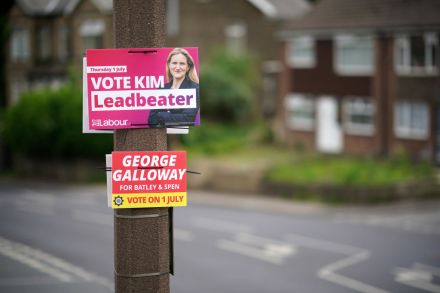
Holyrood 2021 was supposed to be an election for the mavericks. Alex Salmond is back from the political dead with a new party promising to lead nationalists to independence where his former party has failed. George Galloway has turned his attention to Scotland and, despite his previous pronouncements on the matter, is heading up an outfit opposed to indyref2. While Salmond has had no trouble drumming up headlines, neither has made much of an impression on the polls. That might be because their respective parties appear to be all about one man. The opposite seems to be true of Andy Wightman, who actually is one man but his campaign is tapping into a grassroots movement for more rigour, integrity and free-thinking at Holyrood.

Tony Blair states the obvious

If there is more joy in Heaven over one devolutionist who repenteth, the celestial jubilations must be in full roar over a belated admission from Tony Blair. In an interview with ITV News, the former prime minister reflected: ‘I do think one of the weaknesses in the way we approached devolution was not to build real cultural ties and emphasise the enormous things that the different countries in the United Kingdom have in common.

Why the Cummings row won’t harm Boris

It's hard not to agree with those who believe that Boris Johnson, forced into the second Covid-19 lockdown, did say the words: ‘No more fucking lockdowns – let the bodies pile high in their thousands.’  The allegation seems particularly convincing because it was reported in the Daily Mail, whose political team is one of the most plugged in to goings-on at the top of government, the civil service and the Conservative party. Westminster, the media, the infinite outrage-generator that is Twitter — all have been going into overdrive about the Prime Minister’s remarks I am convinced, too, because it sounds all too plausible.

Anas Sarwar’s independence problem

Will Anas Sarwar lead Scottish Labour back into second place at Holyrood? On the strength of the campaign he has fought, he deserves to, for he has run the most positive, energetic and ideas-based offering in a dreary and rancorous election. Sarwar has been almost alone in trying to make the May 6 poll about something other than arid constitutionalism.  His proposals are all sound, social democratic measures: a jobs guarantee for young Scots; investing in cancer and mental health treatment; and extra funding for schools to recover from the educational setbacks of Covid-19. Against an increasingly stale-sounding Nicola Sturgeon and the Scottish Tories' angry-robot leader Douglas Ross, Sarwar has been a breath of fresh air.

Scotland’s Mean Girls election

From our US edition

Presented for whatever is the opposite of your edification, an exchange between the leaders of Scotland’s main political parties. The setting is Tuesday night’s Holyrood election hustings, hosted via Zoom by the National Union of Students. We begin with Nicola Sturgeon accusing Scottish Conservative leader Douglas Ross of being inconsistent on who gets credit for the Covid vaccination programme in Scotland. Nicola Sturgeon: Make your mind up. Douglas Ross: No, I was saying your rollout was poor. Your rollout was poor. NS: But the point is, the UK chose to— DR: But answer the question— It’s like watching a very dressed-down remake of Mean Girls. Totally not fetch.

Sturgeon goes on spending spree with UK credit card

There isn’t much I agree with in the SNP’s manifesto for the Holyrood elections, so it seems peevish to cavil about the policies to which I am generally sympathetic. These are: a national care service, 100,000 new houses, abolition of dental charges, free school meals, investment in closing the attainment gap and more money for skills and training. I might quibble with the universalism of some measures because I would rather see resources redistributed from those with means to those without them. Even so, the Nationalists are making some of the right noises, if purely for their own electoral benefit rather than any late conversion to social democracy. The obvious question, then: How do they intend to pay for it?

The SNP cannot win a mandate for indyref2

This week's Holyrood election debate should not be allowed to pass without noting how it highlighted the dismal state of Unionism. Nicola Sturgeon revisited a point she has been underscoring heavily during this campaign: that a majority of nationalist MSPs returned after May 6 would represent a mandate for another referendum on Scotland seceding from the United Kingdom. Scottish nationalists have a curious relationship with popular sovereignty, seeing no contradiction in espousing this doctrine while harking back to the Declaration of Arbroath, a pledge of aristocratic fealty and an apologia for the divine right of kings. Among Sturgeon’s statements during the STV debate was: ‘The future of the country should be for the people in Scotland to decide. That is democracy.

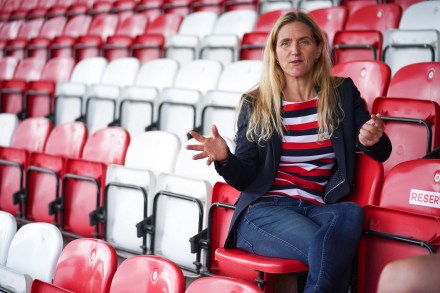
Liz Kendall is right – we don’t value social care enough

Sometimes it’s not what you say, it’s how you say it. In politics, it’s more often than not the latter that matters most. Liz Kendall, star of my somewhat unsuccessful 2015 campaign to ‘Make Liz Kendall Labour Leader and Queen of Everything’, has been pilloried online for suggesting care workers would be ‘better off stacking shelves at Morrisons’ given their pay and conditions. Her remarks were pounced upon as proof of snobbery towards supermarket staff, a largely unacknowledged army of key workers during the Covid-19 pandemic. https://twitter.com/leicesterliz/status/1381937874900226054?ref_src=twsrc%5Etfw As ever with outrage rampages, the truth is a bit more prosaic.

The SNP’s England obsession

There is a whiff of something in the current Scottish Parliament elections. It’s not quite strong enough to call it foul but nor is it faint enough to go undetected. What I can tell you is this: it doesn’t smell right. Yesterday, Alex Salmond’s new party, Alba, released a video depicting throngs of flag-waving nationalists with a voiceover delivered by an actor from the imagined perspective of Robert the Bruce. (If that seems like an odd idea for an election ad, welcome to Scotland.) ‘Bruce’ described the Battle of Bannockburn thus: ‘People power by the small folk of Scotland was the straw which broke the spine of English superiority’.