Stephen Daisley

Stephen Daisley

Stephen Daisley is a Spectator regular and a columnist for the Scottish Daily Mail

Revealed: The SNP strategy for a second independence vote

A new leaflet from the SNP says another referendum on independence is ‘an issue of basic democracy’ and that Boris Johnson ‘is seeking to block the democratic right of the people of Scotland to decide our own future’. The eight-page missive, which I understand is being distributed initially to party members, is entitled ‘A Referendum for Recovery’ and features the ‘Yes’ branding of the SNP’s campaign for indyref2. The booklet is anchored by a short essay by Mike Russell, party president and former constitution minister in Nicola Sturgeon’s devolved administration at Holyrood.

Who can make the Scottish Lib Dems great again?

Willie Rennie's resignation — announced, as only he could, via a self-shot video while climbing Benarty Hill in western Fife — means there's now a vacancy at the top of the Scottish Liberal Democrats. Given the party holds just four seats at Holyrood and four at Westminster, the summit of Benarty enjoys a more elevated position than the Lib Dem leadership. But can Rennie's replacement have any more luck in reviving the party's fortunes? The party was in government at Holyrood from 1999 to 2007 as Scottish Labour's junior partner but Nick Clegg's coalition with David Cameron, the rise of the SNP and the political realignment brought about by the 2014 independence referendum all did for the Lib Dems' fortunes.

‘Anyone But England’ is a sad reflection of Scottish society

My name is Stephen and I am a Bad Scot. At least that’s how I feel. For the past week Italian flags have been popping up all over Scotland ahead of tonight’s Euro 2020 final. Music station Pure Radio Scotland rebranded itself ‘Pure Radio Italy’ for the weekend. A shopper in Glasgow complained that Tesco was failing to ‘help boost national pride’ after their local branch played the England fan anthem ‘Vindaloo’. A pub in the city centre had the moment Gareth Southgate missed the decisive penalty against Germany in Euro 1996 blown up into a giant poster and is displaying it next to the bar’s entrance.

Cummings reveals the Unionist heart of darkness

Like Walter Kurtz, Dominic Cummings had immense plans but was tripped on the threshold of greatness by the weaknesses of his superiors. Now he holds court from his fortress temple of Substack where, in the fashion of Martin Sheen's Captain Willard, subscribers receive his glum musings on Covid strategy, systems management and judicial review. Cummings is sometimes regarded as a brilliant sociopath and while I sway back and forth on whether the emphasis belongs on the adjective or the noun, his insights into how government really works are immensely valuable to understanding policy-making, implementation and the impotence of power.

Why has the NHS been awarded the George Cross?

Awarding the George Cross to the NHS seems a bit much, though in keeping with our devotion to the aspirin-dispensing national religion. The health service has been bestowed the highest civilian gallantry medal for its public service and its handling of the Covid-19 pandemic. It’s not that health professionals don’t deserve recognition. They do, though I’d have thought paying nurses better would be a more tangible nod. And it’s not as if there is no precedent for an institutional recipient, with the entire nation of Malta honoured in 1942. Still, admirable though the NHS’s pandemic response has been in places, it’s not quite single-handedly holding back the Luftwaffe and the Regia Marina.

The price Labour paid for victory in Batley

While Labour’s narrow victory in Batley and Spen will mostly be analysed through the prism of Sir Keir Starmer’s leadership, a more compelling fault line is the apparent estrangement of some Muslim voters from a party that has until now been able to rely on their support. Labour may have held on but it also showed its hand. During the campaign, Labour’s candidate Kim Leadbeater posed for a photograph with local campaigners sporting T-shirts that depicted Israel as ‘Palestine’, issued both a leaflet and a letter touting her pro-Palestinian credentials (by heaping scorn on Israel, naturally), and defended a grim leaflet clearly geared towards tapping into anti-Hindu and anti-Indian prejudices.

Did the SNP cover up a cancer crisis?

The news that a Scottish woman died from cancer after being among more than 400 wrongly told they did not need to undergo cervical screening is unspeakably grim. Worse is the confirmation that the records of a further 500 women, which pre-date 1997, have yet to be accessed, meaning many more could be affected. The error stems from the incorrect exclusion of women who underwent partial hysterectomies. The Scottish government says it is also checking the records of 200,000 women who received a total hysterectomy, though this is a precautionary move and these women are expected to have been properly absented from screening call-ups. They withheld the scandal from the Scottish public for 107 days Four potential reasons for the systemic failure have been given.

Ever weaker Union: The Tories lack a constitutional theory

No doubt Michael Gove is satisfied with how his latest comments on Scottish independence have gone down. The Chancellor of the Duchy of Lancaster, de facto minister for the Union (even though that’s meant to be someone else’s job), told the Telegraph he couldn’t see any circumstances under which the PM would allow Nicola Sturgeon a second referendum on breaking up Britain. This is exactly what Scotland’s embattled unionists want to hear and seem not to tire of hearing, even though they hear it a lot. Sturgeon has obliged by accusing Gove of ‘sneering, arrogant condescension’, ‘completely refusing to accept Scottish democracy’ and helping ‘build support for independence’. And so on this dull, dishonest dance goes.

Labour’s worrying descent into communalism

Labour’s candidate in Batley and Spen, Kim Leadbeater, reportedly pulled out of a hustings featuring George Galloway over the weekend. This makes sense. Not only is Galloway a master of bluster whose pompous bombast has a steamroller quality in a debate, but Leadbeater would have been debating the person of whom she is currently doing a dubious impression. If the organisers were concerned about getting Labour’s perspective, they could have stuck a mirror in front of Galloway and given it equal time.

The questions hanging over GB News

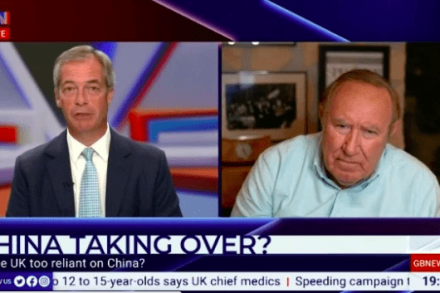
GB News is the most interesting experiment in British television news since Sky in 1989. The brainchild of Andrew Neil (who is also chairman of The Spectator), the channel is pinning its hopes on there being an audience for something different. The thinking goes that the mainstream broadcasters reflect the progressive pieties of London rather than the values of the rest of the country. Critics have characterised the channel as ‘right-wing’, though Neil and his team have been careful not to embrace the label. Of course, GB News isn’t the first broadcaster to cover the news with a particular slant — Channel 4 News has been doing so for a long time without a peep from the regulator. GB News’s crime is that it has the wrong slant.

Why Rishi Sunak should keep the Universal Credit uplift

Chancellor Rishi Sunak agreed to sit down with Andrew Neil on GB News last night for what turned out to be a fairly brutal grilling. The Chancellor floundered under interrogation on the pensions triple-lock, the cost of climate-friendly policies and the Tories’ big-government instincts. However, one of the more uncomfortable moments came when Neil pressed him on the future of the £20 weekly Universal Credit uplift. The benefit supplement, which also applies to the basic element in Working Tax Credit, was introduced at the start of the pandemic because the government acknowledged that the coming recession would inflict particular hardship on those already on the lowest incomes.

Does this SNP politician think buses are racist?

One of the benefits of devolution has been giving Scots their own parliament in which the great issues of the day can be discussed. Issues that might not otherwise make it onto the political agenda. Now the Scottish parliament has posed a question that can be avoided no longer: are buses racist? James Dornan is the SNP MSP for Glasgow Cathcart and the man who has brought these matters to light. Speaking in a debate at Holyrood last week, Dornan raised the enduring blight of ‘institutional prejudice’ against Irish Catholics in Scotland. He could have cited many examples in evidence but admirably chose to make a more original case: ‘To my knowledge, no one has questioned the decision by Lothian Buses to cancel the evening buses on 17 March.

The era of Bibi is over

Israel's new government is a daring, possibly doomed but nonetheless fascinating experiment. Headed by tech millionaire turned nationalist figurehead Naftali Bennett and TV journalist turned voice of centrism Yair Lapid, Jerusalem’s 36th government is an ideological hydra.  Bennett’s right-wing national-religious Yamina party is joined by the secular liberals of Lapid’s Yesh Atid, along with Kahol Lavan moderates, Labor social democrats, Meretz socialists, and the Likud breakaway faction Tikva Hadasha, plus Yisrael Beiteinu’s secular right-wingers and Ra’am’s Islamic conservatives.

The progressive imperialism of Keir Starmer’s Palestine policy

There are two ways to look at Sir Keir Starmer’s call for the Prime Minister ‘to press for a renewed international agreement to finally recognise the State of Palestine’ at the G7 summit. The first is cynical: that the intended audience was not the government benches or the international community, but the voters of Batley and Spen, currently weighing up whether to elect another Labour MP in next month’s by-election. At the 2011 census, almost one in five residents were Muslim and knowing what we know about how progressives view religious and ethnic minorities, it is not a stretch to assume Sir Keir was merely electioneering.

Why our constituency names should celebrate Britain’s history

The real story of the proposed boundary changes is not which MPs might end up seatless or whether the new boundaries help Labour or the Tories, but what it means for ever-lengthening constituency names. Queen Mary university politics professor Philip Cowley says: https://twitter.com/philipjcowley/status/1402142280111120384?ref_src=twsrc%5Etfw Professor Cowley points out that the mean number of characters in a constituency name would hit 15.7 under these proposals, compared to 12.6 in 1950. Whereas almost half of English constituencies had a single-word name in 1955, only one third do today and the new titles would take it down to 31.5 per cent.

Does Google really understand racism?

Opponents of the new racial extremism typically object that it vilifies white people in much the same way that classical racism does black people or other minorities. While this ideology does retail racist theories about white people (collective racial privilege, heritable racial guilt), when progressives want to get really racist, they invariably turn to another target: Jews.  Kamau Bobb was, until a few days ago, Google’s head of diversity strategy. The Washington Free Beacon uncovered a blog Bobb penned in 2007 in response to Israeli actions against Hamas in Gaza. It wasn’t your standard progressive plea for Israel to stop making such a fuss and let those nice Islamists drive it into the sea.

Boris’s media critics are missing the real story

The five most frustrating words a journalist can hear are: ‘This is not a story’. Over the years, I have heard that warding charm invoked by press officers governmental and party, private sector and charitable. Every time, it guaranteed I would work doubly hard to ensure the story in question made it into print. Political journalists, in particular, are thrawn by nature and cynical through experience. They begin from the assumption that you did it, everyone around you knows you did it, half of them are doing it too, and if they keep at you long enough you’ll eventually end up reading a prepared statement outside your front door one morning while your wife silently reflects that you can’t even take a brown envelope competently.

The BBC cannot survive many more scandals

The BBC is still investigating one of its journalists almost one week after it emerged she had tweeted ‘Hitler was right’. Tala Halawa, who is based in the West Bank city of Ramallah, is the ‘Palestine specialist’ for BBC Monitoring and was part of the reporting team which covered the recent fighting between Israel and Hamas and the reactions to the conflict. As The Spectator reported last Sunday, watchdog group Honest Reporting and a number of British Jews who campaign against antisemitism uncovered a series of tweets and Facebook posts from Halawa. These included assertions such as ‘Israel is more Nazi than Hitler’ and ‘Hitler was right’, as well as the pronouncement that ‘ur media is controlled by ur zionist government’.

Westminster must stop Sturgeon’s separatist empire-building

It is so rare to see a Conservative push back against devolution creep that I didn’t believe my eyes at first. Stephen Kerr, newly elected to the Scottish parliament as a list member for Central Scotland,  highlighted this week the £2 million per year the Scottish government spends on a Brussels office with 17 staff members. This crypto-embassy is joined by similar set-ups in Washington DC, Beijing, Dublin, Berlin, Ottawa and Paris. All in, Nicola Sturgeon’s administration is spending just shy of £6 million each year to run these offices and employ almost 40 staffers across them. Kerr says: ‘It’s clear the SNP are doing this to try and boost international support for separation, using taxpayers’ money to do so.

The Tories, Islam, and the importance of pluralism

The Conservatives will be relieved that an independent investigation has not found the party to be institutionally racist, though relief is about all they can feel. Professor Swaran Singh’s report, which has taken two years to arrive, paints a picture of a party at best complacent about how its members talk about Muslims.  Professor Singh examined 1,418 complaints about 727 incidents between 2015 and 2020, of which two-thirds were allegations of anti-Muslim discrimination and three-quarters were from social media.