Simon Diggins

Simon Diggins is a security, defence and military commentator, a former colonel in the British Army and contributing editor to the Defence on the Brink podcast. He also served as defence attaché in Kabul from 2008 to 2010.

Why the US bombers left RAF Fairford in a rush

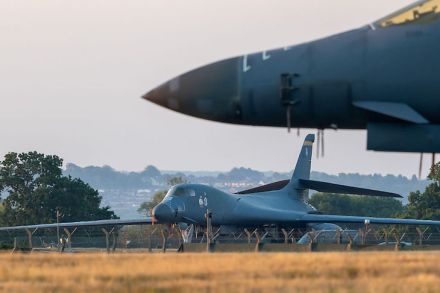
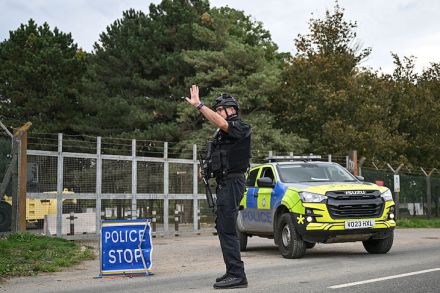
The hasty withdrawal by the United States of its twelve B1 Bombers from RAF Fairford, without explanation by the Pentagon, has fuelled much speculation. The most obvious conclusion is that there was an ongoing security threat to the airbase in Gloucestershire, even after the foiling of last week’s attack, if that is what it was. The lesson for the UK from the sudden departure of the US bombers should be clear: we are now primarily responsible for own defence and security The US, while initially pleased with what they said was a good UK reaction to that incident on 27 September, seemed as bemused as many others as to why five men, who were initially arrested on suspicion of terror offences, were subsequently released on bail.
Was Iran’s hidden hand behind the RAF Fairford incident?

Those who like their irony dark may appreciate the grotesque juxtaposition of photographs of our Foreign Secretary, gripping and grimacing – though fortunately not grinning – with, Iran’s foreign minister, Abbas Araghchi at the UN General Assembly last week, and the arrest of five suspected terrorists at RAF Fairford in Gloucestershire. Britain seems incapable of securing its borders. Perhaps not too surprisingly our internal security is now badly compromised It is, of course, the lot of Foreign Secretaries to have to ‘sup with the devil’. And we are told by the BBC that Ed Miliband’s message to Araghchi was that “…the UK (has an) unwavering resolve to combat threats from Iranian-linked groups in UK soil, including attacks on the British Jewish community.

What is Putin’s game?

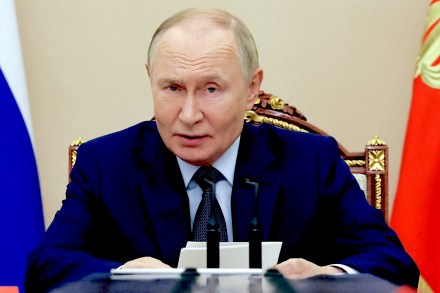
What happens when you boil a frog? It doesn’t notice the warming water until it is too late. According to Margus Tsahkna, Estonia’s foreign minister, Russia is boiling Nato like a frog. He fears that Vladimir Putin’s provocations of Nato (none of which on their own would necessitate a military response) will become increasingly and slowly severe, testing and ultimately undermining Nato’s defences. There is force to his argument. Two weeks ago, Polish air defences shot down Russian drones. Last Friday, Russian jets violated Estonian airspace and forced Nato planes to scramble. More drones, operated by a ‘capable actor’, according to a Danish Police spokesman, flew over Norwegian and Danish airports earlier this week, forcing their closure.

Britain can help defeat the Houthis

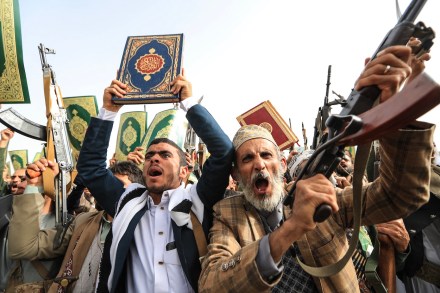
In a lightning series of advances in the past week, the Houthis have captured Hanish and Zuqar Islands, the port of Mocha, and now Perim Island, which effectively divides the aptly named Bab al-Mandab, ‘The Gate of Tears’ or ‘Grief’, in two. They now control the whole of the Yemeni side of the Red Sea. Their partial blockade of the Red Sea, which they have maintained on and off since 2023, is set to become even more effective. Not content with that, the Houthis have in the last 24 hours launched missile attacks against the Saudis’ King Khalid Air Force Base and other military targets, and possibly also been involved in a drone and missile attack on the main east-west pipeline that brings oil from Saudi oilfields which bypass the heavily contested Strait of Hormuz.

Al Qaeda haven’t gone away, you know

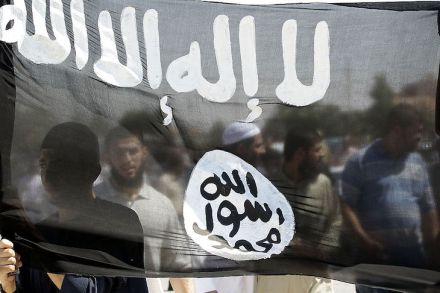
‘They haven’t gone away, you know.” Gerry Adams’s chilling words, uttered during the peace process, to remind everyone that the IRA still existed, would do as well for Al Qaeda, the architects of the 9/11 outrage, the 25th anniversary of which fell yesterday. Osama Bin Laden’s killing in May 2011 may have removed the titular head of Al Qaeda but, neither that well-deserved death, nor the subsequent splintering of Al Qaeda from Isis (Islamic State of Iraq and Syria) in 2014, has diminished either the virulence or potential danger that Al Qaeda presents.

What is the point of the new ‘Muslim Nato’?

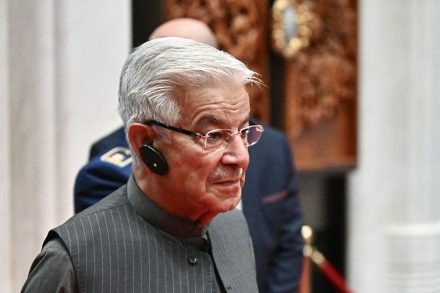
Pakistan’s defence minister, Khawaja Asif, rather excitedly proclaimed a new defence agreement – the Mecca Joint Defence Agreement – between Saudi Arabia, Pakistan and Turkey as the beginnings of a ‘Muslim Nato’ last week. He proceeded to call on Muslim countries to set aside their differences and join them. The key clause – that an attack on any one of the three countries would be considered an attack on them all – is virtually the same as Nato’s much-vaunted Article 5, widely regarded as the underpinning of that alliance.

Are we edging closer to peace in Ukraine?

When he came to write of 1942-3 in his magisterial, if idiosyncratic, ‘History of the Second World War’, Winston Churchill called that period, ‘The Hinge of Fate’: it was the turning of the tide, when from El Alamein, to Stalingrad, and to Midway in the Pacific, the Axis Alliance ground to a halt. There was much hard fighting to be done and the contours of victory were still unclear but as Churchill declared, in November ’42, “…this is not the end. It is not even the beginning of the end. But it is, perhaps, the end of the beginning.” So too in Ukraine. Ukrainians have been able to reach-out beyond this extended ‘No-Mans Land’ The much vaunted Russian Spring Offensive has achieved nothing except thousands more Russian dead.

The trouble with the Ministry of Defence

In a telling exchange on Radio 4 last week, during the furore following John Healey’s resignation, Debbie Abrahams, the Labour MP and chair of the work and pensions committee, was asked about funding for defence. She said that she supported the target of spending 3.5 per cent of GDP by 2035, but was unconvinced of the need to accelerate that rise and certainly not at the expense of what she later described, in a Facebook post, as ‘arbitrary cuts to social welfare’. She was, she told the BBC’s Evan Davis, an ‘evidenced-based politician’. Abrahams’s implication was that she did not accept that we needed to accelerate our spending on defence. This is a misunderstanding that could prove catastrophic for Britain.

Britain is facing an Islamist insurgency

The recent horrific attack in Golders Green has generated much anger and despair at this latest in a series of concerted, violent assaults currently aimed primarily at the Jewish community, but with a clear lineage to earlier Islamist outrages such as the murder of Fusilier Lee Rigby and the London Bridge attacks of 2017 and 2019. The UK terrorism threat level was raised to ‘severe’ following the attack on Thursday. But terrorism, ‘…an action or threat designed to influence the government or intimidate the public’, is an inadequate descriptor of what we face. Instead, I believe we face a different problem: a full-blown insurgency.

China’s parade spells trouble for Taiwan

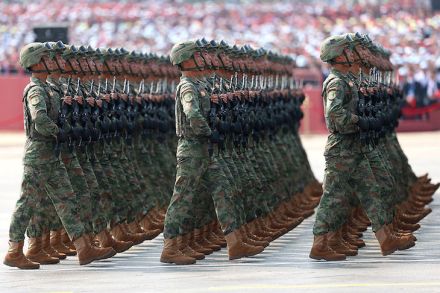
The massive military parade in Beijing today definitively marks the end of the post-World War Two era. Nominally, the 80th Anniversary of China’s victory in ‘The War against Japanese Aggression and the World Anti-Fascist War’, it has been used by China's president Xi to, in the words of Reuters, '…demonstrate Xi’s influence over nations intent on reshaping the Western-led global order' – an order that began with the end of World War Two. Sharing the podium with Xi – but not invited to review the parade – were presidents Putin of Russia and Kim Jong-un of North Korea.

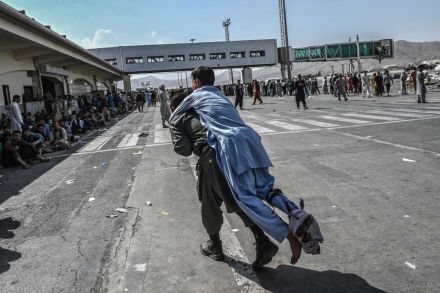
How Britain ended up in the Afghan asylum mess

The Afghan data leak has generated a mass of lurid headlines and, no doubt, there is still much analysis, pointing of fingers and assigning of blame to come. But how did it happen that the UK ended up with such an obligation to so many thousands of Afghans and their families? I support the evacuation, but clarity of ends does not necessarily justify the means. My assessment is that between 2014 and 2021 – when we, along with other Isaf nations, had moved from a combat to a support and capacity-building role – we took our eye off the ball. We accumulated liabilities but had no real mechanism to understand or control them.

Why didn’t the UK rescue Afghan interpreters sooner?

We lost. Whatever hope we had that we could help Afghanistan crawl out of its misery has been shattered. The dreams of the 14 million women in Afghanistan or the tens of thousands of Kabul university graduates, who had grown-up after the expulsion of the Taliban, are now in ruins. Afghanistan has been broken again, by the Afghans’ inability to bury their personal or ethnic differences; by the perfidy of the Pakistanis, who have harboured and nurtured the Taliban; and by the actions of a foolish old man who happens to be US President. Caught in this web of misery are those who supported the Allied forces and those who participated in the Afghan renewal and modernisation programme.

We need to act now to save the army’s Afghan interpreters

In July 2010, near the end of my two-year tour as defence attaché in Kabul, I was phoned by the commander of our field hospital in Camp Bastion. ‘Simon’, he said. ‘We’ve an interpreter here, a triple amputee, and we can’t do anything more for him – we’re a field hospital, and don’t do definitive care.’ I was puzzled. ‘Surely, you just evacuate him back to Selly Oak Hospital in Birmingham, like all our other badly wounded soldiers, and they can look after him there?’ He explained that he couldn’t – the Home Office was worried that the interpreter, or his companion, might claim asylum.