Shiraz Maher

The shooting of Malala Yousufzai

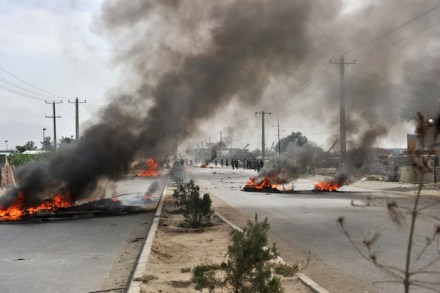
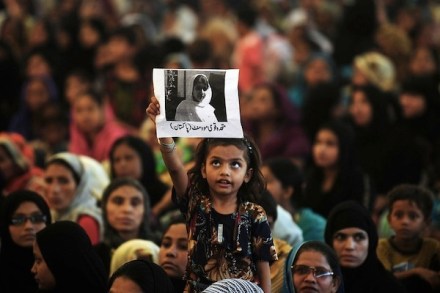
The culture of denial is so pervasive and prevalent in Pakistani politics that the government is now unable to govern the tribal areas. That much was clear yesterday when the Pakistani Taliban shot 14 year-old Malala Yousufzai in the tribal province of Swat as she walked home from school. Yousufzai is a prominent campaigner against religious extremism and promotes women’s rights, including their access to education. ‘She was pro-West, she was speaking against Taliban and she was calling President Obama her idol’, a spokesman for the Taliban, Ehsanullah Ehsan, said when claiming responsibility for the attack. ‘She was young but she was promoting Western culture in Pashtun areas’.
Should British citizens expect British justice?

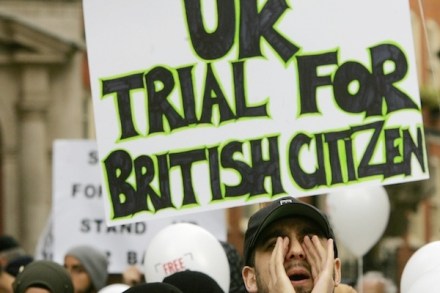
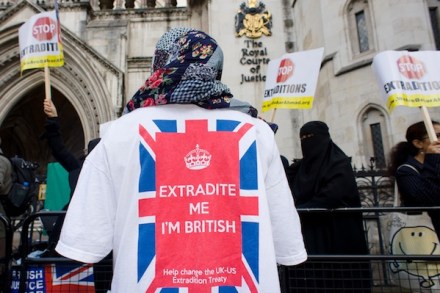
The High Court yesterday issued a final ruling on the extradition of Abu Hamza and four other men saying they will be handed over to American authorities to stand trial on terrorism charges. It’s unusual for the courts to lump different cases together like this, and that’s one of the things supporters of Babar Ahmad and Syed Talha Ahsan are particularly upset about. Abu Hamza’s case is relatively straightforward. He will be tried on 11 charges, including the charge that he tried to create a terrorist training camp in the United States. Two of the other men, Khaled al-Fawwaz and Adel Abdul Bary, are accused of being linked to Osama bin Laden and were indicted in relation to the 1998 twin embassy bombings in East Africa. This case is entirely unconnected to Abu Hamza.

Will the protests in Iran continue to build or fade away?

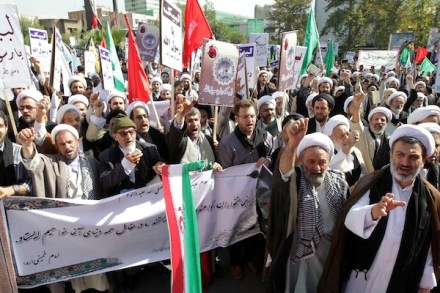
Thousands of Iranians took to the streets this week to protest inflation and the collapse of Iranian currency on international markets. Tehran's historic Grand Bazaar closed for business with many of its merchants leading the demonstrations. This will worry the government because traders there are normally seen as bridging the gap between clerics and Iran's influential mercantile classes. The atmosphere inside the Bazaar is a useful barometer of Iranian political discontent. During the abortive Green Revolution in 2009 which challenged Ahmadinejad's re-election, merchants from the Grand Bazaar offered only muted support. In 1979 they swung decisively behind the Islamic Revolution and helped unseat the Shah, having previously secured concessions from the monarchy a century earlier.

Obama’s ‘economic patriotism’ attack on Romney

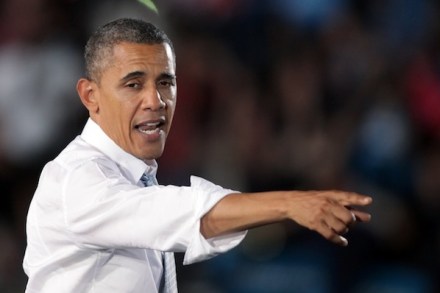
Expect to hear Barack Obama talking about ‘economic patriotism’ in tomorrow’s first Presidential debates. The idea is a simple one: that American’s should keep their money within the United States, place their deposits in American banks, and pay the full measure of their taxes. It’s providing an effective way to undermine Romney’s complex financial arrangements which place much of his money in offshore tax havens. By doing so, Obama claims, he is proving himself a poor patriot. In a new campaign advert, the President argues: 'It's time for a new economic patriotism, rooted in the belief that growing our economy begins with a strong, thriving middle class.

The era of Abu Hamza is now finally drawing to a close

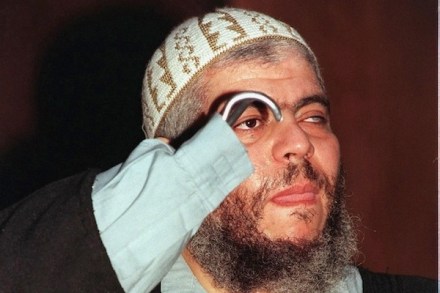
For years he was the face of radical Islam in Britain - a living caricature of the 'mad mullah' — the hook handed, eye patch wearing cleric Abu Hamza. Famous for holding congregational prayers on the streets of Finsbury Park and railing against the West, the era of Abu Hamza is now finally drawing to a close Yesterday, the European Court of Human Rights refused a request by Abu Hamza and four others to have their case referred to its Grand Chamber. This means they have now exhausted all their avenues of appeal through the Strasbourg courts and will soon be extradited to the United States. The Home Office has already told the BBC that Abu Hamza will be removed from the country 'as soon as possible'.

The death of Osama bin Laden

Everyone knows something of what happened the night American Navy Seals killed Osama bin Laden in the Pakistani garrison town of Abbottabad. Frenzied reports followed the news of his death as information, much of it erroneous, flooded the public domain. Bin Laden was armed and engaged the Seals in a fire fight; he was cowering behind his wife when Seals stormed his room and pushed her towards them; there was a stand-off where he looked into the Seals’ eyes before they shot him. The New Yorker published a controversial account of events by Nicholas Schmidle where some of those untruths were advanced. Schmidle’s piece is so thick with atmospheric actualities that readers would reasonably assume that it is based on the testimonies of those involved, except it isn’t.

Israel faces difficult choices over the Sinai

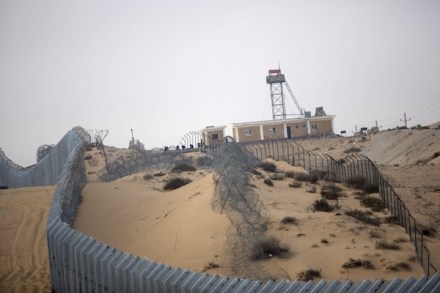
Militants operating in the Sinai breached Israel’s borders for the second time in six weeks on Friday. One soldier was killed during the latest incursion, prompting demands that Egypt do more to reign in groups operating in the Sinai Peninsula. Mohammed Mursi acted swiftly last time militants crossed into Israel, but insists his hands are now tied. Tunnels between Gaza and the Sinai make the peninsula hard to govern while the terms of the 1979 peace agreement make it is a demilitarised zone. The absence of an effective military presence there has allowed Islamists to use the area as a springboard for attacks against Israel. It would not be unprecedented for Egyptian forces to enter the area. After last month’s attack, Egypt sent its army into the area with Israeli permission.

Afghanistan’s triumph: the return of cricket and other ‘frivolities’

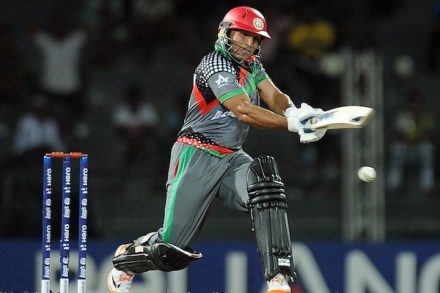
England have just beaten Afghanistan in the Twenty20 Cricket World Cup currently being held in Sri Lanka. In the end, it was a comprehensive victory for Stuart Broad’s men but how wonderful it is to see cultural and sporting life returning to a country where such ‘frivolities’ were outlawed by the Taliban. This is Afghanistan’s second appearance at a major cricketing tournament and follows Rohullah Nikpai’s efforts in the Olympics a few weeks ago where he won the country’s second ever medal.

Western governments are failing to stand up for their own values

One of the most significant revelations from last week’s furore surrounding ‘The Innocence of Muslims’ film has been the way Western governments reacted to it. The White House condemned the film as did the American embassy in Cairo. That much is understandable. To condemn a film as offensive, silly, or provocative is not to undermine the principles on which it was produced. Indeed, the White House made a point of stressing the First Amendment which enshrines the right to free speech. Yet, behind the scenes, that’s precisely what they were busy undermining. Officials lobbied Google (which owns YouTube) to remove the film from its servers, only to be rebuffed. Yesterday the satirical French magazine Charlie Hebdo published cartoons of the Prophet Mohammed.

We need to hear more from Tony Blair on Syria

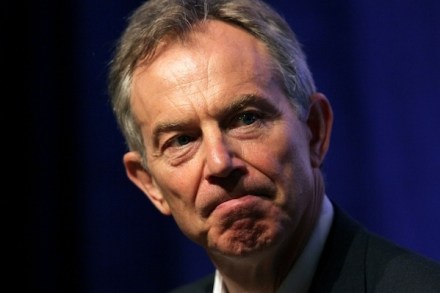
Conventional wisdom suggests that Bashar al-Assad’s Syrian regime will crumble from within if given enough time. That’s the reasoning which has, in part at least, prevented Western governments from intervening in the conflict so far. Tony Blair challenged proponents of that view yesterday. 'People say inevitably he will go. I don't think it is inevitable, actually, unless we are prepared to make clear our support and solidarity for those people who are struggling against what is a very, very brutal repression now,' he told Radio 4's Today programme. Although Blair isn’t necessarily advocating military intervention, he does think we should be exploring military options more thoroughly. This is the conundrum facing Western governments.

Why the bounty on Salman Rushdie has increased

All roads lead back to Salman Rushdie. At least, that’s what the Iranian Ayatollahs would have you believe. Following last week’s furore over a poorly made YouTube video which mocked the life of the Prophet Mohammed, the Iranians are baying for Rushdie again. Ayatollah Hassan Sanei, who leads a semi-official foundation to honour the memory of Ayatollah Khomeini, has upped the bounty for Rushdie’s assassination by $500,000. The overall pot now stands at $3.3 million. What has Rushdie to do with the poorly produced film of a convicted Egyptian fraudster? Well, nothing – but then clerical fascisms seldom concern themselves with the trivialities of reason. Sanei believes that Rushdie set the trend for insulting Mohammed, a supposed pioneer of new insults and ridicule.

The latest attempt at British justice for Babar Ahmad will probably fail

Just when it seemed like Babar Ahmad had exhausted all his options to avoid extradition to the United States on terrorism charges, a new twist has emerged. Yesterday, a wealthy tycoon from Newcastle, Karl Watkin, said he would bring a private prosecution against Ahmad. In theory, anyone can bring a private prosecution if they can demonstrate it is in public interest to do so. Individuals bringing such actions act in cases where they believe the Crown Prosecution Service has failed in its duty to initiate criminal proceedings. Ahmad has been held in custody since August 2004 after the United States requested his extradition on terrorism charges relating to a website he operated called Azzam.com.

Save the Children and Osama bin Laden

Have Pakistani children been the unintended victims of last year’s mission by the United States to kill Osama bin Laden? It might seem a ridiculous question to pose, but it’s clear they are being made to bear the brunt of that decision by an increasingly paranoid official and clerical establishment. The latest manifestation of this was the decision by Pakistan’s intelligence services to order all foreign staff working for Save the Children out of country. They claim to have found evidence of the charity indirectly assisting the United States in its operation to kill Osama bin Laden last year – a claim the group vehemently denies.

How Iranian media saved Ahmadinejad from embarrassment

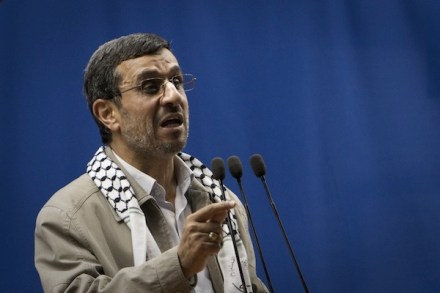
If you ever needed an indication of how the media spouts the propaganda of authoritarian regimes like loyalist apparatchiks faithfully repeating the party line then look no further than Iran. Coffee Housers will remember that last week I highlighted the damning speech given by Mohammed Mursi in Iran during the Non-Aligned Movement conference where he took the opportunity to slam the Syrian regime, describing it as having lost its legitimacy. Mursi’s grandstanding caused some embarrassment to Ahmadinejad given Iran’s unconditional support for Bashar al-Assad – but that’s where the embarrassment seems to have stopped.

Blair should not be cowed by Tutu

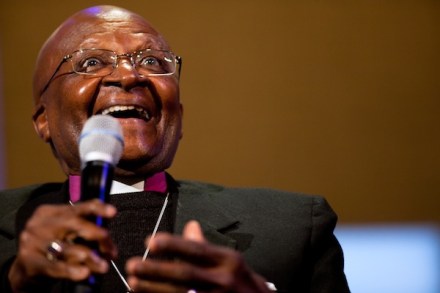
Far from being upset about Archbishop Desmond Tutu repeating something he first said nine years ago, Tony Blair should be proud of his achievements in Iraq. This aspect of Blair’s legacy was raised again over the weekend when Tutu pulled out of an event where he was due to share a stage with the former Prime Minister. It is curious that while Tutu refused to associate with Blair he has happily endorsed the ‘Global March to Jerusalem’. Its members include Ahmed Abo Halabiya who is part of the Hamas administration in Gaza. During a speech he told followers: 'Have no mercy on the Jews, no matter where they are, in any country. Fight them, wherever you are. Wherever you meet them, kill them. Wherever you are, kill those Jews and those Americans who are like them.

Citizen Khan says absolutely nothing new

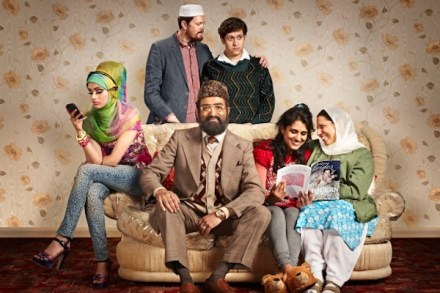
I took the opportunity yesterday to catch up with the BBC’s new comedy ‘Citizen Khan’. Focusing on a Muslim family based in my hometown of Birmingham, it lampoons the trials and tribulations of the self-appointed, self-important, and self-obsessed Mr Khan. Anyone with even a cursory knowledge of British Muslim communities will recognise the basic truths on which the programme’s characters are premised. Alia, daughter of the eponymous hero, seems to have provoked the most controversy. Alia is a shrewd young girl, doting before her parents but defiant behind their backs. There are complaints she portrays a disrespectful daughter, affronting not just her myopic parents but also a stylised vision of ‘British Islam’.

Mursi’s mischief and muscle in Iran

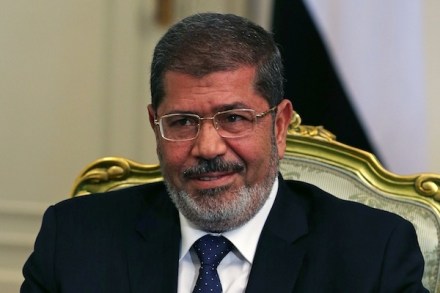
It is not uncommon for new leaders of new nations to flex their muscles. And in spite of its millennia of history as a nation, this is precisely where Egypt now finds itself. It has hosted its first free and fair democratic elections, and, for the first time, has a civilian occupying the Presidency. In this new nation, reborn for the umpteenth time, Mohamed Mursi is busy showing off the Brotherhood’s sinews. He landed in Tehran today, a move the Ahmadinejad government had touted as a diplomatic coup. No Egyptian leader has visited the country in more than three decades, and relations have been little more than frosty at the best of times. But as I suggested on Coffee House last week, Mursi was not headed there to prostrate himself before the Ayatollah's authority.

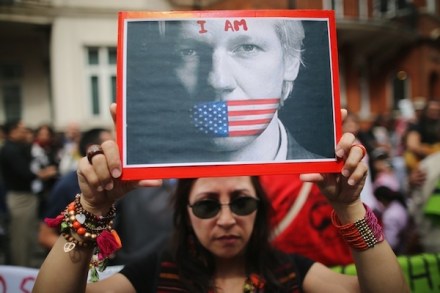
Galloway and Murray’s smears ignore how simple the Assange case is

The remorseless smears of the alleged victims of serious sexual assault by George Galloway MP and Craig Murray, our former ambassador to Uzbekistan will have serious consequences for the victims of sexual assault on British shores. Both men are guilty of some of the most callous behaviour of modern political times in their intemperate outbursts, which are about much more than Julian Assange. The victims of these crimes in this country already suffer from a unique combination of trauma and stigma. It is no surprise that rape and associated crimes are perennially underreported. An authoritative study commissioned by the Home Office in 2007 found that 'between 75 and 95 per cent of rape crimes are never reported to the police'.

Is Mursi really trying to build links with Tehran?

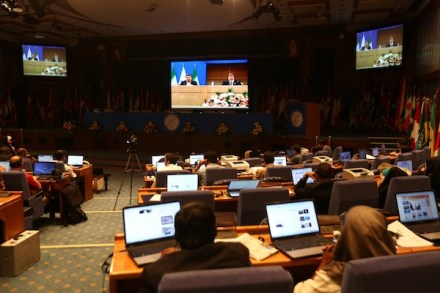
Trying to read the tea leaves on Islamist politicians is notoriously tricky. What else could explain why so many Middle East observers have misinterpreted Mohammed Mursi’s decision to visit Iran later this month as confirmation that Cairo's Islamists are seeking closer union with Tehran? These fears are misguided. Egypt has not had any official diplomatic relations with Iran for more than thirty years and Mursi’s visit will not change that status quo. He won’t be conducting a state visit but will instead be attending a meeting of the Non-Aligned Movement, a group formed to promote the interests of developing nations during the Cold War. Egypt currently holds its rotating presidency. The trip has been on the cards for months.

British residents join Syrian uprising

The British state’s curious relationship with radical Islam appears to have gone full circle. I've just found a picture on an internet forum affiliated with al-Qaeda showing Abu Baseer al-Tartusi carrying a rifle in Syria. Al-Tartusi is a little known cleric who was granted political asylum in London and who gave Islamic lectures in Tower Hamlets until relatively recently. Now he is in Syria, leading a group of jihadists in the war against Bashar al-Assad. A pair of British and Dutch journalists were recently kidnapped and then released by jihadists operating near Idlib. Although blindfolded throughout their detention, they reported that some of their captors had British accents. It was the first indication that British jihadists might be fighting in the conflict.