Shiraz Maher

Bassem Youssef’s arrest is just one example of the attack on free speech in Egypt

Bassem Youssef is better known as ‘Egypt’s John Stewart’. He is a 39 year old cardiologist who made his name with an online comedy programme styled along the lines of The Daily Show. Ever since Egypt’s revolution in 2011 Youssef has attracted a large following in the Middle East, making fun of religious and political figures. With both of those features merged somewhat toxically in the country’s ruling Muslim Brotherhood, there was almost a sense of inevitability about Youssef’s arrest last week on charges of insulting Islam and the President. Youssef’s case has generated a lot of international attention but there are scores of arrests like his. Consider Ali Qandil, a stand-up comedian who appeared on Youssef’s show.

The Saudis oppress their people and expect visitors to look the other way

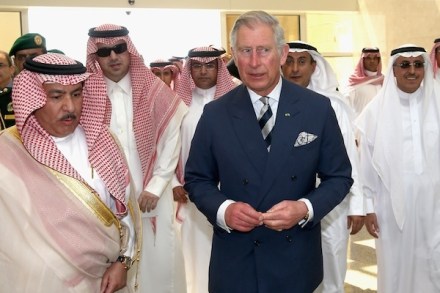
Prince Charles visited Saudi Arabia this week; one of several high-profile visitors to the kingdom in recent weeks, following separate trips by John Kerry and US Attorney General Eric Holder. Most repressive states usually try to behave when hosting Western dignitaries – but not the Saudis. Despite all these visits, the country executed seven men by firing squad for a robbery committed while they were still juveniles. One had originally been sentenced to death by crucifixion although King Abdullah intervened to bring his sentence in line with that of his peers. Then, courts in Riyadh also handed draconian prison sentences to two founders of the Saudi Civil and Political Rights Association. Both were given 10 year sentences along with five year travel bans on their release.

Two years on, the Syrian revolution in numbers

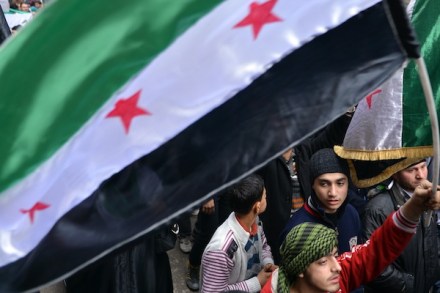
The original defiance came without malice or forethought. A group of barely pubescent schoolchildren, buoyed by the revolutions in Tunisia and Egypt, bought a can of spray paint. ‘The people want the downfall of the regime,’ they scrawled on the school wall, mimicking the popular slogan of protesters in North Africa. Syria’s already nervous Ba'ath administration would abide no dissent. The boys were arrested and disappeared. Two years ago today protesters mobilised across the country in support of the missing children, marking the start of the Syrian uprising. It was too late. The boys had already perished. And when Assad’s forces opened fire on protesters, many others perished too. The government crackdown only fuelled further dissent.

Assad’s jihad against Syrian rebels, and what it tells us about his regime

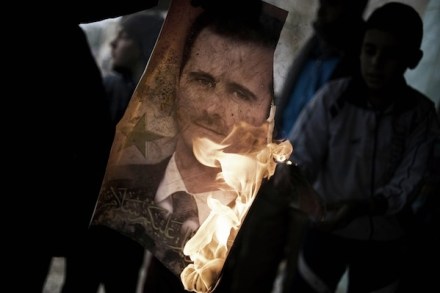
Syrian state TV broadcast a remarkable statement last night calling for an ‘Islamic jihad’ against what it termed ‘Zionist saboteurs.’ In doing so, the Baath regime has reneged on one of its supposed deliverances; the maintenance of communal harmony in a society otherwise deeply fractured along sectarian and confessional lines. The statement is telling because of both its content and what it reveals about Assad’s current thinking. It begins by quoting verses from the Quran followed by the citation of Hadith (recorded traditions of the Prophet Mohammed which provide a source of law in normative Sunni Islam). The scriptural references are carefully chosen, emphasising the virtues of loyalty and martyrdom.

The importance of Pakistan’s literary festivals

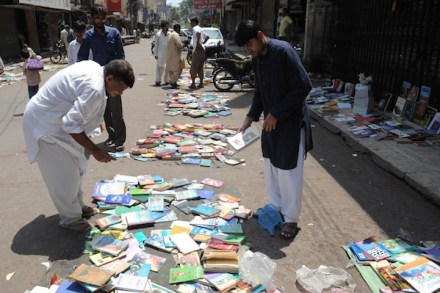
For a country often conceived of only in terms of its troubles with terrorism, extremists and bombs, you could easily be forgiven for thinking that, in Pakistan, all forms of cultural expression have long ceased. But, in the latest edition of Time, there's an interesting piece by Omar Waraich about the cultural flipside of Pakistan that caught my eye. As the world’s attention has been drawn to Pakistan’s problems with Islamist militancy in recent years, a flurry of exciting new voices have stepped forward to share with their readers a more intimate and rounded look at the country and its people — winning many plaudits along the way.

The febrile atmosphere within Saudi Arabia

A Saudi court has sentenced Khaled al-Johani to 18 months in prison for protesting against the regime. His troubles started two years ago when Saudi activists inspired by the revolutions in Tunisia and Egypt had planned a ‘Day of Rage'. Fearing a popular revolt, the government instructed mosques across the country to warn their congregations against protesting. They also exploited Saudi’s still powerful tribal structure to ensure the incipient rebel movement was undermined. On the day, as police, Special Forces, and intelligence officers swarmed the area no one turned up – except Johani. Johani then launched a one man protest and denounced the government to an assembled scrum of journalists. He bemoaned the lack of freedom, democracy, and social support.

The decline of George Galloway

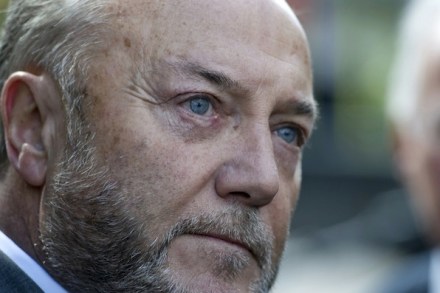
The decay and decline of George Galloway was on full display in Oxford last night when he stormed out of a debate with a third-year PPE student from Brasenose College. The student’s crime was to be an Israeli, a discovery which led Galloway to declare: 'I don't debate with Israelis. I have been misled.' He then got up to leave. 'I don’t recognise Israel and I don’t debate with Israelis,' Galloway said as he exited the room. This is, of course, the old curmudgeon’s stock-in-trade. Galloway has made a career trading in the worst forms of sectarian and dog whistle politics.

Calls grow for EU to ban Hezbollah

The White House is piling pressure on the EU to ban Hezbollah after Bulgarian authorities linked it to a bomb blast in Burgas which killed six people last year. The intended target was a group of Israeli tourists, of which five died in the attack along with their Bulgarian bus driver. An extensive investigation lasting more than six months identified the Lebanese terrorist group as the culprits. 'Europe can no longer ignore the threat that this group poses to the Continent and to the world,' wrote President Obama’s National Security Adviser, Thomas Donilon, in the New York Times. He continued: 'The Bulgarian investigation has once again proved to the world what Hezbollah has tried for years to hide: that it remains engaged in international terrorist attacks against civilians.

The threats to Sadiq Khan remind us of the dangers that many MPs face

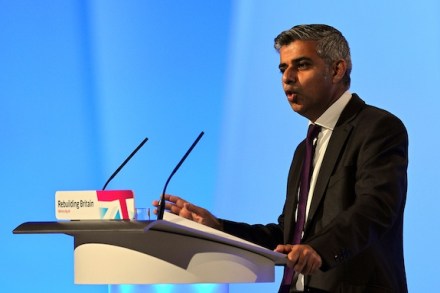
Such is the audacity of extreme Islamists that we now have the remarkable situation where a Muslim member of parliament, Sadiq Khan, is being told by the police to review his security arrangements after having his life threatened. Khan provoked the rage of radicals earlier this month after voting in favour of the Marriage (Same Sex Couples) Bill. On his website, Khan explained: I firmly believe in marriage. Marriage is an important statement of love and long term commitment, and has long been the main way that the state recognises and shows support for loving relationships.  I believe that couples who love each other and want to make that long-term commitment to each other should be able to have a civil marriage regardless of their gender or their sexuality.

A long overdue counterblast to the Left’s thinking on Islamists

A three year open sore within the human rights community will be closed this evening when Gita Sahgal officially launches her new organisation, the Centre for Secular Space, at Toynbee Hall. Sahgal will also be launching the group’s first report, ‘Double Bind: The Muslim Right, the Anglo-American Left, and Universal Human Rights’ highlighting the ongoing scandal of the left’s promiscuous embrace of radical Islamists. The story of Gita Sahgal has been covered before but is worth revisiting. A lifelong human rights activist, Sahgal worked on issues relating to women’s rights, religious extremism, and racism before heading up the Gender Unit at Amnesty International.

Sandy Hook and the Super Bowl

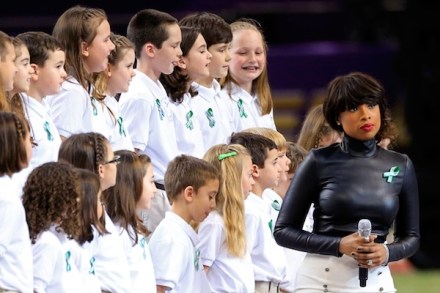
Last night’s Super Bowl advertising gives an interesting insight into the ongoing gun debate following the Newtown shooting in December. Super Bowl adverts have become a phenomenon in their own right, generating as much interest and discussion as the game itself – with a 30-second slot during yesterday’s game costing up to $4 million. At that price most advertising slots are only bought by large multinationals. Yet, a campaign group called ‘Mayors Against Illegal Guns’ took the opportunity to make the case for tightening background checks on gun owners.

Morsi uses emergency laws he once decried as dictatorial

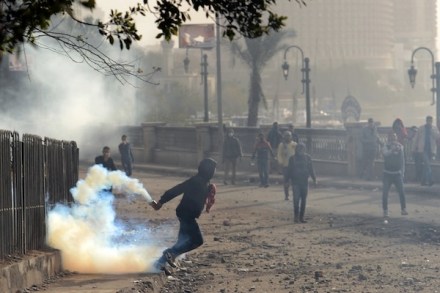
The emergency law has returned to Egypt less than two years after Hosni Mubarak was ousted from power, when Mohammed Morsi reintroduced it to curb unrest which claimed 33 lives over the weekend. It is a remarkable move given that the law epitomised much of what was wrong with Mubarak’s administration and fuelled the anger against him. Provisions in the law allow police to detain suspects indefinitely, often with little evidence; subvert constitutional rights; and curb press freedoms. Mubarak used these laws throughout his thirty year rule. The Muslim Brotherhood is sensitive to accusations of authoritarianism despite Morsi frequently revealing his proclivity for repression.

Jordan risks unrest with subsidy cuts

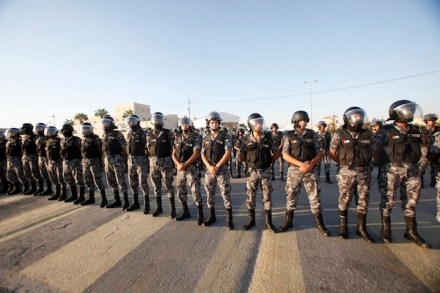
Keep an eye on Jordan next week where King Abdullah is set to announce further subsidy cuts to water and electricity to ease the country’s economic crisis. The last time he was forced to cut subsidies was in November, prompting widespread protests across the country. It is likely similar unrest will follow if he now announces cuts on water and electricity subsidies. For the region’s monarchies, this is particularly unsettling. So far they’ve managed to avoid much of the turbulence that swept away regimes in North Africa. If unrest against Abdullah intensifies, don’t expect the Gulf’s monarchs to be shielded from popular protest for much longer.

Mali could be the gamble that defines Hollande’s presidency

The crisis in Mali is yet another unintended consequence of the Arab Spring. Specifically, they are a result of the revolution in Libya, where Tuareg rebels who supported Gaddafi were forced to flee after his downfall. Heavily armed and regrouping in Mali, they created the National Movement for the Liberation of Azawad (MNLA) which effectively ended the government’s control over the north. Jihadist groups aligned with al-Qaeda then swooped in and established a semi-autonomous Islamic state in the north. As they pushed south it looked as if they might capture all of Mali, prompting interim President Dioncounda Traore to ask for French assistance. Francois Hollande responded by launching Operation Serval with overwhelming public support both at home and abroad.

International silence on suspected chemical weapons will embolden Assad

Foreign Policy magazine published a remarkable story last night revealing that American diplomats have concluded that Bashar al-Assad probably used chemical weapons against his own people last month. After speaking with activists on the ground, doctors, and key military defectors who previously played a role in the country’s WMD programme, one official concluded: ‘We can't definitely say 100 percent, but Syrian contacts made a compelling case that Agent 15 was used in Homs on Dec. 23.’ (Activists uploaded this graphic video showing the effects on its victims). This would chime with other intelligence the Obama administration is receiving, particularly from Assad’s former spokesman Jihad Makdissi who defected last month and is now in America.

The changing high street

I’ll confess to receiving the news of HMV going into administration with a heavy heart. Along with Woolworths, JJB Sports, Clinton Cards, Game, and Borders, it’s clear that most of the shops from my childhood are disappearing from the High Street. Some of these structural changes have been caused by the economic downturn and benign changes in consumer habits, but the more enduring factor remains the ascendency of the internet. The Centre for Retail Research estimates that online sales accounted for 13.2 per cent of all retail sales last year. That’s an increase of 14 per cent on the previous year, and the highest figure for any European country.

The aid group brokering the Syria prisoner exchange

There’s an interesting subplot to yesterday’s prisoner exchange in Syria which has not received as much attention as it should. While government and rebel forces were busy swapping captives (more than 2,000 in total), little has been made of the role played by aid group IHH in brokering the deal. The group came to prominence during the Gaza flotilla in 2010 when its members became involved in a deadly confrontation with the Israeli army after refusing to cooperate with the coastguard. The IHH has since dismissed accusations of being linked to jihadist groups and insists its aims are purely humanitarian. Its role in the Syrian prisoner exchange belies these claims.

The need for self-assured American power has never been greater

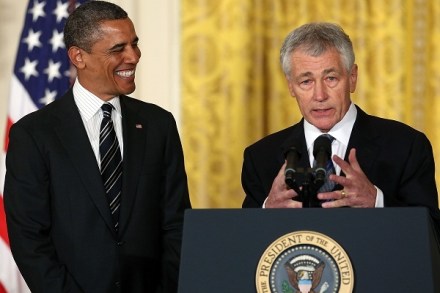
The Europeanisation of American politics continues apace with President Obama’s nomination of Chuck Hagel as Secretary of Defence. Known for his dovish views on Iran, his opposition to the war in Iraq, and scepticism of America’s relationship with Israel, Hagel’s nomination is a contentious one. Obama’s first term cabinet was a diverse one, with the reappointment of several Bush administration officials including Ben Bernanke as Chairman of the Federal Reserve, and Robert Gates as Defence Secretary. It is hard to think of two more sensitive positions for an incoming president given the challenges America faces at home and abroad.

What can the Pakistani government do about drones?

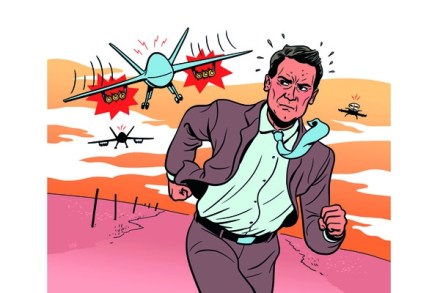
The dilemma over drones continues today with the announcement that a leading Taliban figure, Mullah Nazir, was killed earlier this morning. Public opinion in Pakistan is deeply hostile to such attacks even when militants are killed because of the perceived cost to civilians. Scores have been incorrectly identified as hostile jihadists and targeted as a result. Pakistan’s government has long adopted a dual-hatted approach. Officially it protests all drone strikes while privately sanctioning them. That now appears to be changing and the Foreign Ministry is now more committed than ever to stopping drones in Pakistan. Part of the pressure is explained by upcoming elections, with drones becoming a key electoral issue.

New terrorism control measures under the spotlight

It has not been a very happy start to the new year for Theresa May, who will have to answer difficult questions in the Commons about the disappearance of a terrorism suspect. Ibrahim Magog has been on the run since Christmas eve when police first realised he had failed to meet the conditions of his overnight residence requirements. Magog has been under investigation for two years and is believed to have trained with al-Shabaab, a Somali terrorist group linked to al-Qaeda. The group has waged a violent campaign in East Africa and has long threatened attacks against the West (although none have actually materialised).