Shiraz Maher

‘One Pound Fish’ singer deported

Everything you need to know about the fallen state of our political and cultural capital is captured by the story of Muhammad Nazir. A Pakistani immigrant who came here to study at a now defunct college, he took part-time work in Queen’s Market, East London, and was filmed singing a bizarre yet inexplicably catchy song about ‘One Pound Fish.’ Nazir’s innocence, rubbery grin, and fluvial Bollywood cadences made the experience all the more endearing. The video went viral; Nazir went on X Factor; and he was signed by Atlantic Records. Nazir eventually ranked 29th in the Christmas charts, a formidable accomplishment considering he was just five spots behind the chicly grace of Adele.

How Obama united Syria’s rebel groups

How soon the revolutionaries forget. You only need a sketchy knowledge of what happens to the pigs in Animal Farm to appreciate how easily revolutions are deflected from their original course. A recent – and rare – show of unity by disparate Syrian rebel groups suggests this is happening in Syria, too. Throughout the 20 month uprising President Obama has watched and wavered with almost blithe indifference (save for the occasional condemnation) as Bashar al-Assad has killed more than 50,000 of his own people. This changed last week when the White House finally intervened. In its most decisive pronouncement on the conflict to date, the jihadist group known as Jabhat al-Nusrah (which has ties to al-Qaeda) was proscribed.

A long road ahead for equal rights in Saudi Arabia

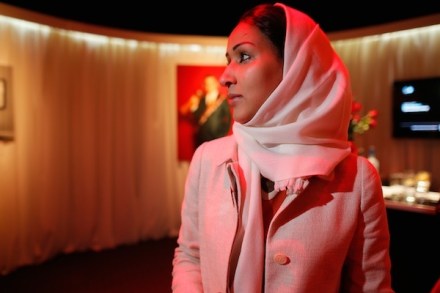
Great news for Manal al-Sharif, the Saudi activist who rose to prominence after footage of her driving on the Kingdom’s roads went viral on YouTube last year. She was arrested, of course, and spent time in jail for defying the authorities, but a small and committed campaign emerged nonetheless. Their tactics were simple: Sharif and her cohorts repeatedly applied to the General Directorate of Traffic for a driving licence, only to be refused on each occasion. That seemed to change yesterday when a euphoric Sharif tweeted a picture of her new driving licence. The only downside is that it was issued by the United Arab Emirates. Saudi women still face a long road ahead in their quest for equal rights.

What can the international community do to stop Assad using chemical weapons?

Bashar al-Assad is busy writing his suicide note, ordering military officials to prepare the country’s chemical weapons for use. That’s the assessment of Pentagon officials overnight who have detected a flurry of activity at two facilities where these weapons are known to be stored – in al-Safir, on the outskirts of Aleppo; and Furqlus, about 30 miles from the already destroyed city of Homs. The precursor chemicals for Sarin nerve gas, an extremely lethal toxin, have now been loaded into bombs that can be delivered by Syrian aircraft. Sarin was deployed most notoriously by Saddam Hussein who used it to crush a Kurdish uprising in 1988 during the Halabja massacre. More than 5,000 people were killed by a single missile.

Mursi has divided Egypt in two with his authoritarianism

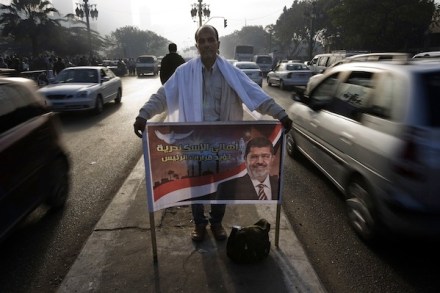
The thing about Islamists is that they just can’t help themselves. Mohammed Mursi’s stock was riding high in certain quarters shortly after he slapped down Hamas in Gaza and avoided a full-scale confrontation with Israel. Foreign policy panjandrums in London and Washington who tout fashionable theories of a ‘moderate Muslim Brotherhood’ felt vindicated in their convictions, arguing the group is really just an Arab version of European Christian Democrats. Yet so attracted is the Brotherhood to the clarion call of reaction that after the ceasefire, Mursi instantly seized the moment to reveal his proclivity for authoritarianism.

Could a major escalation in the Syrian conflict be imminent?

In the last 12 hours all mobile and internet lines have been cut in Syria, plunging the country into a communications vacuum. The regime has been badly hit in recent days. Almost all of its supply lines into Aleppo have been cut off and a number of strategic military bases were overrun in recent days. Heavy fighting also resulted in Damascus airport closing down earlier today, suggesting the rebels are enjoying a degree of momentum at the moment. For its part, the Assad regime is saying the rebels are responsible for the communications blackout. That might be so, but if true, it reveals just how far Assad’s grip on power has been weakened.

Few would shed tears if Britain barred Anjem Choudary from returning

Britain’s best known Islamist, Anjem Choudary, is planning to hold a conference in Pakistan on Friday where, among other things, he will issue a fatwa on Malala Yousafzai. She is the schoolgirl from Pakistan’s Taliban-controlled tribal areas who was shot in the head for defying the terrorist group by demanding an education. Yousafzai survived the attempted assassination and was later flow to Birmingham for specialist medical treatment (the bill is being picked up by the Pakistani government). Choudary plans to hold his conference – 'Shariah for Pakistan' – at the Red Mosque in Islamabad which was the scene of a notorious standoff in 2007.

Operation Pillar of Defence leads Israel to strategic failure

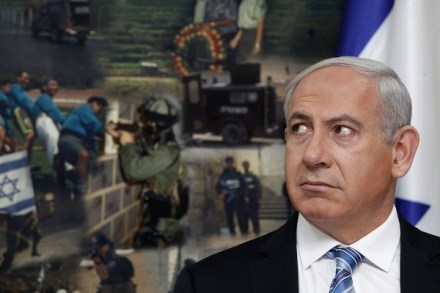
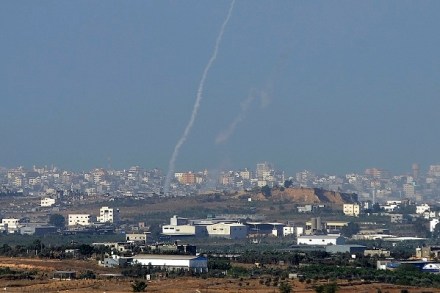
Last night’s ceasefire is a strategic failure for Israel. While the end of military action must be welcomed, it is hard to see what Netanyahu has achieved beyond the killing of Ahmed Jabari. Despite a week of tit-for-tat missile fire, Israel secured none of its strategic objectives. In fact, in many cases it actually strengthened Hamas and diminished Israel’s security. Here’s some of the ways in which Israel has been weakened by Operation Pillar of Defence: 1) Hamas was able to break the psychological barrier of attacking Tel Aviv. No one has fired missiles at the city since 1991 when Saddam Hussein tried to undermine coalition forces in Operation Desert Storm.

The Gazan conflict poses a dilemma for Mohammed Morsi

As tensions between Israel and Gaza continue to flare, the real story is what’s happening in Cairo. The conflict represents an acute crisis for the Muslim Brotherhood, which knows the West has long been apprehensive about how it would conduct itself with regards to Israel. So far, the Brotherhood has been in no rush to give a definitive answer, offering instead a mix of sabre-rattling and olive branches. Its hand is now being forced. Internally, the Brotherhood is divided over the Gaza conflict. Hard liners see this as an excuse to tear up the peace treaty, reassert Egyptian pride, and impose themselves on the conflict.

Jordanians protest against King Abdullah

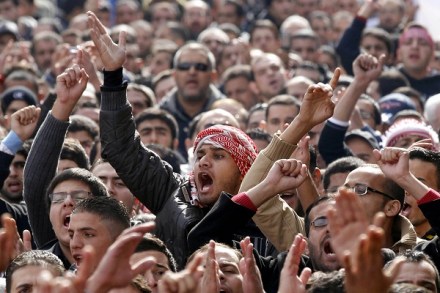
Large protests have gripped parts of the Jordanian capital, Amman, today in a country where criticism of the king is punishable by three years in prison. King Abdullah has been careful not to repeat the errors of Bashar al-Assad’s authoritarian crackdown which quickly escalated matters in neighbouring Syria. So far, Jordanian police have adopted a passive approach to protesters. Abdullah will be hoping the momentum behind these protests subsides over the coming days. He can still take some relief from the fact these protests have been caused by a hike in fuel prices. This is the vital difference here. The popular uprisings which swept away regimes in Tunisia, Libya and Egypt were principally about corruption and the lack accountability. Abdullah is not yet facing similar criticisms.

The Petraeus and Allen business raises questions about US defence

Leaving aside the moral implications of the scandal which caused General Petraeus to resign as head of the CIA, this is an issue which demands serious attention from the American defence establishment. We know that Petraeus’ alleged mistress Paula Broadwell is said to have accessed his emails, and that she sent threatening emails to another lady, Jill Kelly, who she believed was getting too close to the General. Now it also transpires that General John Allen has been sending between 20,000 and 30,000 pages of ‘inappropriate emails’ to Kelly. The emails are said to have been sent from 2010-2012 which, even using the lowest figure amounts to something like 27 emails a day.

Can Hamas contain Gaza’s other terrorist groups?

One of the things to watch for as tensions escalate between Gaza and Israel is the extent to which Ismail Haniyeh’s authority is eroded within the Strip. Hamas is clearly responsible for launching a number of missiles into southern Israel, yet it does not have a monopoly on the violence. Salafi-Jihadist groups such as Jund Ansar Allah and Tawhid wal-Jihad also operate in the region and are acting unilaterally when it comes to attacking Israel. Haniyeh failed to broker a deal between the various factions earlier this week, once it was clear that Israel would no longer tolerate rocket attacks. All this reveals the limits of any political pressure which might be brought to bear on Gaza’s administration.

Abu Qatada walks free at our expense

Just last month I wrote about the inverted priorities of our judiciary and police who busy themselves with the arrest of individuals for things posted on social networking sites. Earlier today police bailed a 19 year old man after he was arrested for posting a video of a burning poppy on Facebook. The video was allegedly accompanied by a statement which read: ‘How about that you squadey c****.’ The sentiment is undoubtedly crass and offensive, but I suspect few would support his prosecution for offences under the Malicious Communications Act 1988. In itself this is a remarkable indication of just how inverted the police’s priorities have become. Yet, he is not the only suspect to be bailed today.

Obama’s top foreign policy concerns for his second term

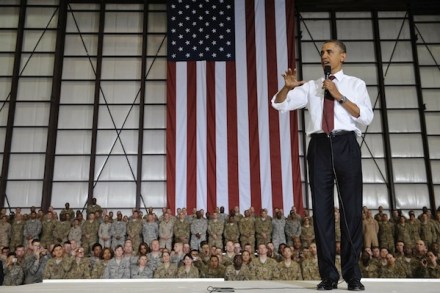
With Barack Obama being returned to the White House, it’s worth considering what his key foreign policy challenges will be during the second term. I’ve outlined a few areas I think will dominate his thinking over the next four years. 1. Afghanistan and Pakistan Obama has committed to withdrawing American forces from Afghanistan by the end of 2014. This will be a far from smooth transition. As the number of US forces declines, expect to see a resurgence of the Taliban, greater instability across the country, and the accelerated erosion of Hamid Karzai’s authority.

David Cameron is out to warn of the nuclear threat from Iran

David Cameron is using his Middle East tour to remind Gulf States about the tremendous threat Iran’s nuclear ambitions pose to the region. This was something he touched on yesterday in Abu Dhabi during a questions and answers session with students, but expect it to form a very substantial part of his discussions with the Saudis today. After the Israelis, no one is more perturbed by the idea of Iranian nuclear arsenal than Saudi Arabia. The House of Saud worries about Iranian influence expanding into the Gulf and is unlikely to watch such a development with passivity. Rather than develop their own, the Saudis will simply buy one from Pakistan sparking a nuclear arms race in the region. Qatar and Egypt will quickly develop their own programmes.

Muslims and the Republican vote

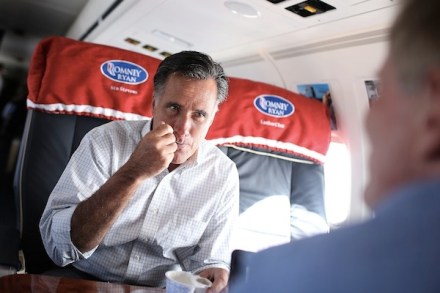
Will American Muslims swing the US Presidential election? It seems highly unlikely, if not improbable, but that’s the line being pushed by the Council on American-Islamic Relations, a not uncontroversial lobby group with ties to the Muslim Brotherhood. A poll released by the group last week found that 68 per cent of American Muslims intend to vote for Obama. By contrast, only 7 per cent are committed to voting for Romney in next week’s election. That represents more than treble the number who voted for McCain in 2008 (when just 2.2 per cent of Muslims voted Republican) while the Democrat share of Muslim votes is down from just under 90 per cent in 2008.

Ahmadinejad vs Iranian judiciary

Trouble continues to brew inside Iran. The ordinarily supine Attorney-General, Gholam Hossein Mohseni Ejehi, has defied Mahmoud Ahmadinejad by preventing him from visiting an imprisoned aide. Ahmadinejad is viewed as having acted against the country’s powerful clerical establishment, with whom Ejehi is closely aligned. Indeed, Ahmadinejad’s aide is currently being detained over charges of publishing material which ‘offends’ Islamic norms. He is just one of a dozen political allies close to Ahmadinejad to have found themselves arrested as relations between the political and clerical authorities become increasingly strained. Meanwhile, Ahmadinejad continues to bluster about ‘external enemies’.

Why Prince Charles’ letters should not be published

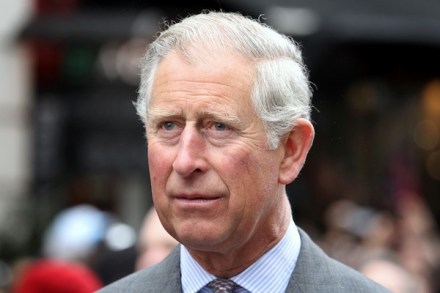
Much is being made of Dominic Grieve’s decision to ban publication of Prince Charles’ correspondence with ministers. Republic, a group which campaigns for the abolition of the monarchy, has been pressing for their release through freedom of information requests over the last seven years. Having successfully convinced three judges of the public interest in seeing the Prince of Wales’ letters, Grieve has taken the unusual step of vetoing their decision. Almost two years ago the CIA tipped off their counterparts in MI5 and MI6 that al-Qaeda was planning a ‘Mumbai style’ terrorist attack in the UK.

Gary McKinnon case: campaigners accuse Theresa May of double standards

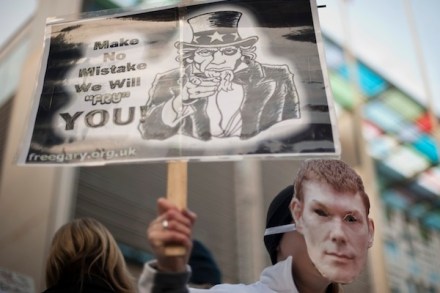
The Home Secretary blocked the extradition of Gary McKinnon to the United States earlier today, arguing that it would infringe his human rights because he has Asperger’s Syndrome. Moreover, Theresa May has said she will introduce a forum bar which means that judges can block extradition in cases where the alleged offence is deemed to have been committed in the UK. The Crown Prosecution Service has already been instructed to draw up guidance relating to this. This is a significant victory for campaigners against Britain’s lopsided extradition treaty with the United States but many are also questioning its timing. Babar Ahmad and Talha Ahsan were deported to the United States to face terrorism charges two weeks ago. The parallels with the McKinnon case are uncanny.

Britain’s illiberal state

It can seem surreal, almost otherworldly, to read about our judiciary these days. Just a few days ago my colleague Douglas Murray wrote about the peculiarity of imposing a custodial sentence on Matthew Woods for posting bad-taste jokes on Facebook about the abduction of April Jones. As if to confirm that the Bar is indeed trading in absurdities, another court has now sentenced Barry Thew to eight months in prison (four of which relate to a bail offence) for wearing a t-shirt on which he scrawled the crude message: ‘One less pig; perfect justice’ and ‘killacopforfun.com haha.’ It should be obvious that one need not laugh at the jokes of Mr Woods or support the sentiments expressed by Mr Thew to recoil at their treatment by the state.