Shiraz Maher

Saudi Arabia is the early victor of the Arab Spring

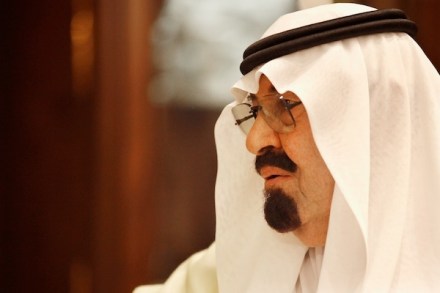
King Abdullah opened an emergency session of the Organisation of Islamic Cooperation in Saudi Arabia today to address ongoing instability in the Middle East. Syria is high on their list of priorities, with other member states already voting to suspend its membership of the OIC until Bashar al-Assad gives up power. The OIC is a famously ineffectual institution but there is significant posturing taking place behind the scenes. Saudi Arabia had only hosted the OIC once since its inception in 1969 until King Abdullah took power in 2005. Since then, at his request, it has hosted it a further two times. This chimes with Abdullah’s plans to project himself as the region’s leading statesman, particularly now that all his competitor grotesques are gone.
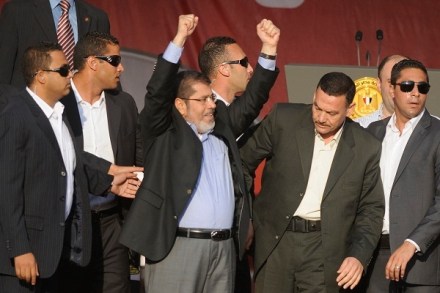
Mursi shores up his powers

The confrontation between military brass and Muslim Brotherhood in Egypt came much sooner than expected. Mohammed Mursi has effectively sacked the head of the armed forces, Field Marshal Mohamad Hussein Tantawi, and Chief of Staff Sami Annan, in the hope of asserting his authority. Relations between the army and president have been strained for months because the Supreme Council of the Armed Forces enacted a number of measures to preserve their influence over Egyptian politics. Tantawi ensured, for example, that the SCAF had control over the drafting of Egypt’s new constitution and also appointed himself as Minister of Defence. This was widely seen as a pre-emptive move to guard against an Islamist takeover. Mursi has outmanoeuvred the army on all this.

How William Hague changed the Foreign Office

There is a quiet revolution taking place at the Foreign Office under William Hague’s stewardship. This morning’s headlines focus on the announcement of 'greatly increased' support for Syrian rebels including £5 million 'of non-lethal practical assistance' for the Free Syrian Army. In straightforward terms this means communications equipment, medical supplies, and body armour. Critics have understandable concerns. Who is the Free Syrian Army? What do they want? Will sectarian bloodshed follow the fall of Assad? Lessons from the Afghan-Soviet war counsel against the promiscuous embrace of rebels whose immediate aims appear to chime with ours. This is the challenge facing Whitehall mandarins.

Memoir of an Islamist

It was a surreal experience to meet Maajid Nawaz for the first time. I had known of him for years and admired his bombast. He was a hero — not just my hero — but a hero to hundreds of young Islamist radicals. 'Woah, this is the brother in Egypt, isn’t it?' said an erstwhile comrade, listening to a cassette in my badly beaten Peugeot 106 as we drove through Bradford. That brother was Nawaz and it explained why neither of us had met him at that time. In late 2001 Nawaz had travelled to Egypt to learn Arabic as part of an undergraduate degree at SOAS but was now being detained in one of Mubarak’s notoriously brutal political prisons.

What multiculturalism really means

Proponents of multiculturalism are crowing after golden Saturday when Team GB won a slew of Olympic medals. Somali Muslim immigrant Mo Farah and mixed race Jessica Ennis were among those securing gold. 'Today intolerant right-wingers question the motives of non-indigenous sportspeople and are furious they have been chosen to represent the UK,' Yasmin Alibhai-Brown wrote in the Independent. This is disingenuous. A packed Olympic stadium has stood and cheered for everyone in Team GB. The Times and Sun both carried articles on how our Olympic achievements reveal the success of a diverse and progressive nation. Alibhai-Brown epitomises how many on the left perennially misunderstand the debate around multiculturalism.

The rot at the heart of the Syrian administration

There have been many tipping points in the Syrian revolution, and this morning we were provided with another. The newly appointed Prime Minister, Riyad Hijab, once considered a staunch Baath party loyalist, announced his defection to the opposition. He had only been in the post for two months. Working at the heart of President Bashar al-Assad’s government, Hijab is the most senior official to have defected. There are unconfirmed reports that a further three ministers are trying to defect, but are being stopped by the intelligence services. Activists from the beleaguered city of Homs have said that the Finance Minister, Mohamed Jalilati, was arrested as he tried to leave the country, although state TV has denied the claims.

What the government should do to tackle honour violence and forced marriages

It has taken the police nine years to secure convictions for murder against the parents of 17 year old Shafilea Ahmed. Murdered by her parents in an honour killing, they spun a web of lies to conceal the true circumstances of her death for years. A wall of silence surrounded the case until 2007 when police finally made a breakthrough, and charged the parents. Cases like Shafilea's occasionally capture the public attention and then recede from popular consciousness, but what can authorities do to end honour based violence and forced marriages? There was a distinct lack of political will under the last Labour government to tackle this problem.

Annan’s resignation suggests a military resolution to Syrian conflict

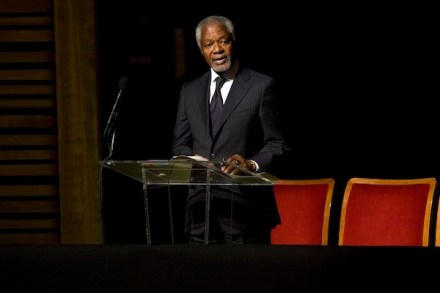
This is the end of diplomacy in Syria. Kofi Annan announced yesterday that he will step down as international peace envoy for Syria at the end of this month, highlighting the impotence of United Nations efforts in the country. This effectively closes the main diplomatic avenue by which Western powers have been able to raise their concerns with the regime, signalling the success of Russian and Chinese obstructionism. Since Annan embarked on his mission in February, Russia and China have used their veto powers in the UN Security Council on three separate occasions to thwart draft proposals put forward by Western and Arab governments to pressure the Assad regime.

The revival of Prince Bandar bin Sultan

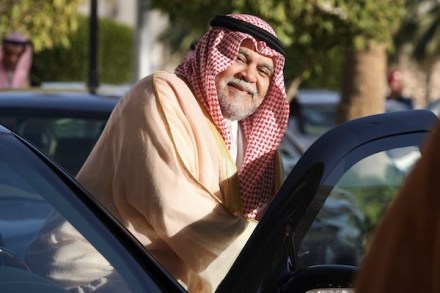
Keep an eye on Saudi Arabia’s newly appointed spymaster, Prince Bandar bin Sultan. After a long stint in Washington where he served as ambassador for 22 years, the prince was recalled to Riyadh in 2005 and then largely sank from public view. Reinstated to frontline politics last month, both King Abdullah and Barak Obama are investing their hopes in Prince Bandar to achieve mutual Saudi-American interests in response to ongoing unrest in the Middle East. Known for his flamboyant and maverick approach to politics, he has a unique opportunity to secure the vital interests of Saudi and its western allies. Perhaps Saudi Arabia’s most skilled political operator, Bandar has a reputation for getting things done.

Romney’s foreign tour isn’t derailing his campaign

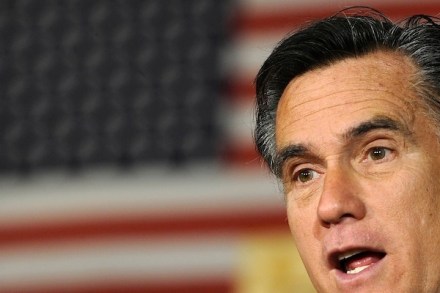
Mitt Romney arrives in Poland today on the third and final leg of a foreign tour that has already taken him to London and Israel. While he may not have the obvious charm of Obama, predictions of his campaign being derailed by this foreign tour misunderstand Romney’s strategy. Foreign pundits are perennially guilty of ascribing too much importance to the foreign trips of prospective presidential candidates from the United States. When Obama visited Europe, the Middle East, and Afghanistan in the run up to the 2008 election – to mostly fawning press coverage – he only enjoyed a short-lived boost in the polls over his Republican candidate. His lead grew to nine points and then dropped to just one within days.

Remembering the Munich victims

As with all bureaucracies of its size and aloof detachment, the International Olympic Committee is blithely indifferent to the very principles it claims to uphold. Its charter proclaims that 'any form of discrimination with regard to a country or a person on grounds of race, religion, politics, gender or otherwise is incompatible with belonging to the Olympic Movement'. It was precisely that discrimination – of country, race, religion, and politics – that inspired the worst atrocity the Olympic Games has ever seen. During the 1972 games in Munich, the Black September terrorist group took eleven members of the Israeli Olympic team hostage and killed them.

Talk of an imminent victory in Syria is overstated

Revolutions don’t succeed until the capital starts wavering. Bashar al-Assad knows this and has, so far, managed to assert his authority over Damascus and Syria’s second city, Aleppo. That much was true until earlier this week when rebels launched a massive assault on both cities, coinciding with the start of the Muslim holy month of Ramadan. Buoyed by a suicide bombing which killed four members of Assad’s inner circle last week, we are now into the heaviest period of fighting inside Syria’s main cities. Assad has managed to maintain some calm in Damascus, but parts of Aleppo have now fallen into rebel control. Khaled Habous, head of the Damascus military council of the Free Syrian Army, struck a bullish tone about the FSA's prospects in a recent interview.

Tony Blair’s legacy on tackling extremism

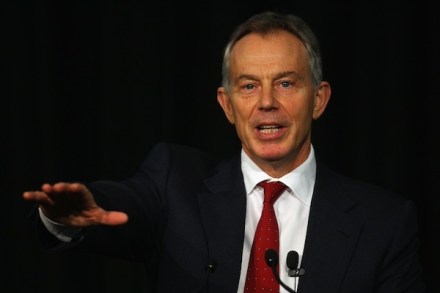
It may be unpopular to say, but there is reason to be charitable to Tony Blair and his latest warnings about Islamist extremism. The former Prime Minister gave afascinating interview to Charles Moore in yesterday’s Telegraph where, inter alia, he talks about the challenge of militant Islam. 'The West is asleep on this issue,' he tells Moore. Blair has been more vocal and unequivocal on the issue than almost any other politician in recent years. He notes that the success of his Africa Governance Initiative faces 'this threat above all others'. Failed states in the Horn of Africa have accentuated this, while one of the unintended consequences of the Libyan revolution has been to strengthen Islamist militants in northern Mali – an area the size of France.

An arms race in the Middle East is a real possibility

The war with Iran has already been raging for many months. So far, Western powers have largely confined themselves to covert operations designed to thwart Tehran’s nuclear aspirations. However, the bombing of a bus carrying Israeli tourists in Bulgaria on Wednesday marks a dramatic escalation in hostilities. In the past, western intelligence agencies have assassinated and kidnapped Iranian nuclear scientists, at one stage picking off a different target every few months. Not only did this hinder Iran’s quest for nuclear weapons, but it was also deeply embarrassing to the regime because of the sophistication with which attacks were being conducted right under its nose.

Clinton’s Cairo visit reveals limits of US influence

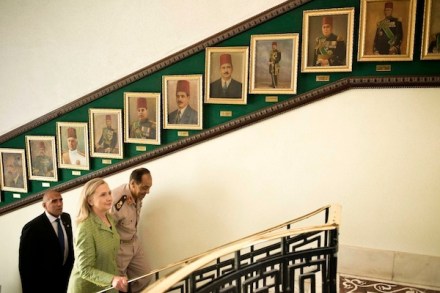
Hillary Clinton is holding talks in Israel today after a turbulent weekend in Egypt, ending a diplomatically fraught trip with little obvious benefit. Officially, Clinton was there to open the American consulate in Alexandria after it closed in 1993 due to budget cutbacks, but the subtext was to manage the conflicting aspects of America’s strategic interests in the country. Clinton met with Mohammed Mursi, a member of the Muslim Brotherhood who is now Egypt’s new President, assuring him of the ‘full authority’ of his office. This was a subtle endorsement at a time when Mursi finds himself locked in tug-of-war with the Supreme Council of the Armed Forces for power. The latter has so far prevented him from forming a civilian government or convening parliament.

Declaring a civil war in Syria could inspire more to turn from Assad

It’s hard to know how the conflict in Syria could be classed as anything other than a civil war. Yesterday, the International Committee of the Red Cross finally agreed and branded it such. Their announcement follows the Tremseh massacre last week and some of the heaviest fighting in Damascus since the conflict began – a development invested with huge significance because of the premium Assad has placed on maintaining calm in the capital. It all reflects the gains being made by the Free Syrian Army. So far, the Red Cross has only regarded Homs, Hama, and Idlib as active war zones but this overlooks gains being made by the FSA elsewhere.

Romney’s risky campaign focus

There’s a belief among the strategists surrounding Mitt Romney that his campaign should focus almost exclusively on the state of America’s economy. It’s an obvious battleground with unemployment figures hovering around 8 per cent, a sorely depressed manufacturing sector, and soaring petrol price. Sacrificed to this belief are a broader spectrum of policies. Throughout his entire campaign, for example, Romney has given just one major foreign policy speech. The single-issue approach adopted by Romney’s team – essentially turning the election into a referendum on Obama’s handling of the economy – is a risky strategy, and one the campaign is not playing as best it could.

Resolving the conflict in Syria is in Britain’s national interest

There was an air of inevitability about yesterday’s massacre in the Syrian village of Tremseh which left 200 civilians dead. Observers of the Syrian uprising could foretell this grim event after Bashar al-Assad suffered two significant diplomatic setbacks over the last week. First, one of Assad’s closest friends and the highest ranking Sunni member of his government, General Manaf Tlass, fled to Turkey last week. News of his defection roared through Damascus. He was followed by Nawaf al-Fares, a senior member of the Baath party and accomplished diplomat who has served both Assad père and fils, who announced his defection on Wednesday. The Tremseh massacre follows a similar incident in Houla just seven weeks ago.

Pakistan and the Higgs Boson

Have you heard about Pakistan’s contribution to last week’s discovery of the Higgs Boson? No, thought not. Remarkably, the reason you probably won’t have is because Pakistan doesn’t want you to. Dr Abdus Salam, a theoretical physicist, carried out pioneering work in the 1960s to suggest the existence of a hypothetical particle after creating a grand unification theory for weak forces and electromagnetic fields. He won the Nobel Prize in 1979 for his efforts, the only Pakistani to have ever received the honour. Yet, his name is largely airbrushed from textbooks in Pakistan and is rarely mentioned in public debate.

Has the Arab Spring given way to an Islamist Winter?

The obituary of the Arab Spring has already been written by many commentators who see political Islamists as the only winners of unrest in the Middle East. The Arab Spring, it is said, has given way to an Islamist winter. With the Brotherhood installed in Egypt and Islamists from the Ennahda party driving through their agenda in Tunisia, this is a tempting conclusion to reach. Yet, provisional results from the Libyan elections warrant a reassessment of what is really taking place in the region. Mahmoud Jibril, who served as Prime Minister in the aftermath of Gaddafi’s demise, will almost certainly secure a majority once the results are finalised later this week.