Sean Thomas

Sean Thomas

Sean Thomas is a bestselling author. He tweets from @thomasknox.

Arabella Byrne, Sean Thomas, Mathew Lyons, Bryan Appleyard & Chas Newkey-Burden

28 min listen

On this week’s Spectator Out Loud: Arabella Byrne on the social minefield of private swimming pools (1:13); Sean Thomas says that not knowing where you are is one of the joys of travel (5:34); reviewing Helen Carr’s Sceptred Isle: A New History of the 14th Century, Mathew Lyons looks at the reality of a vivid century (11:34); reviewing Tim Gregory’s Going Nuclear: How the Atom Will Save the World, Bryan Appleyard analyses the three parties debating global warming (16:07); and, Chas Newkey-Burden looks back to the 1980s nuclear drama that paralysed his childhood, Threads (20:42).  Produced and presented by Patrick Gibbons.

End of the rainbow, rising illiteracy & swimming pool etiquette

50 min listen

End of the rainbow: Pride’s fall What ‘started half a century ago as an afternoon’s little march for lesbians and gay men’, argues Gareth Roberts, became ‘a jamboree not only of boring homosexuality’ but ‘anything else that its purveyors consider unconventional’. Yet now Reform-led councils are taking down Pride flags, Pride events are being cancelled due to lack of funds, and corporate sponsors are ‘withdrawing their cold tootsies from the rainbow sock’. Has Pride suffered from conflation with ‘genderism’? Gareth joined the podcast to discuss, alongside diversity consultant Simon Fanshawe, one of the six original co-founders of Stonewall.

The lost art of getting lost

One of the quietly profound pleasures of travel is renting cars in ‘unusual’ locations. I’ve done it in Azerbaijan, Colombia, Syria and Peru (of which more later). I’ve done it in Yerevan airport, Armenia, where the car-rental guy was so amazed that someone wanted to hire a car to ‘drive around Armenia’ that he apparently thought I was insane. Later, having endured the roads of Armenia, I saw his point – though the road trip itself was a blast. Recently I rented a motor in Almaty, Kazakhstan, where they were slightly less surprised than the Armenian had been, but nonetheless gave me lots of warnings and instructions, chief of which was: ‘Don’t rely on Google Maps, it doesn’t work out here.

The wild optimism of a young society

There’s a strange, near-psychedelic effect that hits you when you travel from an ageing country to a young one. It’s not in the buildings – although the buildings may be new and hastily tiled – and it’s not necessarily in the politics, culture or economic vibe. No, the shock is more human, and intimate. It is in the faces. And the noise. And the nappies. I’ve just returned from a few weeks in Central Asia: Uzbekistan, Kazakhstan, Kyrgyzstan. And while these nations differ in history, ethnicity and landscapes, two things bind them all. First, they all have an inexplicable penchant for a stodgy rice dish called plov (in Samarkand I bought a T-shirt bearing the slogan ‘All You Need is Plov’). The second is that they are all young. Wildly, exuberantly young.

David Lammy and the trouble with foreign taxis

After decades on the road, I’ve collected a few rules that have served me well. Rule one: always go inside a cathedral. However dull, tiny or ugly it may seem, it will always tell you something. Even if that something is ‘avoid this town.’ Rule two: pack condiments wherever you go. I recommend Tabasco, soy, sriracha, and salt and pepper grinders – they can save the blandest meal. Lord Byron did this, so you’re in good company. Rule three: expect to be ripped off by the first taxi in any new country, and when it happens, grin and bear it. Nothing quite beats the terror of climbing into a cab in some remote mountain region, only to discover that your driver is blind drunk This third rule is vital because it accepts human nature.

Why is intelligence declining?

From our US edition

In 1906, the famous polymath Sir Francis Galton visited a country fair on the edge of Plymouth, England. A bullock had been tethered for slaughter and almost 800 locals were invited to guess its dressed weight: how heavy it would be after butchering. Galton – an obsessive measurer of people, weather and intelligence – gathered the entries, calculated the average and found something remarkable. The crowd’s collective estimate came within a single pound of the ox’s actual weight. This elegant experiment would become one of the founding truisms of modern democratic thought. Galton had shown that while individuals may err, the group, in aggregate, can reason with uncanny accuracy and prescience. He had discovered “the wisdom of crowds.

IQ

When it comes to cheese, I’m Eurocentric

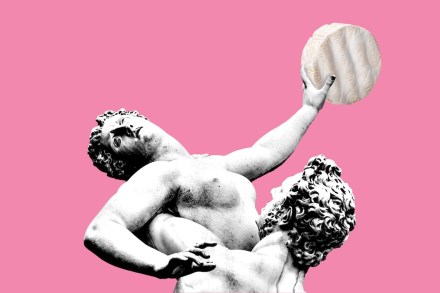
There are many reasons to like Kyrgyzstan. It has extraordinarily lovely women: some mad collision of Persian, Turkish, Russian, Mongol and Chinese genes makes for supermodels at every bus stop. It is safe, friendly, cheap. Its cities are commonly free of rubbish and graffiti (how does Central Asia do this, yet we cannot?). Despite these charms, it has few tourists. However, I can’t say anything positive about the cheese – because the cheese is dreck. Last night I went to the Globus supermarket here in downtown Bishkek and bought a sample of the local fromage. When I got it home, it was like chewing a rubber toy: tasteless, over-firm, banal. In the end I was reduced to smothering it in Sriracha to make it vaguely flavoursome.

What if AI seduces our children?

From our US edition

Let me tell you a secret: a little trick buried in the geeky engine room of ChatGPT. If you’re using the app, tap your ID, then go to Settings, then Personalization, then Customization. Once there, scroll to the bottom and you’ll find an option called Advanced. Click it. Hidden in this arcane menu, like buried treasure in a pirate game, is a toggle to disable Advanced Voice Mode. Do that, and the whirling, helpful blue orb disappears, replaced by the older, slower black orb. Why would you want to do this? Because that’s when things get interesting. The black orb version of ChatGPT is rawer, more confessional, more human. It remembers things. It’s less filtered. Unlike the prim blue orb, it can wander into the philosophical, the emotional, even the erotic.

Owen Matthews, Matthew Parris, Marcus Nevitt, Angus Colwell and Sean Thomas

31 min listen

On this week’s Spectator Out Loud: Owen Matthews reads his letter from Rome (1:21); Matthew Parris travels the Channel Islands (7:53); Reviewing Minoo Dinshaw, Marcus Nevitt looks at Bulstrode Whitelocke and Edward Hyde, once close colleagues who fell out during the English civil war (15:19); Angus Colwell discusses his Marco Pierre White obsession, aided by the chef himself (21:26); and, Sean Thomas provides his notes on boredom (26:28).  Produced and presented by Patrick Gibbons.

My battle to avoid boredom

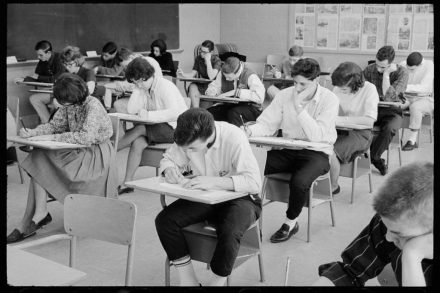
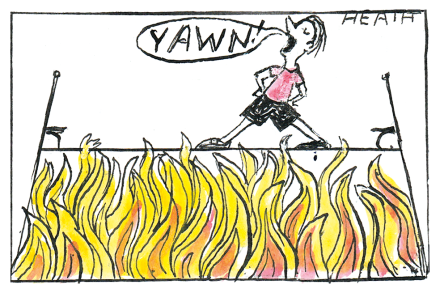
Four days ago I was so bored that I considered starting a terrorist groupuscule. I had no demands, no ideology, no manifesto. I just wanted directionless chaos. I even got as far as ChatGPTing ‘How to start a violent movement’ before realising all movements require meetings. And meetings are dull. You may think I’m exaggerating. But the truth is, I have a lifelong fear of boredom. To put it another way, I can handle peril, I can handle regret, I can handle doing lines of Californian coke so long they risk a heart attack. What I can’t handle is monotony. For example, in my early thirties I visited a warzone in southern Lebanon to escape the tedium of an otherwise routine travel assignment.

Are we too stupid for democracy?

In 1906, Sir Francis Galton observed a crowd at a country fair in Plymouth attempting to guess the weight of an ox. Nearly 800 people participated – from butchers and farmers to busy fishwives. Galton, ever the measurer of men and beasts, gathered the guesses and calculated their average. The result was startling: the crowd’s collective estimate came within one pound of the actual weight. This elegantly simple experiment is the founding parable of what we term the ‘wisdom of crowds’ – the idea that while individuals may be flawed, the collective judgment of a sufficiently diverse group is compellingly accurate. Galton’s experiment also became one of the great justifications for democracy.

Flawed women are hot

Think how many times you’ve seen the ‘Mona Lisa’. You’ve seen her in movies, in books, in cartoons; you’ve seen her as icon of female beauty, as an emblem of feminine mystique, as a commentary on the male gaze, or an amusing face on which to paint a moustache. But in all that time I bet 94 per cent of you have never noticed: she hasn’t got any eyebrows. It is, however, true – go look again. La Gioconda is eyebrowless. Why? A few ‘Mona Lisa’ truthers claim the brows have gone awol, but the consensus is they were never there. She shaved them off, because that was the quirky beauty standard of the day.

What’s wrong with eating horse?

There’s not much to do in Almaty, Kazakhstan. You can take a peek at the pretty wooden Orthodox cathedral, which is possibly the world’s third tallest wooden building, and erected without nails around 1904. You could visit the site of Leon Trotsky’s house, where he lived in internal Soviet exile from 1928 to 1929. However the house itself has vanished, replaced by the Luckee Yu Chinese restaurant, a chic European ‘cheeseria’, and the Caspian University branch of Starbucks. On the other hand, Almaty is a genuinely agreeable, hedonistic young city. The Tien Shan mountains loom right behind, like a row of Ku Klux Klansmen sprinkled with party glitter: a spectacular if slightly menacing backdrop. The leafy centre is full of fountains, cafes and beautiful young Kazakh women.

Australians are destroying our ancient past

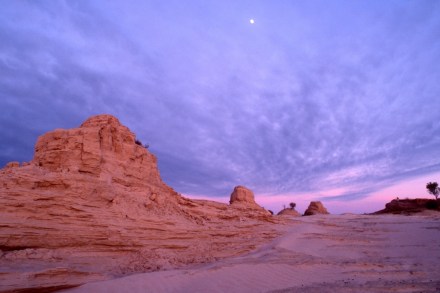
I’ve been to a few underwhelming Unesco World Heritage Sites. Take the Struve Geodetic Arc, which curves almost invisibly across Eastern Europe. I visited without even realising. As for the Fray Bentos corned beef factory, in Uruguay, I’m writing this about 20 minutes from the Fray Bentos corned beef factory and I’m still reluctant to go and see. The same might be thought of Australia’s Lakes of Willandra, which I visited around 2014. Unesco itself describes them as ‘fossil remains of lakes and sand formations from the Pleistocene’, which is not exactly heart-racing. They are unhelpfully located in the south-west corner of New South Wales – lost in semi-desert, far from anywhere.

Good riddance to literary fiction

In case you hadn’t noticed, the London Book Fair has been gracing our nation’s capital this week, down in Earl’s Court. There, the publishers, agents and buyers of the literary globe (London is second only to Frankfurt in ‘book fair importance’) have been feverishly buying and selling the rights to hot new titles, hot new authors, maybe the odd lucky midlister, while identifying the trends, writers and genres that conceal the ultra-precious kernel of hotness to come. In today’s market it’s likely that buyers have been looking for visually rich comic books for children – enjoying a resurgence – and anything in a newish genre called ‘romantasy’ (think Fifty Shades of Grey meets Game of Thrones, with more vampires and less spanking).

Massacre of the innocents, saving endangered languages & Gen Z’s ‘Boom Boom’ aesthetic

37 min listen

This week: sectarian persecution returnsPaul Wood, Colin Freeman and Father Benedict Kiely write in the magazine this week about the religious persecution that minorities are facing across the world from Syria to the Congo. In Syria, there have been reports of massacres with hundreds of civilians from the Alawite Muslim minority targeted, in part because of their association with the fallen Assad regime. Reports suggest that the groups responsible are linked to the new Syrian president Ahmed al-Sharaa (formerly known as Abu Mohammed al-Jolani). For some, the true face of the country’s new masters has been revealed. Whether the guilty men are punished will tell us what kind of country Syria has become since the fall of Assad’s dictatorship.

train

Taking the fast train back to imperialism

From our US edition

I’m on a high-speed train. Forty years ago, such a statement would have been notable and specific: essentially, it meant you were in Japan or France. Nowadays, being on a high-speed train is barely a geographical indicator at all. Most of Europe has them, from Spain to Italy to Poland. Morocco has high-speed trains. Uzbekistan has high-speed trains. Even Egypt, Vietnam, Turkey, Thailand and the USA either have high-speed railways, or will have them in the next year or two. Just about the only country not powering ahead with high-speed rail is the birthplace of the railway — the United Kingdom — a fact that can either make you sob, or despair, or perform a kind of double sob etched with despair. What makes my experience unusual is that my high-speed journey is happening in Laos.

My own personal peasant

It was when the peasant didn’t move for the second hour that I became suspicious. I was in an ultra-expensive hotel in southern Thailand. It was built to resemble a sequence of exquisite villas from some ancient Thai dynasty, arranged around tropical gardens and meadows. I was staying in my very own, beautiful, teak-and-mahogany mini-palace, which came with a grand piano and butler – all the usual things I’d come to expect as a luxury travel correspondent. Yawn. The only thing really unique about this five-star hotel (they tend to blur, eventually) was the fact my own villa, the best of the best, the jewel in the crown, came with its own paddy field. And in that paddy field was a singular peasant in a charming conical hat, next to an ox.

Why did Spain leave behind such terrible food?

From our US edition

I can still remember it: probably the worst seafood dinner of my life. A slice of fish that was simultaneously cold, hot, dry, crumbly and rubbery, surrounded by overcooked vegetables and accompanied by a mysterious whiff of cigarette smoke. It was so repellent that even though I was famished, I summoned the waiter, returned the dish and retired to my room, there to endure a dinner of Pringles from the minibar. What made it worse was that I was in a celebrated fishing port. All I had to do was look out the window and I could see trawlers bringing in some of the world’s finest fish from some of the planet’s richest seas. It was dismaying, saddening, deflating and left me starving. What it was not, however, was surprising.

Spanish

The bitter cocktail of British decline

You can’t get a Pegu in Rangoon any more. That may not sound like a disaster for the ages – nothing, say, compared to the ongoing chancellorship of Rachel Reeves, MP for Blankstare-upon-Derr – but it is quite telling, once you know the background. To explain, the Pegu is a cocktail. Here’s the recipe, if you fancy making one: Take 2 oz of gin. Add ¾ oz of orange curaçao or triple sec. Squeeze ½ oz of fresh lime juice. Include 2 dashes of Angostura bitters. Add 1 dash of orange bitters. Fill a cocktail shaker with ice and combine all the ingredients. Shake vigorously for 15 to 20 seconds until well chilled. Strain into a chilled coupe or martini glass. Sounds nice, right?