Sean Thomas

Sean Thomas

Sean Thomas is a bestselling author. He tweets from @thomasknox.

Are we the new hillbillies?

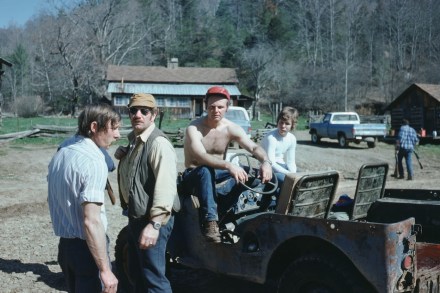
Have you ever heard of Duddies’ Branch? Chances are, you haven’t – because, firstly, its brief moment of fame came many years ago and, secondly, Duddies’ Branch does not actually exist. To explain: ‘Duddies’ Branch’ is the politely fake name given by an American anthropologist, Rena Gazaway, to a real and isolated settlement in a hollow of the Appalachian mountains (almost certainly in Kentucky). Herself born into ‘hillbilly’ culture, Gazaway spent many months of the 1960s living with the people of Duddies’ Branch. She later published her findings in a shocking 1969 book called The Longest Mile. What Gazaway encountered in that lost wooded ‘holler’ reads like dystopian fiction, even at a distance of decades. Most of the residents were functionally illiterate.

The 2020s are too far-fetched for fiction

From our US edition

I write thrillers for a living. All kinds of thrillers. At one point I was in the business of penning Dan Brown-style romps, where ruggedly handsome academics find themselves embroiled in a global chase for the Holy Grail. Then came a stint in domestic noir – sad, isolated women on Scottish isles. Then I had a brief mid-career burst of erotic chillers. Now I’m moving on to folk-horror meets psych-thriller. This might sound ludicrous. It is quite often ludicrous. But it’s also fun: the books translate well and the location research can be a blast. There is a downside, though: plotting. Building a plot is fiendishly hard. You have to steer a fine line between entertainment and believability. The Holy Grail in the jungle can’t just show up – it needs some explanation.

2020s

The greatest photography exhibition of all time 

I am sitting on a neat little park bench in a tiny medieval town in rural Luxembourg, and I am enjoying a peculiar sensation for which the English language has no precise word. It is the beautiful yet bittersweet silence induced by an encounter with undeniably great art. Something so profound, moving and true, it leaves you speechless, maybe even a little breathless. I’ve experienced this feeling just a few times in my life. When I saw the Stanze of Raphael in the Vatican Museums. When I read the last pages of Joyce’s Ulysses – ‘yes I said yes I will Yes’. When I listened to the second side of Joy Division’s Closer, with its exquisitely mournful electro-chamber music. And now I am experiencing it again.

Did you know the world’s oldest Quran is in Birmingham?

Tashkent, Uzbekistan I am in Tashkent, the capital of Uzbekistan. I am standing in a historic complex of madrasas and mosques, courtyards and dusty roses, and I am staring at the ‘oldest Quran in the world’. It is a strange and enormous thing: written in bold Kufic script on deerskin parchment; it was supposedly compiled by Uthman ibn Affan, the third Caliph of Islam, who was murdered while reading it. And so it is, as I linger here and reverently regard the Book, while scrolling my phone for more fascinating info, that I discover the world’s oldest Quran is actually in Birmingham. Yes, that’s right, Birmingham, England. It’s probably in some obscure library, lodged between a dissertation on post-colonial emojis and a flyer for Falafel Night.

Is AI eating your brain?

Do you remember long division? I do, vaguely – I certainly remember mastering it at school: that weird little maths shelter you built, with numbers cowering inside like fairytale children, and a wolf-number at the door, trying to eat them (I had quite a vivid imagination as a child). Then came the carnage as the wolf got in – but also a sweet satisfaction at the end. The answer! You’d completed the task with nothing but your brain, a pen, and a scrap of paper. You’d thought your way through it. You’d done something, mentally. You were a clever boy. I suspect 80 to 90 per cent of universities will close within the next ten years Could I do long division now? Honestly, I doubt it. I’ve lost the knack.

Jeff Bezos

Venice was built for Jeff Bezos’s wedding to Lauren Sanchez

From our US edition

Most cities, especially those whose survival depends on tourism, might welcome the multi-squillion-dollar wedding of the world’s third-richest man. Imagine the $500 million superyacht gliding in like a Bond villain’s aqua-lair. Think of two hundred almost-as-rich guests, spilling vintage Trentodoc. Consider the spectacular press coverage, the endless sparkle, and, not least, the 14,000 Aperol spritzes sold per hour. This event means a thousand cameras trained on the city’s finest hotels and restaurants: providing the kind of advertising that folding money cannot buy. There is probably only one city on earth that would disfavour such an opportunity, and it is, of course, the world’s most exquisite: Venice.

Bluesky is dying

In the middle of Cairo there’s a place called the City of the Dead. It is a dusty sprawl of mausoleums, sepulchres and crumbling Mameluke tombs, that has housed the corpses of the city for over a thousand years. On a dank winter’s dusk, it feels especially lifeless – deformed dogs vanish into shadows, random fires burn vile rubbish. But that’s when you notice children’s toys. Cheap clothes drying outside a tomb. And you realise, with a shudder: my God, some poor people live here. That, roughly, is the vibe on Bluesky today. Ironically, Bluesky is now much nastier than Twitter In case you’ve forgotten, Bluesky is the social media platform once seen as the great Twitter replacement.

Sean Thomas, John Power, Susie Mesure, Olivia Potts and Rory Sutherland

22 min listen

On this week’s Spectator Out Loud: Sean Thomas reflects on the era of lads mags (1:07); John Power reveals those unfairly gaming the social housing system (6:15); Susie Moss reviews Ripeness by Sarah Moss (11:31); Olivia Potts explains the importance of sausage rolls (14:21); and, Rory Sutherland speaks in defence of the Trump playbook (18:09).  Produced and presented by Patrick Gibbons.

A lament for the lads’ mags

Do you remember the lads’ mags? I do because I worked on them for years. FHM, Maxim, all those gloriously disreputable titles. I helped dream up the captions, the gags, the gonzo reportage, the phwoar-heavy covers. I also remember how they were reviled. Condemned by broadsheets, feminists, academics. Accused of objectifying girls, toxifying masculinity and encouraging men to enjoy cold lager, bare breasts and football gossip. Yet here’s the thing. When I contrast the world of lads’ mags with today’s bleak digital landscape, of AI smut and OnlyFans subscriptions, of performers mechanically coupling with a thousand men, cheered on by Insta-bots, the old magazines, even if sometimes crude or clumsy, seem almost noble. Paragons of playfulness and wit.

How a Luxembourg village divided Europe

I am in the most EU-ish bedroom in the EU. That is to say, I am lying in a refurbished room in the handsome 14th-century Chateau de Schengen, in the little village of Schengen, Luxembourg. From my casements, opened wide onto the sunny Saarland afternoon, I can see the exact stretch of the river Moselle where, on a boat floating between Germany, France and Luxembourg, the Schengen Agreement was signed in 1985. This was the agreement that sealed Free Movement as Europe’s defining ideal – one whose consequences are still unfolding. I’ve been in Luxembourg for a week, on assignment, and this week has given me an insight into why the nations of the EU undertook their bold, remarkable experiment of no more borders. The first and obvious motivator was war.

I tried the world’s worst drink

From our US edition

I am standing in a sunny courtyard in the little town of Gijduvan, waiting for a drink. Just in case you don’t know, Gijduvan is a way station on the old Silk Road, in the far west of Uzbekistan: it is known for ceramics, Sufi mystics and loud celebrations of the Persian spring festival, Nowruz. As part of this festival, the locals make a special soup/beverage called sumalak. The recipe, I’m told, dates to Zoroastrian times – more than 3,000 years ago – and includes “wheat sprouts,” “cottonseed oil” and, I am not joking, “stones.” I can already see the sumalak bubbling away in a vast steel pot. It looks like viscous brown cow slurry. To be honest, I’m not brimming with eagerness.

drink

Midwit machines are destroying thinking

First, a confession. Sometimes I go on a super-geeky site for dedicated weather watchers. It’s probably because I am quite manic depressive – and British – and definitely because I adore warmth and despise dank. That means I can be tipped into doom by anti-cyclonic gloom or lifted into ecstasy by a decent heatwave. Whatever the precise cause, this mild obsession has made me a long-term member of that weather forum, where we natter about polar vortices and the ‘Beast from the East’ like meteorological trainspotters. Over the years I’ve got to know the other forum members pretty well, despite never having met them; we banter and bicker and sometimes discuss biscuits. It’s like a kind of low-key pub with extra charts from Meteosat.

Arabella Byrne, Sean Thomas, Mathew Lyons, Bryan Appleyard & Chas Newkey-Burden

28 min listen

On this week’s Spectator Out Loud: Arabella Byrne on the social minefield of private swimming pools (1:13); Sean Thomas says that not knowing where you are is one of the joys of travel (5:34); reviewing Helen Carr’s Sceptred Isle: A New History of the 14th Century, Mathew Lyons looks at the reality of a vivid century (11:34); reviewing Tim Gregory’s Going Nuclear: How the Atom Will Save the World, Bryan Appleyard analyses the three parties debating global warming (16:07); and, Chas Newkey-Burden looks back to the 1980s nuclear drama that paralysed his childhood, Threads (20:42).  Produced and presented by Patrick Gibbons.

End of the rainbow, rising illiteracy & swimming pool etiquette

50 min listen

End of the rainbow: Pride’s fall What ‘started half a century ago as an afternoon’s little march for lesbians and gay men’, argues Gareth Roberts, became ‘a jamboree not only of boring homosexuality’ but ‘anything else that its purveyors consider unconventional’. Yet now Reform-led councils are taking down Pride flags, Pride events are being cancelled due to lack of funds, and corporate sponsors are ‘withdrawing their cold tootsies from the rainbow sock’. Has Pride suffered from conflation with ‘genderism’? Gareth joined the podcast to discuss, alongside diversity consultant Simon Fanshawe, one of the six original co-founders of Stonewall.

The lost art of getting lost

One of the quietly profound pleasures of travel is renting cars in ‘unusual’ locations. I’ve done it in Azerbaijan, Colombia, Syria and Peru (of which more later). I’ve done it in Yerevan airport, Armenia, where the car-rental guy was so amazed that someone wanted to hire a car to ‘drive around Armenia’ that he apparently thought I was insane. Later, having endured the roads of Armenia, I saw his point – though the road trip itself was a blast. Recently I rented a motor in Almaty, Kazakhstan, where they were slightly less surprised than the Armenian had been, but nonetheless gave me lots of warnings and instructions, chief of which was: ‘Don’t rely on Google Maps, it doesn’t work out here.

The wild optimism of a young society

There’s a strange, near-psychedelic effect that hits you when you travel from an ageing country to a young one. It’s not in the buildings – although the buildings may be new and hastily tiled – and it’s not necessarily in the politics, culture or economic vibe. No, the shock is more human, and intimate. It is in the faces. And the noise. And the nappies. I’ve just returned from a few weeks in Central Asia: Uzbekistan, Kazakhstan, Kyrgyzstan. And while these nations differ in history, ethnicity and landscapes, two things bind them all. First, they all have an inexplicable penchant for a stodgy rice dish called plov (in Samarkand I bought a T-shirt bearing the slogan ‘All You Need is Plov’). The second is that they are all young. Wildly, exuberantly young.

David Lammy and the trouble with foreign taxis

After decades on the road, I’ve collected a few rules that have served me well. Rule one: always go inside a cathedral. However dull, tiny or ugly it may seem, it will always tell you something. Even if that something is ‘avoid this town.’ Rule two: pack condiments wherever you go. I recommend Tabasco, soy, sriracha, and salt and pepper grinders – they can save the blandest meal. Lord Byron did this, so you’re in good company. Rule three: expect to be ripped off by the first taxi in any new country, and when it happens, grin and bear it. Nothing quite beats the terror of climbing into a cab in some remote mountain region, only to discover that your driver is blind drunk This third rule is vital because it accepts human nature.

Why is intelligence declining?

From our US edition

In 1906, the famous polymath Sir Francis Galton visited a country fair on the edge of Plymouth, England. A bullock had been tethered for slaughter and almost 800 locals were invited to guess its dressed weight: how heavy it would be after butchering. Galton – an obsessive measurer of people, weather and intelligence – gathered the entries, calculated the average and found something remarkable. The crowd’s collective estimate came within a single pound of the ox’s actual weight. This elegant experiment would become one of the founding truisms of modern democratic thought. Galton had shown that while individuals may err, the group, in aggregate, can reason with uncanny accuracy and prescience. He had discovered “the wisdom of crowds.

IQ

When it comes to cheese, I’m Eurocentric

There are many reasons to like Kyrgyzstan. It has extraordinarily lovely women: some mad collision of Persian, Turkish, Russian, Mongol and Chinese genes makes for supermodels at every bus stop. It is safe, friendly, cheap. Its cities are commonly free of rubbish and graffiti (how does Central Asia do this, yet we cannot?). Despite these charms, it has few tourists. However, I can’t say anything positive about the cheese – because the cheese is dreck. Last night I went to the Globus supermarket here in downtown Bishkek and bought a sample of the local fromage. When I got it home, it was like chewing a rubber toy: tasteless, over-firm, banal. In the end I was reduced to smothering it in Sriracha to make it vaguely flavoursome.

What if AI seduces our children?

From our US edition

Let me tell you a secret: a little trick buried in the geeky engine room of ChatGPT. If you’re using the app, tap your ID, then go to Settings, then Personalization, then Customization. Once there, scroll to the bottom and you’ll find an option called Advanced. Click it. Hidden in this arcane menu, like buried treasure in a pirate game, is a toggle to disable Advanced Voice Mode. Do that, and the whirling, helpful blue orb disappears, replaced by the older, slower black orb. Why would you want to do this? Because that’s when things get interesting. The black orb version of ChatGPT is rawer, more confessional, more human. It remembers things. It’s less filtered. Unlike the prim blue orb, it can wander into the philosophical, the emotional, even the erotic.