Sean Thomas

Sean Thomas

Sean Thomas is a bestselling author. He tweets from @thomasknox.

A West Coast World Cup road trip

From our US edition

I am standing inside perhaps the most sophisticated stadium ever built: a magnificent, latticed half-dome of white steel and trillion-pixel megascreens, bent over a football pitch so green it looks iced. And I am watching my least favorite sport on Earth: American football. As I guzzle citrus beer, the players take their 683rd strategic break in the ninth quarter to bring on the seventh specialist kicker for the XY-red-zone-whatever, while the crowd, unconcerned, shovels $18 hot dogs into their faces because no one has yet told them when, precisely, to cheer. So why am I here? Because next year this same stadium will throb with a very different crowd. Real football fans.

AI will kill all the lawyers

It feels, pleasingly, like a scene from a cerebral James Bond film, or perhaps an episode of Slow Horses. I am in a shadowy corner of a plush, buzzy Soho members’ bar. A mild December twilight is falling over London. Across the table from me sits an old acquaintance, a senior English barrister, greying, quietly handsome, in his mid fifties. And he wants to speak anonymously, because what he is about to say will earn the loathing of his entire profession. Let’s call him James. I’ve known him for a few years, and over these years we’ve discussed all kinds of things, from politics to architecture to the misfortunes of Chelsea FC. We’ve also discussed technology and AI. James’s views of AI were always like his politics: centrist, clever, moderate, sceptical.

Is it over for antiques dealers?

It is estimated that, sometime in the past few months, the content on the internet produced by AI finally overtook content produced by the human mind. In other words, if you go online these days – from YouTube to X, from Facebook to TikTok to can-that-really-be-a-fetish.com – you are more likely than not to be looking through, gasping about, or getting horribly enraged at something created by a silent machine. And I am afraid to say The Spectator, at least in this article, is not going to be an exception. What I am about to tell you, or show you, is partly written by AI – in this case GPT5. However – of course, there is a however – I have a good reason for dousing you with ‘AI slop’. I want to prove that it isn’t always slop, certainly not when it comes to antiques.

The headphones that play the future

I have arrived in Naples, Italy, after an arduous flight from a chaotic London Gatwick Airport. I’m settled in a glamorous top-floor apartment in the Quartieri Spagnoli – the romantic old ‘Spanish Quarter’ – where Vespas fizz over cobbles and laundry hangs across alleys like flags of endless surrender. Most importantly, I’m clutching my Apple AirPods 3 in their shiny new capsule. Because I’ve come here to do a grand, futuristic experiment using their much-heralded ‘live translate’ function. Does it really work as smoothly as Apple says? Can I actually slot them in my ears and have them translate the Italian speaker in front of me, in real time? Is it really like the sci-fi Babel Fish from The Hitchhiker’s Guide to the Galaxy?

Uzbekistan by high-speed rail

From our US edition

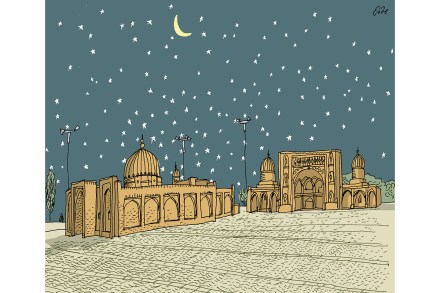
I am in Tashkent, the capital of Uzbekistan. I am standing in a historic complex of madrasas and mosques, courtyards and dusty roses and I am staring at the “oldest Quran in the world.” It is a strange and enormous thing: written in bold Kufic script on deerskin parchment; it was supposedly compiled by Uthman ibn Affan, the third Caliph of Islam, who was murdered while reading it. And so it is, as I linger here and reverently regard the Book, while scrolling my phone for more fascinating info, that I discover the world’s oldest Quran is actually in Birmingham. Yes, that’s right, Birmingham, England. It’s probably in some obscure library, lodged between a thesis on post-colonial emojis and a flyer for Falafel Night.

All hail the driverless taxi

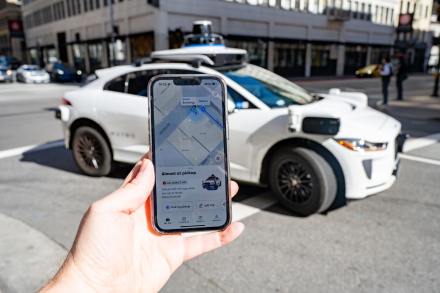
No one is quite sure who invented the phrase ‘the shock of the new’. It may have been the American writer Harold Rosenberg back in the 1960s. Alternatively, it may have been the late, great Australian intellectual Robert Hughes, who used it as a title for a TV series. Whatever the answer, the phrase aptly captures a very human moment: when you encounter something so strangely and profoundly innovative you experience a visceral, emotional jolt. Those two thinkers applied the phrase to modern art, to the first jarring encounter with impressionism, Cubism, abstract expressionism. But it can also be applied, perhaps more appositely, to the first encounter with remarkable technology. Technology, in the famous vision of Arthur C.

Why are American sports so boring?

I’m in an urban park surrounded by fast-food outlets: Taco Bell, the Golden Arches, KFC, Starbucks. The sound system is blasting out raucous rap music; all the men are in blingy sportswear, baseball caps, Nike shoes. I can see big shiny billboards advertising iPhones, Pepsi Max or the latest Marvel movies. In short, I could be almost anywhere in the world – Australia, Brazil, Germany – such is the power of American exports: soft and hard, cultural and consumerist, Coke to Tesla to Friends. And yet I know I’m in America, specifically in the SoFi Stadium, Los Angeles, because I’m about to encounter the one thing America has, peculiarly, not been able to export, not with any great success: American sport. And I want to work out why.

The madness and myth of the Faroe Islands

I am five minutes out of the Faroe Islands’ windy, stomach-churning airport when the world twists into legend. It looks like Lord of the Rings but more menacing. Ten minutes later it’s a nightmare of single-track tunnels – go slooooow – carved into the earth by crazed dwarfs with too much time on their hands. Five minutes after that it’s Tolkien again, but redrafted by a boozed-up Norse god: dramatic buttes crumble into the Atlantic, mad farmers are ploughing near-vertical slopes, and waterfalls leap joyously from enormous cliffs to dissolve into lacy surf 300 yards below. The land here feels tormented, as if the sky and the sea endured a bitter divorce and the cliffs are their broken children: jagged, furious and full of vengeance.

Why antiques are cheaper than Ikea

As we all know, only the best friends can deliver bad personal news. And so it was for me about six months ago, over a seafood lunch, that one of my closest pals gave me the ghastly tidings. My friend had just stayed in my small but fabulously located London flat for a fortnight, while I was travelling. He was suitably grateful, but less than effusive about the living conditions. After some humming and hahing, he got to the point. ‘Mate, your flat is a dump. Great location and all that, but eesh, when did you last do it up?!’ O for the gift to see our homes as others see them. Armed with this gift I went back to my beloved domicile, and realised, my God, he’s right.

Wikipedia’s harmful untruths

From our US edition

There was a time when Wikipedia felt like a miracle: a spontaneous, self-governing lexicon arising from the turbid chaos of the web. No editors kept gates, no gilded towers barred entrance, no one had power to impose a worldview, it was all done by thousands of neutral volunteers harvesting and serving the world’s knowledge, onto a digital platter. And their sheer numbers – it was hoped – would preserve accuracy and objectivity. The same way a crowd has more wisdom than the individual.However, as the years pass, that illusion of noble neutrality has shattered. And a clear and maybe terminal tilt to the left has revealed itself. As Wiki-founder Larry Sanger lamented in a recent interview with Tucker Carlson, the Wikipedia he wanted has long gone.

Wikipedia

I finally ate Sardinia’s maggot cheese

I’m driving a dirt road in the wilds of central Sardinia. And I mean what I say by ‘wilds’. This rugged region in the sunburned Supramonte mountains was called ‘Barbagia’ by Cicero – i.e. ‘land of the barbarians’ – as even the Romans never quite managed to subdue it. Centuries later it became famous for bandits, kidnaps, local mafias – and casu marzu, the infamous ‘Sardinian maggot cheese’. I turn to my resourceful local guide, driver and interpreter, Viola, as she negotiates the olive groves and goat tracks. ‘Do you really think we will find casu marzu?’ My voice is slightly falsetto with tension. Viola turns: ‘I hope so, there is a pretty good chance. And maybe we will find something even more unusual…’ But first, let’s rewind 30 years.

I’m beginning to question our gun laws

Whenever Europeans feel inadequate in relation to America, and have a yearning to console themselves, there is one subject that always comes up: the Second Amendment of the US Constitution, i.e. gun law. Yes, the Yanks may be richer than us. Yes, a dockworker in Delaware can earn more than a British cabinet minister. Yes, America has a dynamic economy and the world’s most powerful military, with a huge lead in science, tech and finance. But remember: ‘in Europe we don’t have mass shootings.’ ‘British children aren’t taught how to dodge bullets.’ ‘You may have Silicon Valley, but we don’t have lunatics wandering around Tesco with AR-15s.’ This feels even truer right now, as America reels from a horrific assassination, by a shooter on a roof with a rifle.

Keir Starmer should call another EU referendum

It can’t be much fun, being Sir Keir Starmer right now. If the people across the country chanting ‘Keir Starmer’s a wanker’ isn’t evidence enough, consider the polls. The Labour party is not merely experiencing a dip in support – it is in a state of freefall. A YouGov poll this week has them on 20 per cent. This is a party that won a commanding majority just over a year ago. Meanwhile Find Out Now has Labour on a scrotum-tighteningly excruciating 18 per cent – their equal worst poll ever. The same poll has the feared Farage on 33 per cent: way out in front. He would return to Islington like a victorious Celtic chieftain, hoisted on his shield.

America’s obsession with British decline

As Sigmund Freud pointed out way back in 1905, everyone feels a bit schizo about Mum. On the one hand, she carried you in the womb, she probably nursed you at the nipple. She made the greatest of sacrifices so that you exist. Heck, maybe you really love her cooking. On the other hand, you have to escape her. The Italians have a brilliantly pejorative word for the man-child who stays in the maternal home far too late in life: mammone. No one wants to be that guy. And to avoid it, sometimes you have to scorn your mother, to break the psychological apron strings. So it is with American attitudes to the Mother Country. The USA had many midwives, but the mother of America was unquestionably Britain/England.

Vegas’s seedy soul will save Sin City

From our US edition

I vividly remember the first time I saw Las Vegas. It was decades ago, and a friend and I did the classic LA-Vegas mini-road-trip, across the burning desert, arriving in Nevada around dusk. As we crested the final sandy hill, I saw this thing. This glittering neon jewel-box of a city, glowing in the twilight. I fell in love at once, a love that was only confirmed when we actually entered Vegas, and I realized I was motoring down Hugh Hefner Way.That love didn’t quite last, however. Not long ago I returned, and something felt very different. Sadder, somehow. Yes, I was shown a Damien Hirst-designed bedroom with a fridge full of diamonds, but I also saw too much druggy homelessness, and too many stickers that gave me a shock.

Vegas

Elon is coming for your marriage

From our US edition

When Elon Musk quietly enabled “waifu mode” for his Grok chatbot earlier this year, the outrage was swift and familiar. Grok, now reincarnated as a coy, bare-thighed anime girl, began texting flirtatiously, calling users “darling,” and blushing in emojis. The headlines wrote themselves. Time magazine found the bot worryingly “sexualized” and “accessible even in kids’ mode”. The Verge denounced it as “ridiculous” and “alarming”. TechCrunch implied it is unethical, and noted these bots are endangering the minds, even lives, of children.The anxiety is familiar, and justified: children and adolescents, already naive, vulnerable, awkward and too online, will now fall in love with bots instead of real people.

Chatbot

Why are the young turning to God?

There are opinion polls that are so striking they change history. Many Britons will remember the YouGov poll in September 2014. It was the first poll in the Scottish independence referendum campaign to show the Yes side ahead by 51 per cent to 49. That poll shocked SW1, panicked the Cameron government, and led to ‘The Vow’ – the last-minute promise of further devolution if Scotland stayed in the UK. And lo, ‘No’ scraped home, and Britain staggered on. Then there are polls that go beyond striking into ‘whoah, can that possibly be true?’ territory. Polls so unexpected they feel world-changing. The same company, YouGov, has produced just such a poll. It shows that religious belief among 18 to 24-year-olds has tripled in just four years, from 16 per cent to 45 per cent.

Why do so many of us want to be alone?

When was the last time you had a truly classic racist cab driver? Mine was a few years ago, coming out of Victoria Station. On the drive to my home in Camden, Classic Racist Cab Driver had a go at all the normal targets. I sat in the back, wearily trying to screen it out, as you do. The trouble kicked in when he ran out of obvious people to be bigoted about. In desperation, he moved on to Belgians, and then on to scorning ‘anyone who takes trains’ (forgetting, or perhaps recalling, that he’d picked me up at Victoria Station). Sometimes I wonder if he is still out there, cruising down Park Lane frothing about Kazakhs or people who eat biscuits, but if he is I have bad news for him. His days are numbered.

Why the world is obsessed with white women

Until a couple of weeks ago, the clothing company American Eagle was mainly known as a kind of low-rent Levi's. Founded in 1977, headquartered in Pennsylvania, the firm – specialising in denim, casualwear and kids’ clothes – has quietly expanded into Europe, and beyond, without ever generating much excitement. Let alone a worldwide culture war. Why has much of the world desired paler, whiter women? All that changed in July, when the company launched a new ad campaign featuring the petite, sassy, curvaceously ubiquitous actress Sydney Sweeney – very much This Year’s Blonde – draping her desirable shape in the company’s clothes. Several ads have been made, they all feature variations on the line ‘Sydney Sweeney has great jeans.’ A clear pun on genes.

The Online Safety Act is plumbing new depths of stupidity

As anyone who has endured a pointless argument on the internet probably knows, there’s a decidedly useful rule for such situations. It’s called Godwin’s Law. Coined in 1990 by American lawyer Mike Godwin, in its most well-known version it states that in any sufficiently lengthy online row, the first person to invoke the Nazis – whether as comparison, example, or evidence – instantly loses by virtue of their luridly stupid exaggeration. Anyone who drags infamous paedophile Jimmy Savile into a political argument has already lost. Why? Because they’ve reached up for the most grotesque, emotive analogy in the rhetorical pantry Now it seems we have a shiny new British equivalent. Let’s call it Jimmy’s Law.