Sean Thomas

Sean Thomas

Sean Thomas is a bestselling author. He tweets from @thomasknox.

Should Europe ban American tourists?

As Donald Trump claims Nato forces stayed ‘a little off the front lines’ in Afghanistan, and the Great Greenland Crisis rumbles on, and off, and on again, one thing is clear: Europe keeps threatening to ‘stand up to America’ and every time it does, the effect is roughly equivalent to a damp baguette waved in the general direction of the Pentagon. Imagine, just for a moment, that Europe calmly announced a ban on American tourists.The psychological damage would be immense Why? Because we don’t have the military muscle, the economic leverage or even the diplomatic coherence. We famously disagree on the correct shape of a banana, or the relative evil of Russia. In this particular brouhaha, we can’t even manage a symbolic boycott of the World Cup.

Why I can’t resist a red-light district

From our US edition

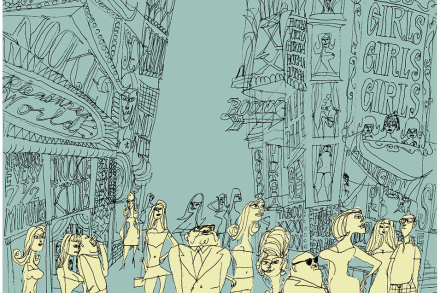
I am writing this on the 17th floor of the Novotel Sukhumvit, on Soi 4, aka “Soi Nana,” in Khlong Toei, Bangkok. For anyone that knows the Big Mango, they’ve already guessed where I am, psychogeographically: from that tell-tale word “Nana.” For those still in the dark, I am on the rude, ribald, rambunctious street that is Soi 4, which is full of tattoo parlors, 7-Elevens, dried-squid-sellers, fake Italian winebars, blaring “British” pubs, slightly dodgy pharmacists, hair salons that do laundry as well – it culminates in Nana Plaza, a multitiered al fresco mall of gaudy and noisy go-go bars that probably constitutes the single largest collection of sex workers on the planet.

Mickey Down, Charlie Gammell, Sean Thomas & Douglas Murray

32 min listen

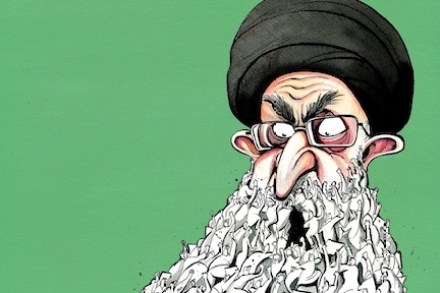
On this week’s Spectator Out Loud: Mickey Down, co-creator of Industry, reads his diary for the week; Charlie Gammell argues that US intervention could push Iran into civil war and terrorism – warning that there are more possibilities than just revolution or regime survival; false dichotomy at the heart of; Sean Thomas bemoans the bittersweet liberation from his libido; and, Douglas Murray believes Britain has a growing obsession with race. Produced and presented by Patrick Gibbons.

Britain’s fatal good manners

One of the guilty pleasures of the patriotic British travel writer is encountering yet another country, city or island that we invaded, occupied, colonised or just menaced into submission with a couple of gunboats. For example, did you know we casually took out Uruguay back in the day? It’s true – we demolished the walls of Montevideo in 1807, during the Battle of the River Plate, as I discovered on my first visit there last year. I’ve had the same experience all over. The Maldives. Kefalonia. The Colombian coast (we were so punchy and piratical half the Colombian nobility decamped 200 km inland). Also, Menorca, the Faroes, Haiti, Iceland, Bolivia (our economic colonisation is the reason women in La Paz wear bowler hats).

The London property market might be about to implode

First off, let me say: I’m a London property owner. It’s a pretty little flat, in a pleasant corner of the capital. Nothing special, but quite desirable. Therefore, I am not writing this article in a gleeful spirit of provincial schadenfreude, rather, I write it with a grim sense of metropolitan foreboding. I had kind of hoped my flat would be my pension. Now I fear it may end up a nicely furnished prison. The reasons why are obvious, and begin with our bewilderingly stupid government Why? For the good reason that – unnoticed by many, who always presume London property prices go up – the London market has been stagnant for years, and often falling in real terms. Now prices are actively descending, sometimes quite severely.

An elegy for my libido

I’m not sure when my libido first began to decline. It was probably during the pandemic, so it went unnoticed – like much else. Given that I was stuck indoors, newly divorced, in a one-bed flat, with no garden, and only allowed out to walk for one hour a day in the driving sleet, I didn’t really clock that I wasn’t getting a lot of action. My main concern was not committing suicide through love-grief and loneliness. Also, I cooked several new turbot recipes. Then the tides of plague retreated and that is when I realised. Something in me had changed: and it was the ‘dogs of lust’, as John Betjeman called them in ‘Senex’, his fine poem about age and desire. The dogs no longer barked, loudly, 24/7, driving me to distraction. Sometimes they went entirely quiet.

AI porn will spawn a nation of addicts

From our US edition

If there is one safe prediction we can make about 2026, it is this: public debate and global news will be dominated by artificial intelligence and the anxieties that surround it. And near the top of that swelling list of worries will be “AI porn” – the fateful collision between ever more accomplished image-making machines and humanity’s eternal appetite for audiovisual sexual stimulation. The year has barely begun and already two loud tsunami sirens have sounded. The first is the latest Grok incident. For the uninitiated, Grok is Elon Musk’s AI, conceived a couple of years ago in a fit of pique after Musk’s spectacular falling-out with OpenAI.

The economic purge of the young white male

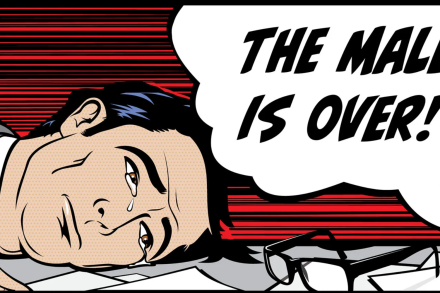
I can remember when I first realised that something strange was happening to white men in Hollywood. It was around 2014, and my younger colleagues in LA – often British writers, directors and actors who had moved to California to ‘make it’ – began reporting, anecdotally, that their work was disappearing. By that I don’t mean the normal vicissitudes of a volatile creative industry. I don’t mean actors ‘resting’ or scripts getting stuck in ‘development hell’. I mean that all jobs, and job opportunities, were abruptly vanishing. Applications went nowhere, CVs were binned, hopeful meetings were suddenly cancelled.

A West Coast World Cup road trip

From our US edition

I am standing inside perhaps the most sophisticated stadium ever built: a magnificent, latticed half-dome of white steel and trillion-pixel megascreens, bent over a football pitch so green it looks iced. And I am watching my least favorite sport on Earth: American football. As I guzzle citrus beer, the players take their 683rd strategic break in the ninth quarter to bring on the seventh specialist kicker for the XY-red-zone-whatever, while the crowd, unconcerned, shovels $18 hot dogs into their faces because no one has yet told them when, precisely, to cheer. So why am I here? Because next year this same stadium will throb with a very different crowd. Real football fans.

AI will kill all the lawyers

It feels, pleasingly, like a scene from a cerebral James Bond film, or perhaps an episode of Slow Horses. I am in a shadowy corner of a plush, buzzy Soho members’ bar. A mild December twilight is falling over London. Across the table from me sits an old acquaintance, a senior English barrister, greying, quietly handsome, in his mid fifties. And he wants to speak anonymously, because what he is about to say will earn the loathing of his entire profession. Let’s call him James. I’ve known him for a few years, and over these years we’ve discussed all kinds of things, from politics to architecture to the misfortunes of Chelsea FC. We’ve also discussed technology and AI. James’s views of AI were always like his politics: centrist, clever, moderate, sceptical.

Is it over for antiques dealers?

It is estimated that, sometime in the past few months, the content on the internet produced by AI finally overtook content produced by the human mind. In other words, if you go online these days – from YouTube to X, from Facebook to TikTok to can-that-really-be-a-fetish.com – you are more likely than not to be looking through, gasping about, or getting horribly enraged at something created by a silent machine. And I am afraid to say The Spectator, at least in this article, is not going to be an exception. What I am about to tell you, or show you, is partly written by AI – in this case GPT5. However – of course, there is a however – I have a good reason for dousing you with ‘AI slop’. I want to prove that it isn’t always slop, certainly not when it comes to antiques.

The headphones that play the future

I have arrived in Naples, Italy, after an arduous flight from a chaotic London Gatwick Airport. I’m settled in a glamorous top-floor apartment in the Quartieri Spagnoli – the romantic old ‘Spanish Quarter’ – where Vespas fizz over cobbles and laundry hangs across alleys like flags of endless surrender. Most importantly, I’m clutching my Apple AirPods 3 in their shiny new capsule. Because I’ve come here to do a grand, futuristic experiment using their much-heralded ‘live translate’ function. Does it really work as smoothly as Apple says? Can I actually slot them in my ears and have them translate the Italian speaker in front of me, in real time? Is it really like the sci-fi Babel Fish from The Hitchhiker’s Guide to the Galaxy?

Uzbekistan by high-speed rail

From our US edition

I am in Tashkent, the capital of Uzbekistan. I am standing in a historic complex of madrasas and mosques, courtyards and dusty roses and I am staring at the “oldest Quran in the world.” It is a strange and enormous thing: written in bold Kufic script on deerskin parchment; it was supposedly compiled by Uthman ibn Affan, the third Caliph of Islam, who was murdered while reading it. And so it is, as I linger here and reverently regard the Book, while scrolling my phone for more fascinating info, that I discover the world’s oldest Quran is actually in Birmingham. Yes, that’s right, Birmingham, England. It’s probably in some obscure library, lodged between a thesis on post-colonial emojis and a flyer for Falafel Night.

All hail the driverless taxi

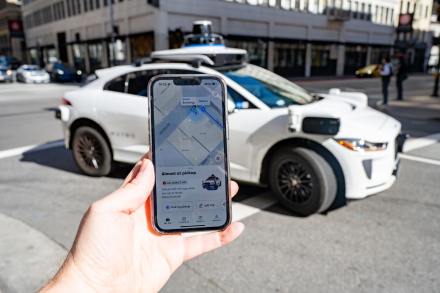
No one is quite sure who invented the phrase ‘the shock of the new’. It may have been the American writer Harold Rosenberg back in the 1960s. Alternatively, it may have been the late, great Australian intellectual Robert Hughes, who used it as a title for a TV series. Whatever the answer, the phrase aptly captures a very human moment: when you encounter something so strangely and profoundly innovative you experience a visceral, emotional jolt. Those two thinkers applied the phrase to modern art, to the first jarring encounter with impressionism, Cubism, abstract expressionism. But it can also be applied, perhaps more appositely, to the first encounter with remarkable technology. Technology, in the famous vision of Arthur C.

Why are American sports so boring?

I’m in an urban park surrounded by fast-food outlets: Taco Bell, the Golden Arches, KFC, Starbucks. The sound system is blasting out raucous rap music; all the men are in blingy sportswear, baseball caps, Nike shoes. I can see big shiny billboards advertising iPhones, Pepsi Max or the latest Marvel movies. In short, I could be almost anywhere in the world – Australia, Brazil, Germany – such is the power of American exports: soft and hard, cultural and consumerist, Coke to Tesla to Friends. And yet I know I’m in America, specifically in the SoFi Stadium, Los Angeles, because I’m about to encounter the one thing America has, peculiarly, not been able to export, not with any great success: American sport. And I want to work out why.

The madness and myth of the Faroe Islands

I am five minutes out of the Faroe Islands’ windy, stomach-churning airport when the world twists into legend. It looks like Lord of the Rings but more menacing. Ten minutes later it’s a nightmare of single-track tunnels – go slooooow – carved into the earth by crazed dwarfs with too much time on their hands. Five minutes after that it’s Tolkien again, but redrafted by a boozed-up Norse god: dramatic buttes crumble into the Atlantic, mad farmers are ploughing near-vertical slopes, and waterfalls leap joyously from enormous cliffs to dissolve into lacy surf 300 yards below. The land here feels tormented, as if the sky and the sea endured a bitter divorce and the cliffs are their broken children: jagged, furious and full of vengeance.

Why antiques are cheaper than Ikea

As we all know, only the best friends can deliver bad personal news. And so it was for me about six months ago, over a seafood lunch, that one of my closest pals gave me the ghastly tidings. My friend had just stayed in my small but fabulously located London flat for a fortnight, while I was travelling. He was suitably grateful, but less than effusive about the living conditions. After some humming and hahing, he got to the point. ‘Mate, your flat is a dump. Great location and all that, but eesh, when did you last do it up?!’ O for the gift to see our homes as others see them. Armed with this gift I went back to my beloved domicile, and realised, my God, he’s right.

Wikipedia’s harmful untruths

From our US edition

There was a time when Wikipedia felt like a miracle: a spontaneous, self-governing lexicon arising from the turbid chaos of the web. No editors kept gates, no gilded towers barred entrance, no one had power to impose a worldview, it was all done by thousands of neutral volunteers harvesting and serving the world’s knowledge, onto a digital platter. And their sheer numbers – it was hoped – would preserve accuracy and objectivity. The same way a crowd has more wisdom than the individual.However, as the years pass, that illusion of noble neutrality has shattered. And a clear and maybe terminal tilt to the left has revealed itself. As Wiki-founder Larry Sanger lamented in a recent interview with Tucker Carlson, the Wikipedia he wanted has long gone.

Wikipedia

I finally ate Sardinia’s maggot cheese

I’m driving a dirt road in the wilds of central Sardinia. And I mean what I say by ‘wilds’. This rugged region in the sunburned Supramonte mountains was called ‘Barbagia’ by Cicero – i.e. ‘land of the barbarians’ – as even the Romans never quite managed to subdue it. Centuries later it became famous for bandits, kidnaps, local mafias – and casu marzu, the infamous ‘Sardinian maggot cheese’. I turn to my resourceful local guide, driver and interpreter, Viola, as she negotiates the olive groves and goat tracks. ‘Do you really think we will find casu marzu?’ My voice is slightly falsetto with tension. Viola turns: ‘I hope so, there is a pretty good chance. And maybe we will find something even more unusual…’ But first, let’s rewind 30 years.

I’m beginning to question our gun laws

Whenever Europeans feel inadequate in relation to America, and have a yearning to console themselves, there is one subject that always comes up: the Second Amendment of the US Constitution, i.e. gun law. Yes, the Yanks may be richer than us. Yes, a dockworker in Delaware can earn more than a British cabinet minister. Yes, America has a dynamic economy and the world’s most powerful military, with a huge lead in science, tech and finance. But remember: ‘in Europe we don’t have mass shootings.’ ‘British children aren’t taught how to dodge bullets.’ ‘You may have Silicon Valley, but we don’t have lunatics wandering around Tesco with AR-15s.’ This feels even truer right now, as America reels from a horrific assassination, by a shooter on a roof with a rifle.