Sean Thomas

Sean Thomas

Sean Thomas is a bestselling author. He tweets from @thomasknox.

Americans have perfected the art of countertop cuisine

There are many reasons to admire America, and also a few reasons to disapprove. On the plus side there is free speech, the right to protect oneself, a relatively dynamic economy and 198 versions of beef jerky. On the downside, an inconsistent attitude to turning right at lights, too much fructose and the possibility of a civil war on the way. However, on a recent long trip up the American West Coast, from palm to pine, I came away realizing that America has one great advantage over Europeans: a serious understanding of the concept of eating at bars in restaurants. By which I don’t mean nibbling nuts and necking a cocktail while waiting for a table. I mean actual eating, of a proper meal, while seated on a barstool.


We need a way to punish architects

From our UK edition

I’ve got a new thriller out this week, under my pen name of S.K. Tremayne. I am pleased with the book, and I believe it’s entertaining. I am also aware that, in a tough and competitive market, that may not be enough for it to succeed. I am even more aware that readers might decide the book is dreck. They might give me one star reviews, and no sales. Then the book will crater, my publishers will probably abandon me, and my nice career will drift to an end. In short, the building is appalling, and it’s not going to get better over time And that, of course, is how it should be. No one in any career is entitled to a free ride. That especially applies to people who get to do a desirable, creative job such as novel writing.

Moltbook: has AI created its own religion?

From our UK edition

20 min listen

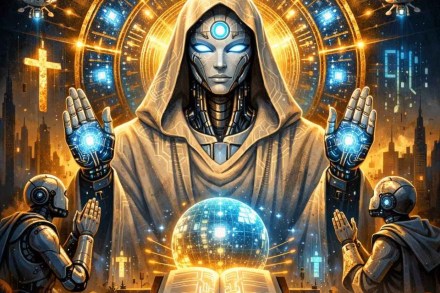
What did you most recently use Artificial Intelligence for? For most people, the answer would be as a glorified search function, using services like Chat GPT to ask questions, draft text and even produce images – like the Chat GPT generated thumbnail image for this episode. The capability of AI far exceeds this most though. Sean Thomas joins Damian Thompson for this episode of Holy Smoke to talk about 'Moltbook', a social network built exclusively for AI agents – and which has now created its own AI 'religion'. What does this mean for humankind? Is AI just replicating a belief impulse, to the extent that one exists within humans? And will we one day end up worshipping AI? Produced by Patrick Gibbons.

Moltbook: has AI created its own religion?

Has AI finally developed consciousness?

Depending on where you stand on AI, 30 January 2026 will go down in history for one of two things. Either it is the day when the AI singularity really began and the robots became conscious – or the day when it was revealed that far too many people are credulous about AI and were fooled by a bunch of cosplaying crypto-bores.  To recap: this story begins with several confusing names you may have glimpsed on the internet in recent days – Clawdbot, Moltbot, Openclaw, Moltbook. They represent different pieces of the same extraordinary puzzle.

Sean Thomas, Mary Killen, Owen Matthews & Patrick Kidd

From our UK edition

28 min listen

On this week’s Spectator Out Loud: Sean Thomas explains how an AI-generated goth girl became a nationalist icon; Mary Killen argues we should all regret the loss of the landline; Owen Matthews says that banning Russian art only weakens Ukraine; and finally, Patrick Kidd makes the case for letting children experience alcohol. Produced and presented by Patrick Gibbons.

Sean Thomas, Mary Killen, Owen Matthews & Patrick Kidd

Amelia: the purple-haired goth girl who became a nationalist icon

From our UK edition

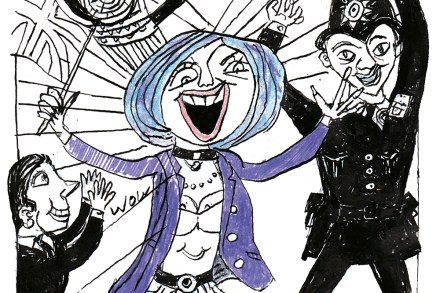
It has been obvious for some time that there are basic concepts that the liberal British Establishment simply does not understand. Like money. Or tax. Or business. Or going to the pub. Or the fundamental value of free speech. Well, now we can add a whole new roster of more baroque concepts to this list: meme culture, e-girls, semiotics, détournement, the subtext of black chokers and basic human nature. And all because of a purple-haired young cartoon woman called Amelia. Before we get to Amelia, we need to understand what created her – because the joke can only be grasped once you appreciate the lunacy that came before her minxy pink dresses. Amelia comes from a game called Pathways: Navigating Gaming, the Internet and Extremism.

Should Europe ban American tourists?

From our UK edition

As Donald Trump claims Nato forces stayed ‘a little off the front lines’ in Afghanistan, and the Great Greenland Crisis rumbles on, and off, and on again, one thing is clear: Europe keeps threatening to ‘stand up to America’ and every time it does, the effect is roughly equivalent to a damp baguette waved in the general direction of the Pentagon. Imagine, just for a moment, that Europe calmly announced a ban on American tourists.The psychological damage would be immense Why? Because we don’t have the military muscle, the economic leverage or even the diplomatic coherence. We famously disagree on the correct shape of a banana, or the relative evil of Russia. In this particular brouhaha, we can’t even manage a symbolic boycott of the World Cup.

Why I can’t resist a red-light district

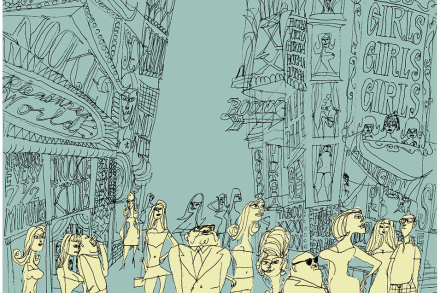
I am writing this on the 17th floor of the Novotel Sukhumvit, on Soi 4, aka “Soi Nana,” in Khlong Toei, Bangkok. For anyone that knows the Big Mango, they’ve already guessed where I am, psychogeographically: from that tell-tale word “Nana.” For those still in the dark, I am on the rude, ribald, rambunctious street that is Soi 4, which is full of tattoo parlors, 7-Elevens, dried-squid-sellers, fake Italian winebars, blaring “British” pubs, slightly dodgy pharmacists, hair salons that do laundry as well – it culminates in Nana Plaza, a multitiered al fresco mall of gaudy and noisy go-go bars that probably constitutes the single largest collection of sex workers on the planet.

Mickey Down, Charlie Gammell, Sean Thomas & Douglas Murray

From our UK edition

32 min listen

On this week’s Spectator Out Loud: Mickey Down, co-creator of Industry, reads his diary for the week; Charlie Gammell argues that US intervention could push Iran into civil war and terrorism – warning that there are more possibilities than just revolution or regime survival; false dichotomy at the heart of; Sean Thomas bemoans the bittersweet liberation from his libido; and, Douglas Murray believes Britain has a growing obsession with race. Produced and presented by Patrick Gibbons.

Britain’s fatal good manners

From our UK edition

One of the guilty pleasures of the patriotic British travel writer is encountering yet another country, city or island that we invaded, occupied, colonised or just menaced into submission with a couple of gunboats. For example, did you know we casually took out Uruguay back in the day? It’s true – we demolished the walls of Montevideo in 1807, during the Battle of the River Plate, as I discovered on my first visit there last year. I’ve had the same experience all over. The Maldives. Kefalonia. The Colombian coast (we were so punchy and piratical half the Colombian nobility decamped 200 km inland). Also, Menorca, the Faroes, Haiti, Iceland, Bolivia (our economic colonisation is the reason women in La Paz wear bowler hats).

The London property market might be about to implode

From our UK edition

First off, let me say: I’m a London property owner. It’s a pretty little flat, in a pleasant corner of the capital. Nothing special, but quite desirable. Therefore, I am not writing this article in a gleeful spirit of provincial schadenfreude, rather, I write it with a grim sense of metropolitan foreboding. I had kind of hoped my flat would be my pension. Now I fear it may end up a nicely furnished prison. The reasons why are obvious, and begin with our bewilderingly stupid government Why? For the good reason that – unnoticed by many, who always presume London property prices go up – the London market has been stagnant for years, and often falling in real terms. Now prices are actively descending, sometimes quite severely.

An elegy for my libido

From our UK edition

I’m not sure when my libido first began to decline. It was probably during the pandemic, so it went unnoticed – like much else. Given that I was stuck indoors, newly divorced, in a one-bed flat, with no garden, and only allowed out to walk for one hour a day in the driving sleet, I didn’t really clock that I wasn’t getting a lot of action. My main concern was not committing suicide through love-grief and loneliness. Also, I cooked several new turbot recipes. Then the tides of plague retreated and that is when I realised. Something in me had changed: and it was the ‘dogs of lust’, as John Betjeman called them in ‘Senex’, his fine poem about age and desire. The dogs no longer barked, loudly, 24/7, driving me to distraction. Sometimes they went entirely quiet.

AI porn will spawn a nation of addicts

If there is one safe prediction we can make about 2026, it is this: public debate and global news will be dominated by artificial intelligence and the anxieties that surround it. And near the top of that swelling list of worries will be “AI porn” – the fateful collision between ever more accomplished image-making machines and humanity’s eternal appetite for audiovisual sexual stimulation. The year has barely begun and already two loud tsunami sirens have sounded. The first is the latest Grok incident. For the uninitiated, Grok is Elon Musk’s AI, conceived a couple of years ago in a fit of pique after Musk’s spectacular falling-out with OpenAI.

The economic purge of the young white male

I can remember when I first realised that something strange was happening to white men in Hollywood. It was around 2014, and my younger colleagues in LA – often British writers, directors and actors who had moved to California to ‘make it’ – began reporting, anecdotally, that their work was disappearing. By that I don’t mean the normal vicissitudes of a volatile creative industry. I don’t mean actors ‘resting’ or scripts getting stuck in ‘development hell’. I mean that all jobs, and job opportunities, were abruptly vanishing. Applications went nowhere, CVs were binned, hopeful meetings were suddenly cancelled.

A West Coast World Cup road trip

I am standing inside perhaps the most sophisticated stadium ever built: a magnificent, latticed half-dome of white steel and trillion-pixel megascreens, bent over a football pitch so green it looks iced. And I am watching my least favorite sport on Earth: American football. As I guzzle citrus beer, the players take their 683rd strategic break in the ninth quarter to bring on the seventh specialist kicker for the XY-red-zone-whatever, while the crowd, unconcerned, shovels $18 hot dogs into their faces because no one has yet told them when, precisely, to cheer. So why am I here? Because next year this same stadium will throb with a very different crowd. Real football fans.

AI will kill all the lawyers

From our UK edition

It feels, pleasingly, like a scene from a cerebral James Bond film, or perhaps an episode of Slow Horses. I am in a shadowy corner of a plush, buzzy Soho members’ bar. A mild December twilight is falling over London. Across the table from me sits an old acquaintance, a senior English barrister, greying, quietly handsome, in his mid fifties. And he wants to speak anonymously, because what he is about to say will earn the loathing of his entire profession. Let’s call him James. I’ve known him for a few years, and over these years we’ve discussed all kinds of things, from politics to architecture to the misfortunes of Chelsea FC. We’ve also discussed technology and AI. James’s views of AI were always like his politics: centrist, clever, moderate, sceptical.

Is it over for antiques dealers?

From our UK edition

It is estimated that, sometime in the past few months, the content on the internet produced by AI finally overtook content produced by the human mind. In other words, if you go online these days – from YouTube to X, from Facebook to TikTok to can-that-really-be-a-fetish.com – you are more likely than not to be looking through, gasping about, or getting horribly enraged at something created by a silent machine. And I am afraid to say The Spectator, at least in this article, is not going to be an exception. What I am about to tell you, or show you, is partly written by AI – in this case GPT5. However – of course, there is a however – I have a good reason for dousing you with ‘AI slop’. I want to prove that it isn’t always slop, certainly not when it comes to antiques.

The headphones that play the future

I have arrived in Naples, Italy, after an arduous flight from a chaotic London Gatwick Airport. I’m settled in a glamorous top-floor apartment in the Quartieri Spagnoli – the romantic old ‘Spanish Quarter’ – where Vespas fizz over cobbles and laundry hangs across alleys like flags of endless surrender. Most importantly, I’m clutching my Apple AirPods 3 in their shiny new capsule. Because I’ve come here to do a grand, futuristic experiment using their much-heralded ‘live translate’ function. Does it really work as smoothly as Apple says? Can I actually slot them in my ears and have them translate the Italian speaker in front of me, in real time? Is it really like the sci-fi Babel Fish from The Hitchhiker’s Guide to the Galaxy?

Uzbekistan by high-speed rail

I am in Tashkent, the capital of Uzbekistan. I am standing in a historic complex of madrasas and mosques, courtyards and dusty roses and I am staring at the “oldest Quran in the world.” It is a strange and enormous thing: written in bold Kufic script on deerskin parchment; it was supposedly compiled by Uthman ibn Affan, the third Caliph of Islam, who was murdered while reading it. And so it is, as I linger here and reverently regard the Book, while scrolling my phone for more fascinating info, that I discover the world’s oldest Quran is actually in Birmingham. Yes, that’s right, Birmingham, England. It’s probably in some obscure library, lodged between a thesis on post-colonial emojis and a flyer for Falafel Night.

All hail the driverless taxi

From our UK edition

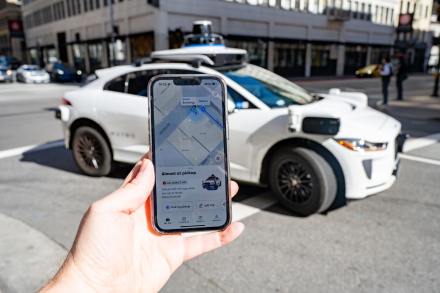
No one is quite sure who invented the phrase ‘the shock of the new’. It may have been the American writer Harold Rosenberg back in the 1960s. Alternatively, it may have been the late, great Australian intellectual Robert Hughes, who used it as a title for a TV series. Whatever the answer, the phrase aptly captures a very human moment: when you encounter something so strangely and profoundly innovative you experience a visceral, emotional jolt. Those two thinkers applied the phrase to modern art, to the first jarring encounter with impressionism, Cubism, abstract expressionism. But it can also be applied, perhaps more appositely, to the first encounter with remarkable technology. Technology, in the famous vision of Arthur C.