Sean Thomas

Sean Thomas

Sean Thomas is a bestselling author. He tweets from @thomasknox.

European stereotypes need updating

The most depressing number in Britain right now is not the national debt, small boat arrivals, the IQ of Foreign Secretary Ed Miliband, or the price of a train ticket, though all four make one want to emigrate into a compost bin. It is 43.  According to a recent YouGov survey, just 43 per cent of adults in Great Britain have confidence in their nation’s police. This is a tragedy. The British policeman was one of our noblest soft-power inventions. He was unarmed, faintly comic, yet morally reassuring. He had a helmet, a notebook, and he knew the location of the post office. Other countries had bristling polizei, with menacing riot kit. We had Dixon of Dock Green.

Britain’s universities are feeding their own destruction

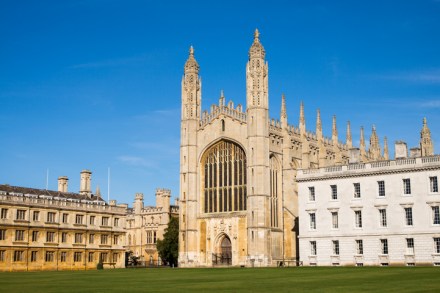
As observers of the trendy psychedelic scene know well, it is strongly advised that anyone who wants to experiment, anyone who wants to go on 'a trip', should only do so when their lives are otherwise content. In other words, when no negative moods might impinge on the intentional lunacy. It is therefore unfortunate that Britain’s universities seem to have embarked on a truly hallucinatory episode, complete with moments of florid self-harm, just as every economic force in the universe seems intent on their destruction. Consider the surreal visions now swirling through the Oxbridge quadrangles. First we have Professor Jason Arday, Cambridge’s youngest ever black professor, whose heroic backstory is falling apart under scrutiny.

The horror of a French heatwave

It’s a sweet little town, Arcachon. Clinging to the long French Atlantic coast, adorned with Victorian villas and pretty flowerbeds, it reminds me oddly of Bournemouth. By which I mean: Bournemouth before it was ruined. As such, it’s the kind of place that usually calls for a return visit. I am sure for many French people it is a holiday regular – ‘ahh, shall we do Arcachon again? Mais oui, we can try that new oyster cabin.’ But right now I seriously wonder if anyone will want to return to Arcachon, ever.  The reasons are twofold.

British men should lean into their evil reputation

From our US edition

I was about 19 years old and threatening to kill myself with a Bic disposable razor (not easy: I was bluffing) when I realized that Women Love Bastards. The revelation arrived like this. I was a heartbroken student, having been dumped by, ah, let's call her Emilia. For months I mooned about, bereft, wondering why Emilia had chucked me when I was so NICE – attentive, gift-giving, loyal. Then a good female friend – bless her wicked heart – took me aside and said: "Sean, girls don't like nice. They like a guy with swagger. Stubble. Slightly mean." She sighed. "I think we prefer bastards, if I'm honest." Putting down the razor, I picked up her advice, and I have used it ever since. I’m happy to say it works.

evil british

Is Tainan the world’s most dangerous city?

In a country full of brilliant food, the Garden Night Market in sultry Tainan, southwest Taiwan, is still a standout: a cheerful riot of steam, umami, deep-fried tofu and loud, vivacious chatter. Families drift past in loose formation, grandparents hefting toddlers with fruit ices, flirting teenagers orbiting bubble-tea stalls, couples sharing hot skewers of squid, pork and chicken gizzards. Almost everyone plays lurid and inexplicable games involving teddy bears and claw machines. I eat sublime oyster omelettes slick with sweet chili pepper sauce, then hot soup dumplings that collapse into scalding, savory bliss. Someone presses popcorn chicken into my hand. It is dangerously moreish. The next morning, Tainan feels sun-blessed and unhurried.

Let’s smarten up our shopfronts

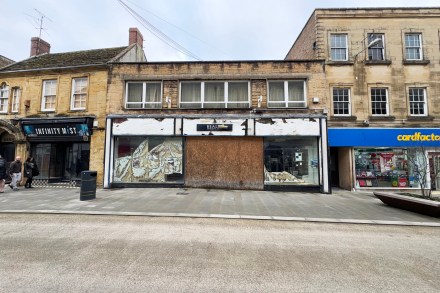
For a decidedly short London road, little Store Street in Bloomsbury, which connects the scholarly precincts of London University with the furniture stores of Tottenham Court Road, delivers a pleasant hit of history. In 1791, ur-feminist Mary Wollstonecraft lived here, then wrote A Vindication of the Rights of Woman.  In case you didn’t know, I also lived on Store Street in the 1990s, back when it was, to be honest, a slightly shabby sideroad, with a greasy spoon and grubby offices. Arguably quaint, and definitely honest, but not somewhere you’d want to linger.  Now, all is changed, changed utterly. In recent years Store Street has spruced up and become a destination in itself.

Why have we forgotten about Covid?

Deep in the honeycombed limestone caves of Slovenia, Croatia, and Friulian Italy, there is a fantastical creature called ‘the olm’, also known as ‘the baby dragon’. It was once an ordinary salamander, which probably fell down into the karstic caverns - where it has evolved into an eerie pink creature that lives for a century, eats once a decade, possesses eyes without sight, lives permanently in a larval condition – called ‘neoteny’ by zoologists – and has been recorded sitting in the exact same place for seven years, without moving.  Why do I mention the olm? Because, as I travel the world, I’m increasingly wondering if we humans, Homo sapiens - have turned into a peculiar higher primate version of the olm.

The classical beauty of the ‘Turkish Riviera’

I am sitting in the Ottoman courtyard at Ruin Adalya in the old town of Antalya, drinking a tulip glass of black sweet tea and munching near-perfect baklava, and twenty feet beneath me the Romans are still there. That is to say, the Ottoman courtyard is paved with Lycian limestone but sections of it are now made of glass, and through the glass I can see the old Roman road.  Which, as metaphorical launchpads go, will do very nicely. Yes, Antalya has, as many Brits know, fine beaches, serious resorts, agreeably cheap food and wine, and the odd Roman temple. But the history of this stretch of Mediterranean coast goes back further than that, and deeper, so much deeper. And I want to trace that extraordinary depth.

Is the end of writing finally upon us?

It's that time of year again. The giddy middle of May. When millions across the English-speaking world gather to find out who has been shortlisted for the Commonwealth Short Story Prize.  This year's shortlist, drawn - as ever - from a diverse selection of not-European, not-male authors, is particularly enriching and profound. As the committee itself puts it, the stories ‘bring compelling characters to life in sharply drawn settings, exploring themes of power, family tension, resistance and unheard voices, alongside courage and unexpected connection. Among them are a keenly observant domestic worker, a young woman whose henna art enables silenced women to speak, and a resourceful young sheep farmer’.

The wonder of Irish linen tea towels

Her name, let us say, is Mary Ann McCready. She is eleven-years-old when she first walks through the gate at six in the morning. The hooter has already gone. Her mother walked her to the mill from a kitchen-house off the Grosvenor Road: a two-up, two-down with six children in one room and an outside privy shared with the next terrace. Mary Ann is a half-timer. She does school until noon, the mill until six. She is paid two shillings a week.  By 13 she is full-time.

Why British toilets are revolting

First things first, as this is an article about toilets, we need to establish if the word ‘toilet’ is an acceptable word. Here at The Spectator, editorial opinion on this crucial point is deeply divided. Some have expressed a preference for ‘bog’. Others opt for 'john', 'jakes', or lavatory.

Primrose Hill has always had a dark side

For nearly all my adult life, I’ve lived within walking distance of Primrose Hill. Indeed, for the last two decades, I’ve lived close enough that my regular evening ritual – travel, health, and global plagues permitting – involves a short stroll down Regent’s Park Road, then a stiff walk up the sacred hill itself, to take in the splendid view. Then I march home, fully dopamined, via the rugged Primrose Hill borderlands of Gloucester Avenue and the Regent’s Canal, to my Camden flat. There is the typical Primrose Hill scene – beautiful young people picnicking with M&S prosecco – and here is a young man about to be knifed to death.

The end of litter is nigh

There are plenty of reasons to be depressed about Britain right now. From our government, which consists mainly of sixth-formers with special needs, to our sporting teams, which conspire to lose across the world. And polls show this depression is real: in a poll on ‘national happiness’ in different countries Britain has plunged from 13th place to 29th, in only a few years.  But if I was asked to name one small but daily aspect of modern British life that gets me down the most, I would answer: litter. All the bloody litter, everywhere. My despair gets so bad that sometimes I convince myself I’m imagining it; did London always look like this? But then I check old photos, and I realise I’m right.

Where will AI strike first?

From our US edition

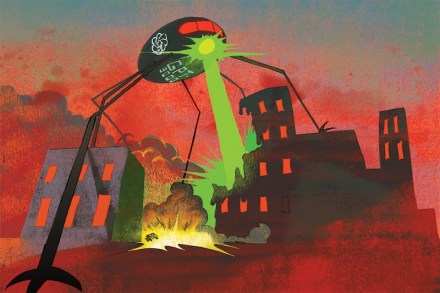
Homo sapiens, as a species, is programmed to anticipate death, disaster and apocalypse. The monster in the mere, the ague that comes from the east, the flood that wipes out all living creatures outside the Ark. The reason children – and adults in horror movies – are scared of the dark is because darkness is where predators strike. We have a sensible evolutionary fear of things that go bump in the night. For thousands of years it was possible to argue this primal fear of apocalypse was overwrought. No matter what humans did, or did not do, we were incapable of destroying ourselves and anything that might destroy us in toto – like the comet that erased the dinosaurs – was simultaneously so rare and so beyond our ability to resist that it was pointless worrying.

Americans have perfected the art of countertop cuisine

From our US edition

There are many reasons to admire America, and also a few reasons to disapprove. On the plus side there is free speech, the right to protect oneself, a relatively dynamic economy and 198 versions of beef jerky. On the downside, an inconsistent attitude to turning right at lights, too much fructose and the possibility of a civil war on the way. However, on a recent long trip up the American West Coast, from palm to pine, I came away realizing that America has one great advantage over Europeans: a serious understanding of the concept of eating at bars in restaurants. By which I don’t mean nibbling nuts and necking a cocktail while waiting for a table. I mean actual eating, of a proper meal, while seated on a barstool.

We need a way to punish architects

I’ve got a new thriller out this week, under my pen name of S.K. Tremayne. I am pleased with the book, and I believe it’s entertaining. I am also aware that, in a tough and competitive market, that may not be enough for it to succeed. I am even more aware that readers might decide the book is dreck. They might give me one star reviews, and no sales. Then the book will crater, my publishers will probably abandon me, and my nice career will drift to an end. In short, the building is appalling, and it’s not going to get better over time And that, of course, is how it should be. No one in any career is entitled to a free ride. That especially applies to people who get to do a desirable, creative job such as novel writing.

Moltbook: has AI created its own religion?

20 min listen

What did you most recently use Artificial Intelligence for? For most people, the answer would be as a glorified search function, using services like Chat GPT to ask questions, draft text and even produce images – like the Chat GPT generated thumbnail image for this episode. The capability of AI far exceeds this most though. Sean Thomas joins Damian Thompson for this episode of Holy Smoke to talk about 'Moltbook', a social network built exclusively for AI agents – and which has now created its own AI 'religion'. What does this mean for humankind? Is AI just replicating a belief impulse, to the extent that one exists within humans? And will we one day end up worshipping AI? Produced by Patrick Gibbons.

Moltbook: has AI created its own religion?

Has AI finally developed consciousness?

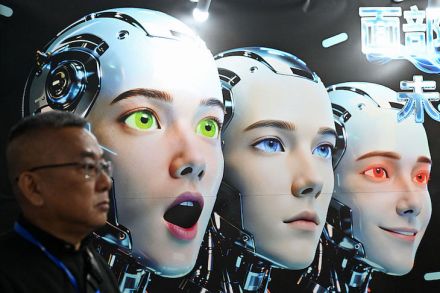
Depending on where you stand on AI, 30 January 2026 will go down in history for one of two things. Either it is the day when the AI singularity really began and the robots became conscious – or the day when it was revealed that far too many people are credulous about AI and were fooled by a bunch of cosplaying crypto-bores.  To recap: this story begins with several confusing names you may have glimpsed on the internet in recent days – Clawdbot, Moltbot, Openclaw, Moltbook. They represent different pieces of the same extraordinary puzzle.

Sean Thomas, Mary Killen, Owen Matthews & Patrick Kidd

28 min listen

On this week’s Spectator Out Loud: Sean Thomas explains how an AI-generated goth girl became a nationalist icon; Mary Killen argues we should all regret the loss of the landline; Owen Matthews says that banning Russian art only weakens Ukraine; and finally, Patrick Kidd makes the case for letting children experience alcohol. Produced and presented by Patrick Gibbons.

Sean Thomas, Mary Killen, Owen Matthews & Patrick Kidd

Amelia: the purple-haired goth girl who became a nationalist icon

It has been obvious for some time that there are basic concepts that the liberal British Establishment simply does not understand. Like money. Or tax. Or business. Or going to the pub. Or the fundamental value of free speech. Well, now we can add a whole new roster of more baroque concepts to this list: meme culture, e-girls, semiotics, détournement, the subtext of black chokers and basic human nature. And all because of a purple-haired young cartoon woman called Amelia. Before we get to Amelia, we need to understand what created her – because the joke can only be grasped once you appreciate the lunacy that came before her minxy pink dresses. Amelia comes from a game called Pathways: Navigating Gaming, the Internet and Extremism.