Sean Thomas

Sean Thomas

Sean Thomas is a bestselling author. He tweets from @thomasknox.

Owen Matthews, Matthew Parris, Marcus Nevitt, Angus Colwell and Sean Thomas

From our UK edition

31 min listen

On this week’s Spectator Out Loud: Owen Matthews reads his letter from Rome (1:21); Matthew Parris travels the Channel Islands (7:53); Reviewing Minoo Dinshaw, Marcus Nevitt looks at Bulstrode Whitelocke and Edward Hyde, once close colleagues who fell out during the English civil war (15:19); Angus Colwell discusses his Marco Pierre White obsession, aided by the chef himself (21:26); and, Sean Thomas provides his notes on boredom (26:28).  Produced and presented by Patrick Gibbons.

My battle to avoid boredom

From our UK edition

Four days ago I was so bored that I considered starting a terrorist groupuscule. I had no demands, no ideology, no manifesto. I just wanted directionless chaos. I even got as far as ChatGPTing ‘How to start a violent movement’ before realising all movements require meetings. And meetings are dull. You may think I’m exaggerating. But the truth is, I have a lifelong fear of boredom. To put it another way, I can handle peril, I can handle regret, I can handle doing lines of Californian coke so long they risk a heart attack. What I can’t handle is monotony. For example, in my early thirties I visited a warzone in southern Lebanon to escape the tedium of an otherwise routine travel assignment.

Are we too stupid for democracy?

From our UK edition

In 1906, Sir Francis Galton observed a crowd at a country fair in Plymouth attempting to guess the weight of an ox. Nearly 800 people participated – from butchers and farmers to busy fishwives. Galton, ever the measurer of men and beasts, gathered the guesses and calculated their average. The result was startling: the crowd’s collective estimate came within one pound of the actual weight. This elegantly simple experiment is the founding parable of what we term the ‘wisdom of crowds’ – the idea that while individuals may be flawed, the collective judgment of a sufficiently diverse group is compellingly accurate. Galton’s experiment also became one of the great justifications for democracy.

Flawed women are hot

From our UK edition

Think how many times you’ve seen the ‘Mona Lisa’. You’ve seen her in movies, in books, in cartoons; you’ve seen her as icon of female beauty, as an emblem of feminine mystique, as a commentary on the male gaze, or an amusing face on which to paint a moustache. But in all that time I bet 94 per cent of you have never noticed: she hasn’t got any eyebrows. It is, however, true – go look again. La Gioconda is eyebrowless. Why? A few ‘Mona Lisa’ truthers claim the brows have gone awol, but the consensus is they were never there. She shaved them off, because that was the quirky beauty standard of the day.

What’s wrong with eating horse?

From our UK edition

There’s not much to do in Almaty, Kazakhstan. You can take a peek at the pretty wooden Orthodox cathedral, which is possibly the world’s third tallest wooden building, and erected without nails around 1904. You could visit the site of Leon Trotsky’s house, where he lived in internal Soviet exile from 1928 to 1929. However the house itself has vanished, replaced by the Luckee Yu Chinese restaurant, a chic European ‘cheeseria’, and the Caspian University branch of Starbucks. On the other hand, Almaty is a genuinely agreeable, hedonistic young city. The Tien Shan mountains loom right behind, like a row of Ku Klux Klansmen sprinkled with party glitter: a spectacular if slightly menacing backdrop. The leafy centre is full of fountains, cafes and beautiful young Kazakh women.

Australians are destroying our ancient past

From our UK edition

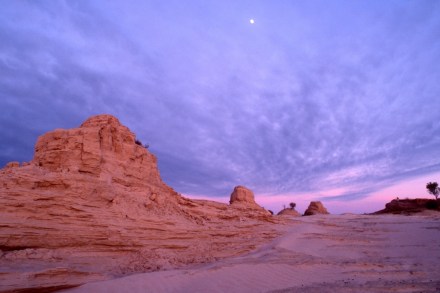
I’ve been to a few underwhelming Unesco World Heritage Sites. Take the Struve Geodetic Arc, which curves almost invisibly across Eastern Europe. I visited without even realising. As for the Fray Bentos corned beef factory, in Uruguay, I’m writing this about 20 minutes from the Fray Bentos corned beef factory and I’m still reluctant to go and see. The same might be thought of Australia’s Lakes of Willandra, which I visited around 2014. Unesco itself describes them as ‘fossil remains of lakes and sand formations from the Pleistocene’, which is not exactly heart-racing. They are unhelpfully located in the south-west corner of New South Wales – lost in semi-desert, far from anywhere.

Good riddance to literary fiction

From our UK edition

In case you hadn’t noticed, the London Book Fair has been gracing our nation’s capital this week, down in Earl’s Court. There, the publishers, agents and buyers of the literary globe (London is second only to Frankfurt in ‘book fair importance’) have been feverishly buying and selling the rights to hot new titles, hot new authors, maybe the odd lucky midlister, while identifying the trends, writers and genres that conceal the ultra-precious kernel of hotness to come. In today’s market it’s likely that buyers have been looking for visually rich comic books for children – enjoying a resurgence – and anything in a newish genre called ‘romantasy’ (think Fifty Shades of Grey meets Game of Thrones, with more vampires and less spanking).

Massacre of the innocents, saving endangered languages & Gen Z’s ‘Boom Boom’ aesthetic

From our UK edition

37 min listen

This week: sectarian persecution returnsPaul Wood, Colin Freeman and Father Benedict Kiely write in the magazine this week about the religious persecution that minorities are facing across the world from Syria to the Congo. In Syria, there have been reports of massacres with hundreds of civilians from the Alawite Muslim minority targeted, in part because of their association with the fallen Assad regime. Reports suggest that the groups responsible are linked to the new Syrian president Ahmed al-Sharaa (formerly known as Abu Mohammed al-Jolani). For some, the true face of the country’s new masters has been revealed. Whether the guilty men are punished will tell us what kind of country Syria has become since the fall of Assad’s dictatorship.

train

Taking the fast train back to imperialism

I’m on a high-speed train. Forty years ago, such a statement would have been notable and specific: essentially, it meant you were in Japan or France. Nowadays, being on a high-speed train is barely a geographical indicator at all. Most of Europe has them, from Spain to Italy to Poland. Morocco has high-speed trains. Uzbekistan has high-speed trains. Even Egypt, Vietnam, Turkey, Thailand and the USA either have high-speed railways, or will have them in the next year or two. Just about the only country not powering ahead with high-speed rail is the birthplace of the railway — the United Kingdom — a fact that can either make you sob, or despair, or perform a kind of double sob etched with despair. What makes my experience unusual is that my high-speed journey is happening in Laos.

My own personal peasant

From our UK edition

It was when the peasant didn’t move for the second hour that I became suspicious. I was in an ultra-expensive hotel in southern Thailand. It was built to resemble a sequence of exquisite villas from some ancient Thai dynasty, arranged around tropical gardens and meadows. I was staying in my very own, beautiful, teak-and-mahogany mini-palace, which came with a grand piano and butler – all the usual things I’d come to expect as a luxury travel correspondent. Yawn. The only thing really unique about this five-star hotel (they tend to blur, eventually) was the fact my own villa, the best of the best, the jewel in the crown, came with its own paddy field. And in that paddy field was a singular peasant in a charming conical hat, next to an ox.

Why did Spain leave behind such terrible food?

I can still remember it: probably the worst seafood dinner of my life. A slice of fish that was simultaneously cold, hot, dry, crumbly and rubbery, surrounded by overcooked vegetables and accompanied by a mysterious whiff of cigarette smoke. It was so repellent that even though I was famished, I summoned the waiter, returned the dish and retired to my room, there to endure a dinner of Pringles from the minibar. What made it worse was that I was in a celebrated fishing port. All I had to do was look out the window and I could see trawlers bringing in some of the world’s finest fish from some of the planet’s richest seas. It was dismaying, saddening, deflating and left me starving. What it was not, however, was surprising.

Spanish

The bitter cocktail of British decline

From our UK edition

You can’t get a Pegu in Rangoon any more. That may not sound like a disaster for the ages – nothing, say, compared to the ongoing chancellorship of Rachel Reeves, MP for Blankstare-upon-Derr – but it is quite telling, once you know the background. To explain, the Pegu is a cocktail. Here’s the recipe, if you fancy making one: Take 2 oz of gin. Add ¾ oz of orange curaçao or triple sec. Squeeze ½ oz of fresh lime juice. Include 2 dashes of Angostura bitters. Add 1 dash of orange bitters. Fill a cocktail shaker with ice and combine all the ingredients. Shake vigorously for 15 to 20 seconds until well chilled. Strain into a chilled coupe or martini glass. Sounds nice, right?

It’s not just DeepSeek, all AI is censored

From our UK edition

There are multiple reasons to be fascinated by DeepSeek, the Chinese AI chatbot that debuted last week, knocking Donald Trump off the headlines and $1 trillion off the US stock market. For a start, it represents yet another remarkable leap forward in the race to artificial general intelligence – which looks likely to arrive this decade, maybe this year. Brace. A second reason to gaze with intrigue at DeepSeek is the mysterious way it arrived. Was it really made for a mere six million bucks, as they claim? Or did they cut corners and steal the IP of ChatGPT, as OpenAI is alleging? If they did, it is quite the irony, as OpenAI itself is right now in court for chewing up the entire internet, copyright be damned, to feed its own ravenous bot.

Has Donald Trump saved the world?

From our UK edition

Like the definition of an old man in a hurry, since his inauguration Donald Trump has been pumping out orders and vetoes like Lieutenant Kilgore summoning napalm strikes in Apocalypse Now. Such has been the shock-and-awe of his legislative blitz, some of Trump’s less newsworthy diktats have gone nearly unnoticed. But hidden away in one White House document, dated January 20 2025, and titled ‘INITIAL RESCISSIONS OF HARMFUL EXECUTIVE ORDERS AND ACTIONS’ is a policy switch that might save us all. You have to scroll down the list of ‘harmful’ executive orders made by Biden – now being rolled back – to get to this jewel.

How Eastern Europe is leaving Western Europe behind

I'm in the tiny riverside town of Virpazar, in the little Balkan country of Montenegro; and under the white geisha face of a late summer moon I am warily ordering the celebrated local delicacy. It is carp — caught from the nearby, slivovitz-clear waters of Lake Skadar (biggest lake in the Balkans!). But what makes me wary is the preparation. The carp is apparently marinated, and served cold, with boiled potatoes and greens. Cold slimy fish with hot spuds and spinach? It sounds like some nightmare culinary “specialty” from the old communist bloc (of which Montenegro was once a part, within Yugoslavia). I’m veteran enough to remember a few of these. “Famous” flatbreads that came with rancid lard.

Eastern

The town that inspired One Hundred Years of Solitude

From our UK edition

The homes of famous writers are disappointing. Often, you see the famous desk, and that’s about it. There are exceptions: for example, Pushkin’s home in St Petersburg is interesting because they have the blooded waistcoat he wore during his fateful duel. Hemingway’s house in Cuba is intriguing because it is so macho – pistol, rifles, leather everywhere – you conclude he must have been secretly gay. Sadly, I can report that the home of Gabriel García Márquez in remote little Aracataca, in Colombia, is predictably disappointing. They don’t even have the desk. They’ve got the bed where he soiled his nappy – allegedly his first childhood memory – and half a kitchen. A visit takes ten minutes, as does a tour of his tedious hometown. https://youtu.be/4oQeQR1DEjw?

Red lights and shinto rites in Osaka

From our UK edition

It gets somewhat forgotten, Osaka. On the bamboo-and-tatami trail of Japanese sites, this ancient port, fort and conurbation at the very heart of Japan commonly misses out on foreign visitors: as everyone rushes from Tokyo to Kyoto, from sacred Mount Fuji to ancient Nara to haunted Hiroshima. For most overseas tourists, Osaka is just a fleeting stop on the Shinkansen high-speed trains – a glimpse of another sprawling Japanese city with bland, utilitarian housing. The edgiest place in Osaka is about as dangerous as the Cotswolds The Japanese themselves know otherwise. They flock to the city because they revere its pivotal history – Osaka was Japan’s archaic imperial capital, back in the 4th to 7th centuries – and they celebrate its epochal sites.

Alexandra Shulman, Sean Thomas, Matthew Parris, Adrian Dannatt and Philip Hensher

From our UK edition

34 min listen

On this week’s Spectator Out Loud: Alexandra Shulman reads her fashion notebook (1:13); Sean Thomas asks if a demilitarised zone in Ukraine is inevitable (6:02); Matthew Parris argues against proportional representation (13:47); Adrian Dannatt explains his new exhibition Fresh Window: the art of display and display of art (21:46); and Philip Hensher declares he has met the man of his dreams: his Turkish barber (28:17).  Produced and presented by Patrick Gibbons.

London is getting worse

From our UK edition

A famously elitist members’ club, a 900-year-old meat market, and a traditional old barbershop may not feel like they have much in common. In fact, they didn’t – not until the last week or two, when they all simultaneously closed in their disparate parts of London. The first closure, that of the Groucho Club, has been widely covered in these pages, generally with an overtone of chortling. After all, it is hard to feel sorry for a place that is notoriously exclusive, boasts a world-class art collection, and charges members £1,500 a year for the privilege of eating near a Damien Hirst – or indeed eating near Damien Hirst.

Is Ukraine heading towards a Korean-style demilitarised zone?

From our UK edition

It is the strangest place, the demilitarised zone (DMZ) that separates South Korea from North Korea. It is simultaneously a historic battlefield, a sombre graveyard, a tourist honeypot full of coach parties from Seoul, and a Cold War frontier, hotly defended on either side. One minute you are looking at a kiddies’ funfair, or a shop that sells ‘souvenir North Korean money’, the next you are staring at endless barbed wire and monuments to failed North Korean defectors, shot dead as they attempted to cross the two-and-a-half-mile strip of landmines. Which itself has turned into an Edenic eco-haven, full of deer and eagles, as the humans have vanished.