


I am standing inside perhaps the most sophisticated stadium ever built: a magnificent, latticed half-dome of white steel and trillion-pixel megascreens, bent over a football pitch so green it looks iced. And I am watching my least favorite sport on Earth: American football. As I guzzle citrus beer, the players take their 683rd strategic break in the ninth quarter to bring on the seventh specialist kicker for the XY-red-zone-whatever, while the crowd, unconcerned, shovels $18 hot dogs into their faces because no one has yet told them when, precisely, to cheer.
So why am I here? Because next year this same stadium will throb with a very different crowd. Real football fans. Tens of thousands of tribal, chanting, painted, slightly dangerous lunatics roaring the world’s greatest tournament into being: the 2026 World Cup. And the US is hosting it in, among other places, three West Coast cities: LA, San Francisco and Seattle. The question is, therefore, obvious. Can you stitch these venues into one long, classic American road trip – the whole Pacific coast, palm to pine, desert to drizzle? I’m going to give it a good go, and I aim to do it via some unexpected byways. No Big Sur, no Hearst Castle, no Malibu.
My base in Los Angeles fits the brief: old-school, quirky, slightly hidden. The Culver Hotel, 20 minutes from SoFi stadium, is a restored 1924 Art Deco dream, originally built beside Hollywood’s big studios. Charlie Chaplin once owned it; supposedly he lost it in a poker game to John Wayne. Greta Garbo and Clark Gable both kept suites here. When The Wizard of Oz was being filmed down the road, the moguls put all the munchkins here and allegedly saved money by making them sleep three to a bed, sideways. The munchkins retaliated by trashing the place like 120 half-pint Ozzy Osbornes, swinging from chandeliers.
Today, the Culver is beautifully restored. The buzzy bar supplies a stylish but ruinously expensive dirty martini. The whole movie-biz neighborhood is improbably walkable: a few blocks away, a restaurant called Margot serves unctuous saffron seafood risotto with crisp Falanghina wine.
After a couple of days in town, taking in much agreeable music and art – at one concert I get to hear Bruce Dickinson interrupt his Tolkien-metal songs with some homilies about Donald Trump with all the earnestness of a man who believes Gandalf voted to stay in the EU – it is time to head north.
The landscape changes quickly. Within hours I’m in burnt-gold hills that feel like Tuscany, if Tuscany had ranchers instead of parish priests and tech bros instead of cardinals. This is Santa Ynez, the wineland of Sideways. But don’t come expecting just the obvious pinot noir. The terroirs and microclimates pile on top of each other like college freshmen shoving themselves into a phone kiosk. I spend the day antiquing in Los Olivos, boozing with chatty bar staff, then hiking in the high coastal hills before sinking into a glass of garnet-dark grenache beside the firepit at the Genevieve Hotel.
Next stop, Monterey: one of America’s great coastal palimpsests. The US flag was first raised here in 1846 after California was pried from Mexico. Since then this lovable town has boomed, busted, brawled and rebirthed, multiple times. It has been a state capital, a pirate port, a sardine-cannery empire chronicled by John Steinbeck, a near-ghost town after overfishing. Now it is mainly a tourist idyll with marine wildlife so vivid it feels AI-enhanced.
The best way to see Monterey is by kayak. Launch from any beach and paddle among hundreds of sea lions pungently barking and belching from the rocks. These are mostly bachelors; the females stay in Baja California. You’ll likewise spy starfish, pelicans, cormorants, sometimes humpback whales – but the real glamour-pusses, in these parts, are the abundant sea otters. They recline on mats of kelp, like fur-wrapped pashas cracking shellfish on their bellies.
Happily, my hotel room is a beachside job at the swish Monterey Plaza. This means I can sip espresso and watch the otters disport, at dusk, as the distant California mountains blush red and purple and the littoral city lights sparkle. When night deepens, I wander into town and dine at Stokes Adobe, an 1840s house haunted by a British sailor turned deviant doctor. The liver mousse is impossibly good.
From Monterey it’s a swift freeway descent into San Francisco through the billionaire green-burbs of Silicon Valley. And it’s at this point I find myself bracing. Because, like everyone else, I’ve seen social media. I’ve watched the many videos of fentanyl addicts expiring on every SF street corner. And what do I find?
Maybe I missed all the bad stuff (the city does have a very popular, new, energetic mayor, after years of stasis) but to me SF seems as nice, if not nicer, than the city I remember from my last visit 20 years ago. It is eccentric, handsome, youthful, optimistic, pricey, vivid, and decidedly hi-tech (my hotel has robot staff). And it is fun.
Two neighborhoods – SoMa and the Tenderloin – do indeed feature spectral addicts shuffling about, but the cold truth is you can simply glide past them in your Waymo robotaxi to your next excellent restaurant. And this you should, because the food almost everywhere is fabulous. Downtown, John’s Grill, founded in 1908 and patronized by Sam Spade and Dashiell Hammett, welcomes me like a lost son. I stuff myself with superb lobster ravioli.
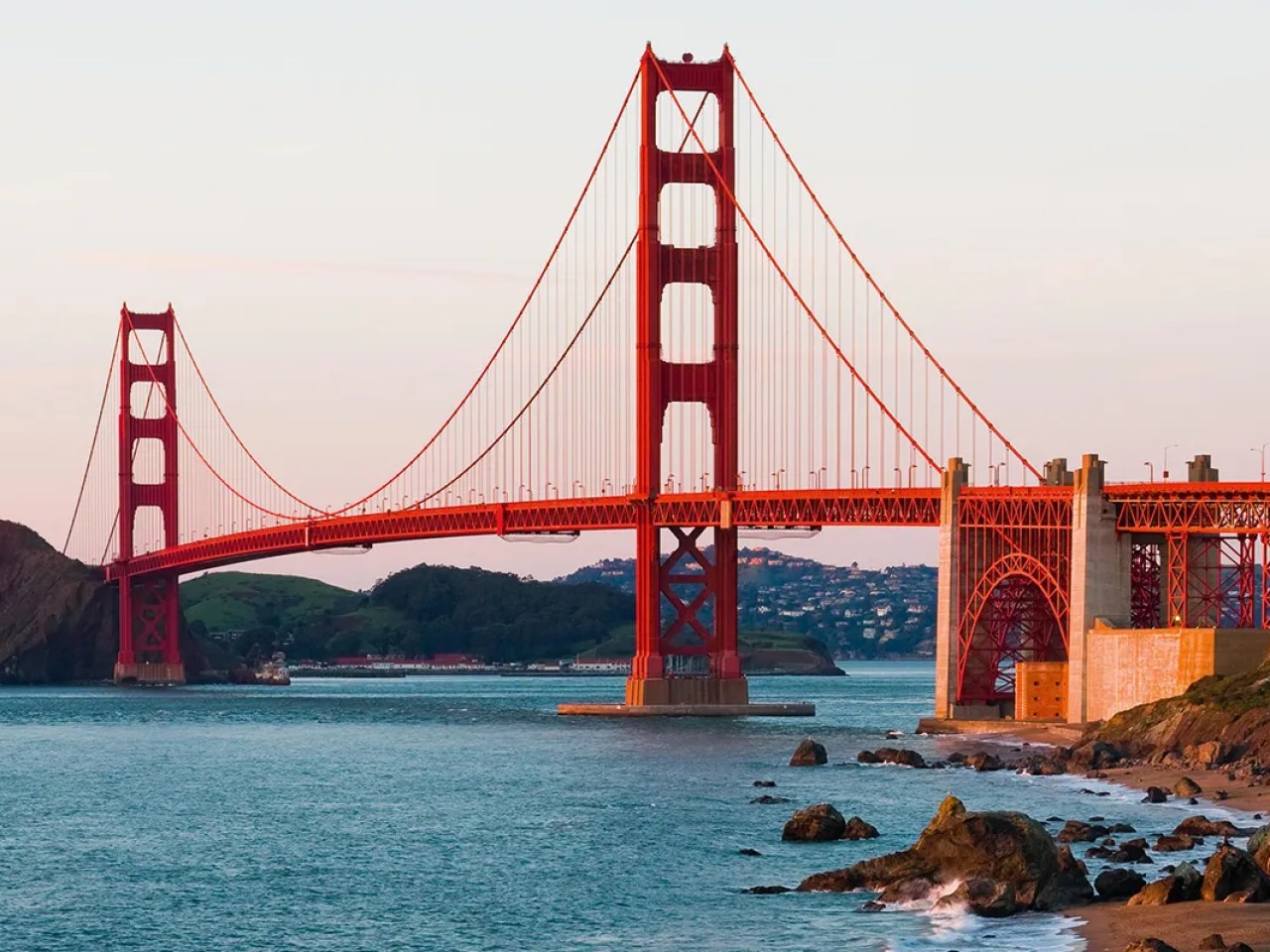
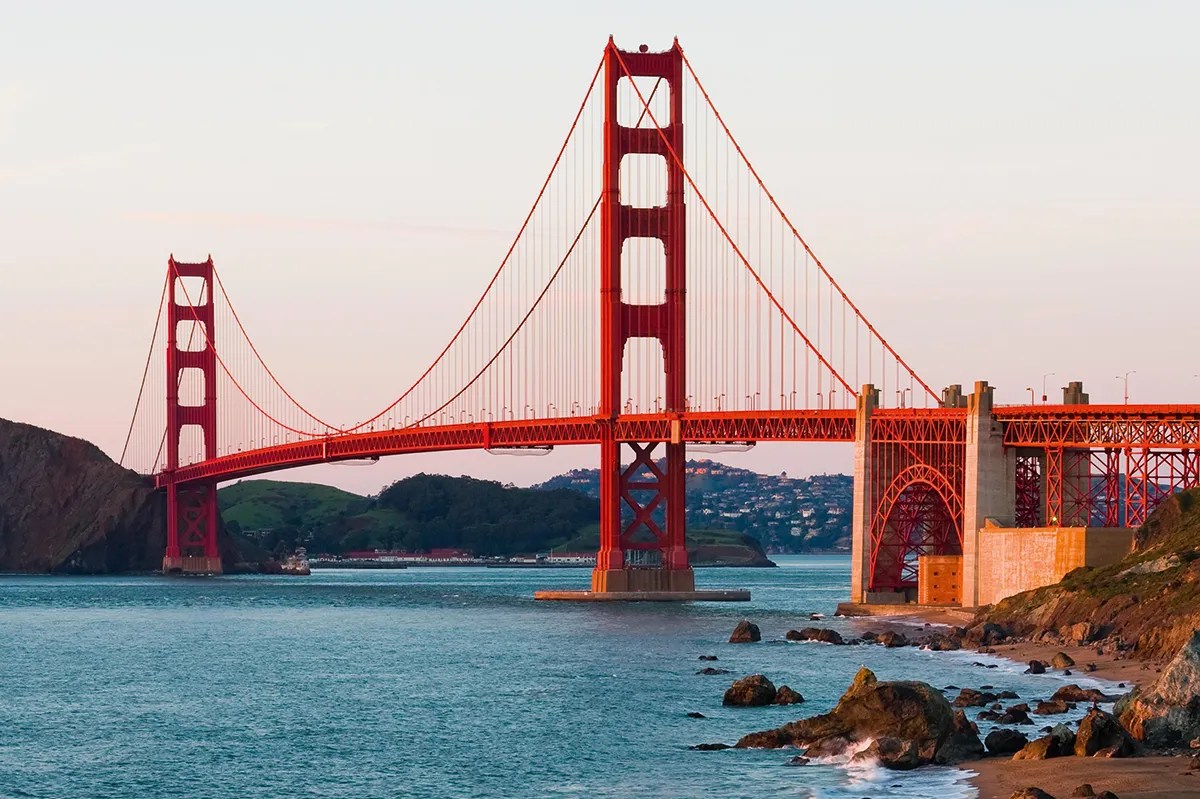
The next day the city gives me one of the great travel moments of my life. I am scheduled to cycle across the Golden Gate Bridge to pretty Sausalito, but I am waylaid by revelry: it is Fleet Week. This means US Navy fighter jets are scoring acrobatic spirals above Alcatraz, while jazz quartets play Cole Porter by the glittery waters and half the city languidly sunbathes with pomegranate sorbets. It is joyous, surreal and profoundly cinematic.
Now I must light out for the trees. Slowly the crowds and traffic vanish and Northern California becomes older, cooler, moodier. One morning I wake in Mendocino surrounded by magnificent redwoods and I feel like I have woken in prehistory. A few miles away I find myself pedaling a tiny skunk-themed rail-bike along a 150-year-old timber line into the same stunning coastal redwood groves.
As I cross the state line, the mood shifts once more. Oregon is gentler, greener, humbler. But beneath the mellow, fertile surface lie deep wounds. At Grave Creek, just off Interstate 5, I confront one of the saddest yet least-known episodes in American history.
When settlers first arrived on the Oregon Trail, around here, they found empty meadows and forests, perfect for farming. But the emptiness was an illusion. Earlier epidemics – measles, smallpox and especially a hyper-virulent malaria brought by Hudson Bay Company sailors – had already wiped out up to 97 percent of the tribes. It was probably the worst per-capita plague in all of human history.
The settlers moved in. The remaining tribes fought back. The army massacred the natives. A poetically minded traveler might look at modern Oregon’s opioid crisis, which you can spy in some smaller, woebegone towns, and imagine it as a kind of belated, chemical revenge by old tribal gods.
And yet, this is the West Coast, and so the road uncaringly sweeps on, like American history itself, into the widening Willamette Valley, which opens like the mighty nave of a long green cathedral. Here, vineyards flourish under soft blue skies. Orchards rustle with the first of their autumn golds. The land feels fecund, generous, kindly. Then I arrive in Portland – which, again, is far from the dystopia I imagined. It’s rather stately, Victorian and grand. The Willamette River steers serenely through the centre, and teems with kayaks and life; my hotel (the Sentinel, luxe and lofty) is two blocks from one of the world’s biggest bookshops (the wonderful Powell’s City of Books). Portland, it turns out, is decidedly liveable, even delectable. I only have one complaint: I wish the restaurants opened after 8 p.m. Americans go to bed too early.
My last leg steers me into Seattle, past brooding volcanoes, chilly rainforests and brawny gray urban sprawl. The first skyscrapers crest the horizon. And then I hit the opulent downtown of a city grown fat on Microsoft, Boeing and big government.
After valeting my car I stride downhill to Pike Place Market and a noisy, vibrant world of absurd abundance, of flowers and fish and leatherware, of musicians and skateboarders and antique experts, of Kumamoto oysters from Hama Hama, Shigokus from Willapa Bay, fat Yakima Valley cherries, huge Skagit Valley strawberries, sweet Marionberry chili jam and Dungeness crab from the Salish Sea. After 2,000 miles of coastline, forest, ghosts, AI, Roederer fizz, Google, Facebook, pro basketball games, and weird tourist bike-trains with free popcorn, the Pacific Northwest’s beating heart welcomes me with grand and edible splendor.
This, I realized, is why the World Cup will work here. America can host anything, because it contains everything. Beauty, tragedy, rebirth, mania, ruin and redemption. And if you time it right, you can see all this and watch, if schedules permit, Argentina play Spain in LA, Portugal defeat Brazil in San Francisco and England crash out spectacularly in Seattle – all in one long, mad, unforgettable road trip.
Rooms at LUMA Hotel San Francisco from $180 per night; rooms at the Culver Hotel in Los Angeles from $340 per night; rooms at The Sentinel Hotel in Portland from $155 per night; rooms at Hotel Ändra in Seattle from $180 per night. This article was originally published in The Spectator’s December 22, 2025 World edition.





Comments