
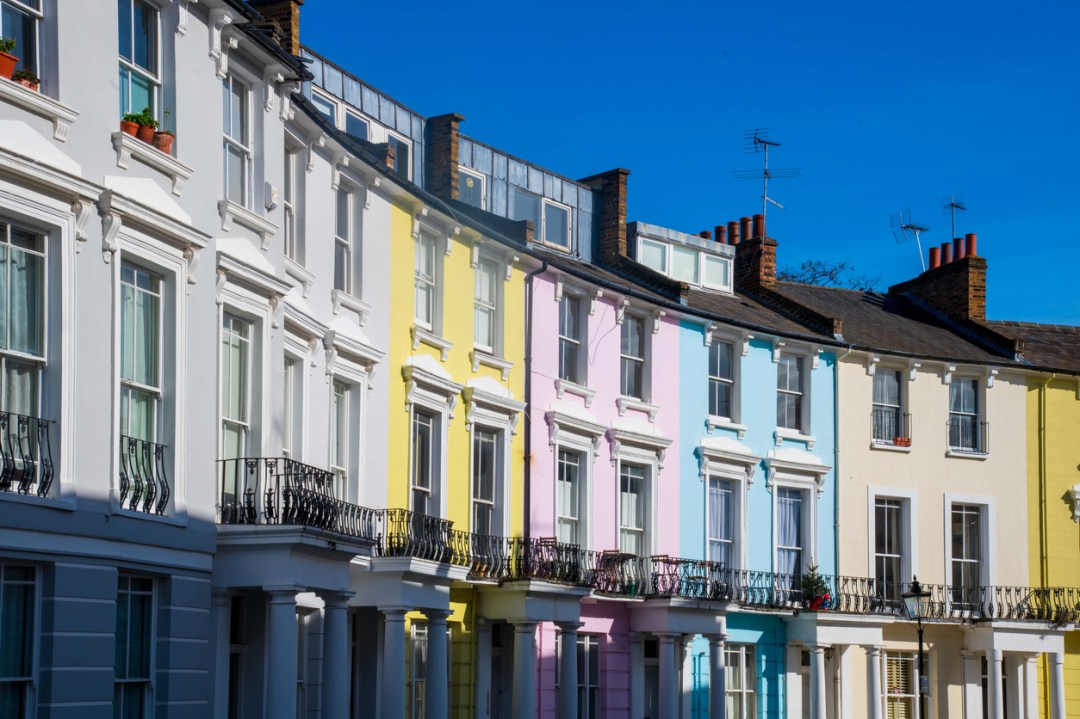
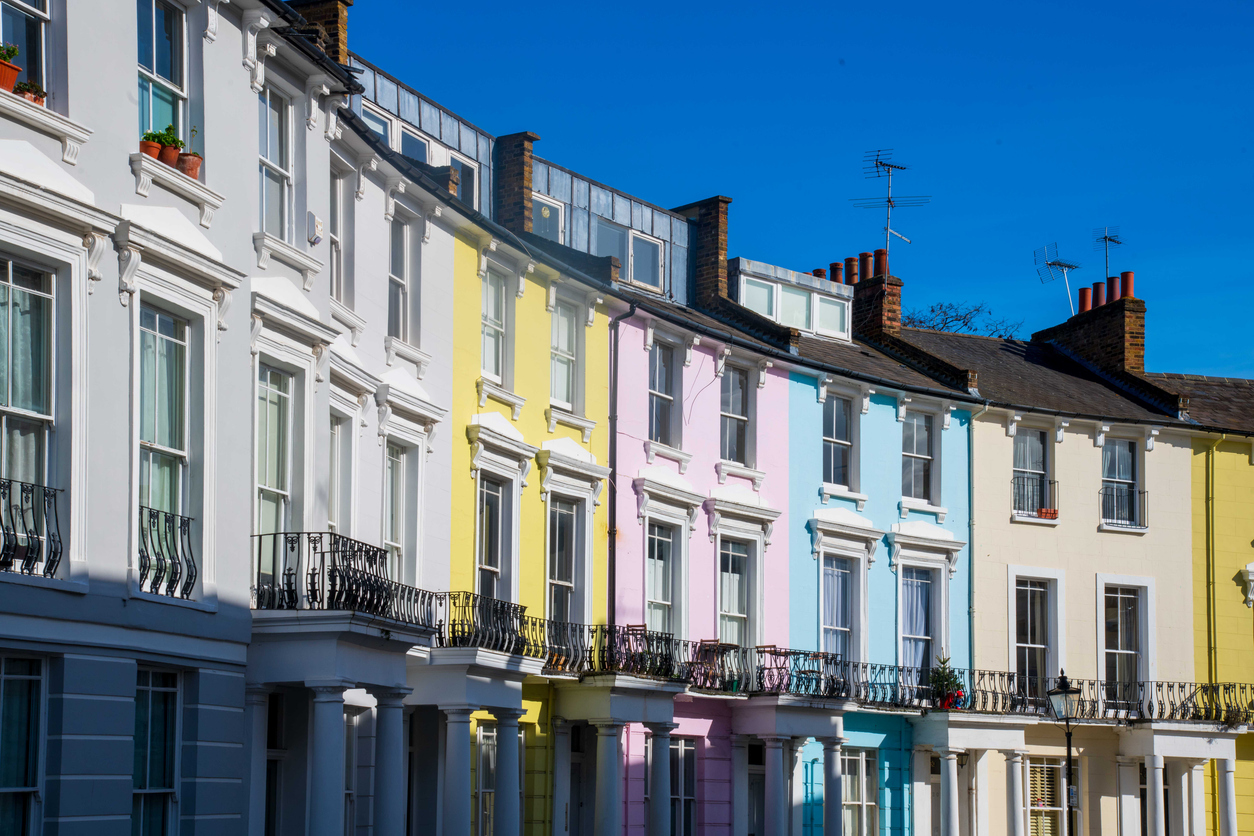
For nearly all my adult life, I’ve lived within walking distance of Primrose Hill. Indeed, for the last two decades, I’ve lived close enough that my regular evening ritual – travel, health, and global plagues permitting – involves a short stroll down Regent’s Park Road, then a stiff walk up the sacred hill itself, to take in the splendid view. Then I march home, fully dopamined, via the rugged Primrose Hill borderlands of Gloucester Avenue and the Regent’s Canal, to my Camden flat.
There is the typical Primrose Hill scene – beautiful young people picnicking with M&S prosecco – and here is a young man about to be knifed to death. It does not make sense
I say ‘rugged Primrose Hill borderlands’ because that’s been a modest in-joke with locals and neighbours for as long as I can remember. Yes, I live in that fuzzy bit where fashionable Primrose Hill begins to fade into grittier Camden, but the idea this quintessentially civilised, harmonious and beautiful corner of north London could ever be some kind of war-torn frontier, a land of bandits and reivers, is so patently absurd it is quietly funny.
It is not so funny right now. Not after the brutal stabbing and murder of 21-year-old film student Finbar Sullivan early last Tuesday evening, on the lower slopes of the hill. There are social media videos which purport to show the run up to the murder, but they are as perplexing as they are jarring. There is the typical Primrose Hill scene – beautiful young people picnicking with M&S prosecco – and here is a young man about to be knifed to death. It does not make sense. How did a silly scuffle end in a youthful corpse? This cannot be.
As a result, I have tried to make sense of it. First I tried reassuring myself that this is not typical. That London remains, as our earnest, reedy homunculus of a mayor keeps telling us, a relatively safe city, at least according to the statistics.

But the fact is, I’ve stopped trusting the stats. Not just because they seem to elide stuff like phone theft, bike theft and shoplifting, but because Khan, Starmer and their ilk never mention less comfortable numbers, such as the fact that knife crime in London has risen by 86 per cent in the last decade. You would think that particular stat might darken the official mood a little. Yet it barely seems to register.
In the absence of properly reassuring data, I’ve turned to historical context, and this is more consoling. Because Primrose Hill has never been quite as civilised as it looks: the hill has always had a shadier side.
It ‘began’ when Henry VIII enclosed it as a royal hunting ground – a place where blood was the point. When the civil war stripped its trees, it became open, lawless terrain, favoured by those with reasons to avoid the city’s watchmen, a.k.a outlaws. There really were bandits on the rugged borderlands by the Engineer pub.
Nor is Primrose Hill a stranger to celebrated murder. In 1678 a prominent magistrate, Sir Edmund Godfrey, vanished one October evening and was found five days later, face down in a ditch on the hill’s southern slopes, impaled on his own sword – except the sword had been inserted after death. There was no blood, just a broken neck. His money and rings were untouched.
The story worsens. Three likely innocent Catholic men – surnamed Green, Berry, and Hill – were subsequently hanged at Tyburn for the crime. The coincidence of their names was so macabre that for years locals dubbed the site of the magistrate’s death ‘Greenberry Hill’ – a darkly punning stain on the landscape that eventually faded back into the more innocent ‘Primrose’.
The bloodiness continues. For a while the hill became London’s preferred theatre for duelling. The most lethal encounter, in 1803, began with a fight between two Newfoundland dogs in Hyde Park. The dogs’ owners, both distinguished military men, met at the hill’s base at seven of the evening. One fired first, one returned fire. One expired, according to the record, ‘with a gentle sigh’. The other was acquitted, partly thanks to a character reference from Lord Nelson.
After that came the poets. William Blake stood on this summit and told a friend he had ‘conversed with the spiritual sun’ – seen it rise: shiny, alive and angelic, above the corrupted city below. In 1792, a Welsh antiquarian climbed the hill on the summer solstice and proclaimed the founding of a Druidic order, a ceremony he largely invented, though robed successors still gather here for pagan festivals.
And then there is 23 Fitzroy Road, just off the eastern flank, where greatness and catastrophe, darkness and light, become almost too painfully conjoined. W.B. Yeats lived here as a child. Then the great American poet Sylvia Plath moved in, after her split with Ted Hughes, drawn specifically by the Yeats association.
Alone with her two kids, in the cruelly cold winter of 1962-63, she enjoyed weeks of ferocious creativity, penning the famously disturbing Ariel poems, composed in the dark hours before her children woke: ‘Daddy, daddy you bastard, I’m through’. And then one day she left milk and bread by her sleeping kids, sealed their door shut, and she went downstairs to the kitchen and she turned on the stove, resting her head, near the gas flow, on a carefully folded tea-towel.
Sometimes on my walks home, if I’m feeling wistfully poetic or in need of dark inspiration, I pass right by Plath’s old house. And as I do I think of those final, brilliant poems she wrote in that wicked winter.
One, the very last poem in Ariel, probably written right before her suicide, summarises my hugely mixed feelings about the Primrose Hill murder. Is it just another day in the life of a great world city, or is this an ominous sign of something truly terrible coming? Plath ends the poem this way:
The moon has nothing to be sad about,
Staring from her hood of bone.
She is used to this sort of thing.
Her blacks crackle and drag.





Comments