Sean Thomas

Sean Thomas

Sean Thomas is a bestselling author. He tweets from @thomasknox.

Keir Starmer should call another EU referendum

From our UK edition

It can’t be much fun, being Sir Keir Starmer right now. If the people across the country chanting ‘Keir Starmer’s a wanker’ isn’t evidence enough, consider the polls. The Labour party is not merely experiencing a dip in support – it is in a state of freefall. A YouGov poll this week has them on 20 per cent. This is a party that won a commanding majority just over a year ago. Meanwhile Find Out Now has Labour on a scrotum-tighteningly excruciating 18 per cent – their equal worst poll ever. The same poll has the feared Farage on 33 per cent: way out in front. He would return to Islington like a victorious Celtic chieftain, hoisted on his shield.

America’s obsession with British decline

From our UK edition

As Sigmund Freud pointed out way back in 1905, everyone feels a bit schizo about Mum. On the one hand, she carried you in the womb, she probably nursed you at the nipple. She made the greatest of sacrifices so that you exist. Heck, maybe you really love her cooking. On the other hand, you have to escape her. The Italians have a brilliantly pejorative word for the man-child who stays in the maternal home far too late in life: mammone. No one wants to be that guy. And to avoid it, sometimes you have to scorn your mother, to break the psychological apron strings. So it is with American attitudes to the Mother Country. The USA had many midwives, but the mother of America was unquestionably Britain/England.

Vegas’s seedy soul will save Sin City

I vividly remember the first time I saw Las Vegas. It was decades ago, and a friend and I did the classic LA-Vegas mini-road-trip, across the burning desert, arriving in Nevada around dusk. As we crested the final sandy hill, I saw this thing. This glittering neon jewel-box of a city, glowing in the twilight. I fell in love at once, a love that was only confirmed when we actually entered Vegas, and I realized I was motoring down Hugh Hefner Way.That love didn’t quite last, however. Not long ago I returned, and something felt very different. Sadder, somehow. Yes, I was shown a Damien Hirst-designed bedroom with a fridge full of diamonds, but I also saw too much druggy homelessness, and too many stickers that gave me a shock.

Vegas

Elon is coming for your marriage

When Elon Musk quietly enabled “waifu mode” for his Grok chatbot earlier this year, the outrage was swift and familiar. Grok, now reincarnated as a coy, bare-thighed anime girl, began texting flirtatiously, calling users “darling,” and blushing in emojis. The headlines wrote themselves. Time magazine found the bot worryingly “sexualized” and “accessible even in kids’ mode”. The Verge denounced it as “ridiculous” and “alarming”. TechCrunch implied it is unethical, and noted these bots are endangering the minds, even lives, of children.The anxiety is familiar, and justified: children and adolescents, already naive, vulnerable, awkward and too online, will now fall in love with bots instead of real people.

Chatbot

Why are the young turning to God?

From our UK edition

There are opinion polls that are so striking they change history. Many Britons will remember the YouGov poll in September 2014. It was the first poll in the Scottish independence referendum campaign to show the Yes side ahead by 51 per cent to 49. That poll shocked SW1, panicked the Cameron government, and led to ‘The Vow’ – the last-minute promise of further devolution if Scotland stayed in the UK. And lo, ‘No’ scraped home, and Britain staggered on. Then there are polls that go beyond striking into ‘whoah, can that possibly be true?’ territory. Polls so unexpected they feel world-changing. The same company, YouGov, has produced just such a poll. It shows that religious belief among 18 to 24-year-olds has tripled in just four years, from 16 per cent to 45 per cent.

Why do so many of us want to be alone?

From our UK edition

When was the last time you had a truly classic racist cab driver? Mine was a few years ago, coming out of Victoria Station. On the drive to my home in Camden, Classic Racist Cab Driver had a go at all the normal targets. I sat in the back, wearily trying to screen it out, as you do. The trouble kicked in when he ran out of obvious people to be bigoted about. In desperation, he moved on to Belgians, and then on to scorning ‘anyone who takes trains’ (forgetting, or perhaps recalling, that he’d picked me up at Victoria Station). Sometimes I wonder if he is still out there, cruising down Park Lane frothing about Kazakhs or people who eat biscuits, but if he is I have bad news for him. His days are numbered.

Why the world is obsessed with white women

From our UK edition

Until a couple of weeks ago, the clothing company American Eagle was mainly known as a kind of low-rent Levi's. Founded in 1977, headquartered in Pennsylvania, the firm – specialising in denim, casualwear and kids’ clothes – has quietly expanded into Europe, and beyond, without ever generating much excitement. Let alone a worldwide culture war. Why has much of the world desired paler, whiter women? All that changed in July, when the company launched a new ad campaign featuring the petite, sassy, curvaceously ubiquitous actress Sydney Sweeney – very much This Year’s Blonde – draping her desirable shape in the company’s clothes. Several ads have been made, they all feature variations on the line ‘Sydney Sweeney has great jeans.’ A clear pun on genes.

The Online Safety Act is plumbing new depths of stupidity

From our UK edition

As anyone who has endured a pointless argument on the internet probably knows, there’s a decidedly useful rule for such situations. It’s called Godwin’s Law. Coined in 1990 by American lawyer Mike Godwin, in its most well-known version it states that in any sufficiently lengthy online row, the first person to invoke the Nazis – whether as comparison, example, or evidence – instantly loses by virtue of their luridly stupid exaggeration. Anyone who drags infamous paedophile Jimmy Savile into a political argument has already lost. Why? Because they’ve reached up for the most grotesque, emotive analogy in the rhetorical pantry Now it seems we have a shiny new British equivalent. Let’s call it Jimmy’s Law.

Are we the new hillbillies?

From our UK edition

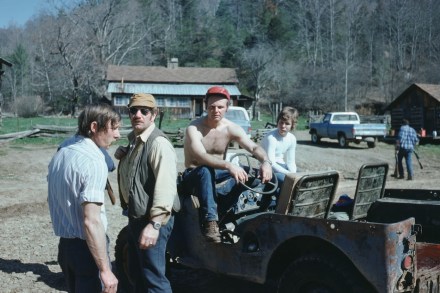
Have you ever heard of Duddies’ Branch? Chances are, you haven’t – because, firstly, its brief moment of fame came many years ago and, secondly, Duddies’ Branch does not actually exist. To explain: ‘Duddies’ Branch’ is the politely fake name given by an American anthropologist, Rena Gazaway, to a real and isolated settlement in a hollow of the Appalachian mountains (almost certainly in Kentucky). Herself born into ‘hillbilly’ culture, Gazaway spent many months of the 1960s living with the people of Duddies’ Branch. She later published her findings in a shocking 1969 book called The Longest Mile. What Gazaway encountered in that lost wooded ‘holler’ reads like dystopian fiction, even at a distance of decades. Most of the residents were functionally illiterate.

The 2020s are too far-fetched for fiction

I write thrillers for a living. All kinds of thrillers. At one point I was in the business of penning Dan Brown-style romps, where ruggedly handsome academics find themselves embroiled in a global chase for the Holy Grail. Then came a stint in domestic noir – sad, isolated women on Scottish isles. Then I had a brief mid-career burst of erotic chillers. Now I’m moving on to folk-horror meets psych-thriller. This might sound ludicrous. It is quite often ludicrous. But it’s also fun: the books translate well and the location research can be a blast. There is a downside, though: plotting. Building a plot is fiendishly hard. You have to steer a fine line between entertainment and believability. The Holy Grail in the jungle can’t just show up – it needs some explanation.

2020s

The greatest photography exhibition of all time 

From our UK edition

I am sitting on a neat little park bench in a tiny medieval town in rural Luxembourg, and I am enjoying a peculiar sensation for which the English language has no precise word. It is the beautiful yet bittersweet silence induced by an encounter with undeniably great art. Something so profound, moving and true, it leaves you speechless, maybe even a little breathless. I’ve experienced this feeling just a few times in my life. When I saw the Stanze of Raphael in the Vatican Museums. When I read the last pages of Joyce’s Ulysses – ‘yes I said yes I will Yes’. When I listened to the second side of Joy Division’s Closer, with its exquisitely mournful electro-chamber music. And now I am experiencing it again.

Did you know the world’s oldest Quran is in Birmingham?

From our UK edition

Tashkent, Uzbekistan I am in Tashkent, the capital of Uzbekistan. I am standing in a historic complex of madrasas and mosques, courtyards and dusty roses, and I am staring at the ‘oldest Quran in the world’. It is a strange and enormous thing: written in bold Kufic script on deerskin parchment; it was supposedly compiled by Uthman ibn Affan, the third Caliph of Islam, who was murdered while reading it. And so it is, as I linger here and reverently regard the Book, while scrolling my phone for more fascinating info, that I discover the world’s oldest Quran is actually in Birmingham. Yes, that’s right, Birmingham, England. It’s probably in some obscure library, lodged between a dissertation on post-colonial emojis and a flyer for Falafel Night.

Is AI eating your brain?

From our UK edition

Do you remember long division? I do, vaguely – I certainly remember mastering it at school: that weird little maths shelter you built, with numbers cowering inside like fairytale children, and a wolf-number at the door, trying to eat them (I had quite a vivid imagination as a child). Then came the carnage as the wolf got in – but also a sweet satisfaction at the end. The answer! You’d completed the task with nothing but your brain, a pen, and a scrap of paper. You’d thought your way through it. You’d done something, mentally. You were a clever boy. I suspect 80 to 90 per cent of universities will close within the next ten years Could I do long division now? Honestly, I doubt it. I’ve lost the knack.

Jeff Bezos

Venice was built for Jeff Bezos’s wedding to Lauren Sanchez

Most cities, especially those whose survival depends on tourism, might welcome the multi-squillion-dollar wedding of the world’s third-richest man. Imagine the $500 million superyacht gliding in like a Bond villain’s aqua-lair. Think of two hundred almost-as-rich guests, spilling vintage Trentodoc. Consider the spectacular press coverage, the endless sparkle, and, not least, the 14,000 Aperol spritzes sold per hour. This event means a thousand cameras trained on the city’s finest hotels and restaurants: providing the kind of advertising that folding money cannot buy. There is probably only one city on earth that would disfavour such an opportunity, and it is, of course, the world’s most exquisite: Venice.

Bluesky is dying

From our UK edition

In the middle of Cairo there’s a place called the City of the Dead. It is a dusty sprawl of mausoleums, sepulchres and crumbling Mameluke tombs, that has housed the corpses of the city for over a thousand years. On a dank winter’s dusk, it feels especially lifeless – deformed dogs vanish into shadows, random fires burn vile rubbish. But that’s when you notice children’s toys. Cheap clothes drying outside a tomb. And you realise, with a shudder: my God, some poor people live here. That, roughly, is the vibe on Bluesky today. Ironically, Bluesky is now much nastier than Twitter In case you’ve forgotten, Bluesky is the social media platform once seen as the great Twitter replacement.

Sean Thomas, John Power, Susie Mesure, Olivia Potts and Rory Sutherland

From our UK edition

22 min listen

On this week’s Spectator Out Loud: Sean Thomas reflects on the era of lads mags (1:07); John Power reveals those unfairly gaming the social housing system (6:15); Susie Moss reviews Ripeness by Sarah Moss (11:31); Olivia Potts explains the importance of sausage rolls (14:21); and, Rory Sutherland speaks in defence of the Trump playbook (18:09).  Produced and presented by Patrick Gibbons.

A lament for the lads’ mags

From our UK edition

Do you remember the lads’ mags? I do because I worked on them for years. FHM, Maxim, all those gloriously disreputable titles. I helped dream up the captions, the gags, the gonzo reportage, the phwoar-heavy covers. I also remember how they were reviled. Condemned by broadsheets, feminists, academics. Accused of objectifying girls, toxifying masculinity and encouraging men to enjoy cold lager, bare breasts and football gossip. Yet here’s the thing. When I contrast the world of lads’ mags with today’s bleak digital landscape, of AI smut and OnlyFans subscriptions, of performers mechanically coupling with a thousand men, cheered on by Insta-bots, the old magazines, even if sometimes crude or clumsy, seem almost noble. Paragons of playfulness and wit.

How a Luxembourg village divided Europe

From our UK edition

I am in the most EU-ish bedroom in the EU. That is to say, I am lying in a refurbished room in the handsome 14th-century Chateau de Schengen, in the little village of Schengen, Luxembourg. From my casements, opened wide onto the sunny Saarland afternoon, I can see the exact stretch of the river Moselle where, on a boat floating between Germany, France and Luxembourg, the Schengen Agreement was signed in 1985. This was the agreement that sealed Free Movement as Europe’s defining ideal – one whose consequences are still unfolding. I’ve been in Luxembourg for a week, on assignment, and this week has given me an insight into why the nations of the EU undertook their bold, remarkable experiment of no more borders. The first and obvious motivator was war.

I tried the world’s worst drink

I am standing in a sunny courtyard in the little town of Gijduvan, waiting for a drink. Just in case you don’t know, Gijduvan is a way station on the old Silk Road, in the far west of Uzbekistan: it is known for ceramics, Sufi mystics and loud celebrations of the Persian spring festival, Nowruz. As part of this festival, the locals make a special soup/beverage called sumalak. The recipe, I’m told, dates to Zoroastrian times – more than 3,000 years ago – and includes “wheat sprouts,” “cottonseed oil” and, I am not joking, “stones.” I can already see the sumalak bubbling away in a vast steel pot. It looks like viscous brown cow slurry. To be honest, I’m not brimming with eagerness.

drink

Midwit machines are destroying thinking

From our UK edition

First, a confession. Sometimes I go on a super-geeky site for dedicated weather watchers. It’s probably because I am quite manic depressive – and British – and definitely because I adore warmth and despise dank. That means I can be tipped into doom by anti-cyclonic gloom or lifted into ecstasy by a decent heatwave. Whatever the precise cause, this mild obsession has made me a long-term member of that weather forum, where we natter about polar vortices and the ‘Beast from the East’ like meteorological trainspotters. Over the years I’ve got to know the other forum members pretty well, despite never having met them; we banter and bicker and sometimes discuss biscuits. It’s like a kind of low-key pub with extra charts from Meteosat.