Ross Clark

Ross Clark

Ross Clark is a leader writer and columnist who has written for The Spectator for three decades. He writes on Substack, at Ross on Why?

Don’t listen to the doom-mongers: A rise in inflation isn’t some kind of crisis

It takes quite a determined Cassandra to see the rise in Consumer Prices Index (CPI) from 0.6 per cent in August to one per cent in September as some kind of crisis, not that that will stop the holdouts of the Remain campaign from trying to do so. When CPI fell below one per cent at the end of 2014, you might remember, there were dark warnings about the threat of deflation – with the horrors that would imply for borrowers, who would see the real value of their debts increase. Now, some are trying to present a rise to one per cent as bad news, with former Monetary Policy Committee member Andrew Sentance, for example, calling it the ‘tip of an inflationary iceberg’. Steady on. Sure, inflation is likely to increase over the next few months.

Boris’s Royal Yacht obsession shows his weakness for vanity projects

I would like to think that the lack of obvious progress on negotiating a post-Brexit deal with the EU is, as Theresa May said this week, part of a strategy – that there is a lot going on behind the scenes but it is not in our interests for the Government to give a ‘running commentary’ on it. But listening to the foreign secretary speaking before the Commons foreign affairs committee I am beginning to wonder. Maybe, actually nothing is going on. Top of Boris’s ‘to do’ list, it seems, is not securing trade deals with the world beyond the EU. It is securing himself a royal yacht on which he can then swan around the world - perhaps doing a trade deal or two on the way.

Tesco finally meets its match

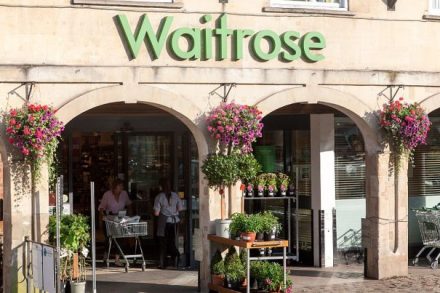
Only in the bizarre, upside-down, post-Brexit referendum world could Tesco try to portray itself as a victim of bullying by one of its suppliers. Isn’t Tesco supposed to be the nasty corporation which ruthlessly uses its might to squash the people who produce the goods which line its shelves? What about all those farmers, dairies and small-time cookie-makers apparently given a tough time by hard-nosed buyers at Tesco, who always want everything cheaper and for payment terms to be stretched out ever longer? I don’t expect anyone to feel sorry for Tesco – I’m certainly not sobbing over my Marmite sandwiches – but the reality is that yes, the supermarket really has met its match.

It’s business as usual in the post-Brexit world

Remember how Brexit was going to cost jobs and investment? At times, even Leave campaigners struggled to find the confidence to persuade themselves that European companies would continue to invest in the UK, falling back instead on the argument that Brexit would provide an opportunity to attract investment from elsewhere in the world. How long ago all that seems now. Today, French train manufacturer Alston has confirmed that it is to build a new £20 million manufacturing plant at Widnes in Cheshire, creating 600 jobs. The plant will refurbish West Coast main line trains and be used as a manufacturing base for future trains for the UK market.

The Brexit bounce continues

Just when you thought economists might finally have got the message about their doom-laden predictions for the economy following the vote for Brexit, along comes another statistic showing they are still getting it hopelessly wrong. I wrote here last month about how the Markit/CIPS Purchasing Managers Index – an early indicator of economic growth – had moved into positive territory in August, defying predictions that it would stay below 50, a level which suggests a shrinking economy. There was then, however, still one black cloud – the construction industry element of the index stood at 49.3 in August.

This is what a xenophobic referendum actually looks like

A country votes against the EU in a referendum in which rabidly anti-immigrant sentiments are aired by senior politicians. That is Hungary, of course, where voters have just rejected -- with a majority of 98 per cent, albeit it on a turnout of 44 per cent, too low to make it binding  -- an EU plan for the country to house 1200 refugees. Now, perhaps, the Remain camp in Britain will stop trying to portray Britain as a nasty, xenophobic country out of step with European values and admit that actually we are really rather liberal in our attitudes towards migration. The only difference is that we had an in-out referendum on EU membership and no other country has yet done so.

Why sacking the football manager is a fool’s game

At last, an English football manager who actually deserves to be sacked (or ‘left by mutual agreement’ if you prefer the official line). An England manager on £3 million a year shouldn’t be dreaming up ways of helping himself to an extra few hundred thousand through dodgy deals. But that makes Sam Allardyce something of a rarity. It is hard to think of another England football manager of recent times who really deserved the heave-ho. Roy Hodgson led a team to an embarrassing defeat against Iceland, but was it really him who deserved to go or the useless players who couldn’t even pick up a pass? It is no use coming up with strategy if the players start letting it through their feet.

Theresa May has made the wrong call on Hinkley Point

Today’s decision to give the go-ahead for Hinkley C after a six-week review seems to confirm what was indicated in July: that Theresa May’s problem with the project was mostly concerned with security issues. What has been announced today is that the government will take a special share in all future nuclear power projects to prevent the plants being sold to unapproved investors. There is no indication that ministers have sought to renegotiate the price. Consumers will still pay EDF for the electricity generated by Hinkley for the next 35 years: £92.50 for every MWh – around double the current wholesale market price.

Why shouldn’t the South Koreans eat dog?

We are, of course, a nation committed to celebrating cultural diversity.    Except, that is, when a foreigner sits down to tuck into a plate of dog meat.   Then, we start to behave like the Taliban, believing that we have the right to dictate standards to the entire world. On Monday, MPs staged a bizarre debate in Westminster Hall on the subject of what should and what should not be served in restaurants in South Korea.

Where should the line be drawn over the famous Kim Phuc photograph?

Can you imagine, in the wake of a terror attack in London, a tabloid, or any other kind of media outlet, publishing a photograph of a naked and distressed child caught up in the melee? It isn’t hard to answer the question. Of course they wouldn’t publish it. It would break every rule in the book. It is bizarre, then, to see Facebook accused of censorship for coming to exactly the same conclusion: that it wasn’t right to carry an image of naked and distressed child. It is even weirder to see Facebook attacked from a corner – the Guardian – which would normally be among the first to damn tabloid intrusion. The difference is that the photograph in question was not taken in London and was not taken in the recent past.

The Brexit bounce

Next time it comes to redesigning the PPE course at Oxford, I suggest a module beginning with a quotation from George Osborne. It’s something he said to the Treasury Select Committee in May, back when he was still Chancellor: ‘If you look at the sheer weight of opinion, it is overwhelmingly the case that people who look at the case for leaving the EU come to the conclusion it would make the country poorer, and it would make the individuals in the country poorer, too.’ There might be advantages to Brexit, he said, ‘but let’s not pretend we’d be economically better off’. In other words: it wasn’t just George Osborne’s opinion that Britain would be worse off if we left the EU; it was objective fact.

Out but not down

No group of the population voted to remain in the EU more enthusiastically than students. According to the polling organisation YouthSight, 85 per cent of them voted to remain, and among the 15 per cent who voted leave, 17 per cent say they now regret it. Moreover, the idea that students were too lazy or drunk to turn out to vote is a gross calumny on the young, according to the survey. It found that 87 per cent of eligible students turned out to vote — compared with 72 per cent of the general population. What it didn’t reveal is how many students voted more than once.

G20 leaders have fallen for Project Fear

So, last week’s sharp rise in the Purchasing Managers’ Index (PMI) for manufacturing wasn’t a freak. This morning its twin, the PMI for the much larger services sector, also showed a huge rebound to 52.9, more than reversing the fall to 47.4 in July and putting it marginally ahead of PMI for the Eurozone, which stands at 52.8. The combined PMI was 53.2 in August. Anything above 50 suggests that the economy in expanding while anything below 50 suggests contraction. Just like last week’s manufacturing figure, this morning’s news seems to have caught forecasters unaware: the consensus was for PMI in services to be 50.0.

How can we trust China with our nuclear power when we can’t trust it not to spy on our government?

In her decision as to whether to go ahead with the Chinese-backed Hinkley C nuclear power station – postponed from July apparently because of security concerns – Theresa May will find no better guidance than the advice which has been given to her and her aides while attending the G20 summit in Hangzhou this week. They have reportedly been advised to not to take their mobile phones, and to use temporary replacements while in China. They have also been given temporary email accounts which can be deleted upon return, and to avoid using public charging points for laptops and iPads.

Why Brexit is the new Black Wednesday

Day by day, the vote for Brexit on 23 June is coming more and more to resemble Black Wednesday, the day when sterling plummeted out of the Exchange Rate Mechanism (ERM). Then, as now, the event was initially treated by many as a national calamity – before it steadily became apparent just how a big a fillip it had provided the economy. This morning’s good news is the Markit/CIPS Purchasing Managers’ Index (PMI), which surged to 53.3 in August. This more than makes up for the plunge to 48.2 in July. Anything above 50 indicates expansion in activity, and anything below 50 contraction. The month-on-month rise was the largest in 25 years.

Who’s at the ‘back of the queue’ now, Obama?

Wasn’t it one of the 'Remain' campaign’s big arguments that leaving the EU would deprive us of the ‘clout’ we enjoy in negotiating foreign trade agreements? I seem to remember someone even warning us that in the event of Brexit we would go ‘to the back of the queue’ for a trade agreement with the US. So much for being at the front of the queue. Today, the French minister for foreign trade, Matthias Fekl, demanded an end to talks with the US over the Transatlantic Trade and Investment Partnership (TTIP). It comes hot on the heels of claim yesterday by German deputy Chancellor Sigmar Gabriel that TTIP has failed. Yet again, the EU has proved hopeless in negotiating a trade deal with a major economy.

The ‘pay to stay’ council house policy ignores the reality of the housing market

Instinctively I feel I ought not to feel sympathy for the 70,000 council house tenants earning more than £40,000 a year in London (£30,000 outside London) and who are going to be made to pay an average of an extra £1000 a year to stay in their subsidised council homes. They are better off than average and at a level of income at which they ought not to be reliant on the charity of the state. There was a time early on in my working life when I earned substantially less than the average earnings, and not for a minute would I have dreamed of applying for social housing. But then we aren’t in the early 1990s now. We are in an age of vastly inflated property prices, caused by government policies which are deliberately aimed at keeping prices high.

How the HIV-prevention drug could break the NHS

If NHS England ever comes to be dismantled it won’t be because a heartless Tory government has decided that, for reasons of neoliberal ideology, it ought to be replaced by private insurance schemes. It will be because the unreasonable and limitless demands placed on it by those who claim to be its friends have inflated its budget to a level that public funds can simply no longer sustain. That moment was brought a little closer last week by a victory in the High Court for the National Aids Trust (NAT). The trust had argued that the NHS should fund, at £400 per month a time, a group of drugs known as PrEP, or Pre-exposure Prophylaxis.

Labour’s £25 voting fee is essentially a poll tax

Imagine the reaction of Her Majesty’s Opposition if the government announced that it was to introduce a new ‘voter charge’ – a levy which citizens had to pay before they were allowed into the polling station. Just as they did with the ‘Community Charge’ over a quarter of a century ago Labour would undoubtedly – and quite reasonably – call it a ‘poll tax’. How could a democracy possibly try to exclude the poor from the vote, they would ask, before backing a legal challenge on the grounds of human rights? Why, then, is Labour so determined to introduce its own internal poll tax?

Corbyn’s gong for Chakrabarti is his biggest own goal yet

It is beginning to look like a bit of a trend this year: the Conservatives get themselves into a tight spot, only for Labour to trump them quickly. Just as the Tories seemed to be descending into a bitter leadership crisis on the weekend after the referendum, half the shadow cabinet resigned. Now, just as David Cameron was being mauled from all quarters over the cronies in his resignation honours list (including from the presumably not soon-to-be Lord Hilton), Jeremy Corbyn has directed attention to himself by ennobling Shami Chakrabarti, formerly of human rights group Liberty. The appointment is embarrassing three times over. Firstly, because he said last year: 'Labour will certainly not nominate new peers for the Lords, which risks undermining its legitimacy'.