Ross Clark

Ross Clark

Ross Clark is a leader writer and columnist who has written for The Spectator for three decades. He writes on Substack, at Ross on Why?

The Brexit bounce

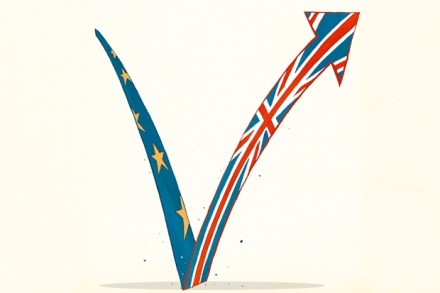
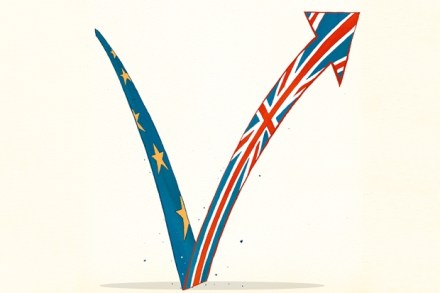
Next time it comes to redesigning the PPE course at Oxford, I suggest a module beginning with a quotation from George Osborne. It’s something he said to the Treasury Select Committee in May, back when he was still Chancellor: ‘If you look at the sheer weight of opinion, it is overwhelmingly the case that people who look at the case for leaving the EU come to the conclusion it would make the country poorer, and it would make the individuals in the country poorer, too.’ There might be advantages to Brexit, he said, ‘but let’s not pretend we’d be economically better off’. In other words: it wasn’t just George Osborne’s opinion that Britain would be worse off if we left the EU; it was objective fact.

Out but not down

No group of the population voted to remain in the EU more enthusiastically than students. According to the polling organisation YouthSight, 85 per cent of them voted to remain, and among the 15 per cent who voted leave, 17 per cent say they now regret it. Moreover, the idea that students were too lazy or drunk to turn out to vote is a gross calumny on the young, according to the survey. It found that 87 per cent of eligible students turned out to vote — compared with 72 per cent of the general population. What it didn’t reveal is how many students voted more than once.

G20 leaders have fallen for Project Fear

So, last week’s sharp rise in the Purchasing Managers’ Index (PMI) for manufacturing wasn’t a freak. This morning its twin, the PMI for the much larger services sector, also showed a huge rebound to 52.9, more than reversing the fall to 47.4 in July and putting it marginally ahead of PMI for the Eurozone, which stands at 52.8. The combined PMI was 53.2 in August. Anything above 50 suggests that the economy in expanding while anything below 50 suggests contraction. Just like last week’s manufacturing figure, this morning’s news seems to have caught forecasters unaware: the consensus was for PMI in services to be 50.0.

How can we trust China with our nuclear power when we can’t trust it not to spy on our government?

In her decision as to whether to go ahead with the Chinese-backed Hinkley C nuclear power station – postponed from July apparently because of security concerns – Theresa May will find no better guidance than the advice which has been given to her and her aides while attending the G20 summit in Hangzhou this week. They have reportedly been advised to not to take their mobile phones, and to use temporary replacements while in China. They have also been given temporary email accounts which can be deleted upon return, and to avoid using public charging points for laptops and iPads.

Why Brexit is the new Black Wednesday

Day by day, the vote for Brexit on 23 June is coming more and more to resemble Black Wednesday, the day when sterling plummeted out of the Exchange Rate Mechanism (ERM). Then, as now, the event was initially treated by many as a national calamity – before it steadily became apparent just how a big a fillip it had provided the economy. This morning’s good news is the Markit/CIPS Purchasing Managers’ Index (PMI), which surged to 53.3 in August. This more than makes up for the plunge to 48.2 in July. Anything above 50 indicates expansion in activity, and anything below 50 contraction. The month-on-month rise was the largest in 25 years.

Who’s at the ‘back of the queue’ now, Obama?

Wasn’t it one of the 'Remain' campaign’s big arguments that leaving the EU would deprive us of the ‘clout’ we enjoy in negotiating foreign trade agreements? I seem to remember someone even warning us that in the event of Brexit we would go ‘to the back of the queue’ for a trade agreement with the US. So much for being at the front of the queue. Today, the French minister for foreign trade, Matthias Fekl, demanded an end to talks with the US over the Transatlantic Trade and Investment Partnership (TTIP). It comes hot on the heels of claim yesterday by German deputy Chancellor Sigmar Gabriel that TTIP has failed. Yet again, the EU has proved hopeless in negotiating a trade deal with a major economy.

The ‘pay to stay’ council house policy ignores the reality of the housing market

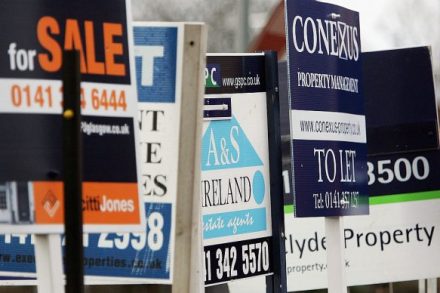
Instinctively I feel I ought not to feel sympathy for the 70,000 council house tenants earning more than £40,000 a year in London (£30,000 outside London) and who are going to be made to pay an average of an extra £1000 a year to stay in their subsidised council homes. They are better off than average and at a level of income at which they ought not to be reliant on the charity of the state. There was a time early on in my working life when I earned substantially less than the average earnings, and not for a minute would I have dreamed of applying for social housing. But then we aren’t in the early 1990s now. We are in an age of vastly inflated property prices, caused by government policies which are deliberately aimed at keeping prices high.

How the HIV-prevention drug could break the NHS

If NHS England ever comes to be dismantled it won’t be because a heartless Tory government has decided that, for reasons of neoliberal ideology, it ought to be replaced by private insurance schemes. It will be because the unreasonable and limitless demands placed on it by those who claim to be its friends have inflated its budget to a level that public funds can simply no longer sustain. That moment was brought a little closer last week by a victory in the High Court for the National Aids Trust (NAT). The trust had argued that the NHS should fund, at £400 per month a time, a group of drugs known as PrEP, or Pre-exposure Prophylaxis.

Labour’s £25 voting fee is essentially a poll tax

Imagine the reaction of Her Majesty’s Opposition if the government announced that it was to introduce a new ‘voter charge’ – a levy which citizens had to pay before they were allowed into the polling station. Just as they did with the ‘Community Charge’ over a quarter of a century ago Labour would undoubtedly – and quite reasonably – call it a ‘poll tax’. How could a democracy possibly try to exclude the poor from the vote, they would ask, before backing a legal challenge on the grounds of human rights? Why, then, is Labour so determined to introduce its own internal poll tax?

Corbyn’s gong for Chakrabarti is his biggest own goal yet

It is beginning to look like a bit of a trend this year: the Conservatives get themselves into a tight spot, only for Labour to trump them quickly. Just as the Tories seemed to be descending into a bitter leadership crisis on the weekend after the referendum, half the shadow cabinet resigned. Now, just as David Cameron was being mauled from all quarters over the cronies in his resignation honours list (including from the presumably not soon-to-be Lord Hilton), Jeremy Corbyn has directed attention to himself by ennobling Shami Chakrabarti, formerly of human rights group Liberty. The appointment is embarrassing three times over. Firstly, because he said last year: 'Labour will certainly not nominate new peers for the Lords, which risks undermining its legitimacy'.

Can Labour be trusted with Britain’s security when it can’t manage its own?

During the Blair years the security guards at Labour party conferences had a reputation for over-zealous intervention – remember the sight of octogenarian Walter Wolfgang being manhandled out of his seat and ejected from the chamber for daring to heckle Jack Straw over the Iraq War? Appropriately enough, under Corbyn, Labour’s conference security has the opposite problem – it seems to have been unilaterally-disarmed. As Guido Fawkes reveals this morning there is a serious possibility that this year’s event, scheduled to take place in Liverpool next month, will have to be cancelled owing to the party’s inability to organise security for the event. The problem goes back to last year when the party’s grandees high-mindedly decided to boycott G4S.

Cronyism isn’t great, but it’s better than corruption

If there was any remaining doubt that David Cameron’s resignation honours list was drawn up shamelessly to reward political flunkies it was removed this morning by Desmond Swayne, or Sir Desmond Swayne as we are now supposed to call him following the knighthood bestowed on him in the New Year’s honours. Sir Desmond said: 'The reason we have a resignation honours list is because over a period of government, particularly difficult government in a coalition, a prime minister has to cajole and get the support of a number people and he builds up a debt of honour. 'I think that frankly an honours list is a relatively light way of paying it off. I think we get far too excited about these things.

There’s nothing ‘anti-establishment’ about this US election

This year’s US presidential election campaign has broken the mould, apparently. Never before have two ‘anti-establishment’ candidates in the shape of Donald Trump and Bernie Sanders put up such a challenge, one securing his party’s nomination and the other coming close to doing so. It is all a symptom of the ‘anti-politics’ mood that has swept Western democracies. There is just one thing wrong with this analysis. If Americans are so fed up with the established parties, why is there no credible third party candidate who is going to come within an ace of challenging the two main candidates? It ought to be a golden opportunity for outsiders.

Osborne’s Hinkley vanity project deserves to be buried alongside his political career

Yesterday was supposed to be the day the nuclear button was finally pressed – a vote by the board of French energy company EDF to go ahead with Hinkley C power station was assumed to be the moment at which the project would finally spring off the drawing board. Instead, business secretary Greg Clark announced that he needed until September to make a final decision on the government’s behalf. He is to be commended for not being pushed into the go-ahead. Hinkley – along with Heathrow and HS2 – is one of three ‘Hs’ bequeathed by the Cameron-Osborne years: hugely expensive infrastructure projects seemingly frustrated by chronic indecision.

Pre-Brexit jitters? No, Britain boomed during the Referendum campaign

It is still a little too early to say for sure that George Osborne’s gloom-laden economic forecasts for post-Brexit Britain were bunk. But never mind the future, it now emerges that he wasn’t much good at telling us what was happening in the present. Throughout the referendum campaign he could barely disguise his contempt for the whole exercise, telling us that the UK economy was suffering from the mere fact we were having a vote. A week before referendum day, for example, he told us that  'The economic uncertainty that the ‘Leave’ campaign carelessly insist won’t be caused is already being seen.' Whatever he was seeing, it didn’t reflect reality. The growth figures for the second quarter released today reveal that in fact the economy grew by 0.

The NHS would be crippled without big pharma

Like Owen Smith, I have an interest to declare when discussing Pfizer.   Somewhere on my bookshelf I have a Pfizer physics prize – a school prize funded by the US pharmaceutical giant which at the time had a research facility nearby. Later, Pfizer helped fund an extension to the school which, appropriately enough given its best-known product, rose to twice the height of the existing science block. I don’t, then, share the view of Jeremy Corbyn who seems to see Pfizer as part of an evil empire trying to undermine the NHS. Rather I see it as a company which, while it gets into the odd scrape with regulators, has some sort of social conscience and which has helped fund and produce drugs which are relied-upon by millions of NHS patients a day.

Was Michael Gove punished for being too soft on crime?

Of today’s corpses piled up in Downing Street, none has caused more shock than that of Michael Gove. That Nicky Morgan, who signed Gove’s nomination papers to be leader, has also gone hints at some kind of personal animosity. But might the explanation be more straightforward than that – simply one of his policy and approach as justice secretary? Gove acquired a reputation as a great reformer during his time at the Department for Education, facing down huge opposition from teachers’ unions in the process. He incurred considerable personal cost for doing this, with David Cameron shifting him to the whips office before the last election on the instructions of Sir Lynton Crosby, who feared Gove to be electorally toxic.

The Fixed Term Parliaments Act has come back to haunt the Lib Dems

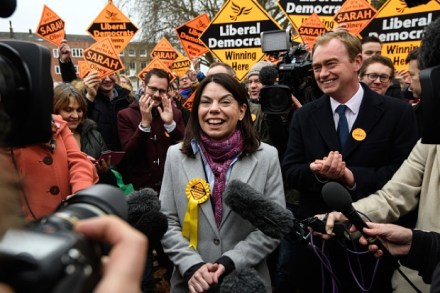
The award for most pathetic remark of the week goes to Tim Farron who earlier released a press statement saying this: 'Just 13 months after the last election the Conservatives have plunged the UK into chaos. It is simply inconceivable that Theresa May should be crowned Prime Minister without even having won an election in her own party, let alone the country. There must be an election. The Conservatives must not be allowed to ignore the electorate, their mandate is shattered and lies in ruins.

A traditional family life is now a political handicap

'I’m a gay woman with strong northern working-class roots,' Angela Eagle told Robert Peston on Sunday. 'I think I’m the right person for this job at this time.' In case we didn’t get the point she followed it up this morning by boasting: 'I’m a northern working-class girl who understands modern life.' How outrageous that Jeremy Corbyn’s challenger should bring her class, her geographical birthplace and her sexuality into the leadership debate, suggesting that they would make her a more suitable leader than Corbyn.   Or maybe it isn’t outrageous that someone should draw on their personal experiences while campaigning for office.

Let’s grown our own money for hi-tech investment

No 1960s vision of the 21st century was complete without an attentive robot-scuttling around doing household chores. At the time, automation went about as far as the Goblin Teasmade — an unwieldy alarm clock programmed to wake its owner with a-gentle hissing and freshly made cup of tea. It seemed logical that the next step would be fully mechanised homes. Yet, not for the first time, the future failed to arrive on time. Domestic robots turned out to be a disruptive technology that disrupted nothing except the retirement plans of those who had invested in them. We have even gone back to brewing our morning tea — while an original-Goblin Teasmade now sits in a display case at the Science Museum.