Ross Clark

Ross Clark

Ross Clark is a leader writer and columnist who has written for The Spectator for three decades. He writes on Substack, at Ross on Why?

The unfair attacks on Liz Truss prove that Parliament has too many lawyers

If there were any doubt that there are too many lawyers in Parliament it has been removed by the meeting, on Monday evening, between backbench Conservative MPs and the justice secretary Liz Truss. The subject was Truss’s alleged failure to defend the judiciary from criticism of last week’s High Court judgement on the enactment of Article 50. One MP was reported as saying: 'Her job is to defend the judiciary from attack.' No it isn’t. Liz Truss has special duties as Lord Chancellor – but she is the government's justice secretary, not CEO of a judges' trade association. Her duty as Lord Chancellor is to uphold the continued independence (from the government) of the judiciary - not to protect it from public criticism.

Theresa May will only regret it if she doesn’t call an early election

Is there anything more absurd than hearing a bunch of Remainers claiming that they have achieved a great victory for Parliamentary democracy in today’s High Court ruling that Parliament should vote on the exercise of Article 50, beginning Britain’s exit from the EU? Parliament voted for a referendum, in which the British people voted to leave the EU. All that today’s judgement does is frustrate that process. As I wrote last week over Heathrow, the judicial review system is fast-turning Britain into a Krytocracy, in which judges wield the real power. All that said, why is the government bothering to fight the judgement? If the Remainers want more Parliamentary democracy, Theresa May should give it to them.

Why I’m boycotting Waitrose

Right, that’s it. No more paying through the nose for sun-dried tomatoes. I am boycotting Waitrose and I urge others to do the same. I am not buying my groceries from a company which has caved into the unscientific balderdash coming from the anti-GM lobby. Waitrose has just announced that it will no longer use GM feed on its farms. I am not usually one for boycotts, but the only way anyone is going to defeat the anti-GM brigade is to play it at its own game. Britain should have been a world leader in GM technology. In the late 1990s we had the minds to develop and grow it. Instead, it was squashed by scare stories spread by environmentalists, who claimed that GM food was going to give us cancer and lead to the countryside being gobbled up by cross-pollinated superweeds.

Amber Rudd is right, Orgreave is best consigned to the history books

So, there will be no public inquiry into the Battle of Orgreave in 1984, and no left-wing lawyers making a fortune. Maybe Andy Burnham, who seems to have appointed himself as Shadow Minister for Ancient Grievances, would have got further had he demanded an inquiry that was less overtly political, and looked at the violence of striking miners as well as misconduct by the police, but do we really have to trawl back through all of that? No-one died at Orgreave, unlike in South Wales where taxi driver David Wilkie was killed when a concrete block was dropped on his car while taking a ‘scab’ to work. The striking miners responsible ended up serving just four years in jail, their murder sentence reduced to manslaughter on appeal.

The Uber ruling will change little

So the GMB and the two Uber drivers who thought they ought to receive holiday pay and be guaranteed the national living wage have won their case. An employment tribunal has ruled that Uber was wrong to classify them as self-employed as their contracts placed too much demand on them to work at particular times – a condition which indicates employment rather than self-employment. What the other 40,000 Uber drivers think of the case is not clear. On the one hand, having status as employees would offer them a guaranteed £7.20 an hour and paid holidays. On the other hand, it would mean paying higher National Insurance contributions and less flexibility to work when they want to. It would make it much more difficult for them to combine driving a cab with doing other work.

Today’s GDP figures show the ‘inevitable’ Brexit recession wasn’t so inevitable after all

So now we know. The recession that we were told would be ‘inevitable’ if we voted to leave the EU was not quite so inevitable after all. In fact, it hasn’t happened at all. The Office of National Statistics’ first estimate of economic growth for the third quarter has the economy growing by 0.5 per cent. Though this is just an early estimate and could well be revised – revision upwards or downwards of 0.1 to 0.2 per cent are perfectly normal – it is certainly not indicating a recession, which would be two quarters of negative growth. It is pretty much in line with how the economy was growing prior to the vote – a healthy annualised growth of around two per cent.

The Project Fear backtracking isn’t over yet

Another day, another backtracking in the doom-laden predictions of what would happen as a result of a vote for Brexit. Back in May, World Trade Organisation (WTO) chief Roberto Azevedo told the Financial Times that Britain would not simply be allowed to ‘cut and paste’ its terms of membership with the WTO. We would, he suggested, effectively have to negotiate from scratch – a process which could take years, as it did when Liberia joined. Today he has recanted, somewhat. 'The UK is a member of the WTO today, it will continue to be a member tomorrow,' he told Sky News. 'There will be no discontinuity in membership. They have to renegotiate but that doesn't mean they are not members.

Let the gruesome legal battle over Heathrow commence

When the history comes to be written of Britain’s descent from a democracy to a krytocracy, the story of Heathrow’s third runway will mark an important point. Is there anyone who really believes that either today’s decision by the government to make Heathrow its preferred option, or the parliamentary vote in perhaps a year’s time, will really be the last word on the matter? It is already 67 years since extra runways to the north of the Bath Road were first proposed for London Airport. It might well be another 67 years before the legal challenges have concluded. Never have quite so many interests been lined up to challenge in the courts a decision which, until fairly recent times, would have been accepted as a political decision.

Theresa May should ignore the privately-educated elite and press on with her grammar school plans

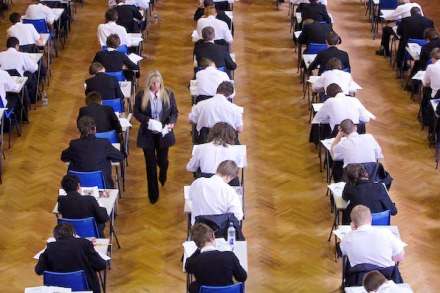
It has become customary in the great grammar school debate to declare where you went to school. I attended the boys’ grammar school in Canterbury, which was mentioned by Ysenda Maxtone Graham in her piece in this week’s magazine. Ysenda chose not to make such a declaration herself, so I will do it for her: she attended the King’s School, the poshest of the three public schools in Canterbury, which inhabits the precincts of the cathedral. I wouldn’t normally make an issue of someone’s schooling, but it is rather relevant in this case because Ysenda appears to be disturbed by what she sees as the social apartheid between Kent’s grammar school children and those who attend other state schools.

The EU would be mad to start a trade war with Britain. Here’s why

So far, the debate over what happens to UK-EU trade after Brexit has been conducted around a rather odd premise: that the EU will be out to punish Britain by cutting us off unless we sign up for continued membership of the single market, with free movement of people and contributions to the EU budget. Certainly, this is the impression which many EU leaders have been keen to create, and one which the 'Remain' lobby is more than happy to promulgate. Yet it sits rather uneasily with reality. As the Leave campaign consistently pointed out before the referendum, the EU would be mad to start a trade war because the rest of the EU sells more to us than we sell to the rest of the EU.

Don’t listen to the doom-mongers: A rise in inflation isn’t some kind of crisis

It takes quite a determined Cassandra to see the rise in Consumer Prices Index (CPI) from 0.6 per cent in August to one per cent in September as some kind of crisis, not that that will stop the holdouts of the Remain campaign from trying to do so. When CPI fell below one per cent at the end of 2014, you might remember, there were dark warnings about the threat of deflation – with the horrors that would imply for borrowers, who would see the real value of their debts increase. Now, some are trying to present a rise to one per cent as bad news, with former Monetary Policy Committee member Andrew Sentance, for example, calling it the ‘tip of an inflationary iceberg’. Steady on. Sure, inflation is likely to increase over the next few months.

Boris’s Royal Yacht obsession shows his weakness for vanity projects

I would like to think that the lack of obvious progress on negotiating a post-Brexit deal with the EU is, as Theresa May said this week, part of a strategy – that there is a lot going on behind the scenes but it is not in our interests for the Government to give a ‘running commentary’ on it. But listening to the foreign secretary speaking before the Commons foreign affairs committee I am beginning to wonder. Maybe, actually nothing is going on. Top of Boris’s ‘to do’ list, it seems, is not securing trade deals with the world beyond the EU. It is securing himself a royal yacht on which he can then swan around the world - perhaps doing a trade deal or two on the way.

Tesco finally meets its match

Only in the bizarre, upside-down, post-Brexit referendum world could Tesco try to portray itself as a victim of bullying by one of its suppliers. Isn’t Tesco supposed to be the nasty corporation which ruthlessly uses its might to squash the people who produce the goods which line its shelves? What about all those farmers, dairies and small-time cookie-makers apparently given a tough time by hard-nosed buyers at Tesco, who always want everything cheaper and for payment terms to be stretched out ever longer? I don’t expect anyone to feel sorry for Tesco – I’m certainly not sobbing over my Marmite sandwiches – but the reality is that yes, the supermarket really has met its match.

It’s business as usual in the post-Brexit world

Remember how Brexit was going to cost jobs and investment? At times, even Leave campaigners struggled to find the confidence to persuade themselves that European companies would continue to invest in the UK, falling back instead on the argument that Brexit would provide an opportunity to attract investment from elsewhere in the world. How long ago all that seems now. Today, French train manufacturer Alston has confirmed that it is to build a new £20 million manufacturing plant at Widnes in Cheshire, creating 600 jobs. The plant will refurbish West Coast main line trains and be used as a manufacturing base for future trains for the UK market.

The Brexit bounce continues

Just when you thought economists might finally have got the message about their doom-laden predictions for the economy following the vote for Brexit, along comes another statistic showing they are still getting it hopelessly wrong. I wrote here last month about how the Markit/CIPS Purchasing Managers Index – an early indicator of economic growth – had moved into positive territory in August, defying predictions that it would stay below 50, a level which suggests a shrinking economy. There was then, however, still one black cloud – the construction industry element of the index stood at 49.3 in August.

This is what a xenophobic referendum actually looks like

A country votes against the EU in a referendum in which rabidly anti-immigrant sentiments are aired by senior politicians. That is Hungary, of course, where voters have just rejected -- with a majority of 98 per cent, albeit it on a turnout of 44 per cent, too low to make it binding  -- an EU plan for the country to house 1200 refugees. Now, perhaps, the Remain camp in Britain will stop trying to portray Britain as a nasty, xenophobic country out of step with European values and admit that actually we are really rather liberal in our attitudes towards migration. The only difference is that we had an in-out referendum on EU membership and no other country has yet done so.

Why sacking the football manager is a fool’s game

At last, an English football manager who actually deserves to be sacked (or ‘left by mutual agreement’ if you prefer the official line). An England manager on £3 million a year shouldn’t be dreaming up ways of helping himself to an extra few hundred thousand through dodgy deals. But that makes Sam Allardyce something of a rarity. It is hard to think of another England football manager of recent times who really deserved the heave-ho. Roy Hodgson led a team to an embarrassing defeat against Iceland, but was it really him who deserved to go or the useless players who couldn’t even pick up a pass? It is no use coming up with strategy if the players start letting it through their feet.

Theresa May has made the wrong call on Hinkley Point

Today’s decision to give the go-ahead for Hinkley C after a six-week review seems to confirm what was indicated in July: that Theresa May’s problem with the project was mostly concerned with security issues. What has been announced today is that the government will take a special share in all future nuclear power projects to prevent the plants being sold to unapproved investors. There is no indication that ministers have sought to renegotiate the price. Consumers will still pay EDF for the electricity generated by Hinkley for the next 35 years: £92.50 for every MWh – around double the current wholesale market price.

Why shouldn’t the South Koreans eat dog?

We are, of course, a nation committed to celebrating cultural diversity.    Except, that is, when a foreigner sits down to tuck into a plate of dog meat.   Then, we start to behave like the Taliban, believing that we have the right to dictate standards to the entire world. On Monday, MPs staged a bizarre debate in Westminster Hall on the subject of what should and what should not be served in restaurants in South Korea.

Where should the line be drawn over the famous Kim Phuc photograph?

Can you imagine, in the wake of a terror attack in London, a tabloid, or any other kind of media outlet, publishing a photograph of a naked and distressed child caught up in the melee? It isn’t hard to answer the question. Of course they wouldn’t publish it. It would break every rule in the book. It is bizarre, then, to see Facebook accused of censorship for coming to exactly the same conclusion: that it wasn’t right to carry an image of naked and distressed child. It is even weirder to see Facebook attacked from a corner – the Guardian – which would normally be among the first to damn tabloid intrusion. The difference is that the photograph in question was not taken in London and was not taken in the recent past.