Ross Clark

Ross Clark

Ross Clark is a leader writer and columnist who has written for The Spectator for three decades. He writes on Substack, at Ross on Why?

Paedophile-hysteria prevents rational debate about policing

If you want to know why we never seem to be able to develop a sensible and proportionate policy towards prosecuting sex offences look no further than the comment threads beneath this morning’s story about Chief Constable Simon Bailey. Bailey, speaking on the Today programme, suggested that men who view child porn should not automatically be jailed but should instead be cautioned, put on the sex offenders’ register and made to attend courses on offending. This, he says, has become necessary in order to concentrate police resources on the most dangerous offenders – those who are a physical risk to children – and to prevent the Crown Prosecution Service becoming clogged up with cases.

The backlash against Waterstones’ ‘secret shops’ is absurd

What calamity could possibly be worse than waking up to find that the small, rarefied town near your weekend cottage has lost its bookshop, leaving you nowhere to go browsing for the latest tome by George Monbiot or Naomi Klein before going home for tea and crumpets? Answer: when a new bookshop opens up, purporting to be an independent bookshop when it is actually a branch of Waterstones in disguise. That is the terrible fate which has just been suffered by residents of Southwold, Suffolk, and Rye, East Sussex, whose High Streets are now adorned with shop fronts in a fetching shade of blue. Only in the small print does it say that their independent-sounding names are in fact trade names of Waterstones.

Ukip is finished? I don’t think so

So, Ukip is finished. So says Matthew Parris in the Times this morning, as well as Marina Hyde in the Guardian – who takes Paul Nuttall’s declaration that he is ‘going nowhere’ in a slightly different way that he intended. The emerging narrative of Thursday’s by-elections is that Labour had an appalling night from which it will take years to recover, but that Ukip is finished for good. Even Farage has given up on his baby. As Matthew puts it: ‘Ukip’s driving spirits are concluding that the time approaches for the party to die’. I have no capital invested in Ukip. I don’t care a great deal whether it dies or thrives. But I can see there is one thing wrong with the above narrative: it is not consistent with the figures.

Why are universities so scared of new rivals offering two-year degrees?

When you hear of universities rewarding their vice-chancellors fat salaries – they averaged £277,000 last year, up 5 per cent on the previous year – it would be easy to think that they have evolved into businesses, driven by a great spirit of enterprise. When universities minister Jo Johnson made the proposal for two year degrees, however, it didn’t take long for the nation’s academics to retreat beneath the comfort blanket of wanting universities to be a monolithic state provider of education. 'Accelerated degrees risk undermining the well-rounded education upon which our universities’ reputation is based', complained Sally Hunt, general secretary of the Universities and College Union.

The Supreme Court’s ruling on foreign spouses is shameful

Just when you were minded to think that Supreme Court judges were a bunch of diehard liberals whose fundamentalist belief in the application of human rights overrides common sense, they deliver a judgement which makes them look like the pathetic toadies of an authoritarian government. This morning the court upheld a rule that forbids British citizens bringing a foreign spouse into the country unless they (the British citizen, not the foreign spouse) is earning at least £18,600 a year (or £22,400 if they have one or more children). I am in favour of controls on immigration, but this is a rule which stinks of discrimination and injustice.

British food and drink exporters defy the doom-mongers

Many farmers, asserted the Earl of Sandwich in a Lords debate last July, were now experiencing ‘regrexit’ – having voted to leave the EU they were now realising that the £3.2 billion worth of subsidies they had received from the EU in 2013 were now under threat. Or were they? Whether any farmers really did suffer from pangs of regret last July, they will since have grasped that whatever happens to agricultural subsidies post-Brexit they might actually do rather well – not from collecting handouts but by growing food and selling it. Today, the Food and Drink Federation published its latest statistics on food exports. In common with so many economic figures published since last June they have defied predictions of doom.

Britain’s manufacturing boom is now underway

Another week, and more good economic news which has not been awarded the attention it deserves. The Office for National Statistics (ONS) has released economic growth figures for December, which show a much stronger-than-expected economy. Construction output in December was up 1.8 per cent on November, and 0.6 per cent up on December 2015. Manufacturing output in December was up 2.1 per cent on November and 4.0 per cent up on December 2015. There is encouragement in the export figures, too – which show just how strong a shot in the arm has been provided by the lower pound. In December British firms exported £31.4 billion worth of goods and services, 8.4 per cent up on November and 16 per cent higher than in December 2015.

Britain needs a statute of limitations for sex offences

In contrast to the many stranglers and IRA terrorists who have become cause célèbres for justice campaigners over the years, there has been no audible campaign claiming that Rolf Harris, jailed in 2014 for 12 historic sex offences, is a victim of a miscarriage of justice. Nevertheless, the failure yesterday of an attempt to convict him on further charges ought to raise the question: should we really be spending vast amounts of time and money prosecuting offences which are pretty low down the scale and which happened decades ago but were never reported until recently? Of course it is an offence to put your hand up the skirt of a 14-year-old girl – one of the charges against Harris on which the jury failed to reach a verdict.

The Bank of England is (slowly) overcoming its Brexophobia

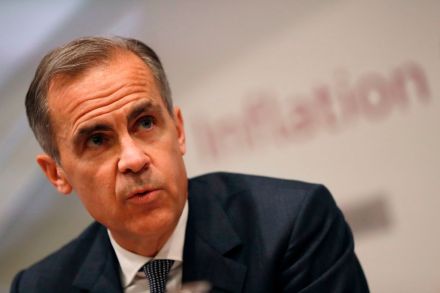
It has been clear for some time that the pre-referendum warnings made by Bank of England governor Mark Carney were wide of the mark. Last May, he said that a vote for Brexit would pose an ‘immediate and significant threat’ to the UK economy, increasing unemployment, hitting growth, possibly to the point of recession. Today, however, the bank effectively admits that it was still being far too gloomy about the economy even last November. It upgraded its forecast for economic growth in 2017 from 1.4 per cent (as announced in the Autumn statement) to two per cent – saying that consumer spending has been stronger than expected and that the global economy as a whole has been performing better. The wonder is now why on Earth the Bank of England kept interest rates at 0.

Trump’s 2020 campaign has kicked off – and Starbucks seem to be running it

I am no fan of Donald Trump, but I can stand far enough back from his presidency to see that many of his critics are inadvertently already doing his re-election campaign for him. Today, Starbucks has reacted to Trump’s US travel ban on citizens of seven Middle Eastern and African countries by defiantly saying that it will go out and hire 10,000 refugees. Can the coffee chain not see that this is exactly the sort of thing which attracts America’s white poor to Donald Trump: the suspicion that they are being overlooked in favour of cheap labour from abroad? In Starbucks’ case it isn’t just a suspicion – it has effectively confirmed that it wants to discriminate against American workers.

No, Donald Trump hasn’t just brought Doomsday closer

Can there be a bunch of more self-serving individuals than the board of the Bulletin of the Atomic Scientists, which annually presents its assessment of global politics in the form of its ‘Doomsday Clock’? Yesterday, the organisation announced that it was moving its clock forward by 30 seconds so that it now stands at two and a half minutes to midnight – where midnight is Armageddon, the end of human civilisation as we know it. The reason, of course, is Donald Trump. As the scientists explained: 'He has made ill-considered comments about expanding the US nuclear arsenal. He has shown a troubling propensity to discount or outright reject expert advice related to international security, including the conclusions of intelligence experts.

Don’t listen to the ‘alternative facts’ being spewed out about Britain’s economy

I don’t know about Donald Trump’s press conferences, but there are certainly enough ‘alternative facts’ being spewed out by the Remain lobby. This morning the Office of National Statistics (ONS) produced its first estimate for economic growth in the last quarter of 2016. It came out at 0.6 per cent, a notch up from the 0.5 per cent which analysts had been expecting and putting annual growth at 2 per cent. We can no longer claim to be the fastest-growing economy in the G7 as annualised growth in a booming US has accelerated to 3.5 per cent. Moreover, the ONS’s figures are provisional.

Why doesn’t the ‘tyranny of the majority’ bother MPs during elections?

Older readers might remember the night in April 1992 when, unexpectedly, a tyranny of the majority returned John Major’s Conservative government to power. That same night a local bunch of tyrants in Huntingdon sent Major back to Westminster with a majority of over 30,000, while a tyrannical mob up in Nottingham did the same for Ken Clarke – who was to become Home Secretary and later Chancellor. Funny enough, though, I don’t recall either John Major or Ken Clarke using the word ‘tyranny’ at the time – or anything approaching it. On the contrary, I vaguely remember them making remarks as to the effect that the good old British people had made a sensible decision in rejecting windbag Kinnock.

Forget ‘peace and love’. Protest language has turned violent

So Madonna says she doesn’t really want to blow up the White House. Her remarks at Saturday’s women’s march -- 'Yes, I'm angry, yes, I am outraged, Yes, I have thought an awful lot about blowing up the White House' – have, she says, been 'taken wildly out of context'. She has missed the point. No-one remotely thought that she would personally mix the Semtex, or offer any help to someone else to do so. But she was using inflammatory language which she ought to know somebody, somewhere will take seriously. If an unhinged loner in the backwoods of Virginia heads to Washington with a pick-up full of explosives she will be culpable in the same way as Henry II was in asking, rhetorically, so he thought, who would rid him of a turbulent priest.

Do Labour MPs not understand how private arts funding works?

You would think there was enough financial scandal in the world to keep MPs exercised without denouncing the owners of private boxes at the Royal Albert Hall. But no. Sharon Hodgson, member for Washington and Sunderland West, has just shown once again that what really gets a Labour MP seething with indignation is not wrongdoing or injustice – it is the whiff of class. Sharon is upset that the Royal Albert Hall’s 330 members – who individually own 1276 privately-owned seats -- are exercising their right to sell tickets for those seats through third party websites. A ticket for the Last Night of the Proms in September has, shock, horror, been spotted for sale at £1,500. According to Sharon ‘privilege is being abused for greed’.

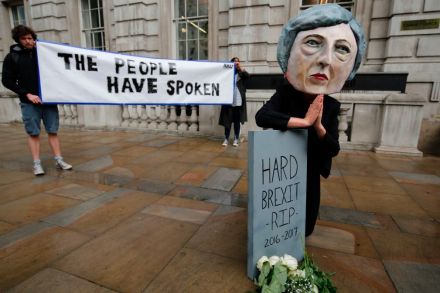
Hard Brexit it is – and the currency markets don’t seem to mind

A hard Brexit, currency markets seemed to indicate yesterday, would mean an even weaker pound. How, then, to explain this afternoon’s surge in sterling, which surged from just over $1.20 to just under $1.24 within a couple of hours of Theresa May’s speech? The rise more than reversed the falls since Monday morning, when the contents of the Prime Minister’s speech first became apparent. In other words, the market for sterling seemed to fear hard Brexit, but when it got hard Brexit it turned jubilant.

Ignore the green lobby – tidal lagoons are the future

If there ever was a form of green energy which showed promise it is surely tidal power. Compared with wind farms and solar farms, tidal barrages have the potential to generate significant quantities of reliable energy. While the tides are intermittent in any one location, the times of high and low tide vary along the coast such that a string of them working in tandem could produce a steady load of electricity, whatever the weather and whatever the time of day. So does that mean that the green lobby is cheering the publication of Charles Hendry’s report recommending the go-ahead for the construction of a tidal lagoon power station in Swansea Bay? You bet it doesn’t. Already the bird and fish lobbies are protesting.

If Amber Rudd doesn’t like being investigated for a ‘hate incident’, she should change the law

At last October’s Conservative party conference, Amber Rudd revealed a rather silly proposal that companies operating in the UK should be obliged to publish data on the number of foreign workers they employ. It was rightly condemned and Rudd later said that the information would not be published, only used by the government to identify areas of skills shortages among British workers. But a ‘hate incident’? That is exactly how, it transpires, the police recorded it. When you read the inevitable headline in a few months’ time that ‘hate incidents have soared’, you may just want to reflect that one of them was a speech by the Home Secretary.

Banality not Brexit is to blame for Jamie’s Italian restaurants shutting

So, yet another business in trouble thanks to this foul recession caused by Brexit. Or that’s what chief executive of Jamie’s Italian, Simon Blagden, wants us to think, anyway. Announcing the closure of six restaurants he said: 'As every restaurant owner knows, this is a tough market and, post-Brexit, the pressures and unknowns have made it even harder' Well, not as every restaurant-owner knows, no. According to the ONS’ figures, published at the end of November, its economic index for hotels and restaurants was up 1.1 per cent in the third quarter – following the vote for Brexit. The latest Purchasing Managers’ Index (PMI), published yesterday, shows accelerating growth in services –the index climbing to 56.2 in November.

A post-Brexit slump? Here’s the good news about Britain’s economy you didn’t hear

The rearguard Remain campaign is now living in a parallel universe. In the past 24 hours we have heard endless whining about Sir Ivan Rogers’ departure and how it will mean disaster for our trading relationship with the EU. We’ve had more claims that inflation is going to surge. The poor Christmas results put out by Next have been taken as a sign of a post-Brexit economic slump when they are really just part of a change in the patterns of retailing, with online sales growing at the expense of those in shops. Meanwhile, come yet more genuine good news on the economy. Yesterday, the Markit/CIPS Purchasing Managers’ Index (PMI) for the manufacturing sector was published, showing a rise to 56.1 in December, from 53.6 in November.