Ross Clark

Ross Clark

Ross Clark is a leader writer and columnist who has written for The Spectator for three decades. He writes on Substack, at Ross on Why?

Corbyn has stirred the youth vote in a way that even Blair could not

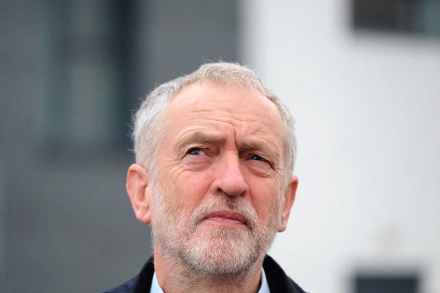
We don’t yet have an age breakdown of who voted on Thursday, but from the rise in turnout it seems that it was yoof wot swung it and robbed the Tories of their majority. British general elections have often evolved from contests between parties into battles between two opposing themes or ideas. That of 1964 became modernity versus the grouse moors, 1979 trade unionism versus individualism, 1983 Cold war strength versus unilateral nuclear disarmament. This year was supposed to be the Brexit election yet instead developed into something loosely associated with that but at the same time quite different: 2017 became the inter-generational election.   Corbyn was never supposed to have had a shout.

There’s only one solution: a coalition between the two parties

How utterly, utterly miserable it could be for a minority Conservative government. They can forget their lacklustre, un-costed manifesto now. They are not going to get any of that through. But how even more miserable would be it for the government’s negotiators in Brussels, stripped of their authority. Theresa May is finished, that is clear. She would be treated with even more contempt than she already is by Jean-Claude Juncker and his henchmen. But would it be any better for some unstable coalition or pact cobbled together by Jeremy Corbyn? No, it would be just as miserable. He wouldn’t get his programme through the Commons, either. And neither would he have much authority in Brussels.

Generation wars | 8 June 2017

British general elections have often evolved from contests between parties into battles between two opposing themes or ideas. In 1964, it was modernity vs the grouse moors; 1979, trade unionism vs individualism; 1983, Cold War strength vs unilateral nuclear disarmament. This year was supposed to be the Brexit election, yet instead developed into something loosely associated with that, but at the same time quite different: it became the intergenerational election. Jeremy Corbyn was never supposed to have had a shout. Way to the left of any Labour leader who had ever won a general election, his economic policies were considered by many to be simply incompatible with the values of the modern, aspirational British population.

Generation wars

British general elections have often evolved from contests between parties into battles between two opposing themes or ideas. In 1964, it was modernity vs the grouse moors; 1979, trade unionism vs individualism; 1983, Cold War strength vs unilateral nuclear disarmament. This year was supposed to be the Brexit election, yet instead developed into something loosely associated with that, but at the same time quite different: it became the intergenerational election. Jeremy Corbyn was never supposed to have had a shout. Way to the left of any Labour leader who had ever won a general election, his economic policies were considered by many to be simply incompatible with the values of the modern, aspirational British population.

Is Jeremy Corbyn really out to help the poor?

Is Jeremy Corbyn really out to help the poor – or just to entice the middle classes into his big socialist tent? I ask because the more you examine the manifesto he keeps waving before the television cameras, the more it seems to be designed around giving benefits to the better-off. These won’t come without cost, of course – the better-off will also be paying for the benefits which Corbyn is dangling before their eyes, in the form of higher income taxes, and possibly new wealth taxes, too. But for the moment, it seems to be the potential handouts which are making Labour headlines rather than the prospect of higher taxes. Could Corbyn potentially sweep to power on the back of the student vote, and the votes of students’ parents?

‘Can Britain’s digital economy be a global leader?’

Recently, The Spectator held a roundtable discussion on the digital economy, featuring Matt Hancock, minister for digital and culture, Garrett Ilg, President EMEA, Adobe; Pete Cummings (Adobe), Vicky Ford MEP, George Freeman MP, Richard Fuller MP, Chris Green MP, Isabel Hardman (The Spectator), Charlotte Holloway (Tech UK), Stephen Metcalf MP, Valerie Mocker (Nesta), and Charlie Pickles (Reform). This is what resulted. Britain is one of the most digitally engaged countries in the world. We don’t have a Google, we don’t have Silicon Valley, but our industry is highly innovative in using technology to transform its operations. As consumers, too, we are strong participants in the digital economy.

Jeremy Corbyn now finds the IRA question easy to answer

A week ago, in the immediate aftermath of the Manchester bombing, it would have been impossible to imagine that Jeremy Corbyn, rather than Theresa May, might benefit most from the interruption in the campaign. Corbyn is supposed to be weak on security and vulnerable to his terrorist-supporting past. Meanwhile, May stood to gain from the switch off the subject of social care, where she was fumbling badly. Yet after last night’s Channel 4 debate it is beginning to look a little different. The concentration on security and terrorism is beginning to play into Corbyn’s hands. He has been challenged so many times on the subject that he has worked out how to neutralise the subject.

Jeremy Corbyn’s speech is a trap for the Tories

The most dangerous thing about Jeremy Corbyn’s speech today, blaming terror attacks in Britain on wars we have fought abroad, is that it is partly true. The temptation for the Conservatives will be to show outrage at the words: 'Many experts, including professionals in our intelligence and security services, have pointed to the connections between wars our government has supported or fought in other countries and terrorism here at home' and to accuse Corbyn of exploiting the Manchester bombing for his own political gain. But they would be extremely foolish to do so because they will be unable to argue away the assertion that British military involvement in the Middle East has increased the risk of terror attacks at home.

Your enemy’s enemy isn’t always your friend when it comes to refugees

For those who argue that Britain should blindly accept refugees, the family history of Salman Abedi must make somewhat uncomfortable reading. Salman was born in Britain in 1994 to a couple who had newly arrived as refugees from Libya. At the time, such people were welcomed with open arms because they were opponents of President Gaddafi, whose embassy staff had killed PC Yvonne Fletcher in London in 1984, who was suspected of commissioning the Lockerbie bomb and who was generally considered to be one of the world’s most evil dictators. On the principle of “my enemy’s enemy is my friend”, rather little seems to have been asked of Gaddafi’s opponents.

There’s a fairer way of funding social care. Here’s how

So, the Conservatives have capitulated. After days of facing negative headlines about the ‘dementia tax’ Theresa May has given in and announced that there will, after all, be a cap on care costs faced by an individual. No wonder modern governments find it so hard to eliminate their structural deficits. So loud are the protests when they propose any tax increase or cut in spending that they are doomed to limp along with an ever-greater gap between what they feel compelled to spend and what they are politically able to raise in revenue. Public opinion may be king, but it doesn’t add up to a balanced budget.

How business-friendly would Theresa May’s government be?

When the main opposition party is proposing to jack up corporation tax from 19 per cent to 26 per cent the Conservatives don’t have to do too much to claim the mantle of the pro-business party, but with Theresa May suddenly attracting the nickname ‘Red Theresa’, just how business-friendly would a post 9 June May government be? First, the losers. First Philip Green and other company-owners who leave pension funds under-funded: the Conservatives are promising punitive fines and a possible new criminal offence for those who ‘deliberately or recklessly put at risk the ability of a pension scheme to meet its obligations’.

Earn less than £85,000? You might be better off under Corbyn

Recent elections have followed the same format: the Conservatives positioning themselves as the party of low taxes while Labour feels obliged to make its own commitments in order to try to neutralise the issue. This year is different. One of the notable omissions from the Conservative manifesto is any firm promise not to jack up the rate of income tax or national insurance. As expected, the Conservative manifesto does not repeat David Cameron’s ‘five year tax lock’ which committed the Conservatives not to raise the rates of income tax, national insurance and VAT during the lifetime of the Parliament just ended. Reducing taxes on businesses and individuals has been reduced to a mere ‘firm intention’.

Labour’s manifesto steals from the rich – and gives it back to the wealthy

The consequence of last week’s leak of a draft Labour manifesto is that all eyes today have fallen on what was missing from the draft: the costings. There is a very big assumption in Labour’s figures: that when you raise taxes you get all the extra revenue that you would expect to receive. The reality, of course, is that when you raise taxes you change people’s behaviour which might lead to them paying less tax. With a 45 per cent income tax levy above £80,000 and a 50 per cent rate over £123,000 higher rate taxpayers would have a greater incentive to find some way of avoiding tax – either by converting income into capital gains, shovelling more into their pensions – or by scarpering abroad.

Team Theresa’s concept of ‘workers’ is seriously outdated

I can understand why Theresa May should want to toy with the idea of having 'workers’ representatives on board'. As with Tony Blair and his promise to be tough on crime, and David Cameron and gay marriage, it has become a tradition in modern-day elections that a party campaigning from a position of strength makes an audacious raid behind the lines to plant a flag in some prominent place in enemy territory. It creates the impression that you are not merely trying to pitch for votes at the fringes of your opponents’ traditional homeland – you are confident enough to present yourself as a government for everyone. May’s proposals are, however, highly tokenistic.

Losing here: Why have the Lib Dems stalled in the polls?

Theresa May’s return to Downing Street on the morning of 9 June will surprise no-one, but there is one thing political commentators will be left to puzzle over: just why did the Liberal Democrats do so badly? Tim Farron’s party should be big winners in this general election. If not matching the 62 seats they won in 2005 or the 57 they notched up in 2010 they should at least be going a long way to reversing the collapse they suffered in 2015 as many of their voters punished them for their role in the coalition and for Nick Clegg’s backtrack on his tuition fees pledge in particular. Conditions are hugely favourable for them. Labour has drifted far to the left as it did in 1983 when the then Liberal-SDP Alliance won 25 per cent of the vote.

The government has some big questions to answer over the NHS cyber-attack

Are there any words which have such an affinity as ‘NHS’, ‘IT’ and ‘cock-up’? Older readers might remember how the Department of Health blew £10 billion of taxpayers’ money on a computer system which was eventually abandoned. Today comes news that two dozen hospitals have been affected by a massive hack of computer systems. Patients in Stevenage and Blackpool have been told not to visit their local A&E departments unless they are desperate. Operations have been postponed. Phone systems have gone down and doctors are unable to prescribe drugs. The culprit is a piece of ‘ransomware’ which seems to be capable of locking computers which it says will only be unlocked if a payment is made in bitcoin.

Labour’s manifesto is a fiscal fantasy land – but the Tories would be wrong to ignore it

Labour's leaked manifesto is, predictably enough, a fiscal fantasy land with lots of spending pledges and rather few tax rises to pay for them –  higher taxes for the top five per cent of earners would not necessarily earn an extra penny in revenue if they encouraged more avoidance or flight to tax havens. But does that mean it is all rubbish? Not at all. Conservatives would do well to refrain from the dismissive talk about the manifesto being a suicide note and recognise that there are some good ideas which they should emulate.

Wiping the record book clean is no way to tackle cheating in sport

What does it say about today’s athletes that the men’s triple jump record hasn’t been broken since 1995, the long jump since 1991 and the discus since 1986? Or that the women’s long jump record still stands from 1988 and the 800 metres since 1983? Does it say that athletes all used to be a bunch of doped-up cheats which today’s squeaky clean competitors can’t possibly be expected to beat without steroids and a few other goodies from the medicine cupboard? Or does it just say that the people currently competing in these disciplines aren’t quite as good as a few exceptional athletes in the past?

Snatching state pensions back from the rich would end in disaster

While Theresa May makes her mind up over the triple lock on state pensions the OECD has come up with an altogether more radical suggestion: that the state pension be withdrawn entirely from the richest five to 10 per cent of the population, in order that more money be available for the poor. I am not sure that the purpose of the OECD ought to be to try to micromanage the fiscal policies of member states, but let’s treat it seriously nonetheless. Snatching the pensions of the better-off would be disastrous policy which, by destroying the disincentive to save, would achieve nothing other than to boost the numbers of poor people requiring assistance.

Macron’s marriage shows how different Britain and France really are

If Emmanuel Macron were British, would he be a Tory, Lib Dem or a Blairite? Or would he be blubbing into a handkerchief in a TV studio calling himself a ‘survivor’ of seduction by his teacher while his wife was banned from the teaching profession, if not put through the mill by investigators from Operation Yewtree? If anyone doubts the gulf in societal attitudes between Britain and France, the relationship between Macron and his wife Brigitte Trogneux provides a rather good illustration. While there is no suggestion they had sex while he was a minor, enough is known about the couple to know how the nature of their meeting would have gone down this side of the Channel.