Ross Clark

Ross Clark

Ross Clark is a leader writer and columnist who has written for The Spectator for three decades. He writes on Substack, at Ross on Why?

The hypocrisy of the Brexit blame game

From our UK edition

One looked in vain for the words 'Islamic extremist' in the Guardian’s reporting of the Westminster attack a fortnight ago. Even after Isis claimed the attacker, Khalid Masood, as one of its own, the paper declined to accept him as a terrorist motivated by religious extremism. And who knows, maybe it was right. Masood had had a violent past, even before he had converted to Islam. It is still far from clear whether he had been influenced or was controlled by an Islamist group, or whether he was a freelance operative motivated entirely by his own internal anger and frustrations. But if you are going to take that line and refuse to undertake any speculation into incidents of this kind you ought at least to be consistent. On this, the Guardian fails badly.

Britain’s borrowing binge – not Brexit – should be the big worry for the Bank of England

From our UK edition

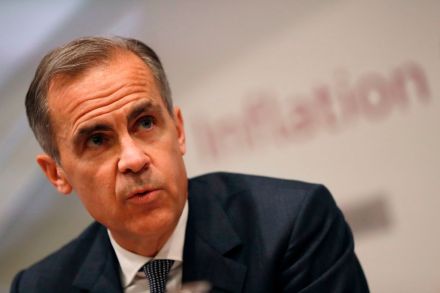
So, the Office of National Statistics has confirmed that the economy grew by 0.7 per cent in the last quarter of 2016, and by 1.8 per cent over the course of the year. Can we now please stop worrying about a post-Brexit recession and worry instead about an unsustainable consumer boom fed by interest rates which remain at panic levels. The bad news this morning is that the UK saving ratio – which is an estimate of the percentage of their income which households are saving – has fallen sharply from 5.3 per cent to 3.3 per cent. That takes it lower than it was a decade ago, just before the financial crash, and indeed is the lowest level measured in half a century. As Helen Nugent wrote here yesterday,  consumers are piling on credit card debt at the fastest rate in a decade.

A hard lesson is coming

From our UK edition

It is one of the great mysteries of modern British politics: how public schools managed to survive three periods of Labour government with their tax breaks intact. How was it that an education secretary, Anthony Crosland, could say: ‘If it’s the last thing I do, I’m going to destroy every fucking grammar school in England, and Wales and Northern Ireland’, and yet do nothing to make life difficult for independent schools? Suzi Leather, Tony Blair’s appointment as head of the Charity Commission, demanded private schools do more to justify their charitable status.

The Government is doing nothing to tackle GCSE grade inflation

From our UK edition

The whole purpose of changing the grading structure for GCSE exams was supposed to be to guard against the curse of grade inflation – whereby, over time, it becomes easier and easier to gain a good grade. How unfortunate, then, that the government has inflated the grades before the first exam results using the new system are published in August. The new scheme replaces the existing A – G grades. In future, candidates will be awarded a grade from 1 to 9, with 1 being the highest level of attainment and 9 being the lowest. The bottom of grade 1 is to be aligned with the bottom of old grade G, and the bottom of grade 4 with the bottom of old grade C.

The Daily Mail is pulling your leg

From our UK edition

The top half of the front cover of the Daily Mail today is of course trivial: the big story of the meeting between Theresa May and Nicola Sturgeon is, obviously, the plummeting relations between Westminster and Holyrood and whether we will still have a United Kingdom in five years’ time. The big story is not the quality of two middle-aged women's legs. But it is also really rather brilliant in how it has worked as a bait for the Left – which by reacting in an absurdly overblown way has merely revealed its own obsession with trivia.

If Ukip is to survive, Nigel Farage also needs to go

From our UK edition

So poisonous were the relations between Nigel Farage and Douglas Carswell that no-one will have been surprised at the latter’s resignation from Ukip, nor the pleasure it generated among Farage and his supporters. It takes something to cheer the departure of your only MP; along with the funding that goes with it. Yet the irony is that in theory Farage and Carswell ought to have been soulmates in Ukip. Both are naturally social conservatives but economic liberals. In contrast to many Ukip members, neither are attracted by protectionism or anti-globalisation – two sentiments which also unite many of Donald Trump’s supporters. From what we know about the political views of Ukip members, both Farage and Carswell stick out as being a little to the right.

Rising inflation isn’t anything to panic about

From our UK edition

Predictably enough it didn’t take long for the rearguard Remain lobby, and other opponents of the government, to jump on the latest inflation figures, which show the Consumer Prices Index (CPI) for February rising from 1.8 per cent to 2.3 per cent. Frances O’ Grady of the TUC, for example, said that Britain risked ‘sleepwalking into another living standards crisis’. A little historical perspective might be in order, especially on the part of the TUC. Inflation of 2.3 per cent would have been a dream back in the late 1970s when its members were pushing the rate beyond 20 per cent through their endless wage demands.

George Osborne is the archetypal part-time MP

From our UK edition

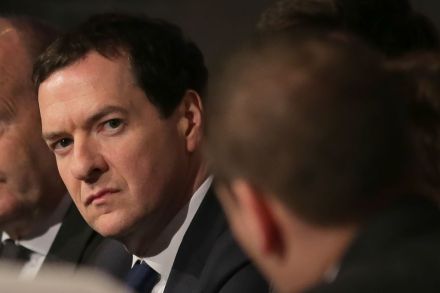
For once, Jeremy Corbyn was spot-on. Learning of the news that George Osborne is to be made editor of the Evening Standard he didn’t bleat about Tory domination of the press, but tweeted ‘It’s taking multi-tasking to an extreme level – what a joke’. What is wrong about Osborne’s new job is not that it confirms that the Evening Standard is a Conservative-supporting newspaper. That is there for all to see, but why does it matter when there is absolutely nothing to stop a Labour-supporting entrepreneur, or anyone else, setting up a rival London newspaper? What ought to concern all taxpayers is that we are already paying the former chancellor to do what is supposed to be a full-time job: being an MP.

Theresa May must call an election immediately

From our UK edition

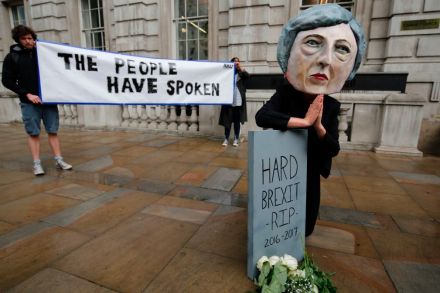
Each day, I can see more clearly a pivotal line from Theresa May’s future biography: 'Ultimately, her downfall can be traced to one mistake: her failure to seek her own mandate and call and general election in the spring of 2017, when Labour was at its weakest and she was still enjoying a political honeymoon.' A fortnight ago William Hague made the case for an early election. Since then, the evidence has grown. In the past 24 hours alone the lights outside the Prime Minister’s windows have twice flashed: go to the country now, or you will regret it. The U-turn on National Insurance for the self-employed should be warning enough.

The self-employed shouldn’t pay more tax. Here’s why

From our UK edition

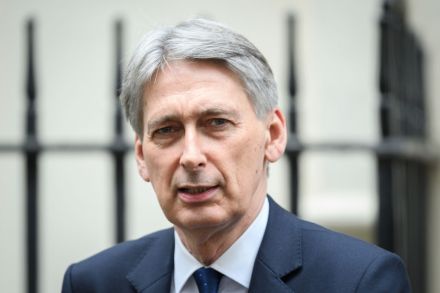
Last Wednesday, Philip Hammond made a joke at Norman Lamont’s expense by reminding the world of how John Major’s first chancellor was sacked after a negative public reaction to his budget in 1993. Hammond, one suspects, is already beginning to regret his gag as Lamont today became the latest Conservative to damn his plans to raise National Insurance contributions on the self-employed. What has been so damaging is not so much the staged 2 per cent rise in contributions as the strong hint that he is considering going far further and equalising, as he sees it, the NI contributions of employed and the self-employed in the name of ‘fairness’.

Why are New Labour wonks directing Tory policy?

From our UK edition

Theresa May’s announcement that the vote on raising National Insurance contributions for the self-employed will be delayed until after the publication of the Taylor Report in Modern Employment Practises in the autumn is presumably meant to reassure us that the government is taking seriously the many objections which have been levied against the policy in the 48 hours since it was announced by the Chancellor. On the other hand it might merely concentrate minds on a question which few have yet asked: just why does Theresa May have Tony Blair’s former chief policy wonk seeming to direct Conservative policy on employment? The Taylor review, set up by the Prime Minister last November, is often described as ‘independent’. Yet Matthew Taylor is not independent at all.

Biggest loser from this Budget? The credibility of Tory tax promises

From our UK edition

There is a very big winner from today’s budget. Not adults in social care, not schools, but Ukip. Philip Hammond has handed a huge political opportunity: to position itself as the party of the self-employed: the taxi driver, the brickie, the plumber, the small shop-owner. These used to be natural Tories. From today, with Hammond imposing a two per cent extra tax on their income, and breaking a manifesto commitment in the process, they will be looking for a new political home. No wonder Suzanne Evans was tweeting about the change within seconds of it being made. The Treasury’s argument for raising National Insurance Contributions on the self-employed is that the current arrangements are unfair to the employed, who pay a higher rate of NIC.

Labour’s membership drop is great news for the party

From our UK edition

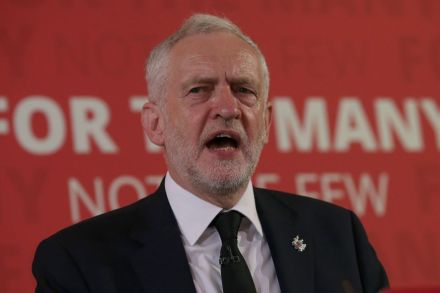
Were I a Labour party strategist I wouldn’t be too distressed by the news that the party has lost 26,000 members since last summer. On the contrary, I would regard it as the possible beginning of a very long road back to power. Until Jeremy Corbyn came along there was a received wisdom that modern political parties were becoming isolated from the views of the public as a whole because their once mass memberships had shrunk to a few party faithful. Not only has Corbyn disproved this theory, his experience suggests that the opposite might be the case: having a large membership is a hindrance to winning elections.

Paedophile-hysteria prevents rational debate about policing

From our UK edition

If you want to know why we never seem to be able to develop a sensible and proportionate policy towards prosecuting sex offences look no further than the comment threads beneath this morning’s story about Chief Constable Simon Bailey. Bailey, speaking on the Today programme, suggested that men who view child porn should not automatically be jailed but should instead be cautioned, put on the sex offenders’ register and made to attend courses on offending. This, he says, has become necessary in order to concentrate police resources on the most dangerous offenders – those who are a physical risk to children – and to prevent the Crown Prosecution Service becoming clogged up with cases.

The backlash against Waterstones’ ‘secret shops’ is absurd

From our UK edition

What calamity could possibly be worse than waking up to find that the small, rarefied town near your weekend cottage has lost its bookshop, leaving you nowhere to go browsing for the latest tome by George Monbiot or Naomi Klein before going home for tea and crumpets? Answer: when a new bookshop opens up, purporting to be an independent bookshop when it is actually a branch of Waterstones in disguise. That is the terrible fate which has just been suffered by residents of Southwold, Suffolk, and Rye, East Sussex, whose High Streets are now adorned with shop fronts in a fetching shade of blue. Only in the small print does it say that their independent-sounding names are in fact trade names of Waterstones.

Ukip is finished? I don’t think so

From our UK edition

So, Ukip is finished. So says Matthew Parris in the Times this morning, as well as Marina Hyde in the Guardian – who takes Paul Nuttall’s declaration that he is ‘going nowhere’ in a slightly different way that he intended. The emerging narrative of Thursday’s by-elections is that Labour had an appalling night from which it will take years to recover, but that Ukip is finished for good. Even Farage has given up on his baby. As Matthew puts it: ‘Ukip’s driving spirits are concluding that the time approaches for the party to die’. I have no capital invested in Ukip. I don’t care a great deal whether it dies or thrives. But I can see there is one thing wrong with the above narrative: it is not consistent with the figures.

Why are universities so scared of new rivals offering two-year degrees?

From our UK edition

When you hear of universities rewarding their vice-chancellors fat salaries – they averaged £277,000 last year, up 5 per cent on the previous year – it would be easy to think that they have evolved into businesses, driven by a great spirit of enterprise. When universities minister Jo Johnson made the proposal for two year degrees, however, it didn’t take long for the nation’s academics to retreat beneath the comfort blanket of wanting universities to be a monolithic state provider of education. 'Accelerated degrees risk undermining the well-rounded education upon which our universities’ reputation is based', complained Sally Hunt, general secretary of the Universities and College Union.

The Supreme Court’s ruling on foreign spouses is shameful

From our UK edition

Just when you were minded to think that Supreme Court judges were a bunch of diehard liberals whose fundamentalist belief in the application of human rights overrides common sense, they deliver a judgement which makes them look like the pathetic toadies of an authoritarian government. This morning the court upheld a rule that forbids British citizens bringing a foreign spouse into the country unless they (the British citizen, not the foreign spouse) is earning at least £18,600 a year (or £22,400 if they have one or more children). I am in favour of controls on immigration, but this is a rule which stinks of discrimination and injustice.

British food and drink exporters defy the doom-mongers

From our UK edition

Many farmers, asserted the Earl of Sandwich in a Lords debate last July, were now experiencing ‘regrexit’ – having voted to leave the EU they were now realising that the £3.2 billion worth of subsidies they had received from the EU in 2013 were now under threat. Or were they? Whether any farmers really did suffer from pangs of regret last July, they will since have grasped that whatever happens to agricultural subsidies post-Brexit they might actually do rather well – not from collecting handouts but by growing food and selling it. Today, the Food and Drink Federation published its latest statistics on food exports. In common with so many economic figures published since last June they have defied predictions of doom.

Britain’s manufacturing boom is now underway

From our UK edition

Another week, and more good economic news which has not been awarded the attention it deserves. The Office for National Statistics (ONS) has released economic growth figures for December, which show a much stronger-than-expected economy. Construction output in December was up 1.8 per cent on November, and 0.6 per cent up on December 2015. Manufacturing output in December was up 2.1 per cent on November and 4.0 per cent up on December 2015. There is encouragement in the export figures, too – which show just how strong a shot in the arm has been provided by the lower pound. In December British firms exported £31.4 billion worth of goods and services, 8.4 per cent up on November and 16 per cent higher than in December 2015.