Ross Clark

Ross Clark

Ross Clark is a leader writer and columnist who has written for The Spectator for three decades. He writes on Substack, at Ross on Why?

Why are some on the Left claiming a ‘bonfire on red tape’ led to Grenfell Tower?

From our UK edition

Now that Labour councils have been shown to be as much up to their eyeballs in the tower block cladding scandal as Conservatives ones the Left has subtly shifted onto a different target: the ‘neoliberalist’ war on red tape. Writing in the Guardian today, George Monbiot accuses the Government’s Red Tape Initiative - set up to consider which regulations might be reformed once Britain is freed from having to abide by EU directives - of plotting to downgrade building regulations, so as to put the poor at risk while big business increases profits. ‘Red tape,’ he asserts for good measure, is a ‘disparaging term for public protections’.

What if Hinkley Point proves Jeremy Corbyn right?

From our UK edition

Theresa May spent her first few months as Prime Minister reversing many of her predecessor’s policies. But there is one which she may well end up regretting that she failed to reverse: going ahead with the contract for French state electricity company EDF to build the Hinkley Point C nuclear power station. Yesterday, EDF announced that its estimate for the construction cost of the project has risen £1.5 billion to £19.6 billion, and that the project could be delayed by yet another 15 months. Notionally the extra costs will not fall upon taxpayers – EDF is supposed to be shouldering the risks for the project, for which it is being handsomely rewarded with a guaranteed price of £92.

How to solve the public sector pay cap dilemma

From our UK edition

Of all the mistakes in the Conservative election campaign, possibly most grievous of all was the promise to maintain a public sector pay cap of 1 per cent until 2020. It was one thing to maintain such a policy in the 2015 election campaign – when the Consumer Prices Index (CPI) stood at 0.4 per cent. It is quite another to do it now, with the CPI at 2.9 per cent. In May 2015, the Cameron government had a policy of capping public sector pay at 0.6 per cent. Now, the May government has a policy of cutting public sector pay by 1.9 per cent. Small wonder that nurses, teacher firefighters and many others aren’t very happy about it. This is a problem that should have been foreseen, and which could have been avoided by capping public sector pay at the level of CPI.

Iain Duncan Smith assesses the government’s welfare record

From our UK edition

When the Conservatives returned to power in 2010, in coalition with the Lib Dems, lifting people out of poverty was one of their signature policies. It would be hard to say that now. Theresa May has shown more interest in devoting time and energy to the ‘just about managing’ classes further up the socio-economic spectrum. Iain Duncan Smith, who as work and pensions secretary set the poverty agenda, is no longer a minister – while Brexit has come to dominate the agenda of a weakened government. So what was achieved during what looks like a brief flirtation with social justice – and what, if anything, happens now?

Glastonbury wouldn’t survive under a Corbyn government

From our UK edition

Only Jeremy Corbyn could speak at Glastonbury and think he was addressing the oppressed proletariat. Glastonbury, he said, while introducing an unintelligible US rapper on the Pyramid Stage, shows ‘that another world is possible if we come together’. To most observers, rather, it shows what is possible when the middle classes pay £228 a head and drive down to Somerset in their VWs, packed with glamping tents and Cath Kidston wellies. As Bruce Dickinson of Iron Maiden put it a couple of years ago, Glastonbury has become 'the most bourgeois thing on the planet'. What would happen to Glastonbury if Jeremy Corbyn really did win a general election rather than just think he did? Don’t count on it continuing to exist at all.

Labour and the Lib Dems are as much to blame as the Tories for Grenfell Tower

From our UK edition

I haven’t been in Camden this afternoon, so I can’t vouch for there being no marches of activists holding banners with the words ‘Labour Out’ and ‘Corbyn Must Go’, but somehow I doubt there are – and I certainly haven’t seen them on the news. But why not? Last week we saw no end of left-wing activists out on the streets trying to exploit the Grenfell Tower tragedy for their own party political purposes – trying to present it as a case of callous Tories treating the lives of the poor as worthless as they slash their way through budgets with abandon.   Yes, Kensington and Chelsea is a Conservative-controlled borough but it turns out that is was far from alone in cladding its tower blocks with flammable cladding.

Theresa May’s problem is that she is far too British for her own good

From our UK edition

While I was rummaging through data on what Treasury officials had spent on their credit cards, back in George Osborne’s day, I came across a series of curious payments. The Treasury had been paying RADA for coaching sessions. Ministers – I presume it was them rather than civil servants – were being trained by actors. Maybe they should have done the same at the Home Office, because the failure of the then Home Secretary to perform in public could very rapidly turn out to be her undoing.   Her failure to express empathy during the election campaign was already being dragged up in election post-mortems.  But what has happened since the Grenfell Tower fire on Wednesday has compounded the problem a thousandfold.

Trying to turn Grenfell Tower into a morality tale about the rich and poor stinks

From our UK edition

Who would want to be a political leader in the wake of a disaster such as that of Grenfell Tower? If you show up and hug the victims you run the risk of being accused of opportunism and obstructing the emergency services in their work; if you stay away from the site you will be accused of callousness – even if you are spending your time working on the practical issues relating to the event. But there is a very strong emerging narrative: that Jeremy Corbyn got it right by turning up and sharing the grief of the victims, and that Theresa May got it horribly wrong by restricting her visit to contact with the emergency services. That she has done the right thing in ordering a full public inquiry has counted for little.

Are conservatives a bunch of neanderthals? Some on the left seem to think so

From our UK edition

How tragic that the country – and indeed the world - is being dragged rightwards by a bunch of Neanderthal conservatives who relish ignorance and despise experts. That, in as many words, was the argument advanced here by Nick Cohen on Monday, as well as by many others on the Left. Nick wrote: '…in Britain and America one trend is clear: the better-educated you are the less likely you are to vote for the right. Like Mill, I am not arguing that educated people are always clever. Intellectuals have always included fanatics and cranks among their number. But I can say this: in a country where ever more people are going to university, no party can hope to survive as a party of government if it sells itself as Michael Gove’s know-nothing party'.

Philip Hammond’s Brexit plan is the worst of all worlds

From our UK edition

Had last week’s expected landslide actually occurred Philip Hammond would by now be working on his memoirs. Instead, he is still in his job and demonstrating why, according to rumours, Theresa May might have liked to have removed him from the Treasury. He has reportedly demanded that May’s policy on Brexit be watered down so that Britain remains in the customs union but not the single market. Staying in the Customs Union would be the quickest way to keep the DUP happy as it would make certain that the border between Northern Ireland and the Irish Republic remains open. But in all other respects it is the wrong way round. If Britain were to remain partially connected to EU institutions it would be far better were it to stay in the single market and outside the customs union.

Let’s stop blaming Brexit for higher inflation

From our UK edition

No time has been lost in blaming Brexit for today’s rise in the Consumer Prices Index (CPI) to 2.9 per cent. It wasn’t just those on the left, either. The head of Theresa May’s policy unit, George Freeman, tweeted this morning: 'This is reality of the devaluation of the £ post Brexit'. While George Freeman has always been a staunch Remainer, the fact he put this out is possibly indicative of a change in attitude at Number 10 – an attempt to reach out to those in the party who continue to believe that Brexit is a mistake. Yet the longer the rise in CPI goes on the less it looks like an adjustment to a lower pound and the more it begins to look like a consequence of excessively-loose monetary policy.

It’s delusional to claim the election result was a vote against Brexit

From our UK edition

How deliciously tempting it must be to do as the Times and FT has done today, along with many others since last Friday, and try to interpret the election result as somehow a vote against Brexit – or against the withdrawal from the single market. 'The notion of a ‘hard’ (to be precise, a dogmatic and ideologically driven) Brexit should be promptly abandoned', asserts a leader in the Times, echoing the sentiments of Tim Farron, Nicola Sturgeon, Ruth Davidson and many others. How tempting – and how utterly wrong.

George Osborne must bitterly regret quitting politics

From our UK edition

I am no psychologist but I don’t think you have to be one to appreciate that there is some turmoil going on in the mind of the man who wrote the Evening Standard’s four front page headlines today. 'May Hung Out to Dry', 'May’s Right Royal Mess', 'May’s Irish Bailout', 'Queen of Denial' – these headlines have been presented by many today as a sign of a man enjoying himself, of revelling in schadenfreude. True, none of these headlines is exactly unfair, but the obsessive search for ever more painful ways of twisting the knife into the Prime Minister is surely indicative of something going on deep in the soul of the author.

Corbyn has stirred the youth vote in a way that even Blair could not

From our UK edition

We don’t yet have an age breakdown of who voted on Thursday, but from the rise in turnout it seems that it was yoof wot swung it and robbed the Tories of their majority. British general elections have often evolved from contests between parties into battles between two opposing themes or ideas. That of 1964 became modernity versus the grouse moors, 1979 trade unionism versus individualism, 1983 Cold war strength versus unilateral nuclear disarmament. This year was supposed to be the Brexit election yet instead developed into something loosely associated with that but at the same time quite different: 2017 became the inter-generational election.   Corbyn was never supposed to have had a shout.

There’s only one solution: a coalition between the two parties

From our UK edition

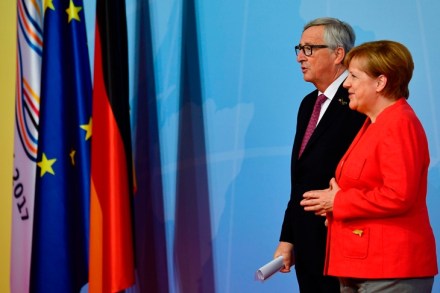
How utterly, utterly miserable it could be for a minority Conservative government. They can forget their lacklustre, un-costed manifesto now. They are not going to get any of that through. But how even more miserable would be it for the government’s negotiators in Brussels, stripped of their authority. Theresa May is finished, that is clear. She would be treated with even more contempt than she already is by Jean-Claude Juncker and his henchmen. But would it be any better for some unstable coalition or pact cobbled together by Jeremy Corbyn? No, it would be just as miserable. He wouldn’t get his programme through the Commons, either. And neither would he have much authority in Brussels.

Generation wars | 8 June 2017

From our UK edition

British general elections have often evolved from contests between parties into battles between two opposing themes or ideas. In 1964, it was modernity vs the grouse moors; 1979, trade unionism vs individualism; 1983, Cold War strength vs unilateral nuclear disarmament. This year was supposed to be the Brexit election, yet instead developed into something loosely associated with that, but at the same time quite different: it became the intergenerational election. Jeremy Corbyn was never supposed to have had a shout. Way to the left of any Labour leader who had ever won a general election, his economic policies were considered by many to be simply incompatible with the values of the modern, aspirational British population.

Generation wars

From our UK edition

British general elections have often evolved from contests between parties into battles between two opposing themes or ideas. In 1964, it was modernity vs the grouse moors; 1979, trade unionism vs individualism; 1983, Cold War strength vs unilateral nuclear disarmament. This year was supposed to be the Brexit election, yet instead developed into something loosely associated with that, but at the same time quite different: it became the intergenerational election. Jeremy Corbyn was never supposed to have had a shout. Way to the left of any Labour leader who had ever won a general election, his economic policies were considered by many to be simply incompatible with the values of the modern, aspirational British population.

Is Jeremy Corbyn really out to help the poor?

From our UK edition

Is Jeremy Corbyn really out to help the poor – or just to entice the middle classes into his big socialist tent? I ask because the more you examine the manifesto he keeps waving before the television cameras, the more it seems to be designed around giving benefits to the better-off. These won’t come without cost, of course – the better-off will also be paying for the benefits which Corbyn is dangling before their eyes, in the form of higher income taxes, and possibly new wealth taxes, too. But for the moment, it seems to be the potential handouts which are making Labour headlines rather than the prospect of higher taxes. Could Corbyn potentially sweep to power on the back of the student vote, and the votes of students’ parents?

‘Can Britain’s digital economy be a global leader?’

From our UK edition

Recently, The Spectator held a roundtable discussion on the digital economy, featuring Matt Hancock, minister for digital and culture, Garrett Ilg, President EMEA, Adobe; Pete Cummings (Adobe), Vicky Ford MEP, George Freeman MP, Richard Fuller MP, Chris Green MP, Isabel Hardman (The Spectator), Charlotte Holloway (Tech UK), Stephen Metcalf MP, Valerie Mocker (Nesta), and Charlie Pickles (Reform). This is what resulted. Britain is one of the most digitally engaged countries in the world. We don’t have a Google, we don’t have Silicon Valley, but our industry is highly innovative in using technology to transform its operations. As consumers, too, we are strong participants in the digital economy.

Jeremy Corbyn now finds the IRA question easy to answer

From our UK edition

A week ago, in the immediate aftermath of the Manchester bombing, it would have been impossible to imagine that Jeremy Corbyn, rather than Theresa May, might benefit most from the interruption in the campaign. Corbyn is supposed to be weak on security and vulnerable to his terrorist-supporting past. Meanwhile, May stood to gain from the switch off the subject of social care, where she was fumbling badly. Yet after last night’s Channel 4 debate it is beginning to look a little different. The concentration on security and terrorism is beginning to play into Corbyn’s hands. He has been challenged so many times on the subject that he has worked out how to neutralise the subject.