Ross Clark

Ross Clark

Ross Clark is a leader writer and columnist who has written for The Spectator for three decades. He writes on Substack, at Ross on Why?

Sadiq Khan has kowtowed to the protectionists over Uber

Let’s face it, the decision today by TfL not to renew Uber’s licence to operate in London has not come about ultimately as a result of genuine concerns over passenger safety. It is a protectionist move to promote the business interests of London’s black cab drivers and to satisfy the unions and other left-wing activists who have latched onto Uber as a cause célèbre in their efforts to stamp out flexible ways of working. I don’t know much of what goes on the back rooms of Labour party HQ but it is fascinating that the decision has come to be made on the same day that it was announced that the Mayor of London, Sadiq Khan, will be speaking at next week’s Labour party conference after all.

Crime and prejudice

Nothing spoke of the fractious atmosphere in the aftermath of the Brexit referendum more than the death of 40-year-old Arek Jozwik in a shopping centre in Harlow, Essex in August 2016. What might, on any other weekend, have been passed over as just another grubby Saturday-night incident on Britain’s drunken high streets became elevated into a symptom of Brexit-induced racial hatred. James O’Brien, an LBC radio talk-show host, declared that certain Eurosceptics had ‘blood on their hands’ as did ‘anybody who has suggested speaking Polish in a public place is in any way undesirable’. This was the premise of almost all reporting on the story: a man seemed to have been murdered for being Polish.

Ryanair’s chaos prediction is coming true – but Brexit isn’t to blame

So, the worst has happened, just as Ryanair said it would. The budget airline has had to cancel thousands of flights – around 50 of them, every day, for the next six weeks. It follows an ominous warning that was made by chief executive Michael O' Leary last month: “What is increasingly likely to happen is that there will be no flights. Mrs May and the Brexiteers will be trying to explain that to you in 12 months’ time, why getting a car to Scotland or a ferry to Ireland are the only options on offer.” Except, that is, while last month’s warning concerned Brexit, this week’s cancellations concerned a cock-up of Ryanair’s own making.

John Lewis doesn’t have a Brexit problem. It has a Waitrose problem

It used to be the weather that served as the catch-all excuse for poorly performing businesses – it is too cold or too hot for people to go shopping. How convenient, now we have grown a little tired with that one, that Brexit has come along to serve the same purpose. Speaking on the Today programme this morning, John Lewis chairman Sir Charlie Mayfield was asked to explain a 53 per cent fall in profits for the first half of the year. To be fair to him he didn’t initially mention Brexit at all but when the inevitable question came from Today’s business correspondent he said: 'We should be under no illusions. Brexit is having an effect on the economy, no question. It’s the same for everybody and the main effects are sterling and confidence.

Jean-Claude Juncker’s EU expansion plans make a powerful case for Brexit

The choice which faced us at the EU referendum has often been presented as lying between the status quo and the unknown, between security and uncertainty. Until the early hours of 24 June last year I was convinced that this would be the clincher: that the British public, though heavily Eurosceptic, would not quite have the balls to overcome their native conservatism and take what many would see as a leap in the dark. Yet Jean-Claude Juncker’s ‘state of the union’ speech today dispels the notion that voting Remain would have been a vote to keep things as they are. Remaining in the EU as it now is was not an option on the ballot paper.

When will Theresa May realise that Parliament hates a ‘power grab’?

Nothing has the potential to harm Theresa May’s weakened government more than a battle over the rights of Parliament. Just remember the PR disaster for the government that was the government’s High Court battle with Gina Miller over the right for a Parliamentary vote on the exercise of Article 50. Having fought and lost in the courts, the government had no trouble whatsoever in passing the Article 50 legislation. Why expend so much energy in a battle which makes you look authoritarian and yet which you never needed to fight in the first place? Tonight, Labour will be hoping to repeat the exercise with the vote on the second reading of the European Union (Withdrawal) Bill.

A civil servant has revealed that HS2 was a political vanity project

Political history, as is perhaps inevitable, tends to be written by the politicians rather than civil servants, so it was refreshing to hear an interview including both Alistair Darling, the former Chancellor, and Nick Macpherson, former permanent secretary, on Radio 4’s Westminster Hour on Sunday night. It was timed to coincide with the 10th anniversary of the run on the Northern Rock, but the most interesting revelation wasn’t about the financial crisis but about HS2. Macpherson spoke, needless to say, in impeccably Sir Humphrey-esque language but was no less deadly than that.

‘Bigot bashing’ is the fashionable new therapy for liberals

Were I to wake up one morning experiencing sudden doubts over my sexuality I don’t think I would turn to Mike Davidson, still less the Mountain of Fire and Miracles Ministries, which has been accused of offering a 'cure' for homosexuality, or anyone else offering gay cure therapy, gay conversion therapy or whatever else people call it. The very names hint to me of quackery, of people wasting their money on pseudo-scientific mumbo-jumbo. But then I am inclined to put much psychotherapy into the same category, along with all the self-help books imploring us to create a better self. But does that mean I want to ban any of them above? Not at all. If people want to pay someone to try to change aspects of their personality that is their own free choice.

Wealthier by degree

It is not a great advert for university when the universities minister says he is not especially bothered whether his own children go or not. ‘The days of degree or bust are long gone,’ Jo Johnson told the Sunday Times recently. ‘There are alternative ways into the workforce these days. Absolutely I would say to my own kids to consider them.’ But hasn’t he got it the wrong way round? Is it not the case that a degree is more essential now than ever? That the chances of getting a good job without one have greatly diminished since a generation ago, when East End barrow boys went straight into the City and industry was full of leaders who had pulled themselves up by their bootstraps?

Footballers deserve their pay – can the same be said of university vice chancellors?

Louise Richardson, Vice Chancellor of the University of Oxford, is, according to the university’s website, a political scientist whose research 'specialises in international security with a particular emphasis on terrorist movements'. Next time she tries to defend her £350,000 salary I suggest she corners someone from the economics department for advice. I don’t think, at her current state of understanding, she would get very far in a PhD on relative pay in the fields of business, entertainment and academia. I am sure Ms Richardson works very hard and her work is all terribly worthy but, alas, in a capitalist system that is not, and has never been, how financial rewards are dispensed.

Blackmail and kisses: the Brexit week

It's been a busy week for Brexit, with David Davis and Michel Barnier going head-to-head in Brussels, and Theresa May and Liam Fox heading to Japan to try and kick-start a trade deal. Here's how the week unfolded: 1. UK-Japan trade deal lined up: In spite of predictions to the contrary, Theresa May won reassurance from Japanese Prime Minister Shinzo Abe that Britain would benefit from a facsimile version of the trade deal being negotiated between Japan and the EU. This could be the first of a series of ‘cut and paste’ bilateral trade deals which the government wants to establish with countries which already have trade agreements with the EU – to ensure that British exporters will continue to have favourable access to these markets immediately following Brexit.

Are those talking down our chances of prospering post-Brexit ever going to stop?

On Tuesday, the FT lead with a confident headline: May’s Hopes for Tokyo Dashed as Japanese Hold Back of Trade Talks – and quoting a Japanese trade official commenting on the Prime Minister’s visit to Japan by saying 'I don’t think there will be substantial progress'. It also quoted the president of Japan’s Institute of International Affairs as saying 'we can’t negotiate until Britain is out of the EU'. Given that at the time the headline was written May hadn’t even met with the Japanese PM Shinzo Abe it seemed a little premature. Yet needless to say it was swallowed whole by Guardian deputy editor Paul Johnson who tweeted: 'May is off to Japan. Hoped for a Trade Deal. Now Japanese say no. Their priority: EU deal. #Brexitreality'.

Question Al Gore on climate change and he’ll call you a ‘denier’

The subtitle of Al Gore’s new film is ‘Truth to Power’, which is supposed to give the impression of brave old Al fighting for right against the mighty fossil fuel establishment. But it is somewhat ironic, given his response when the power being challenged is Gore himself. The former vice president was in London last week to promote his new film and I, along with the world’s press, was invited to a private screening before being allotted an entire eight minutes talking with the great man. An Inconvenient Sequel is an odd film. Billed as a film about global warming, it is really about Gore himself.

Hostile climate

The subtitle of Al Gore’s new film is ‘Truth to Power’, which is supposed to give the impression of brave old Al fighting for right against the mighty fossil fuel establishment. But it is somewhat ironic, given his response when the power being challenged is Gore himself. The former vice president was in London last week to promote his new film and I, along with the world’s press, was invited to a private screening before being allotted an entire eight minutes talking with the great man. An Inconvenient Sequel is an odd film. Billed as a film about global warming, it is really about Gore himself.

Mark Carney’s gospel: give us an interest rate rise, Lord – but not yet

Is there anything more predictable than a Mark Carney press conference? The poor sod in Groundhog Day got to enjoy more variety and suspense. Explaining why, yet again, the Bank of England had decided not to raise interest rates, Governor Carney told us that rates could rise ‘faster than markets expect’. That wouldn’t be all that hard, given that markets have pretty well given up on Carney ever shifting rates. Maybe they believed him the first time, in June 2014, when he said that a rate rise could come ‘sooner than markets expect’. Maybe they were still inclined to take a little bit of notice in July 2015 when he told us that he expected rates to rise over the next three years to reach around 2 per cent. But now Carney has become a bit of a yawn.

Road to nowhere | 3 August 2017

When I heard the government’s announcement that petrol and diesel cars are to be banned from 2040, I resorted, as I often do for entertainment, to the British Pathé news archive. I found a 1967 film showing trials of a prototype electric Mini, as well as a similar experiment from Ford. Then came this rather delicious prediction, delivered in clipped tones: ‘In the next few years there is the prospect of seeing millions of them on the road.’ The hype over electric cars has been going on a long time. Had Harold Wilson been moved by it and done what Michael Gove, the Environment Secretary, has just done, he would have passed a law banning petrol and diesel cars from 1990 — and the country would have been virtually immobilised when that year arrived.

Exports are booming thanks to the competitive pound

Remember George Osborne in his hi-viz jacket as he toured the nation’s metal-bashers and gromit-manufacturers in furtherance of his elusive ‘rebalancing of the economy’ away from services and consumers and towards manufacturing and exports? What a shame he is not still in office to witness his ‘march of the makers’ finally becoming a reality. This month’s Purchasing Managers’ Index (PMI) for manufacturing has come in at a healthy 55.1, comfortably exceeding expectations. Any figure above 50 suggests expansion. The index was boosted especially by a sharp rise in new export orders, which rose at their second fastest level in the 17 year history of the index.

It’s a score draw on the economy for Brexiteers and Remainers

Yesterday was a golden day for the Despite Brexiteers – those who try to frame every piece of good economic news as if it is somehow a great surprise and shouldn’t really have happened. BMW announced that it is to build the electric version of the Mini in Britain, Amazon announced it was doubling the size of its research team in Britain, while according to the CBI, output from factories is growing at its fastest rate in 20 years. Today, though, comes news which is firmly on the other side of the fence: the ONS’s first estimate for economic growth has come in at 0.3 per cent. This is a little higher than the 0.

Ignore the scare stories from Remainers over chlorinated chicken

Isn’t it weird how Remainers, so keen to present themselves as pro-free trade when discussing the single market, turn into Little Englanders the moment that the subject switches to the prospect of Britain doing free trade deals with countries outside the EU? We are mad to be turning our backs on the world’s biggest market, they will say. But then remind them of the talks towards a bilateral trade deal between Britain and the EU – something which is only possible thanks to Brexit – and they start trying to scare us about the prospect of us being forced to eat chlorinated chicken from the US.

Is Michael Gove really an environmental reformer?

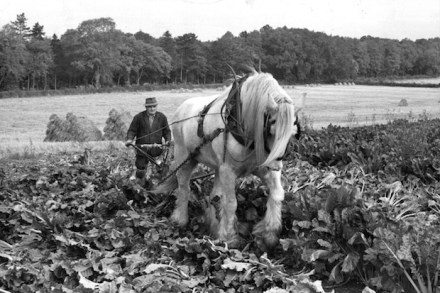
How right Michael Gove was, in his first speech as Environment Secretary, to promise to put an end to a Common Agricultural Policy (CAP) which 'puts resources in the hands of the already-wealthy'. But how bizarre that he then proposed a reform that will continue to do just that. Doing away with CAP ought to be one of the big gains from Brexit. For the past 44 years, taxpayers have been forced to fund a system which, in turn, has created food mountains, degraded the landscape, put millions in the pockets of wealthy landowners in return for doing virtually nothing and, in conjunction with protectionist tariffs from food imports from outside the EU, driven the price of food higher than it need be.