Ross Clark

Ross Clark

Ross Clark is a leader writer and columnist who has written for The Spectator for three decades. He writes on Substack, at Ross on Why?

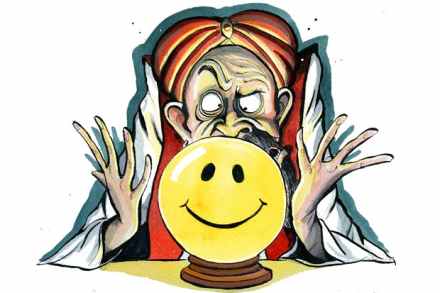
Has Brexit really made us all happier?

Apparently we’re all getting a little happier – if a little more anxious. The government’s official happiness index shows that we rate our overall life satisfaction at an average of 7.7 out of 10. We think our lives are 7.9 out of 10 worthwhile. We rate our happiness yesterday at 7.5 out of 10 and our anxiety rating at 2.9 out of 10 – a slight rise on early 2015 when national anxiety reached a low but still much less than when the index started in 2011.  Does it mean anything though?

Why is the Government so scared of giving all prisoners the vote?

David Cameron will presumably be spending today retching into a bucket at his Oxfordshire home. Having said that the thought of prisoners voting made him ‘physically sick’, he will not be pleased by the Government’s proposal to grant the vote to the hundred or so prisoners who are out of jail at any one time – this in reaction to the European Court of Human Rights (ECHR), which ruled that a blanket ban on prisoners’ voting is a breach of human rights. It is pretty par for the course for the ECHR – standing up for criminals while failing to do much to ensure free speech in Russia and so on. But why the Government’s drawn-out battle to  resist what would be a pretty small and unimportant change to the prison regime?

Why can’t the Bank of England admit it was wrong to cut interest rates?

It took all of five minutes for news of the Bank of England’s first rise in base rate for over a decade to be blamed on Brexit. The Guardian’s live blog, for example, suggested that the rise was 'to prevent the cost of goods bought in the UK from spiralling further', following the fall in sterling. Well no, actually. The explanatory notes from the Monetary Policy Committee (MPC) explain that it voted 7-2 to raise rates because the slack in the UK economy has fallen. With unemployment at a 40 year low, it fears that inflation could run ahead of itself unless dampened by an interest rate rise. The inflationary effects of low sterling, it adds, are falling away, but 'net trade is bolstered by the strong global expansion and the past depreciation of sterling.

Climate change campaigners are crying wolf

When will the climate change lobby finally realise that it is undermining its own arguments through hyperbole? Yesterday, the Lancet published its latest climate change ‘indicators’, accompanied by a comment piece in the Guardian by Christiana Figueres, former Executive Secretary of the UN Framework Convention on Climate Change and now chair of the Lancet Countdown advisory board.  The piece, headed 'Climate change isn’t just hurting the planet – it’s a public health emergency' makes the assertion that climate change is affecting 'the health of you, your family, your neighbours – each and every one of us.

Britain isn’t short of jobs. It’s short of skills

Amid the attention given to the ‘Three Brexiteers’ in their efforts to establish post-Brexit trade with the rest of the world, the work of business secretary Greg Clark often gets overlooked. But in conversation with James Forsyth at the Conservative party conference in Manchester, this is what we learned about the government’s business strategy. The event was sponsored by the Nuclear Industry Association. With unemployment at a 40-year low, Britain can claim to be the ‘jobs capital of the world’, but we can’t claim to be the earnings capital of the world. The productivity gap has been puzzling economists for years, with little improvement since the economic crisis of 2008/09.

The New Frontier: Freedom, security and responsibility in the internet age

The Spectator, in association with Sky, brought together the Home Secretary, Amber Rudd, David Anderson QC, the former independent reviewer of terrorism legislation, Michael Beckerman of the Internet Association, which represents the internet giants, and Andrew Griffith of Sky for a panel event at Conservative party conference. This is a summary of the discussion which took place. How do you tackle the Isis propaganda machine as it pumps out 2000 items a week? Notionally, the power lies with the West to stop the ceaseless incitement to violence. The internet and social media are, after all, largely under the control of large corporations. Yet the internet is also a powerful tool of freedom with which few democratic governments want to meddle without good reason.

Economic forecasts are almost always wrong – so why do we take them seriously?

There is a weird psychology behind economic forecasts. We know they are going to be wrong, because they always are. Yet such is our appetite for information – any information – that nevertheless we can’t stop ourselves taking them seriously. The Sunday Times this morning has gone big on a report by serial doomsayers the EY Item Club claiming that the government needs to move quickly to obtain a transitional deal on Brexit or face a collapse in business investment. Even with a deal it predicts that the growth in business investment next year will fall to 1.5 per cent, from 2.1 per cent this year. Maybe. But then again, maybe not. There is absolutely no evidence from previous EY Item Club forecasts to suggest that this is better than a figure plucked out of the sky.

Sadiq Khan’s ‘T-charge’ is another bung for the car industry

As an object lesson in how the process of regulation is hijacked by rich and powerful interests, today’s introduction of a £10 Toxic – or ‘T’ – Charge on cars over 11 years old entering Central London during peak hours could hardly be bettered. Almost everyone is in favour of clean air, but the effect of this charge will be to tax the poor and excuse the wealthy while adding to the revenues of car manufacturers who have shown contempt for emissions laws. The charge is to be levied only on cars which fail to meet the Euro 4 regulations on car emissions – which effectively means any car manufactured before 2006, when the regulations were introduced. If newer cars really did emit fewer emissions the concept would be reasonable enough.

Fixing social care is key to the future of the NHS

On 12 September, The Spectator hosted a round-table dinner, sponsored by Bupa, to discuss the future of healthcare in Britain, involving MPs and practitioners. This is a summary of the evening’s discussion. We are forever being told that the health and social care system is in crisis thanks to government ‘cuts’. The trouble is that political parties which try to be honest about the rising cost of healthcare, and come up with solutions as to how we will fund it, tend to be given a rough reception – as the Conservatives discovered when they launched their manifesto for this year’s election, which saw their proposals for social care funding damned as ‘dementia tax’.

Can the Northern Powerhouse survive without George Osborne?

At a dinner at the Conservative party conference, in association with Aecom, MPs, local politicians, journalists and policy experts discussed the question: 'Can the Northern Powerhouse still deliver?' Guests included Esther McVey MP, Sean Anstee, Leader of Trafford Council, Andy Bounds, North of England correspondent for the Financial Times, and Richard Robinson of Aecom. The event was chaired by Fraser Nelson and the article below is a summary of what was discussed. The Northern Powerhouse was the brainchild of George Osborne, his intention being to create a better-connected super-conurbation across the North of England with the socio-economic muscle to compete as a global centre.

Banking after Brexit: what does the future look like?

At a dinner on Sunday 1st October at the Conservative party conference, sponsored by Barclays, bankers, journalists, MPs and policy experts discussed ‘Brexit and the City: a future that works for everyone’. The event was chaired by Fraser Nelson and the article below is a summary of what was discussed. Banks were the popular anti-hero of the 2008/09 financial crisis. Now, there is widespread fear for their future after Brexit, as they will be required to relocate some operations in order to continue to qualify for ‘passporting rights’ needed to provide financial services in the single market. On the other hand, Brexit could free us from regulation, which in some ways could boost business for the financial services industry.

The government’s tin ear has undermined the triumph of Universal Credit

So the government has finally worked out that it isn’t a good idea to charge benefit-claimants 55 pence a minute to listen to piped music while they wait for someone to deal with their claim. But how ridiculous that no-one saw it coming, and that it look so long to correct a problem that should have shown up from the beginning as political dynamite. At this rate it will only be another few months before work and pensions secretary David Gauke works out, too, that making people wait six weeks for their first payment is costing the government far more politically than it is saving the Exchequer.

The Weinstein affair has exposed Hollywood’s culture. Let’s boycott it

Oh, the glorious hypocrisy of it all – the dozens of actresses, UN goodwill ambassadors among them, who have come forward to make accusations against Harvey Weinstein – and yet whom said not a word between them when they were on the make and he was in a position to help them with their careers. I should say that if you are important and mature enough to serve as a UN ambassador you ought to be brave enough to report wrongdoing that is going on beneath your nose – and not wait until there is a bandwagon on which to leap.

The Clean Growth Strategy is yet another dubious government target

In August I wrote here about the government’s pre-announced ban on the sale of new petrol and diesel cars by 2040, and how it could turn out to be a hostage to fortune if the necessary technology fails to be developed. Today, in its Clean Growth Strategy, the government announces another dubious target: insulating a million of the leakiest homes with the aid of £3.6 billion raised through the Energy Company Obligation – which is a levy on all energy customers’ bills. The proposal seems to work on the assumption that it is possible to insulate an old property,  bringing it close to the insulation standards of a new home, at an average cost of £3,600 per home. That is hopeful, to say the least.

The left’s love for protest doesn’t apply to the issue of abortion

Funny, but I had picked up the idea, especially over the past year or two, that the Left was rather fond of the concept of street protest. Every time I am in Central London I seem to run into hordes of placard-holders protesting against ‘austerity’, student tuition fees, animal rights, save the NHS, war in Syria, Universal Credit and what have you. While I might disagree it has never occurred to me to try to challenge the right of these people to take to streets to make their views known. I just hope they have a good day out. But there are limits, it seems, to the Left’s enthusiasm for street protest. It only seems to extend to people with whose causes it agrees.

The Bombardier dispute could actually bring down May’s government

When governments fall it often comes from an unexpected quarter. Thirty eight years ago, James Callaghan’s government fell not as a direct result of the Winter of Discontent but from the fallout over a failed referendum on Scottish devolution. Over the past week we have heard plenty of speculation about Theresa May losing her job thanks to her cough at Manchester or through Brexit-induced civil war in her cabinet. But could we be missing something more obscure but at the same time more ominous? The more I think about it, the gravest danger to the government comes not from its handling of Brexit, universal credit, inflation or any of the other stories which have dominated the news agenda in the past month.

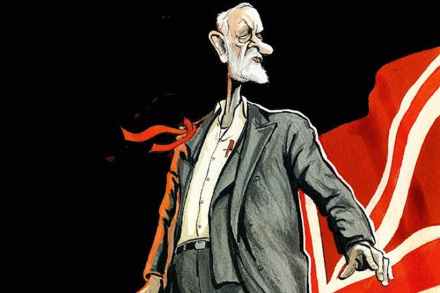
The first 100 days of Corbyn

Many assume that if an election were held soon, Jeremy Corbyn would win. But what if, say, the government fell in 2020 and Labour won a working majority? At 71, Corbyn becomes Britain’s oldest prime minister since Churchill, and at first is one of its most popular. His appeal grows as he takes on some of the country’s favourite demons. Few listen to the protests of water and electricity shareholders as their stakes are seized — most are focused on their own bills, which surely will come down now. There are cheers at Victoria Station as the news flashes across screens that Southern Railway is to be nationalised. At hospitals, medical staff are filmed applauding as PFI contracts are terminated and taken on by the NHS. Stock markets show an upwards blip.

His first 100 days

Many assume that if an election were held soon, Jeremy Corbyn would win. But what if, say, the government fell in 2020 and Labour won a working majority? At 71, Corbyn becomes Britain’s oldest prime minister since Churchill, and at first is one of its most popular. His appeal grows as he takes on some of the country’s favourite demons. Few listen to the protests of water and electricity shareholders as their stakes are seized — most are focused on their own bills, which surely will come down now. There are cheers at Victoria Station as the news flashes across screens that Southern Railway is to be nationalised. At hospitals, medical staff are filmed applauding as PFI contracts are terminated and taken on by the NHS. Stock markets show an upwards blip.

The real winner of Germany’s election is Jean-Claude Juncker

Even if Germany had Britain’s first-past-the-post electoral system, Angela Merkel would be struggling this morning to form a government. With 33 per cent of the vote, her Christian Democrat and Christian Social alliance has suffered its weakest showing in 68 years – tempered only by the equal failure of the socialists. It might have been a moment for Emmanuel Macron to seize the crown of de facto leader of Europe were it not that he, too, suffered a lower-profile though no less significant electoral reversal over the weekend – in Senate elections the La Republique En Marche party won only 23 of the 171 seats up for grabs. With his popularity ratings plummeting and his labour market reforms hardly begun, the Macron bubble has well and truly been burst.

Are old white men really to blame for climate change denial?

Funnily enough, you don’t come across too many pieces in the Guardian blaming black people for crime or women for bad driving. The newspaper would perhaps consider itself a pioneer in trying to drive out racial and gender stereotypes from daily life. It seems a different matter, though, when it comes to the inadequacies of white men, or, more specifically, elderly white men, to throw in a bit of ageism as well. An extraordinary piece in today’s Guardian tries to link what it calls 'climate denial' to race, gender and age.