Richard Bratby

Richard Bratby is the chief classical music critic of The Spectator

The Rite stuff

It was Stravinsky himself who suggested that, in order to preserve its difficulty, the opening bassoon solo of The Rite of Spring should be raised by a semitone every decade. And it was a performance by Birmingham Royal Ballet in 2005 that convinced me that he wasn’t entirely joking. The audience nattered away over the opening bars; the unlucky bassoonist wobbled and cracked. Clearly, this orchestra was not remotely prepared for what was about to hit it. Rhythms splintered like shrapnel and misplaced entries spattered across every silence. As they hurtled into the final Sacrificial Dance, you could almost hear the prayers of musicians audibly struggling simply to hang on. It’s still, without question, the most thrilling Rite of Spring I’ve ever heard.
The Berlioz problem

Hector Berlioz was born on 11 December 1803 in rural Isère. ‘During the months which preceded my birth my mother never dreamed, as Virgil’s did, that she was about to bring forth a laurel branch,’ he writes in his Memoirs. ‘This is extraordinary, I agree, but it is true… Can it be that our age is lacking in poetry?’ And so on, for nearly 600 candid, facetious, outspoken pages. Berlioz’s Memoirs are the inner voice of the Romantic generation as you’ve always imagined it, and everyone who’s interested in music in the 19th century — no, scrub that, everyone who’s interested in European culture — should read them.

Miracle of Mumbai

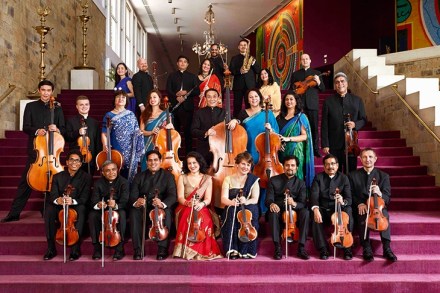
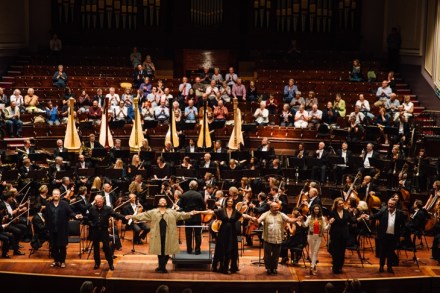
It’s a 31ºC Mumbai morning, and on Marine Drive the Russian winter is closing in. The Symphony Orchestra of India (SOI) is rehearsing Rachmaninov’s Second Symphony ahead of its first ever UK tour, and even on the campus of the National Centre for the Performing Arts (NCPA) — a palm-shaded tropical Barbican next to the Arabian Sea — this is still music to raise a shiver. Strings sigh; horns call across frozen steppes. Then the guest conductor Martyn Brabbins gives the signal for a break and players spill into the foyer, chatting and gulping tea. If the sky were more grey and the tea less sweet, it could be a general rehearsal anywhere in the UK.

Dream ticket

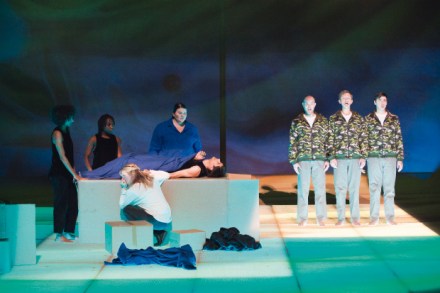
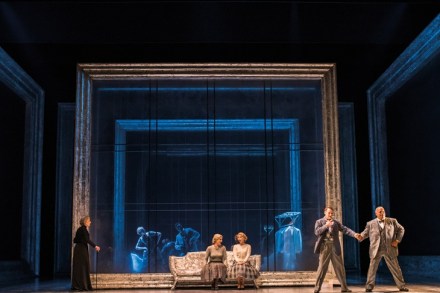
Spoiler alert: it’s all a dream. At least, I think that’s what we’re meant to take away from the business with which director James Brining accompanies the overture to Mozart’s The Magic Flute. A little girl in ochre pyjamas is trying to sleep while in an adjacent room braying, guffawing adults sit down to a formal dinner. Servants bustle about, and there’s a suggestion that all is not well in the hosts’ marriage. Then sleep descends with a David Lynch-like fizzle of electric lights and we’re pitched into a world of princes, serpents and enchantment. Opera directors love unloading on overtures: obscuring the composer’s own musical pathway into their world with elaborately mimed footnotes to a text you haven’t yet read.

Heuberger: Der Opernball

Grade: A– 1898: two Parisiennes and a housemaid secretly invite each other’s partners to the Paris Opera ball and… c’mon, you can guess the rest. It’s Christmas: you don’t want Götterdämmerung. You want luxury, you want tunes and you want irresponsible fun. Richard Heuberger’s waltz-operetta Der Opernball is basically a deluxe box of musical liqueur chocolates, and it’s never been easier to guzzle the lot. Heuberger was a moonlighting music critic (he famously remarked that Schoenberg’s Verklärte Nacht sounds ‘like someone smeared the score of Tristan while the ink was still wet’), and he was working to a tight deadline.

The saddest music in the world

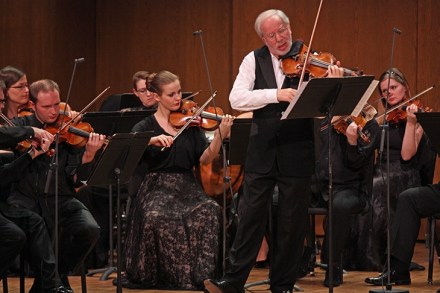
It’s a strange compliment to pay a composer — that the most profound impression their music makes is of an absence. I can’t claim much prior experience of the composer Mieczyslaw Weinberg, who died in 1996: a vague sense of a Shostakovich-like figure who had a bad time of it under Stalin, and the composer of an opera, The Passenger, for which great claims are made by people whose judgment I respect but who probably, on balance, spend too much time with their heads in Eastern Europe. By the end of the first evening of this ‘Weinberg Weekend’, devised by Mirga Grazinyte-Tyla and the City of Birmingham Symphony Orchestra, I felt slightly ashamed about that. Gidon Kremer played his own violin transcription of Weinberg’s 24 Preludes for solo cello.

Sound and fury | 22 November 2018

The People are angry. In fact, they’re bloody furious. As the lights flash up on David Pountney’s production of Prokofiev’s War & Peace, the entire cast confronts the audience: grim, braced, defiant. And before you’ve had time to wonder if this sort of thing is just the long-term legacy of Les Misérables, or whether opera directors really are in love with totalitarian imagery, they unleash hell. This is the chorus of Welsh National Opera, after all. You just know they’re going to slay, and they do. The massive, world-historical Epigraph to Act One shakes the walls and your place is no longer to question, but to sit there and be overawed. To be fair, a Soviet composer during the second world war could hardly get away with anything less.

Britten’s Blackadder moment

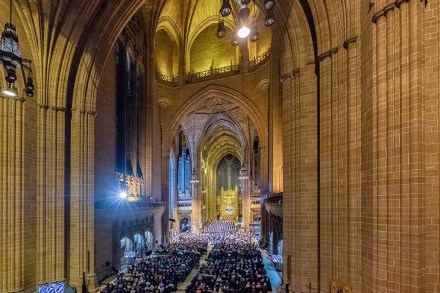
‘What passing-bells for these who die as cattle?’ We’ve heard a lot, lately, of the knell that tolls through the opening bars of Benjamin Britten’s War Requiem, and at Liverpool’s Anglican cathedral it was played on actual church bells. The Royal Liverpool Philharmonic Orchestra’s percussionist Graham Johns has had a set specially cast, and as he struck them video screens relayed the moment all the way down the cathedral’s length. The orchestra was a one-off, assembled half-and-half from the RLPO and the NDR Radiophilharmonie Hannover (the conductor Andrew Manze holds positions in both cities), and this was a major civic occasion, attended by gold chains of all sizes and preceded by speeches from city worthies.

The Maestro, Ennio Morricone, interviewed: ‘I am a real composer’

Ennio Morricone, the Oscar-winning Italian film composer, has died at the age of 91. Here, Richard Bratby spoke to the 'Maestro'. Ennio Morricone’s staff wish it to be known that he does not write soundtracks. ‘Maestro Morricone writes “Film Music” NOT “Sound Tracks”’, explain the printed interview guidelines. ‘Maestro Morricone is a composer. Composers do not use the piano to compose music with, they write their music down directly in musical notes without the interference of any musical instrument.’ Well, that’s Beethoven told. In the classical music world, you hear tales about ‘riders’, the Spinal Tap-like lists of minimum requirements that pop stars issue before consenting to walk among mortal men.

Top scorer

Gershwin’s Porgy and Bess springs to life fully formed, and pulls you in before a word has been sung. A whirlwind flourish; the hectic bustle of violins and xylophone, and then a quick fade into an image of a woman cradling a child and ‘Summertime’, the very first number we hear sung. The aria’s fame actually serves the drama. The thrill of musical recognition as the curtain rises on an unfamiliar world is replaced by astonishment at the dramatic instinct that allows Gershwin to expend a melody like that before his story has even started, in the certain knowledge that what follows can, and absolutely will, live up to what for any composer other than Gershwin would be a once-in-a-lifetime inspiration.

Ring leader

‘On Brünnhilde’s rock I drew the breath that called your name; so swift was my journey here.’ It’s Act Two of Götterdämmerung. Siegfried, entoiled in evil beyond his comprehension, has unwittingly committed the betrayal that will tip the whole vast drama into its final collapse, and at this point Covent Garden’s Ring cycle really does feel like it’s swept by in a breath. True, Keith Warner’s 2007 production is looking creaky. But there’s still no mightier assertion of an opera company’s ambition than to stage all four music-dramas of Der Ring des Nibelungen in the space of a week; and no artistic experience remotely comparable to witnessing it. So, about that experience.

Bingo with Birtwistle

A pregnant silence, a peaty belch from the tuba, and the scrape of brass on brass as gears lock into position and judder forward. It’s almost worth making a bingo card for a Harrison Birtwistle première these days, and I’m not complaining. His last big orchestral work, Deep Time, showed worrying signs of him mellowing into some sort of late period. Not here though, he isn’t. Grinding brass cogwheels? Tick. Sudden stillnesses, punctuated by deadpan creakings and poppings? Tick. Primal screeches from the woodwinds, jarring against chords of millstone grit? House!

The Bruckner effect

The lady behind me on Kensington Gore clearly felt that she owed her friend an apology: ‘It’s Bruckner. I don’t know how that happened.’ I felt for her. ‘It’s Nézet-Séguin and the Rotterdam Phil,’ I’d told a succession of my own musical friends. They’d seemed interested. Since the youngish Canadian conductor Yannick Nézet-Séguin took over at the New York Metropolitan Opera, he’s vaulted on to the A-list, and while the Rotterdam Philharmonic isn’t a super-orchestra, exactly, people do dimly recall that it was conducted by Valery Gergiev, back when that was still something to boast about. So, the inevitable question: what are they playing?

Cannock Chase

Cannock Chase is the long, low range of hills that’s visible to your right as you drive north up the M6 beyond Birmingham. If you’ve travelled by train between Euston and Crewe, you’ve practically brushed its cloak. Soon after Rugeley the landscape closes in, and a palisade of dark pines presses down the slope before your Pendolino ducks into the tunnel that Lord Lichfield made Robert Stephenson dig in 1846 so as not to spoil the landscape of his Shugborough estate. You don’t see much of the Chase, but you certainly sense it. It’s an Area of Outstanding Natural Beauty, but that feels rather an effete description for something so unexpectedly primal: an isolated upland wilderness between Wolverhampton and Stafford.

For the love of operetta

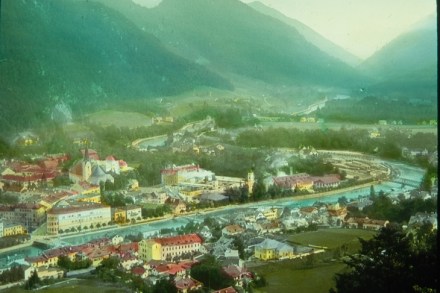
It’s the lederhosen that grabs you first. Two gents were walking down the street ahead of us in full Alpine rig: long socks, collarless loden jackets, and hunting hats decorated with what looked like shaving brushes. Among the flowerbeds and fountains that surround the main theatre of the Bad Ischl Lehar Festival a posse of young women crossed our path, all wearing embroidered dirndls and laughing. By the time we took our seats in the auditorium, we were grappling with a deeply un-British notion: that none of this was ironic. We weren’t at Glyndebourne any more. But if you love the much-mocked art of Viennese operetta, a forgotten spa town at the far end of the Salzkammergut is exactly where you want to be.

The problem with Siegfried

There’s one big problem with Wagner’s Siegfried, and the clue’s in the name. None of Wagner’s mature works hangs so completely upon a single individual. The character himself isn’t really the issue either, however troublesome he might superficially appear (a ‘randy overgrown schoolboy’, if you believe the misguided programme note for this Usher Hall performance). As so often, confusion falls away once you assume that Wagner — who, after all, wasn’t a complete amateur — knew what he was doing, and take Siegfried as the life-force his creator intended. Someone’s still got to sing the damn role, though, and that’s an Olympian challenge.

Return of the Muse

It’s October 1895 and the spirit of Music has been absent from Britain for exactly 200 years. Why she fled, and why she should return now — specifically, to the Leeds Festival — is not clear. Undaunted, Charles Hubert Hastings Parry, the poet Robert Bridges and the massed choral and orchestral forces of the West Riding send up a prayer to the exiled ‘Myriad voicèd Queen’: ‘Thy many-hearted grace restore/ Unto our isle, our own to be’. You read that correctly: the composer whom Edward Elgar would call ‘the head of our art in this country’ begins his Invocation to Music by swallowing whole the Germanic libel that 19th-century Britain was ‘Das Land ohne Musik’. Well, of course he does.

Great expectations | 9 August 2018

‘Outside this house the world has changed. Life is swifter than before; there is no time for idle gestures.’ Anatol, in Samuel Barber’s opera Vanessa, doesn’t pretend to be a romantic hero. The son of Vanessa’s old flame, he’s arrived by night at the remote mansion where she’s waited for 20 years with her elderly mother and niece Erika. He seduces the niece, beguiles the aunt and alienates the grandmother, but at no point is he anything less than honest. ‘I cannot offer you eternal love, for we have learned today such words are lies’, he sings, and Barber, remarkably, takes him at face value. Anatol’s music is lyrical and open; a shaft of light in Barber and his librettist Menotti’s claustrophobic world.

Ariadne’s thread

‘They’ve dined well, they’ve drunk their fill, their brains are dull and slow. They’ll sit snoozing in the dark until they hear some applause, and then, out of courtesy, they’ll wake up’. Hugo von Hofmannsthal’s words, not mine. I’ve never bought the notion that Strauss and Hofmannsthal’s Der Rosenkavalier somehow predicts the first world war. But what’s screamingly obvious is that their next collaboration, Ariadne auf Naxos, precisely skewers the non-existent (in 1916) world of English country-house opera. A millionaire patron has hired an opera company and a comedy troupe for an evening of champagne-fuelled hospitality, and he wants them both finished in time for the fireworks.

Knights at the opera

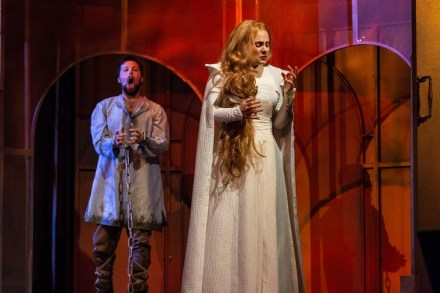
I’ve been trying to pinpoint the exact moment when it became impossible to take Mascagni’s Isabeau seriously. It wasn’t when the scenery jammed, leaving half the cast briefly trapped inside a revolving tower. These things happen, after all: you simply suppress thoughts of Spinal Tap and re-suspend disbelief. I don’t think it was the entry of a character called Ubaldo of Edinburgh either, though people were definitely starting to snigger. It wasn’t even the bit when Mascagni, called upon to depict a trotting horse orchestrally, deployed what sounded like a pair of coconut shells. A score that had started as a weak but listenable slice of art-nouveau medievalism descended — clip clop, clip clop! — into pure Monty Python and the Holy Grail.