Richard Bratby

Richard Bratby is the chief classical music critic of The Spectator

Real Housewives of Windsor

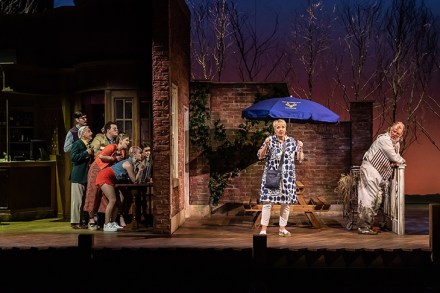
‘Tutto nel mondo e burla’ sings the company at the end of Verdi’s Falstaff — ‘All the world’s a joke’ — and how much you enjoy this opera probably depends upon how far you accept that truth. The 79-year-old Verdi coming out of retirement for one last laugh, finding in Arrigo Boito a librettist who could remake Shakespeare in the sun-kissed Italian of Boccaccio and Petrarch, and then composing a score that saves its deepest compassion for old fools and young lovers, its sweetness (according to Boito) ‘sprinkled across the comedy as one sprinkles sugar on a tart’: seriously, what right-thinking opera-lover, experiencing all of that, wouldn’t want to clink glasses with Sir John Falstaff?

Ring without the bling

At Longborough Festival Opera, Richard Wagner is on the roof. Literally: his statue stands on top of the little pink opera house, surveying the Evenlode valley from beneath a stone beret. He’s not alone, mind. A figure of Mozart looks up indignantly. On the other side of the pediment stands Verdi, arms folded, glowering huffily at the floor. But Wagner is on top: a permanent reminder that this is the company that took on the greatest musical-dramatic challenge in the operatic universe, and in 2013 staged a full production of Der Ring des Nibelungen in a converted barn. And next week, they’re going to start all over again.

Sunny delight | 6 June 2019

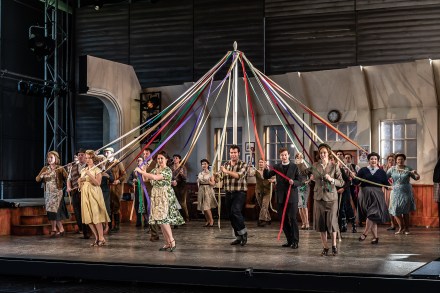
So it’s the start of the summer opera season at Wormsley and we’re sitting there in evening dress in the middle of the Getty estate, looking at a beautifully detailed replica of a rundown English village hall. It’s superbly done: the canvas chairs and austerity-drab paintwork in Paul Curran’s new production of The Bartered Bride could surely have been found in any number of church halls in this corner of the Chilterns, at least in the 1950s when this production seems to be set. And then, having gone to painstaking lengths to relocate this definitive Slav national opera to rural England, Garsington flips our expectations straight back at us and has it sung in Czech. Well, it wouldn’t be country-house opera without a few absurdities.

Reaching the Tippett point

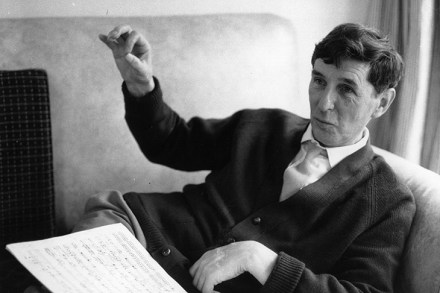
In Oliver Soden’s new biography of Michael Tippett, he describes how Tippett wanted to open his Fourth Symphony with the sound of breathing: ‘as if the orchestra itself had lungs.’ Tippett had no idea how to achieve this effect, and at the première in 1977 they used an orchestral wind machine — a canvas band rubbing against a wooden drum. It proved about as convincing as it sounds, so at later performances a musician exhaled down a microphone. The effect, writes Soden, was reminiscent of an obscene phone call.

Prima le parole

‘I consider that music is, by its very nature, essentially powerless to express anything at all,’ wrote Stravinsky in one of his more honest moments, and when it comes to humour the old fox had a point. Strip away words, visuals, parody and extra-musical associations (the flatulent bassoon; the raspberry-blowing trumpet) and Orpheus, unaided, doesn’t have much left in his comic armoury. Two concerts at the Queen Elizabeth Hall could almost have been test cases. Geoffrey Paterson conducted the London Sinfonietta in the UK première of No. 50 (The Garden) by Richard Ayres, a composer whose playful, surreal sensibility cheerfully jettisons any idea of music as an end in itself.

Hey Judith

‘When a man takes it upon himself to write an oratorio — perhaps the most gratuitous exploit open to a 19th-century Englishman — he must take the consequences,’ wrote George Bernard Shaw, reviewing Parry’s oratorio Judith in 1888. The consequences for Judith seem to have been unusually drastic. Premiered at the Birmingham Triennial Festival, it was a major success: if not quite on the scale of its obvious model, Mendelssohn’s Elijah, then certainly not far behind it. And then it vanished. The most recent UK performance seems to have been in 1951, and while enterprising record labels have blown the dust off Victoriana ranging from Sullivan’s Kenilworth to Ethel Smyth’s Mass in D, there’s no recording of Judith.

Splitting headache | 4 April 2019

Back when the UK was assumed to be leaving the European Union on 29 March, the Aurora Orchestra was invited to Brussels to participate in Klarafestival: specifically, an evening of words and music ‘celebrating cultural links between Europe and the UK’. And because arts organisations in general (and orchestras in particular) change direction with the agility of a supertanker in pack ice, it went ahead regardless. The cellist Nicolas Altstaedt played John Tavener’s The Protecting Veil with exquisite purity of tone. Ian Bostridge sang Britten’s Les illuminations: brisk, earthy, vividly theatrical. The Aurora Orchestra’s strings, playing standing up, flashed and bristled back at him. Musicians like to talk about the power of their art to unite and heal.

Forza majeure

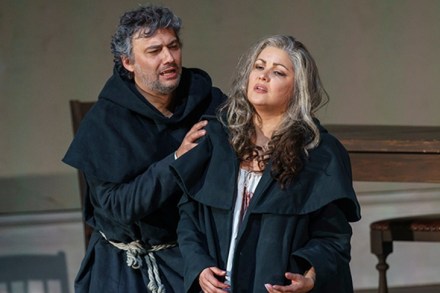
To stage Verdi’s Il Trovatore, they say, is easy: you just need the four greatest singers in the world. The Royal Opera has applied this principle to La forza del destino. Jonas Kaufmann sings Alvaro, Anna Netrebko is his beloved Leonora, and Ludovic Tézier her brother Carlo, with the mighty Ferruccio Furlanetto completing the set as the priest Padre Guardiano. The results have been pretty much as you might expect, ranging from the now-traditional speculation about whether Kaufmann would actually show up (he did) to reports of tickets changing hands privately for £5,000 apiece. And yes, it was extraordinary: a four-hour rush of some of the most glorious singing anyone born after 1970 will probably ever have heard in one place.

Resistance is futile

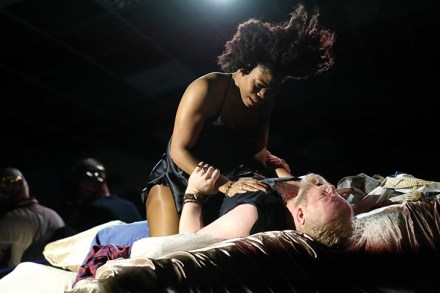
You can see Graham Vick’s work at La Scala or the New York Met. But if you want to be directed by him, you need to go to Birmingham. The Tower Ballroom is a sticky-floored former nightspot out by Edgbaston Reservoir, artfully trashed by Block9, the people behind Banksy’s Dismaland. You crunch across the tarmac, pass the humanoid rats and the drug dealer with his prostitute cards (‘Sonyetka: Exotic Dancing – Russian Lessons’) and enter the crowd. Suddenly Vick’s on you: barking under his breath that you need to move and, should you fail to comply, shoving you firmly out of the way. Seconds later, a double bed careens through, or the space fills with knife-wielding brides in blood-smeared dresses.

The Rite stuff

It was Stravinsky himself who suggested that, in order to preserve its difficulty, the opening bassoon solo of The Rite of Spring should be raised by a semitone every decade. And it was a performance by Birmingham Royal Ballet in 2005 that convinced me that he wasn’t entirely joking. The audience nattered away over the opening bars; the unlucky bassoonist wobbled and cracked. Clearly, this orchestra was not remotely prepared for what was about to hit it. Rhythms splintered like shrapnel and misplaced entries spattered across every silence. As they hurtled into the final Sacrificial Dance, you could almost hear the prayers of musicians audibly struggling simply to hang on. It’s still, without question, the most thrilling Rite of Spring I’ve ever heard.

The Berlioz problem

Hector Berlioz was born on 11 December 1803 in rural Isère. ‘During the months which preceded my birth my mother never dreamed, as Virgil’s did, that she was about to bring forth a laurel branch,’ he writes in his Memoirs. ‘This is extraordinary, I agree, but it is true… Can it be that our age is lacking in poetry?’ And so on, for nearly 600 candid, facetious, outspoken pages. Berlioz’s Memoirs are the inner voice of the Romantic generation as you’ve always imagined it, and everyone who’s interested in music in the 19th century — no, scrub that, everyone who’s interested in European culture — should read them.

Miracle of Mumbai

It’s a 31ºC Mumbai morning, and on Marine Drive the Russian winter is closing in. The Symphony Orchestra of India (SOI) is rehearsing Rachmaninov’s Second Symphony ahead of its first ever UK tour, and even on the campus of the National Centre for the Performing Arts (NCPA) — a palm-shaded tropical Barbican next to the Arabian Sea — this is still music to raise a shiver. Strings sigh; horns call across frozen steppes. Then the guest conductor Martyn Brabbins gives the signal for a break and players spill into the foyer, chatting and gulping tea. If the sky were more grey and the tea less sweet, it could be a general rehearsal anywhere in the UK.

Dream ticket

Spoiler alert: it’s all a dream. At least, I think that’s what we’re meant to take away from the business with which director James Brining accompanies the overture to Mozart’s The Magic Flute. A little girl in ochre pyjamas is trying to sleep while in an adjacent room braying, guffawing adults sit down to a formal dinner. Servants bustle about, and there’s a suggestion that all is not well in the hosts’ marriage. Then sleep descends with a David Lynch-like fizzle of electric lights and we’re pitched into a world of princes, serpents and enchantment. Opera directors love unloading on overtures: obscuring the composer’s own musical pathway into their world with elaborately mimed footnotes to a text you haven’t yet read.

Heuberger: Der Opernball

Grade: A– 1898: two Parisiennes and a housemaid secretly invite each other’s partners to the Paris Opera ball and… c’mon, you can guess the rest. It’s Christmas: you don’t want Götterdämmerung. You want luxury, you want tunes and you want irresponsible fun. Richard Heuberger’s waltz-operetta Der Opernball is basically a deluxe box of musical liqueur chocolates, and it’s never been easier to guzzle the lot. Heuberger was a moonlighting music critic (he famously remarked that Schoenberg’s Verklärte Nacht sounds ‘like someone smeared the score of Tristan while the ink was still wet’), and he was working to a tight deadline.

The saddest music in the world

It’s a strange compliment to pay a composer — that the most profound impression their music makes is of an absence. I can’t claim much prior experience of the composer Mieczyslaw Weinberg, who died in 1996: a vague sense of a Shostakovich-like figure who had a bad time of it under Stalin, and the composer of an opera, The Passenger, for which great claims are made by people whose judgment I respect but who probably, on balance, spend too much time with their heads in Eastern Europe. By the end of the first evening of this ‘Weinberg Weekend’, devised by Mirga Grazinyte-Tyla and the City of Birmingham Symphony Orchestra, I felt slightly ashamed about that. Gidon Kremer played his own violin transcription of Weinberg’s 24 Preludes for solo cello.

Sound and fury | 22 November 2018

The People are angry. In fact, they’re bloody furious. As the lights flash up on David Pountney’s production of Prokofiev’s War & Peace, the entire cast confronts the audience: grim, braced, defiant. And before you’ve had time to wonder if this sort of thing is just the long-term legacy of Les Misérables, or whether opera directors really are in love with totalitarian imagery, they unleash hell. This is the chorus of Welsh National Opera, after all. You just know they’re going to slay, and they do. The massive, world-historical Epigraph to Act One shakes the walls and your place is no longer to question, but to sit there and be overawed. To be fair, a Soviet composer during the second world war could hardly get away with anything less.

Britten’s Blackadder moment

‘What passing-bells for these who die as cattle?’ We’ve heard a lot, lately, of the knell that tolls through the opening bars of Benjamin Britten’s War Requiem, and at Liverpool’s Anglican cathedral it was played on actual church bells. The Royal Liverpool Philharmonic Orchestra’s percussionist Graham Johns has had a set specially cast, and as he struck them video screens relayed the moment all the way down the cathedral’s length. The orchestra was a one-off, assembled half-and-half from the RLPO and the NDR Radiophilharmonie Hannover (the conductor Andrew Manze holds positions in both cities), and this was a major civic occasion, attended by gold chains of all sizes and preceded by speeches from city worthies.

The Maestro, Ennio Morricone, interviewed: ‘I am a real composer’

Ennio Morricone, the Oscar-winning Italian film composer, has died at the age of 91. Here, Richard Bratby spoke to the 'Maestro'. Ennio Morricone’s staff wish it to be known that he does not write soundtracks. ‘Maestro Morricone writes “Film Music” NOT “Sound Tracks”’, explain the printed interview guidelines. ‘Maestro Morricone is a composer. Composers do not use the piano to compose music with, they write their music down directly in musical notes without the interference of any musical instrument.’ Well, that’s Beethoven told. In the classical music world, you hear tales about ‘riders’, the Spinal Tap-like lists of minimum requirements that pop stars issue before consenting to walk among mortal men.

Top scorer

Gershwin’s Porgy and Bess springs to life fully formed, and pulls you in before a word has been sung. A whirlwind flourish; the hectic bustle of violins and xylophone, and then a quick fade into an image of a woman cradling a child and ‘Summertime’, the very first number we hear sung. The aria’s fame actually serves the drama. The thrill of musical recognition as the curtain rises on an unfamiliar world is replaced by astonishment at the dramatic instinct that allows Gershwin to expend a melody like that before his story has even started, in the certain knowledge that what follows can, and absolutely will, live up to what for any composer other than Gershwin would be a once-in-a-lifetime inspiration.

Ring leader

‘On Brünnhilde’s rock I drew the breath that called your name; so swift was my journey here.’ It’s Act Two of Götterdämmerung. Siegfried, entoiled in evil beyond his comprehension, has unwittingly committed the betrayal that will tip the whole vast drama into its final collapse, and at this point Covent Garden’s Ring cycle really does feel like it’s swept by in a breath. True, Keith Warner’s 2007 production is looking creaky. But there’s still no mightier assertion of an opera company’s ambition than to stage all four music-dramas of Der Ring des Nibelungen in the space of a week; and no artistic experience remotely comparable to witnessing it. So, about that experience.