Richard Bratby

Richard Bratby is the chief classical music critic of The Spectator

Bingo with Birtwistle

From our UK edition

A pregnant silence, a peaty belch from the tuba, and the scrape of brass on brass as gears lock into position and judder forward. It’s almost worth making a bingo card for a Harrison Birtwistle première these days, and I’m not complaining. His last big orchestral work, Deep Time, showed worrying signs of him mellowing into some sort of late period. Not here though, he isn’t. Grinding brass cogwheels? Tick. Sudden stillnesses, punctuated by deadpan creakings and poppings? Tick. Primal screeches from the woodwinds, jarring against chords of millstone grit? House!

The Bruckner effect

From our UK edition

The lady behind me on Kensington Gore clearly felt that she owed her friend an apology: ‘It’s Bruckner. I don’t know how that happened.’ I felt for her. ‘It’s Nézet-Séguin and the Rotterdam Phil,’ I’d told a succession of my own musical friends. They’d seemed interested. Since the youngish Canadian conductor Yannick Nézet-Séguin took over at the New York Metropolitan Opera, he’s vaulted on to the A-list, and while the Rotterdam Philharmonic isn’t a super-orchestra, exactly, people do dimly recall that it was conducted by Valery Gergiev, back when that was still something to boast about. So, the inevitable question: what are they playing?

Cannock Chase

From our UK edition

Cannock Chase is the long, low range of hills that’s visible to your right as you drive north up the M6 beyond Birmingham. If you’ve travelled by train between Euston and Crewe, you’ve practically brushed its cloak. Soon after Rugeley the landscape closes in, and a palisade of dark pines presses down the slope before your Pendolino ducks into the tunnel that Lord Lichfield made Robert Stephenson dig in 1846 so as not to spoil the landscape of his Shugborough estate. You don’t see much of the Chase, but you certainly sense it. It’s an Area of Outstanding Natural Beauty, but that feels rather an effete description for something so unexpectedly primal: an isolated upland wilderness between Wolverhampton and Stafford.

For the love of operetta

From our UK edition

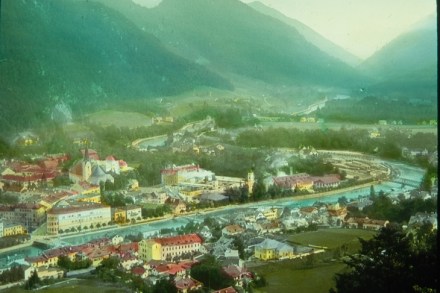
It’s the lederhosen that grabs you first. Two gents were walking down the street ahead of us in full Alpine rig: long socks, collarless loden jackets, and hunting hats decorated with what looked like shaving brushes. Among the flowerbeds and fountains that surround the main theatre of the Bad Ischl Lehar Festival a posse of young women crossed our path, all wearing embroidered dirndls and laughing. By the time we took our seats in the auditorium, we were grappling with a deeply un-British notion: that none of this was ironic. We weren’t at Glyndebourne any more. But if you love the much-mocked art of Viennese operetta, a forgotten spa town at the far end of the Salzkammergut is exactly where you want to be.

The problem with Siegfried

From our UK edition

There’s one big problem with Wagner’s Siegfried, and the clue’s in the name. None of Wagner’s mature works hangs so completely upon a single individual. The character himself isn’t really the issue either, however troublesome he might superficially appear (a ‘randy overgrown schoolboy’, if you believe the misguided programme note for this Usher Hall performance). As so often, confusion falls away once you assume that Wagner — who, after all, wasn’t a complete amateur — knew what he was doing, and take Siegfried as the life-force his creator intended. Someone’s still got to sing the damn role, though, and that’s an Olympian challenge.

Return of the Muse

From our UK edition

It’s October 1895 and the spirit of Music has been absent from Britain for exactly 200 years. Why she fled, and why she should return now — specifically, to the Leeds Festival — is not clear. Undaunted, Charles Hubert Hastings Parry, the poet Robert Bridges and the massed choral and orchestral forces of the West Riding send up a prayer to the exiled ‘Myriad voicèd Queen’: ‘Thy many-hearted grace restore/ Unto our isle, our own to be’. You read that correctly: the composer whom Edward Elgar would call ‘the head of our art in this country’ begins his Invocation to Music by swallowing whole the Germanic libel that 19th-century Britain was ‘Das Land ohne Musik’. Well, of course he does.

Great expectations | 9 August 2018

From our UK edition

‘Outside this house the world has changed. Life is swifter than before; there is no time for idle gestures.’ Anatol, in Samuel Barber’s opera Vanessa, doesn’t pretend to be a romantic hero. The son of Vanessa’s old flame, he’s arrived by night at the remote mansion where she’s waited for 20 years with her elderly mother and niece Erika. He seduces the niece, beguiles the aunt and alienates the grandmother, but at no point is he anything less than honest. ‘I cannot offer you eternal love, for we have learned today such words are lies’, he sings, and Barber, remarkably, takes him at face value. Anatol’s music is lyrical and open; a shaft of light in Barber and his librettist Menotti’s claustrophobic world.

Ariadne’s thread

From our UK edition

‘They’ve dined well, they’ve drunk their fill, their brains are dull and slow. They’ll sit snoozing in the dark until they hear some applause, and then, out of courtesy, they’ll wake up’. Hugo von Hofmannsthal’s words, not mine. I’ve never bought the notion that Strauss and Hofmannsthal’s Der Rosenkavalier somehow predicts the first world war. But what’s screamingly obvious is that their next collaboration, Ariadne auf Naxos, precisely skewers the non-existent (in 1916) world of English country-house opera. A millionaire patron has hired an opera company and a comedy troupe for an evening of champagne-fuelled hospitality, and he wants them both finished in time for the fireworks.

Knights at the opera

From our UK edition

I’ve been trying to pinpoint the exact moment when it became impossible to take Mascagni’s Isabeau seriously. It wasn’t when the scenery jammed, leaving half the cast briefly trapped inside a revolving tower. These things happen, after all: you simply suppress thoughts of Spinal Tap and re-suspend disbelief. I don’t think it was the entry of a character called Ubaldo of Edinburgh either, though people were definitely starting to snigger. It wasn’t even the bit when Mascagni, called upon to depict a trotting horse orchestrally, deployed what sounded like a pair of coconut shells. A score that had started as a weak but listenable slice of art-nouveau medievalism descended — clip clop, clip clop! — into pure Monty Python and the Holy Grail.

Scent and sensibility

From our UK edition

Patrick Mason’s new production of Gounod’s Roméo et Juliette reminded me of something, but it took a while to work out what. We saw shiny black walls with chrome Bauhaus details, and a swirl of mist through which beautiful people moved in black formal wear. Then Olena Tokar made her entrance as Juliette, and as she pirouetted about the stage, evening dress sparkling, it clicked. It’s a perfume advert. The artificiality, the chic, the sexy little hint of affluence with top notes of fascism: you half-expected billowing curtains to reveal a giant bottle of Chanel No. 5. It fitted right in at West Horsley, where the programme book contains adverts for private equity firms and first nights begin with an onstage shout-out to Laurent-Perrier.

Handel for hipsters

From our UK edition

On a sward of AstroTurf somewhere off Silicon Roundabout, Mountain Media is hosting its summer party and, well, it’s the sort of bash you’d pluck your own eyes out to avoid. Hipsters sprawl on dayglo beanbags. Lads wearing fairy wings strike aftershave-advert attitudes as they swig bottled lager, while girls in vintage dresses pout into smart phones through cardboard Instagram frames. Naturally, it’s got its own hashtags: everything is flashed up on digital screens. The only thing that jars — though perhaps it’s some new straight-outta-Hoxton trend — is that instead of a DJ there’s a live band, and the music’s by Handel. Handel’s English-language tragedy Acis and Galatea was once one of his most bankable properties.

Johann Sebastian Bach

From our UK edition

I don’t get Johann Sebastian Bach. I mean, I get that he was good — no Mozart, sure, but definitely up there in anyone’s top five 18th-century composers. But that’s not enough. Bach must be revered as the One: the supreme and universal musical genius. When John Eliot Gardiner celebrated the millennium by performing Bach’s complete cantatas, it wasn’t a cycle or a series but a ‘pilgrimage’, if you please. (He's back with more cantatas this weekend at the Barbican.) Playing Bach, we’re told, requires profound selflessness — though if you’ve ever witnessed a solo violinist hijacking an orchestral concert to saw through all 15 tortured minutes of the D minor Chaconne, you might call it something else entirely.

Darkness visible | 14 June 2018

From our UK edition

Oh, what a beautiful morning! In Jo Davies’s production of Oklahoma! the audience spends the overture staring at the side of a barn. Then, as birdsong rises from the orchestra, corrugated-iron doors slide open on a dustbowl farm of the 1930s. Aunt Eller (Claire Moore) is fixing a tractor, and a wind pump spins slowly against an orange dawn sky. It’s mildly surreal: the light falls as if in one of those New Deal-era western landscape paintings, with a jagged, David Smith-like sculpture of pitchforks and shovels serving as a tree. And then, with throwaway ease, Dex Lee as Curly launches into that greatest of all Broadway opening numbers. Davies catches Rodgers and Hammerstein’s surge of hope on the upswing, and rides it in a single sweep from beginning to end.

The big chill | 7 June 2018

From our UK edition

The picnic hamper’s open, the bubbly is chilled, and country house opera is starting to eat itself. When you arrive at the Wormsley Estate you enter a fantastic, baffling world. Figures in black tie stroll between topiary hedges in obedience to unstated rules, while serving staff hover a few paces behind, gliding silently in to reassert neatness and order. Children dressed in red (they’re from a local Scout group) pop up to help and guide. Then the new production of Die Zauberflöte begins and with a deft, surreal spin, the director Netia Jones bowls it all straight back at you. That’s a big part of the fun here. Jones has designed the production herself, and she clearly has quite a DVD collection.

Laughing matters

From our UK edition

‘Comedy for music by Hugo von Hofmannsthal. Music by Richard Strauss.’ That’s what the creators of Der Rosenkavalier wrote on the score, but don’t expect to see it reprinted in any programme books. Their careful wording doesn’t fit modern assumptions about Der Rosenkavalier, and not merely because it gives the librettist first place. There’s that troublesome word ‘comedy’, too. Advertising blurbs tell us (I know, I’ve written a couple) that Rosenkavalier is a bittersweet meditation on love, transience and loss. Yet its creators meant it to be funny. ‘Don’t forget that the audience should also laugh!’ wrote Strauss to Hofmannsthal. ‘Laugh, not just smile or grin!

Natural selection | 17 May 2018

From our UK edition

‘All fish in flood and fowl of flight/ Be mirthful now and make melody’ writes the poet William Dunbar in the verses that Sir Charles Hubert Parry set to music as Ode on the Nativity. In David Matthews’s new Ninth Symphony, one particular fowl does exactly that. The symphony’s central movement begins on strings: an idyll of grey skies and shivering leaves. Matthews gradually introduces blocks of woodwind and brass, including a heavily stylised burst of birdsong.

Hype and anti-hype

From our UK edition

Apparently it’s called ‘expectation management’. Pollux, Esa-Pekka Salonen’s new work for the Los Angeles Philharmonic Orchestra, takes its name from Greek myth. But as Salonen explains in his programme note, there’s more: lots more. It’s intended to form a diptych with a second piece called (naturally enough) Castor. It’s also part-inspired by Rilke’s Sonnets to Orpheus, and an image (Salonen compares it to Salvador Dali) of a tree growing out of an ear. And finally there’s a ‘mantra rhythm’, which Salonen heard played by a post-grunge band ‘during dinner in a restaurant in the 11th arrondissement of Paris’, which all sounds very civilised.

By ’eck, petal, it’s gorgeous

From our UK edition

The opening of Mark Simpson’s new Cello Concerto is pure Hollywood. A fanfare in the low brass, an upwards rush and suddenly the screen floods with lush orchestral sound — as confident in its onward sweep as Star Wars or ‘Tara’s Theme’. Waiting, poised, in the middle of it all was the soloist Leonard Elschenbroich, for whom Simpson has said that he wanted to write a concerto that celebrated the cello’s ‘expressive and lyrical force’. He has, too. From the instant Elschenbroich entered, it felt right. The cello soared over a chiming marimba, like in Walton’s Cello Concerto. It lingered over its farewells, like in Elgar’s.

Kid’s play

From our UK edition

It’s been a good couple of weeks for cuddly toys in opera. A big floppy Eeyore is the only comfort for 11-year-old Coraline at the darkest moment of Mark-Anthony Turnage and Rory Mullarkey’s new opera. The teenage Composer in Antony McDonald’s production of Ariadne auf Naxos has a Beanie Baby panda as a sort of mascot: a tiny, limp emotional defence against a world that’s about to spin deliriously off kilter. Hansel and Gretel don’t have any toys, but the brattish siblings of Stephen Medcalf’s staging at the Royal Northern College of Music can at least cling to each other as the night closes in. Interestingly, the opera that came across as the most harmless was the only one that wasn’t created for children. Ariadne auf Naxos, then.

The last radical

From our UK edition

A spectre haunted the first weekend of the City of Birmingham Symphony Orchestra’s Debussy Festival: the spectre of Richard Wagner. Debussy’s relationship with Wagner began with infatuation, and ended (as so often) in open rebellion. The young decadent who declared Parsifal ‘one of the loveliest monuments of sound ever raised to the serene glory of music’ later ranted that ‘30 million Boches cannot destroy French thought’ even while, tormented by cancer, he laboured to complete three late sonatas of near-infinite subtlety and grace. But there’s always the sense, as Debussy put it as early as 1890, that ‘I don’t see what can be done beyond Tristan’.