Say what you like about Monteverdi, but he knew how to get his audience on side. ‘I greet you, heroes, princes,’ declares the personification of Music in the opening scene of L’Orfeo, and if you’re a Glyndebourne regular you’ll feel at home right away. ‘Many singers have celebrated you – and fallen short of the truth, which is too exalted for mortal vision.’ Why, thank you; and how true, how very true. Now, when’s the picnic?
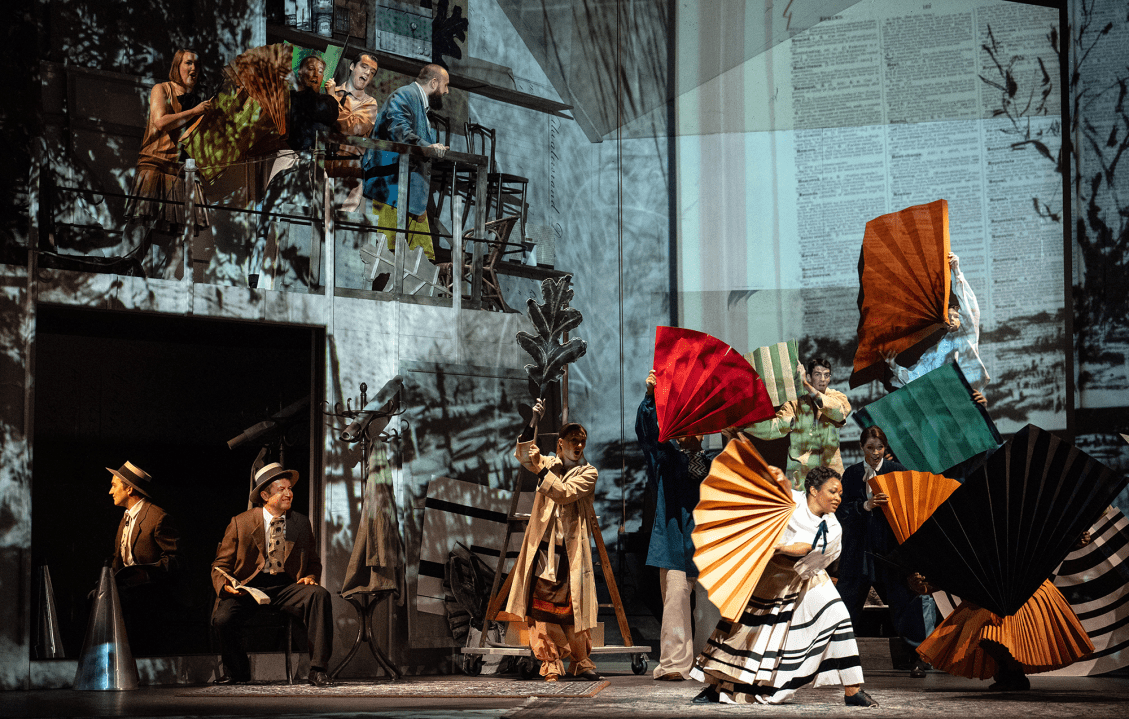
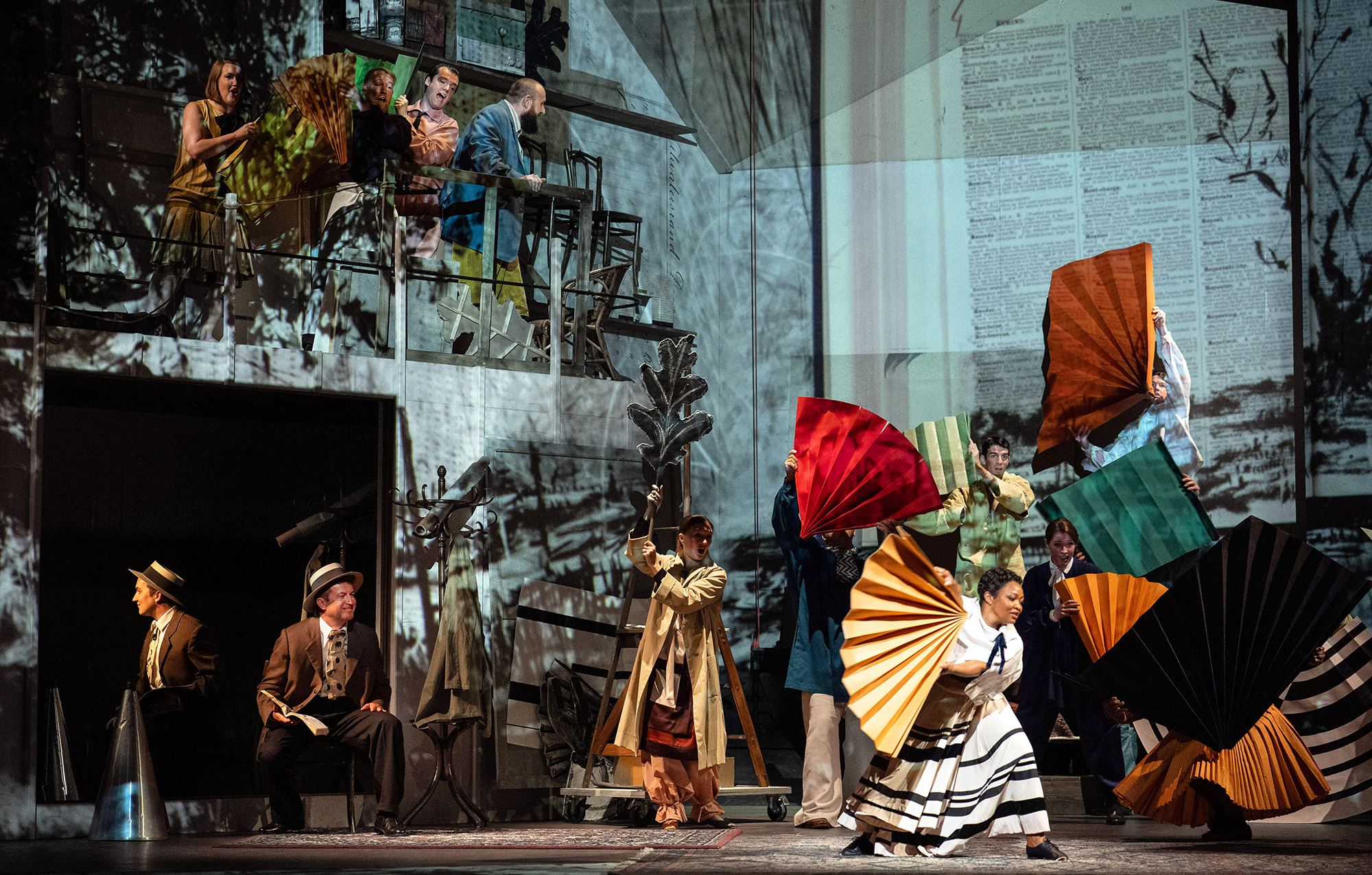
But seduction is what opera does. It’s what opera has done since the very beginning – and L’Orfeo, premièred in 1607 at the court of Mantua, is almost as close to the beginning as we can get. A shrewd director will lean into the impossible extravagance and ambition: the sense that we’re dealing here with an entirely novel piling of art upon art. As director of this spectacular new staging, the artist William Kentridge says that his aim is to provide ‘too much to see and experience’ and your reaction will depend upon how you feel about being overwhelmed. This is not a production for those delicate souls who imagine that baroque opera is somehow safer and purer than those awful overbearing romantics.
Anyway, the set is an artist’s studio. La Musica (Francesca Aspromonte – surpassingly pure and sweet) opens a book and starts to paint. She sings Euridice’s part, too (well, any artist has to decide where his true love lies), while the physical woman is played by a dancer (Roseline Wilkens) whose movements exude joy. Orfeo (Krystian Adam) wanders through this world in blazer and boater. I thought of Aschenbach and his doomed pursuit of beauty. My companion saw him as the young David Hockney.
Regardless, they’re all just part of a larger cosmos, suspended between the lush, silky tread of Monteverdi’s score (Jonathan Cohen conducts the Orchestra of the Age of Enlightenment) and Kentridge’s teeming full-stage video cascade of rippling pages, live illustration and raw, disorienting spectacle (at one point the entire set seems to be sliding away). The eye grasps at the flickering images and the mind scrambles to construct meaning. Trees grow, megaphones pulse and there are occasional, haunting glimpses of human figures – some sensual; some traumatised, but all rendered in Kentridge’s nervy, smudgy strokes of pencil and charcoal.
The effect is rather like Peter Greenaway’s Prospero’s Books. The easiest response is to surrender – as, of course, everyone should when Orpheus sings; even the fantastically masked denizens of Kentridge’s Underworld. Then see what sticks, and what emotions accrue.
That’s made immeasurably easier by the beauty of the singing and playing. Adam maintains a direct, expressive dignity; Xenia Puskarz Tomas is touchingly plangent as Messaggera/La Speranza and Proserpina (Leia Lensing) and Plutone (Davide Giangregorio) make one hell of a Stygian power couple. Cohen and the OAE, meanwhile, sounded as if they were on a sonic spa day; indulging themselves with splashes of harp, iridescent swashes of strings, and a battery of buzzing regals and sackbuts.
Essentially, though, you spend two hours engulfed in a hyperactive art installation. Not everyone will agree, but on first viewing it felt to me like a sincere meeting of creative minds across a four-century chasm, with visuals, music, words and dance all serving the drama. Nothing succeeds like excess; again, that’s opera for you, and if you’re unpersuaded I’ve one last observation. When Orfeo, fatally, turns and looks at Euridice – a catastrophe that has been told and retold in every Western artform for nearly 3,000 years – the audience gasped out loud with surprise.
In a happier world we’d have 800 words to discus Oscar Straus’s gorgeous 1908 operetta The Chocolate Soldier, which is based on George Bernard Shaw’s Arms and the Man. Shaw tried to ban it, but later wished he’d negotiated a cut of the royalties. Old beardie must be gyrating in his grave, because the copyrights have long since expired, and for this revival (the first in London since 1940) director Jeff Clarke and his team at Opera della Luna have deftly spliced Shaw’s dialogue into the spoken text.
Operetta buffs will already know that Straus’s score is delicious (it’s closer in spirit to Schubert than Lehar) but with an 11-piece orchestra and a re-Shaved book, it’s positively piquant. As ever, ODL compensates for a low budget by taking the piece seriously (which is to say, making it very funny) and casting singers who really get it.
Everyone looks the part: whether a smart and soubrettish Raina (Eleanor Sanderson Nash), the bullet-headed Major Petkoff (Paul Featherstone), or the alpha-male Sergius (Robin Bailey – a tenor who really knows the power of a raised eyebrow). For the rest: well, what do you want from a Viennese operetta? Waltzes? Peasants? Ruritanian uniforms, and moustaches so flamboyantly waxed that they’re practically a trip hazard? They’re all here. Result: happiness.




Comments