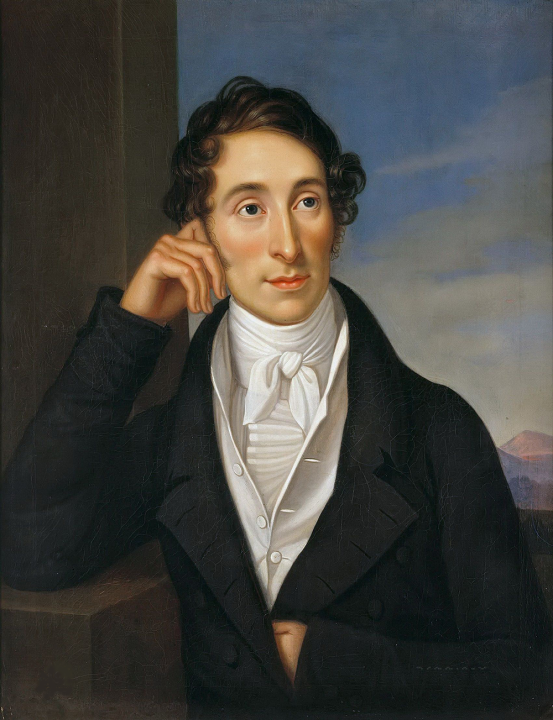
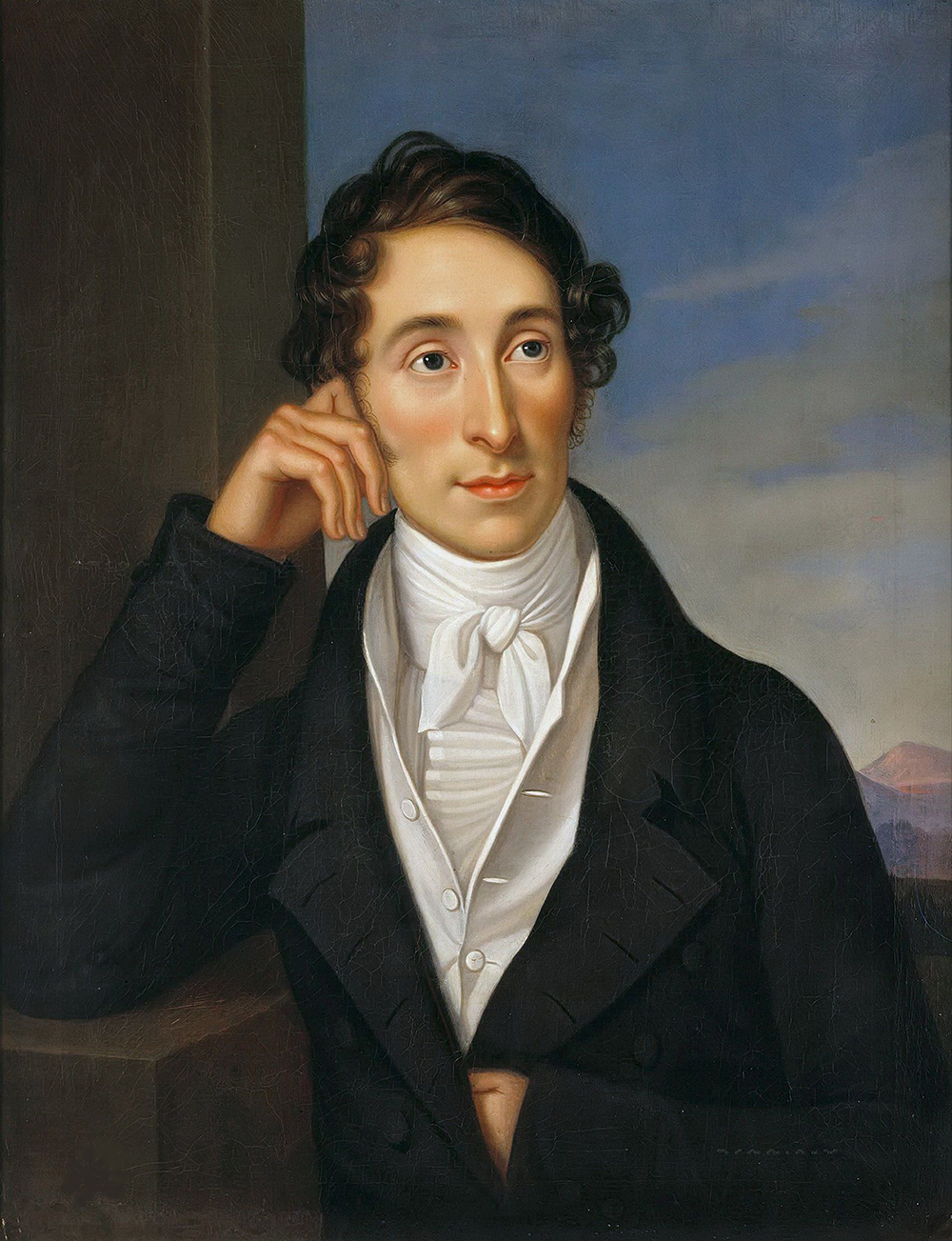
Pity Carl Maria von Weber. On the morning of 5 June 1826 a servant knocked on the door of his bedroom in Great Portland Street, and heard no response. Stricken by tuberculosis, and tortured by the ‘thick, dank, yellow’ London smog, Weber had died in his sleep, aged 39. He knew that he was dying, and he’d travelled to London to try and make as much money as possible for his wife and children. He spent his last strength on Oberon; a sprawling half-opera, half-pantomime that he had been assured would drive British audiences wild.
So it was fitting that the Proms should commemorate the 200th anniversary of Weber’s death with a concert staging of his only English opera, warts and all. It’s hardly the Proms’s fault that no major company in Britain has done anything else to celebrate this giant of romanticism in his anniversary year. Yes, giant: Weber’s output was patchy but no more so than (say) Donizetti’s. Berlioz idolised him and Schumann, Brahms and (supremely) Wagner are all unthinkable without Weber’s Der Freischütz, which ought to be standard rep in any credible opera house. It hasn’t been seen at Covent Garden this century.
Weber’s Der Freischütz ought to be standard rep in any credible opera house
Perhaps Weber’s shade can draw some consolation from the fact that the Proms Oberon sounded exquisite. That’s to be expected with music as inspired as this. Still, what panache, and what darting flashes of fantasy from the Monteverdi Choir and the Orchestre Révolutionnaire et Romantique! The ORR, who assembled the project, parted company with their founder-conductor John Eliot Gardiner in 2024, and now appear to be living their best life. The conductor for Oberon was Sir Mark Elder, who directed Weber’s piecemeal score with boyish, smiling alertness.
Where to begin with that score? Elder and the stage director Emma Doherty took a single horn player out of the orchestra and placed her high in the Albert Hall to sound the enchanted call that opens the overture. The elf-king Oberon (Nicky Spence, in pink slippers) has a magical horn, you see, which enables him to send warriors on quests to the land of the Arabian Nights, and – look, without the spoken dialogue, it’s no use pretending that any of this makes much dramatic sense. Savour the musical numbers for what they are (Elder and the ORR certainly did). Doe-eyed clarinets sigh behind diaphanous veils of string tone. There are storm scenes, love songs and showpiece arias; and thistledown fairy choruses, decades before Mendelssohn.
The cast were enthusiastic (John Findon was heroic as the knight Sir Huon, with Jennifer Davis sounding feisty as his oriental sweetheart Reiza). The chorus, too, entered into the spirit of the thing as Doherty sent them scampering around the stage and arena in a brave attempt to make Oberon work as theatre. Everyone agrees that it doesn’t, and the dialogue had been replaced with a new verse narration, written by Timothy Knapman and drolly delivered by Tamsin Greig. It was witty and knowing (Oberon, we learned, was part of the Shakespeare Extended Universe), and on this occasion it was probably the best solution. Even so, it felt like we were being invited to smile at Oberon’s weaknesses; to feel superior to the composer, and the grave he dug for himself in his fatal attempt to please us Brits. A noble effort, but as a nation we owe him so much more.
Still, at least the government didn’t issue a national barbecue alert mid-concert. That happened at the start of Waterperry Opera Festival’s La bohème, and believe me, there’s nothing like a cheeky four-minute warning to reveal who’s switched their phone off and who’s merely set it – ha! – to ‘Silent’. One advantage of Waterperry’s open-air stage is that they take that sort of thing in their stride. Later, we had dive-bombing bats, and a rainbow (honestly) appeared in the sky as Musetta (Ceferina Penny) sang her waltz song. It’s all part of the magic at this easy-going festival, where the village-fête atmosphere provides an ideal late-season chill-out for opera lovers frazzled by three months of black tie and bubbly.
But once the music starts, you are in very professional hands indeed. Every detail that matters – from fresh and perfectly enunciated English translations, to the precision of the ensemble – has been comprehensively addressed; an astonishing feat on a stage that incorporates all three storeys of a Georgian manor house. Ruth Knight’s production imagined the landlord Benoit as a Lord Berners-like eccentric presiding over an inter-war artists’ colony, and the young cast sang with wonderful ardour. It’s delightful to have a Mimi (Faryl Smith), a Rodolfo (Robert Forrest) and a Marcello (Patrick Dow) who look, as well as sound, so completely the part. Bertie Baigent conducted in sparkling colour. Having begun the summer at Glyndebourne, he ended it standing on a stack of pallets on an Oxfordshire lawn. Respect due.






Comments