Peter Hoskin

The doubts that remain after Brown’s Afghanistan statement

So there we have it.  Gordon Brown has confirmed what we all expected: that 500 more British troops will be sent to Afghanistan, bringing the total UK presence up to around 10,000.  The "surge" will be rounded off when Obama announces something like 35,000 extra US troops tomorrow. Although greater manpower is A Good Thing for the mission in Afghanistan – and the mission in Afghanistan is certainly an important one – I can't help but have some qualms about the twin UK and US announcements.   For starters, there's the simple issue of numbers.  500 more UK troops and 35,000 more US troops falls short of the bar of 2,000 and 40,000, respectively, that some military figures had set.  It may not make much difference.

Will Darling’s politicking make the Tories weaken their IHT pledge?

Ok, so the Age of Austerity means that promises made in sunnier times will need to be forestalled - or even cancelled altogether.  But it's still revealing that Labour are thinking about reversing their plan to raise the threshold at which inheritance tax is levied. After all, this is what Brown regards as The Great Dividing Line: the Tories implementing a tax cut for their "rich friends," on the one side, and Labour implementing policies "for the many," on the other.  Darling's decision to raise the IHT threshold to £350,000 for single people and £700,000 for married couples undermined that crude message.  Reversing the policy may, in Labour strategists' eyes, strengthen the dividing line.

PBR 2008 and PBR 2009: a difference which may not make much difference

Yep, it's that time of the year again: the run-up to the Pre-Budget Report, when we hear tales of splits between Number 10 and the Treasury on how they should approach the fiscal mess we're in.  According to today's Sunday Telegraph, and going off rumblings on Whitehall, Darling is pushing for a more expansive package of cuts.  Whereas Brown – and Ed Balls, natch – would prefer to emphasise all that investment, investment, investment. In which case, I was tempted to just copy-and-paste a post I wrote last year, on a similar subject, and at almost exactly the same time in the political cycle.  Its point was that stories about tension between Brown and Darling could work to undermine Labour's overall economic message.  As it happens, that's still the case.

Lord Pearson makes his mark

He's only been in the job a few hours, but the new leader of UKIP, Lord Pearson, has already dropped a fairly intriguing bombshell.  Interviewed in today's Times, he reveals that he proposed, some months ago, a deal with the Tories whereby UKIP would disband* if Cameron offered a referendum on a ratified Lisbon Treaty.  Apparently, the Tories didn't respond to the overture – which seems rather tactless, if nothing else. You can see why Pearson has made the revelation now.  This "greater good"-style posturing could incite a few Tory supporters, and perhaps even parliamentarians, who are concerned about their party's stance on Lisbon.  Who knows? – it may even drive some votes UKIP's way.

Has dead aid taken on a green hue?

We've got £800 million to spare, haven't we?  Don't be so cynical – of course we do.  After all, it's the amount of UK cash that Gordon Brown is prepared to sign over to a new £10 billion climate change fund that he's proposing.  The idea is that the money can be used to encourage poorer countries to move towards greener economies.  Brilliant. More seriously, I'd have thought that the money would be better spent on developing those green technologies which could create jobs and clean up the environment, both home and away.  Especially as we don't have much money to spare, and this fund contains so much potential for waste.  After all, will it make any real difference when set against the richer countries who are the main emission offenders?

The axeman cometh | 27 November 2009

Philip Hammond, the man the Tories have tasked with overseeing spending cuts should they get into power next year, has just given a speech to Policy Exchange on reducing waste and improving efficiency. Much of it reheated existing arguments about, say, transparent public spending - which doesn't make those arguments any less valid.  But there are one or two other points worth mentioning here First, the very fact that Hammond was making this speech.  Introducing him, George Osborne complained that the Labour government has made Hammond's potential role - Chief Secretary to the Treasury - a non- job, and that the Tories would restore it to being "one of the most important jobs I'm government".

What Gordon thinks of London 2012

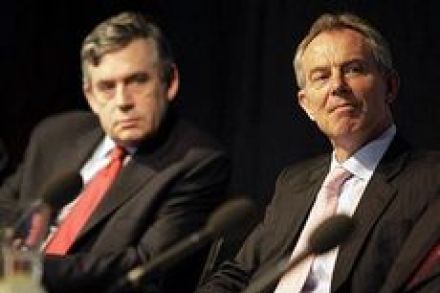
Another good quote for the Brown 'n' Blair scrapbook, courtesy of Ben Brogan's column in the Telegraph: "Only once in the 20th century has a government that won the games survived to deliver them. A change of administration in the run-up to the Olympics might be expected to herald political trouble. Thankfully, David Cameron does not share Gordon Brown's loathing of what he refers to as 'Tony's f------ Olympics'. He is committed to ensuring stability by protecting London 2012's status as the Switzerland of politics, immune from partisan attacks." Brogan's wider argument is worth noting: that the Cameroons think 2012 could be the tonic the country – and their potential mid-term government – needs.  Myself, I still think there's a strong case for an Austerity Olympics.

Johnson: the Tories aren’t the “nasty party” when it comes to immigration

There are plenty of noteworthy snippets in Mehdi Hasan and James Macintyre's interview with Alan Johnson today, but it's this passage which jumped out at me: "Johnson even chooses to defend the Tories on immigration, saying they represent a 'mainstream, centre-right' party engaging in a 'decent, centre-ground debate on immigration'. This, despite the Tories having stuck to the 2005 pledge, under Michael Howard, for an immigration 'cap', which - along with campaign posters asking 'Are you thinking what we're thinking?' - led to accusations of 'dog-whistle' politics." It's a truism that in order to have a sensible debate, you've got to be willing to actually have a debate – so it's encouraging that Johnson is taking this more conciliatory approach to the question of immigration.

Byrne draws a dividing line over decentralisation

Good work by the Guardian, who have got their hands on leaked sections of a government report into downscaling Whitehall.  At first glance, it all looks kinda promising.  There are provisions to reduce the cost of senior civil servants, to cut the numbers of quangos, and to make it more difficult to establish new quangos.  Surely, these are measures which will be necessary to fix our broken public finances. But it's the headline idea which could give you cause for concern: namely, that the government "wants a review" into relocating around 200,000 civil servants and other public sector workers away from London and the South-East.  It's meant to strengthen localism and reduce costs - which is nice, if it works.

The man who hopes to unseat Harman

The papers have been stuffed with articles recently about the current crop of Tory party candidates – but few have been as readable, or as encouraging, as Rachel Williams' profile of Andy Stranack in today's Guardian.  Stranack is the Tory PPC in Camberwell and Peckham – Harriet Harman's seat – and his background is really quite remarkable: "In 2001, Stranack ignored the concerns of his family ('They thought I was mad'), gave up his £30,000 a year council policy officer job in Croydon, south London, sold his maisonette, and moved to the borough's deprived Monks Hill estate. He stayed there, living on the poverty line and doing church-backed community work, for six years.

Yet another poll for the mix

After the Ipsos MORI hullabaloo, it's tempting to treat the YouGov/Telegraph poll on Westminster voting intentions in Scotland with extreme caution.  But, for the record, here are the headline figures, and a hefty rise for Labour: Labour --- 39 percent (up 9 points from August) SNP --- 24 percent (down 2) Conservatives --- 18 percent (down 2) Lib Dems --- 12 percent (down 6) As this fits in with another recent poll, it's safe to say that Labour have solidified their support in Scotland during and after the Glasgow North by-election.  And there's more discouraging news for the SNP: at 29 percent, support for Scottish independence is hardly overwhelming – even if it's practically unchanged since the last poll on the issue.

Mandelson downplays Van Rompuy and Ashton – and bigs up the EU’s financial influence

To my eyes, there's more than a little dose of mischief in Peter Mandelson's article for the FT today.  Discussing the recent EU jobs grab, he seems to suggest that the new economic and financial commissioners may have a more important role to play than either Herman Van Rompuy or Lady Ashton, the EU’s president and high representative, respectively: "Some commentators felt that the EU’s choices for its new president and high representative for foreign affairs lacked this kind of continental ambition. Herman Van Rompuy and Lady Ashton will no doubt aim to prove them wrong. But Europe’s dilemma is not just one of influence projection. Europe’s influence will inevitably be tied to its economic strength.

Osborne’s recycling giveaway is actually an Age of Austerity measure

I don't want to be a stick-in-the-mud when it comes to an idea which is actually quite promising, but it's worth pointing out that George Osborne's plan to pay people to recycle – featured in quite a few of today's papers – was first mooted by him back in July 2008.   The difference between then and now?  That this particular nudge was worth up to £360 a year for families who took advantage of it – whereas now the figure has come down to £130 a year.  In which case, it's probably better to regard at least this part of Osborne's announcement today as an Age of Austerity-inspired cutback, rather than new policy.  Not that that's a bad thing, of course, given the desperate state of the public finances… P.S.

A debased database

As with much police work, the questions surrounding a DNA database come down to one thing: striking a balance between civil protection and civil liberties.  Going off a new report by the Human Genetics Commission, reported on the cover of today's Times, the government are getting that balance seriously wrong: "Jonathan Montgomery, commission chairman, said that 'function creep' over the years had transformed a database of offenders into one of suspects. Almost one million innocent people are now on the DNA database... ...Professor Montgomery said there was some evidence that people were arrested to retain the DNA information even though they might not have been arrested in other circumstance.

Dodgy expenses referred to the CPS

And so the expenses scandal rumbles on.  This morning's Telegraph lead with home-flipping allegations against Andrew Dismore, a member of the Commons Committee on Standards and Privileges.  And now it's emerged that the Met have referred the cases of four parliamentarians to the Crown Prosecution Service.  All of which makes Brown's decision not to mention expenses in the Queen's Speech seem even more unwise.

Hold your horses | 23 November 2009

The blogosphere is alight with all kinds of chatter about yesterday's Ipsos MORI poll for the Observer, which showed Labour closing the gap between them and the Tories to 6 points: from James Macintyre's claim that the Labour fightback has begun to Nick Robinson's call for calm.   Myself, I'm on Team Robinson.  Sure, the poll is an eye-opener for CCHQ - but, by itself, it's hardly evidence of a tidal shift in voting intentions.  Indeed, going off two very useful posts by Anthony Wells and Stephan Shakespeare, there's a considerable chance that this is a rogue. Polls will always be imperfect, but they've been particularly volatile recently.  Since party conference season, we've seen the Tories achieving 17-point leads as well as this low of 6 points.

Bradshaw goes to war against the Sun

Peter Mandelson has already claimed that the Tories and the Sun have “effectively formed a contract", but today Ben Bradshaw takes the insinuations even further.  Here's the relevant passage from his interview with the Guardian, with my emphasis in bold: "Echoing the views of the business secretary, Lord Mandelson, Bradshaw says of News International and the Tories: 'There is no doubt there's a deal ... The Tories have basically subcontracted their media and broadcasting policy to News International. It's brazen.

Brown goes for growth – fails

So the dividing line persists.  Today, both Gordon Brown and David Cameron will talk about "going for growth" at the CBI's annual conference.  But it all, more or less, comes down to the same, dreary "investment vs cuts" line that we've heard countless times before.  According to the Times, Brown is going to say that growth is the best way of tackling the deficit, rather than those nasty Tory cuts.  And, what's more, "he hopes investment from China will drive the recovery". Of course, growth will have a role to play in reducing the deficit.  A vibrant economy will have a better chance of tackling record deficits and debt levels than a sinking one.  But to indicate that extensive cuts will not be necessary is disingenuous in the extreme.

A fine line between love and hatred for Peter Mandelson

So far as Downing Street is concerned, this morning's Sunday Times cover is a presentational nightmare. It reports that Peter Mandelson is calling on Brown to make him Foreign Secretary – a move which would create all kinds of internal difficulties for the PM. Sounds a little bizarre to me: we all know that Mandelson would, in theory, like the role which was once occupied by his grandfather, but would he really want it under such controversial circumstances and for what would likely be only six months? Perhaps not. But, true or no', it still feeds into the idea that the government is divided and self-obsessed. It's also the kind of story which could loosen Mandelson's grip on the government. Over the past year he's enjoyed a remarkable renaissance within the Labour Party.