Peter Hoskin

Brown’s class war could doom Labour for years

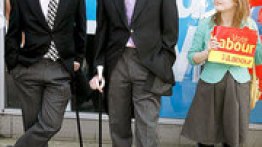
A lot of pixels have been expended on Labour's new class war and soak-the-rich strategies, so it's worth highlighting the in-a-nutshell argument which Tom Harris deploys against them on his blog: "Rather than using opinion polls as a basis on which to judge the wisdom of class politics, let’s take a rather different measure: general election results. In 1979, 1983, 1987 and 1992, Labour promised tax increases (but only for the wealthy) and got hammered. In 1997, 2001 and 2005, we pledged not to increase the basic or higher rates of tax. And golly! Look what happened!" Ok, correlation and cause aren't necessarily the same thing.

What will today mean for the expenses saga?

So MPs have until the end of today to declare whether they're appealing against Sir Thomas Legg's request that they repay certain expenses claims.  Three have already done just that, one from each of the main parties: Jeremy Browne, Frank Cook and Bernard Jenkin.  You imagine that more may follow throughout the day, especially given the rumblings that the Legg review contained a fair few errors. Now, it's only fair that MPs have a right of appeal – but you still wonder what it will mean for the expenses saga more generally.  From the public's perspective, a swathe of appeals could look like MPs resisting reform.

Unless they defuse the issue, the Tories will face Ashcroft questions every day until the election

If PMQs today showed anything, it's just how eager the Tories' opponents are to bring up the issue of Lord Ashcroft.  Vince Cable set the ball rolling by referring to the Tory deputy chairman as a "non dom", and Harriet Harman gleefully followed up by firing questions in William Hague's direction.  She was cut off – and rightly so – by John Bercow.  But the insinuations about the Lord and his tax status had already been made. Now, you could say that this is pretty low stuff from Labour and the Lib Dems.  After all, David Cameron pledged earlier this week to legislate so that all MPs and peers are UK taxpayers.

PMQs live blog | 16 December 2009

It's snowing in Westminster; Gordon Brown's off saving the world; and PMQs will see Harman facing off against Hague and Cable.  Stay tuned for live coverage from 1200. 1200: Have MPs gone on holiday already?  There are plenty of empty seats in the chamber... 1202: Here's Harman now.  Condolences for fallen soldiers, first, and then a status update on Brown in Copenhagen.  I imagine we'll hear more about the Danish summit today... 1203: Harman says that she hopes a settlement is soon reached in BA negotiations. 1204: Plant 'o the Day: Labour MP Judy Mallber hints that the Tories' allegiances in Europe will impact their ability to tackle climate change. 1204: And the bigging up of Brown begins.

The Tories should resist any temptation to go soft on debt

Of all the findings from today's ICM poll for the Guardian, I imagine this one will concern the Tory leadership most: "Just two months ago, 49 percent of voters said they thought Cameron and Osborne would do better than Darling and Brown, but that figure is 38 percent today." They're still ahead of Brown and Darling – who are langushing on 31 percent – but the drop is still pretty striking.  What's more, it seems to go against conventional wisdom about fixing the fiscal mess we're in.  While they could still go further in setting out a few specifics, the fact is that the Tory pair have spent the last couple of months railing against the the twin debt and deficit burdens, and stressing the need for spending cuts.

Only Ireland and Iceland have had a bigger debt explosion than the UK

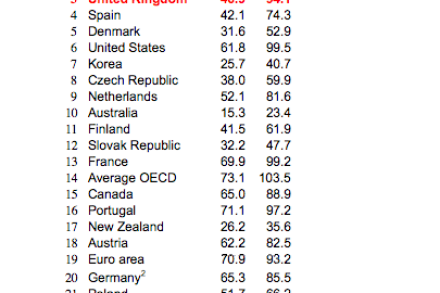
An argument put forward by some Labour types is that we're not really facing a debt crisis at all.  "Yes, the national debt levels are bad," they say, "but we started off at a low level in comparison to other countries, so we can absorb the deficits we're racking up." Well, you can take issue with the idea that we had "low levels" of debt before the crisis kicked in – but the real mistake this statement makes is to ignore the rate at which we've accumulated debt.  As the latest OECD data shows, UK debt is set to rise faster than any other nation save for Iceland and Ireland: The picture would probably look even worse if you accounted for all the off-balance sheet fiddles, like the toxic bank assets and PFI.

Things the Speaker shouldn’t discuss in public

As Andrew Sparrow says, it's well worth reading Iain Dale's interview with John Bercow in the latest issue Total Politics.  It's a fun read, mostly because the Speaker is remarkably candid – a quality that's normally to be admired in a politician.  But I can't help thinking that he made a mistake in admitting this:   "I received various approaches from various senior people in the Labour party saying: 'Aw, you know, we'd love to have you on board. We think you're being discarded by the Conservatives. We think you'd be quite at home with us.' Senior people, not in a formal setting, but people sidling up to you – ex-ministers, current ministers, backbenchers, whatever.

Balls beats the drum for investment

Oh, look, Ed Balls is talking about "investment" again.  This time it's an address on the Government's Children's Plan, and, judging by the preview in today's Independent, it's all going to be about how much more money his department is spending.  I doubt Alistair Darling will be impresssed - especially as much of that money was strong-armed out of the Treasury in the early hours of Wednesday morning last week.  And I doubt that some of Balls's other colleagues will be too amused either.  Their departments will be subject to even deeper cuts thanks to his brinksmanship. But you suspect that Balls isn't just hoping to rile his fellow ministers - he'll probably want to divert some attention away from the important u-turn which he outlined on Marr yesterday.

The Ed Balls approach to fiscal management

Considering the fiscal crisis we face, this revelation in Andrew Rawnsley's column is particularly dispiriting: "[Gordon Brown] has been egged on by Ed Balls [to make more spending promises], partly because the schools secretary is also obsessed with that old dividing line, partly because he wanted to be able to boast that he had won more money for his department. I am reliably told that the wrangling between the schools secretary and the chancellor went on into the early hours of the morning on the day of the PBR itself. The result was that some of the extra spending beaten out of Mr Darling by Mr Balls did not get into the document because it was already printed.

Heated debate | 12 December 2009

Major bad language warning on the video below, but this incident in the Irish Parliament yesterday is too extraordinary not to post.  Maybe the Tories will take notes for their new, more aggressive approach...

Has Mandelson given up on Brown?

For any Kremlinologists among us, Peter Oborne's latest column in the Mail sure is a juicy read.  It claims that Mandelson and Brown are "at war again" – only, this time, insiders say the damage to their relationship is "irreparable".  The Business Secretary is said to be "bitterly unhappy" with Labour's class war strategy, and with Brown's reluctance to deal with the fiscal crisis.  And – as Martin highlighted the other day – he wants out. None of this is too surprising.  Indeed, Mandelson has been conspicuous by his absence from the government's PBR media drive, fuelling more than a few Westminster mumblings about his commitment to the Brownite cause.

Why not just scrap ID cards, then?

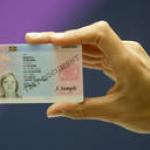
So the protracted, wheezing death of ID cards continues, with Alistair Darling admitting in today's Telegraph that: "Most of the expenditure is on biometric passports which you and I are going to require shortly to get into the US. Do we need to go further than that? Well, probably not." The government are letting it be known that this doesn't contradict their existing policy, but their shifting rhetoric remains striking.  Last year, we had the then Home Secretary, Jacqui Smith, proposing that British citizens should be able to choose between a card and a biometric passport.  Earlier this year, Alan Johnson said that ID cards wouldn't be compulsory for British nationals, after all.

The Tories dust off their baseball bats

Is it just me, or have the Tories developed a slightly harder edge in the couple of days since the Pre-Budget Report?  We had an unusually acidic address from David Cameron yesterday, in which he likened Brown 'n' Darling to "joy-riders in a car smashing up the neighbourhood," and criticised the PBR for its "irresponsibility, basic deceit and complete lack of moral principle".  There have been a couple of quite powerful attack posters from CCHQ.  And now we've got George Osborne saying that Brown may have "betrayed the responsibilities of the office he holds." "So what?" you say, "they're the Opposition – it's their job to oppose."  Well, yes, of course.  But that opposition seems to have been concentrated over the past few days.

Committee overload

We all know how bureaucratic and convoluted a lot of Parliamentary practice is, but this reminder from Heather Brooke of the bodies involved in reforming MPs' pay and expenses is still pretty astonishing: "Currently we have: the senior salaries review body (which makes recommendations on MPs' salaries and pensions); the committee on standards and privileges (appointed by the House of Commons to decide on complaints against individual MPs reported to them by the parliamentary commissioner for standards – currently John Lyon); the committee on standards in public life (which deals with complaints about unethical conduct among MPs – the current chair is Sir Christopher Kelly); the members allowances committee (made up of MPs who advise the members estimate committee on the rule.

Why class wars don’t work

Well, it seems like Paul Richards – a former aide to Hazel Blears – wants to corner the market in quietly persuasive demolitions of his own party's strategy.  If you remember, he wrote a perceptive piece on Labour's shortcomings in the aftermath of the Norwich North by-election, which we highlighted here on Coffee House.  And, today, he's at it again, with a very readable article in PR Week on why the class war won't work.  His three reasons why are worth noting down: "First, it is hypocritical. The Labour Party has a disproportionately far higher number of former public schoolboys and schoolgirls in parliament and in the government than a random sample of the public they serve.

The unravelling continues apace

Has Brown got away with his horror Budget?  Reading the Populus poll in this morning's Times, you might be tempted to say he has.  Sure, there's some bad news in there for the government: trust in Dave 'n' George's ability to manage the economy has hit an all-time high, and only 12 percent of respondents think that the measures outlined in the PBR will be sufficient to deal with our country's fiscal woes.  But Labour types will also seize on those numbers which show quite high levels of support for the individual proposals annouced on Wednesday.  78 percent back the bonus tax.  61 percent back the capping of public sector pay increases.  And – surprisingly, to my mind – 51 percent back the national insurance increase.

At least Gordo and Sarko are still friends…

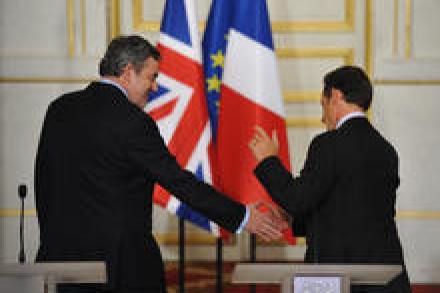
If you're looking for some sort of light relief after yesterday's horror-PBR, then can I recommend the joint article by Gordon Brown and Nicolas Sarkozy in today's Wall Street Journal.  Yep, the two men have put their recent spat behind them, and have cemented their relationship by huddling over a typewriter and bashing out just under 900 words on global financial regulation.  The Entente Cordiale never looked so strong.    Beyond the display of unity, it seems the article's purpose is to convince the City that the EU's French finance commissioner won't blunt our competitive edge.

The cuts unveiled

Well, as expected, the IFS have put the lie to Darling's claim that the budgets of non-ringfenced departments would be "pretty much flat".  Here's how Nick Robinson reports it: "The Institute for Fiscal Studies says that government plans imply £36bn of cuts in departmental spending ie over 19% from 2011-2014 in order to protect schools, hospitals and increase overseas aid. They say the police pledge is meaningless. They also say that defence, higher education, transport and housing are most likely to be hit.   The cost of paying back the debt over the next eight years is equivalent to £2,400 per family in taxes or cuts over that period." UPDATE: The relevant IFS presentation has now been uploaded on their website – you can read it here.

Behind the expenses curve

And so the expenses scandal rumbles inevitably on.  If you want the latest on all the dubious claims our, erm, honourable representatives made in 2008-09, then I'd recommend Andrew Sparrow's live blog over at the Guardian - and Guido's got a good round-up here.  But, behind all that, there's a u-turn which is almost as embarrassing for the government as all those dodgy, dodgy receipts. Remember when Gordon Brown neglected to mention MP's expenses, or the Kelly reforms, as part of his legislative agenda in the Queen's Speech?  The decision was immediately launched on by Sir Christopher Kelly himself, and set up some juicy attacks for the Tories.

The Darling deception

Alistair Darling normally strikes us as an honest man dropped into an impossible situation. But whether he misspoke, or whether he set out to mislead, he told a lie on the Today Programme this morning which needs to be highlighted. So what was it?  That non-ringfenced departmental budgets would remain "pretty much flat" rather than receiving significant, if not sufficient, cuts.  As Fraser demonstrated yesterday, there were spending cuts hidden in the Budget   and we'll see the full extent of those as soon as the IFS processes the numbers later today.  Last time around, after April's Budget, they calculated cuts of 7 percent across three years.  Thanks to a few more ringfenced budgets here and there, those cuts could even be deeper this time around.