Peter Hoskin

Money talks in Afghanistan

Afghan politics stinks; we all know it.  But it's still shocking to read how the former governor of Helmand, Sher Mohammed Akhundzada, encouraged his supporters to join the Taliban after he lost his position, in 2005, under a cloud of drug-running allegations.  Here's what he tells today's Telegraph:   "When I was no longer governor the government stopped paying for the people who supported me ....  I sent 3,000 of them off to the Taliban because I could not afford to support them but the Taliban was making payments. Lots of people, including my family members, went back to the Taliban because they had lost respect for the government.

Behind the closed doors of Brussels

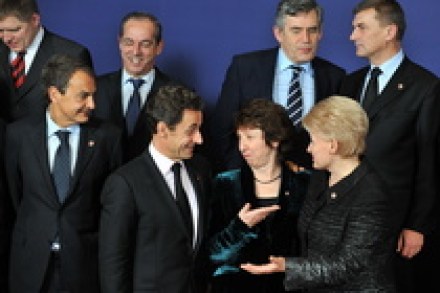
Today's Times carries a cracking account of all the wheeling and dealing that went on during the EU jobs fair this week.  Here are some of the most striking points that I've culled from it: i) Brown rejected advice from Mandelson and other ministers that he should try and secure one of the EU's financial roles for a British candidate. ii) There are claims that Brown was "persuaded" into accepting the EU High Representative role for Britain by Europe's Socialist leaders along with José Manuel Barroso. iii) There are also claims that Brown did a deal with the French to get Baroness Ashton appointed, by which a French MEP, Michel Barnier, would be appointed the Commissioner in charge of the internal market and financial services.

Portillo: the Tories won’t succeed in cutting public spending – they’ll have to raise taxes

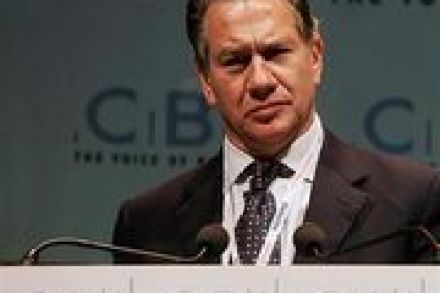
Ever the contrarian, Michael Portillo makes a case that you don't hear from many on the right in his interview with Andrew Neil on Straight Talk this weekend.  George Osborne has given "a fair amout of detail" about the Tories' debt-reduction plans, he says, but that could be the wrong approach: "I wouldn’t seek probably to give very much more detail ....  You know, I was with Margaret Thatcher when she came in to Government in 1979, we faced a big public spending problem.  It was terrible.  It was a hard slog but she didn’t cut public spending.  I was Chief Secretary between ’92 and ’94 – big public spending problem – I was trying to cut public spending; I did not succeed in cutting public spending.

The problem with Brown’s latest Big Idea

There's some very readable stuff in this week's Economist (including a leader which outlines what Brown's government should – but almost certainly won't – do with its "last months in power").  But if you read only one article from it, make sure it's the Bagehot column and its dissection of Brown's latest Big Idea: public service guarantees.   These are the pledges-turned-legal entitlements which popped up throughout the Queen's Speech – such as the "guarantee" that patients will have hospital treatment within 18 weeks of being referred by a GP.  As Bagehot points out, it's a problematic approach: 'To be worth the manifesto paper they will be printed on, public-service guarantees need to be readily enforceable.

The day ends on a sour note for Labour

Two Labour figures, two bad news stories.  The first is Tony Blair, and the news that he has given up on the role of EU President – leaving the path more or less clear for the Belgian PM, Herman Van Rompuy.  The second is Harriet Harman, and the news that she faces prosecution for allegedly "driving without due care and attention and driving while using a mobile phone." The Blair story is significant enough on its own – but throw in Harman, and it's doubly certain that Brown's legislative programme will be shunted right off the news agenda.  But isn't that a good thing for Labour, you might ask, given the kicking the Queen's Speech was subjected to in this morning's press?  Well, perhaps.

A phonecall to Kelly looks better than not mentioning expenses

If you want a measure of how disastrous yesterday's Queen's Speech was for Gordon Brown, you need only pay heed to two things.  First, today's news coverage, which is almost universally negative for the PM.  Even the FT, which is usually quite forgiving of Brown, launches an acerbic attack on the "shameless politicking" in the speech.  And that's before we get onto numerous stories about discontent on the left, as well as unflattering write-ups by political columnists across the political spectrum. The second is David Cameron's interview on the Today programme this morning.

Nothing to see here

Blink and you missed it.  After seven minutes, the Queen had rattled through the Government's legislative agenda for the next few months.  It was all pretty much as expected – although it’s worth noting the “council of financial stability,” made up of the Treasury, the Bank of England and FSA, chaired by the Chancellor, and which was first mooted back in July.  The question is whether any of this will connect with the public.  I rather doubt it. We’ll put footage on Coffee House as soon as it’s available.

Last chance saloon

So what to make of today's Queen's Speech?  Myself, I'm finding it hard to drum up much excitement.  After all, we already know most of its contents (if you want a primer, then check out this excellent Guardian summary article here), and much of it is either underwhelming, unworkable or – as everyone from David Cameron to Michael White has pointed out – self-servingly political on Labour's part.  Tory peers are saying that they'll block the proposals, but you've got to doubt whether they'll be enacted before the next election anyway.  All in all, Danny Finkelstein's analysis is attractive.  As he puts it: "who cares?" But there is one sense in which this Queen's Speech matters.

Your chance to grade Gordon

The public's judgement on Gordon Brown will probably come with the general election, but CoffeeHousers may have fun with this webpage in the meantime.  It has been created by the clean-up-politics organisation Power 2010, and will let you grade Gordon Brown in the aftermath of tomorrow's Queen's speech.  Naturally, the grades run from A ("Top of the class") to F ("Brown fail"); you can leave comments; and Gordon will receive a school report in December.  I suppose it's meant to help close the democratic deficit between Downing St and the rest of the country – but it could just help some folk let off a little steam...

Brown misjudges the Afghanistan waiting game

There's something futile about Gordon Brown's and, now, David Miliband's speeches on Afghanistan.  After all, the world is still waiting to hear what Obama's strategy is for the country.  Will he increase troop numbers – and by how much?  What does he actually want to achieve with them?  Until that's known, it's a little premature to talk about a "comprehensive political framework" for handing security responsibilities over to the Afghan army. Worse, though, the PM's statements may actually be damaging.  Sure, it's frustrating that the US President is leaving his allies hanging.

Is Blair’s bid for the EU presidency still alive, after all?

I still think there are too many hurdles standing in the way of Tony Blair, but it's worth noting this passage from Ben Brogan's latest blog post about our former PM's chances of becoming EU President – particularly the bit I've highlighted in bold: "When the manoeuvring [by EU leaders] is stripped out, who is their first choice [for the EU presidency]? Weirdly, 12 or 13 say Blair. Strip out the ones who are dead against – Belgium, Luxembourg and Austria (now there’s a triple alliance to conjure with – talk about surrender monkeys) – and the Swedes who hold the presidency and that leaves you a sizeable majority and the chance of winning a few more over.

Balls dumps Brown into another lose-lose situation

Things never seem to go smoothly for Gordon.  On a day when the Telegraph carries details of his Whitehall savings programme, the FT has news that one of his closest allies, Ed Balls, is calling for relatively hefty spending increases elsewhere.  Apparently, Balls has asked the Treasury to grant his department – the Department for Children, Schools and Families – real-terms spending increases of 1.4 percent until 2014.  That's an extra £2.6 billion in total – and goes beyond previous Labour commitments to "protect" schools spending. It's a brassy move by Balls and one which is sure to aggravate his colleagues.

Carry on camping | 16 November 2009

Over at his blog, Nick Robinson has put together a useful digest of the different attitudes towards Brown's premiership inside the Labour party.  Putting it briefly, he thinks Labour MPs fit into three distinct "camps": 1) The plotters: "...believe that Mr Brown is taking their party to certain oblivion and are still desperately searching for ways to remove him and to install a new leader by January." 2) The quitters: "...agree with [the plotters'] analysis but have given up hope of installing a new leader who just might do better." 3) The fighters: "...are beginning to hope that a recovery might just be possible." It's a neat outline, albeit one which is pretty intuitive.

Unnecessary respite from reform

This snippet from Jon Snow's latest blog-post (with my emphasis) is jaw-dropping: "To add to matters, I have learned that the Labour party is now going through its ranks of peers to determine where their 'principal residence' is. This after years of wholesale abuse of the system in which lords and ladies of all persuasions have claimed distant holiday homes to enable them to get the accompanying unreceipted travel expenses. I have also learned that 'arrangements' have been made to allow serving ministers in the Lords to claim a residence out of town 'for necessary respite', retrospectively protecting ministers and law officers who may have claimed for such provision.

Labour’s next election broadcast

Over at his New Statesman blog, James Macintyre reveals that Labour's next election broadcast will be the sentimental, two-and-half minute history of the Labour party shown before Brown's speech at the last party conference.  We've embedded it below, for the – ahem – benefit of CoffeeHousers; so I'll repeat the question I asked during our live blog of Brown's speech: "This is clearly a Labour crowd-pleaser, but will it make any difference outside the conference hall?

The Tory leadership could be talking like Boris soon

So Boris is attacking the 50p tax rate again - and rightly so.  In his Telegraph column today, the Mayor of London repeats the lines he pushed in April: that the measure will drive business talent away from our shores, that it will damage London's competitiveness, and that it could actually lose money for the Exchequer.  It all comes to a punchy conclusion: "What Gordon Brown wants to do is therefore economically illiterate." I imagine a few commentators will see that last line as a veiled attack on the Tory leadership, given that they're committed to the tax rate too.  But, as Tim Montgomerie says over at ConservativeHome, and going off conversations with Tory types, I doubt that Cameron and Osborne would disagree with the thrust of Boris's article.

The ultimate jam session

Peter Hoskin celebrates 50 years of American independent cinema As so often, our story begins with Mickey Mouse and a child’s pliant mind. The child in this case was Amos Vogel, growing up in 1930s Vienna. His father had bought him a small hand-cranked film projector, and the kid Vogel used to sit there, winding the handle and watching Mickey, Krazy Kat and other cartoon characters dance across the walls. Only there was frequently something odd, something perverse, about their movements. You see, Vogel used to enjoy running the projector in reverse — making the films, and the characters, go backwards. The experience must have tripped some wires in the young boy’s head.

Rod Liddle is giving out champagne

Over at his blog, Rod has a simple plea: "let's start a mass campaign of disobedience".  The target: the type of council bureaucracy which stops parents taking their kids to a playground unless they've been CRB checked.  The method: well, that's where you come in.  There's a bottle of champagne for the best suggestion.  Just head over to Rod's blog to have your say.

Iain Duncan Smith’s overlooked “affordable policy solutions”

After his superb work with the Centre for Social Justice, it's encouraging that Iain Duncan Smith is being tasked by the Tory leadership to come up with "affordable policy solutions" to spring the traps which keep people stuck in worklessness.  It's thought that David Cameron rated the proposals of the CSJ's recent report on this issue – as, too, did Coffee House – but was put off by the £3 billion upfront cost of the reforms. But there's an important aspect of that report which hardly got any attention at the time: it already includes more affordable options.  The £3 billion was for a universal benefits system which would see claimants losing*, at worst, only 55p of every extra £1 they earn from taking extra employment.