Peter Hoskin

Who should be the Tory attack dog?

A persuasive passage (complete with a spiky, ministerial quote – highlighted) from Rachel Sylvester's column this morning: "There is growing concern among some Shadow Cabinet ministers and strategists about the increasingly aggressive tone Mr Cameron uses against Mr Brown. It is, they believe, no coincidence that the poll gap has narrowed as the Tory leader launches a series of increasingly vitriolic personal attacks on the Prime Minister. Last week, for example, by turning the bully into the victim, Mr Cameron seems to have simply solidified support for Mr Brown. There was a similar backlash to the Conservatives’ misleading 'death tax' poster campaign.

Brown goes crime-fighting<br />

Yeah, I know: 4,500 words of Brown's rhetoric is too much for most CoffeeHousers to bear.  So I thought I'd read his "speech on crime and anti-social behaviour" on your behalf, and highlight three things which jumped out at me.  Here goes: 1. Taking on the Tories over DNA retention. Paul Waugh has already blogged on what may turn out to be the most significant passage of Brown's speech – at least so far as the cut 'n' thrust of the election campaign is concerned.  In it, Brown highlights the case of Jeremiah Sheridan, who raped a woman some 19 years ago, but was caught last year thanks to DNA evidence retained after Sheridan was arrested – but not convicted – for an offence in 2005.

Market tremors

Forget the polls, the markets should be enough to give any of us a sharp dose of The Fear.  Exhibit A: Sterling, which has slumped below $1.50 today, for the first time in nine months, and on the back of what analyists are calling "deficit worries".  And Exhibit B: the UK Gilt markets, where rising interest rates suggest that investors are rapidly losing confidence in Britain's ability to pay back its debt, just as Coffee House's Mark Bathgate warned a few months back.  Check out the FT for the full story. Of course, I say "forget the the polls" – but this is all very poll-related.  The possiblity of a hung Parliament – and, with it, the possibility of political paralysis – is preying heavily on the minds of investors.

Lord Ashcroft confirms his tax status

Lord Ashcroft has just released a statement admitting that he's a non-dom, and suggesting that he'll soon become a full UK taxpayer.  Here's the key passage: "My precise tax status therefore is that of a 'non-dom'. Two of Labour's biggest donors - Lord Paul (recently made a privy councillor by the Prime Minister) and Sir Ronald Cohen, both long-term residents of the UK, are also 'non-doms'. As for the future, while the non-dom status will continue for many people in business or public life, David Cameron has said that anyone sitting in the legislature - Lords or Commons - must be treated as resident and domiciled in the UK for tax purposes. I agree with this change and expect to be sitting in the House of Lords for many years to come.

The morning after the speech before

So, what did the newspapers make of Cameron's Big Speech?  A brisk stroll through this morning's coverage, and you'll come across the whole gamut of responses: from wholehearted enthusiasm in the Sun, to wholehearted scepticism in the Independent.  But the general tone is somewhere in between: the mitigated praise of, say, the Times or the Guardian.  Which is, I think, fair enough.  The speech struck me as effective, perhaps elegant, without ever quite hitting the heights. But the Tories should only be concerned by the media response insofar as it's a conduit for their own message.  What bits of that message have cut through?  Will that message resonate with voters?  And so on.

Brown v Blair: a comedy

First the tragedy, then the farce: if there was something dark, perhaps shocking, about last weekend's bullying allegations, then the latest Rawnsley revelations veer towards the hilarious.  They're centred around Brown's efforts to oust Tony Blair, and the Guardian covers them here.  I won't pre-empt your enjoyment of them, except to highlight this passage from the report: "Rawnsley reveals that Brown rang Blair while he was staying with the Queen at Balmoral. He was furious that Alan Milburn, Blair's close ally, had written a piece supporting the prime minister's right to stay at No 10. Rawnsley writes: 'The chancellor's fury was titanically demented even by his standards. 'You put fucking Milburn up to it,' Brown raged down the phone. 'This is factionalism!

Back with a vengeance | 25 February 2010

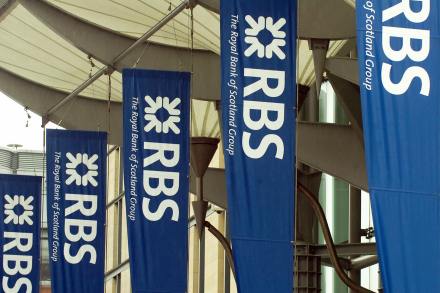
All of a sudden, the Big Banks are Big Politics again.  And who'd have it any other way, on the day that the 84 percent taxpayer-owned RBS announced losses for 2009 of £3.6 billion?  And that's alongside a bonus pool for its staff of £1.3 billion.  Yep - however hard they try, the exorcists of Westminster just can't shift the ghost of Fred the Shred. In which case, there'll be plenty about bankers' pay, and about getting taxpayers what's owed to them, over the next few days.  And rightly so.  But I often feel that these issues detract from even bigger ones, such as how to ensure that there aren't similar shocks in future.  After all, the financial furniture is arranged pretty much identically to how it was a couple off years ago.

And what about Ed Balls?

Two related points, worth repeating. The first from Ben Brogan: "Mr Brown is on surer ground on a narrow point, in that in all likelihood he did not explicitly order his Eighth Circle chums to unleash hell against Mr Darling. Then again, he didn't need to. His reaction to the Chancellor's Guardian interview will have had the required Henry II effect. If Dave wanted some sport [in PMQs], surely, he should have asked whether Ed Balls ordered his friends to undermine Mr Darling. He wanted the job after all, and as has long been realised, there was what amounted to a Balls operation within the Brown operation designed to promote his interests as alternative Chancellor and future Labour leader.

PMQs live blog | 24 February 2010

Stay tuned for live coverage from 1200. 1200: Alistair Darling is sat next to Brown. How cosy. 1201: And we're off.  Brown starts with condolences for fallens soldiers – sadly, seven names to read out. 1202: Labour MP Jamie Reed asks Brown for reassurances that the public will one day see the taxpayers' cash that's been pumped into the banks. He gets in a dig at George Osborne's public shares plan.  Brown responds by banging on about the G20. 1204: Cameron now. He leads off with a question about the deaths at the Stafford Hospital – asking whether a private inquiry is sufficient to tragedy and the public interest. 1206: Brown gives a managerial response – saying that the government is doing all it can.

Darling throws one hell of a spanner into No.10’s election works

So what's Alistair Darling up to?  When I first heard his "forces of Hell" comment last night – his description of those briefing against him from inside No.10 – I half suspected it was all part of Downing Street's grand plan.  You know, trying to defuse the bullying story by being honest – up to a point – about Brown's premiership, and then claiming that everything's alright really.  A bit like Peter Mandelson saying he took his "medicine like a man" – only with greater poetic license. Now, though, I'm convinced that this wasn't part of No.10's script.  The clue is in the hurried, and ridiculous, denials that have been issued since.

Brown comes around to the Mandelson way of thinking

Did I read it wrong, or did Brown really say this in his interview with the Economist? "[Our deficit-reduction plan] is probably the most ambitious of any of the G7 countries. It contains, obviously, public-spending economies, cuts in some departments, efficiency savings in others, but protection of the front-line services in health and education and policing. It contains tax rises ... I wish we hadn't had to do that but ... it is necessary to show that you have got a sensible and credible plan over a number of years..." Putting aside the question of whether it really is the most ambitious deficit plan in the G7 (other countries want to cut more, quicker), it's striking just how closely this cleaves to Peter Mandelson's strategy for presenting cuts – i.e.

How not to calm the bullying row

Phil Woolas, the immigration minister, probably thought he was being helpful to Gordon Brown by describing Christine Pratt as: "this prat of a woman down in - where's she from, Swindon?" But, erm, he wasn't.

The bullying story keeps on rolling, but will it affect the polls?

Much confusion on the digital grapevine, last night, about YouGov's latest daily tracker poll.  Turns out, it doesn't have the Tories leading by twelve – but, rather, the positions are unchanged from the poll in the Sunday Times.  So that's the Tories on 39 percent, Labour on 33, and the Lib Dems on 17.  A six point gap between the two main parties. The poll was conducted between Sunday afternoon and Monday morning – so, after the bullying story broke, but, perhaps, too soon for it to have filtered through to the public consciousness.  Even so, Labour will be encouraged by what they see.  A below-headline question has more people rating Brown as "passionate" than a "bully" (by 28 percent to 24).

Cameron kicks off the transparency agenda

Here I am, in a cavernous "space" in East London, for a conference on the Post-Bureaucratic Age - or  "See-Through Government," as Guido more evocatively put it. David Cameron has kicked things off with a speech on the issue, and there'll be talks and panels throughout the day. It's like Glastonbury for policy wonks. So how was Cameron? Well, he's normally at his snappiest and most persuasive when he talks about all this tech stuff - and today was no exception. All the usual lines about "handing power to the people," and eroding "the dull, stultifying presence of state control," made an encouraging appearance. And he outlined what this would mean in practice, with new policies on town planning, for instance.

Brown faces the Rawnsley revelations, while the Tories face the polls

The question tonight is: which piece of bad news will make the biggest impact?  The bad news for the Tories, or the bad news for Labour? Let's take the second one first.  I'm referring, of course, to the first installment in Andrew Rawnsley's revelations about Gordon Brown.  ConHome have already published some snippets – click here – and they give you plenty of juice for your buck.  Not only are there the expected allegations about Brown hitting his staff (much of which seems to have been covered in the Mail on Sunday a couple of weeks ago), but Rawsley also reveals that the Cabinet Secretary, Gus O'Donnell, investigated and reprimanded the PM for his behaviour.

No surprises – and much Tory-bashing – in Brown’s Big Speech

Move along, now – there's nothing to see here.  Or rather, reading Gordon Brown's Big Speech, there's nothing that you hadn't already seen in the papers, or that you wouldn't have expected to see anyway.  The four election themes got a mention.  Labour's record in government was pushed and promoted to the point of absurdity.  Words like "new", "fair" and "change" were flung around like so much confetti.  And no election date was given.  No alarms, no surprises. More than anything, Brown set about attacking the Tories on every conceivable level.  He caricatured Cameron & Co. as a party of privilege and wealth, who are more concerned about fox-hunting than reform, and who are still peddling the "same old Conservative economics of the 1980s".

Welcome to The Future Fair

So now we know.  Labour's election slogan is A future fair for all.  And – as various folk, including Alex, have pointed out – it's kinda screwy.  As in, "we're all going to The Future Fair" kinda screwy.  So don't expect it to catch on.  Unless, of course, there really are bright lights, big wheels and rollercoasters on offer. The slogan kickstarts a feverish weekend of activity.  Brown is going to set out the main themes of Labour's campaign.  The Tories might try to sabotage it all.  And we may, possibly, perhaps, find out what the election date is.  Stay tuned, so to speak. P.S. I wouldn't be too surprised to see that slogan tweaked slightly – A fairer future for all, perhaps.

The numbers spoil Labour’s narrative

Labour have certainly come out of the traps snarling and gnashing this morning.  For one, they're making the most of two letters in the FT, signed by 60 economists, which ostensibly support their position on the public finances.  And then there's Gordon Brown's speech to European leaders, in which he implores them to tackle the "hatred" of "the right".  Naturally, by "the right", he means "David Cameron". It's those letters which really grab the attention, though.  Not really because of what they say, or who has signed them, but because they're suggestive of how the debate over the public finances is going to go.  Yep, the Tories get 20 economists to write a letter in support of their deficit-reduction plans, so Labour respond with 60 economists of their own.

Introducing Dave

Readers of the magazine will be familiar with Michael Heath's series of 'Flash Gordon' cartoons, based on the life and sulks of our glorious Prime Minister.  Well, now it's got a successor – 'Dave' – which, naturally enough, focuses on the Tory leader and would-be PM, Mr Cameron.  Here's the first of them, from this week's issue, for the benefit CoffeeHousers.