Peter Hoskin

A day to damage Brown?

Contain yourselves, CoffeeHousers.  I know that we're all really excited about today's Parliamentary vote on an alternative vote referendum (it is, after all, something our Prime Minister has described as "a rallying call for a new progressive politics"), but it isn't a done deal just yet.  That "new politics" might still be put on hold. Indeed, things could get messy for Brown in just a few hours time.  You'd expect him to win the vote, what with Labour's majority and the creeping sense that Downing St very much wants this to happen.  But even the slightest hint of a Labour rebellion, or of Lib Dem disquiet, and the story could turn toxic for the PM.

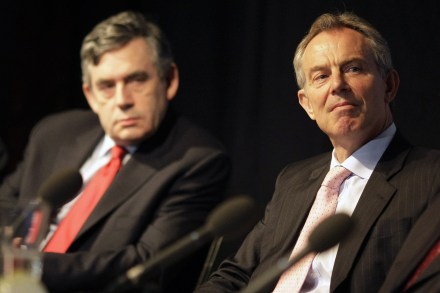
Brown and Blair, together again

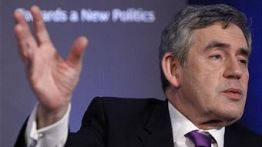
Strange that there's really only one major political point arising from Gordon Brown's interview in the Standard today.  But, then again, maybe that is the point.  Like the PM's interview with the News of the World a few weeks ago, the emphasis is far more on the personal than anything else: his relationship with Sarah Brown, the death of his daughter Jennifer, his upbringing, and so on.  We even learn why his handwriting is so bad ("due to the way he was taught to write at school," apparently).  And with a TV appearance alongside Piers Morgan in the schedules, it does seem that Brown is keen to present a more human front. As for that political point, it's Brown's confirmation that Tony Blair will play a "major role" in Labour's election campaign.

The Tories need to push the fiscal case for public service reform

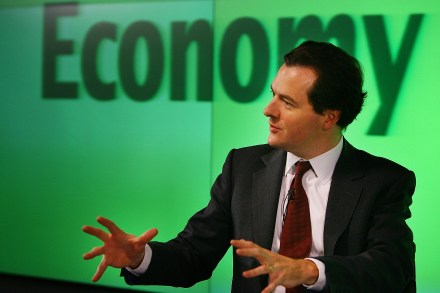
Andrew Haldenby's article in the Telegraph this morning got me thinking: when was the last time the Tories really pushed the fiscal case for public service reform; that the government can indeed deliver better services while spending less money? By my count, you'd have to go back around six months to George Osborne's speech on progressive politics at Demos. There, the shadow chancellor said this kind of thing: "Indeed, I would argue that our commitment to fiscal responsibility in the face of mounting national debt is not at odds with progressive politics, but fundamentally aligned to it - as politicians on the left from Bill Clinton to former Canadian Prime Minister Jean Chretien once understood.

Four Parliamentarians to be charged over expenses

It's just been announced which Parliamentarians will face criminal charges over their expense claims. They are: David Chaytor Jim Devine Elliot Morley Lord Hanningfield So, three Labour MPs and one Tory Lord.  Expect plenty more public anger – the Legg report has no way near drawn a line under this issue.

Practice – not pay – may be the key to public sector workforce savings

Great article from my former boss, Andrew Haldenby of Reform, in today's Telegraph.  He makes the general case that spending less on public services needn't mean worse public service – far from it, in fact – and is scathing about the political class's inability to soak up this lesson.  But it's this passage which jumped out at me: "Another path to reform is to get more out of the workforce. Simple changes have tremendous results. If public-sector workers took the same amount of sick leave as those in the private sector, that would save 3 per cent of their wage bill, which adds up to £6 billion per year. If they worked the same number of hours per week as in the private sector, that would save a further 10 per cent, or £20 billion per year.

Mandelson’s video diary

We all know that Peter Mandelson enjoys the limelight, but this – from Kevin Maguire's column in the New Statesman – is taking things to a whole new level: "Set your videos for Mandy: the Movie. I hear that the resurrected Prince of Darkness is to star in a fly-on-the-wall documentary. Eager to share his transformation from Labour outcast to potential saviour, the shy and retiring Lord of All-He-Surveys is being followed everywhere by a camerawoman. Visitors to an eighth-floor lair in the Department for Biz are surprised to be co-opted as extras, while Mandy is permanently wearing a microphone. The great panjandrum maintains that no deal has been signed with any channel.

Legg latest

The Legg report is about 240 pages, if you can manage it.  But the message you can take from it is short enough: there's going to be plenty more public anger with our political class.  Guido's post here should tell you why.  But, suffice to say, there are MPs paying back up to £42,458.  There are dodgy claims for flagpole accoutrements, luxury furniture and expensive gardeners.  And even the report itself cost more than the money than it's going to recoup. Although I don't think the parties should be trying to make political capital out of each other's misdemeanours – beyond, of course, proposing ways to fix the mess – there's little doubting that this is especially bad news for Gordon Brown.

It’s Legg time

Consider the expenses wound well-and-truly reopened – not that it ever really closed in the first place.  Sir Thomas Legg's report into the matter will today identify around 350 MPs who have to return a total of about £1 million in dubious claims.  What's more, in his introduction to the document, Legg is set to attack MPs in general for "knowingly" encouraging and exploiting a "culture of deference" in the Parliamentary fees office.  The papers are calling it "devastating". But what will it all come to?  The worry is that Legg's report won't draw a line under the whole stinking affair – but will instead kickstart a new round of grumbling, backbiting and reprisal on the part of MPs.

The chip on Brown’s shoulder

So the former roadblock is now a born-again reformer – and, like most born-again types, he wants everyone to know about it.  Writing in today's Guardian, Gordon Brown sells his proposal for a referendum on the alternative vote system as "a rallying call for a new progressive politics."  And, from there, he gallops through written constitutions, Lords reform and digital democracy.  Watch him go.   Amid it all, though, I couldn't help noticing that the PM repeats a key mistake from last year: "I am inviting the leaders of all parties to engage positively in these debates and back our constitutional reform and governance bill.

The scary graph

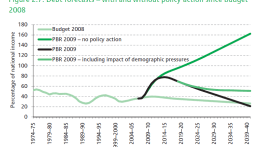
If you're worried about the national debt burden, then what follows is one of the scariest graphs from the IFS's Green Budget.  It extrapolates from the government's current plans and assumptions to work out when debt may get below 40 percent of GDP again.  The answer, as you can see, is sometime in the early 2030s - and later if you account for demographic pressures: Of course, this isn't a perfect model.  For instance, things will certainly change before the 2030s - governments will come in which adopt stronger or weaker fiscal tightening policies; we may have another recession or strong spurts of growth; and so on.  But, even from the vantage point of 2010, it's clear that Brown's debt binge will haunt us for decades to come. P.S.

A first time for everything…

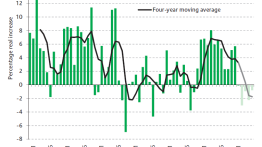
A noteworthy observation from the IFS's Rowena Crawford, here at the Green Budget launch: "We've never had three consecutive years of public service spending cuts, let alone the five years we've got forecast ahead." She also pointed out that, if Labour extended its pledges to ringfence certain areas of spending until 2015, the cuts for "unprotected"  departments could start pushing 24 percent. That would be around 23 percent if current Tory plans are extended over the same time period. UPDATE: Here's the graph which relates to the "five year" observation above, from page 195 of the Green Budget.

Dispatches from the Green Budget

It's back to the British Museum for public finances anoraks. After George Osborne's speech here yesterday, the IFS are this morning presenting their Green Budget (that's green in colour, rather than green in outlook). It's the mid-session coffee break, so I thought I'd fill CoffeeHousers in on what's been said so far. The bottom line came more or less immediately, with the IFS director Robert Chote's introduction. His point was that the next government will have to introduce "more ambitious" fiscal tigthening, going forward to 2015, than that set out in Darling's PBR. But he added that there shouldn't really be more spending cuts and tax rises this year.

The Tories are muddying their clear, blue water

Front page of the Independent: "Vote of no confidence in Tory economic policies".  As headlines go, it's one of the worst the Tories have had for a while - even if, as Anthony Wells and Mike Smithson point out, it's kinda misleading.  Truth is, the Indy's ComRes poll finds that 82 percent of people want "Mr Cameron to be clearer about what he would do on the economy".  And 24 percent think the Tories would have ended the recession sooner, against 69 percent who don't.  They're hardly positive findings for CCHQ, but, by themselves, they don't quite add up that that two-line scarehead.

The widening public-private divide

The growth of the public sector isn't exactly new news, but the figures attached to it are always pretty eyecatching.  These courtesy of Allister Heath in City AM: "MORE evidence of a growing public-private divide: 57 per cent of extra UK jobs created during 1997-2007 were either officially on the government's payrolls or 'para-state', technically private but dependent on government funding. And that was before the private sector jobs bloodbath since 2008. Manchester University's Centre for Research on Socio-Cultural Change calculates that of the 2.24m net new jobs created in 1997-2007, 1.

Cameron has shifted the spending debate to Labour’s home ground – but the Tories still have an aggregate lead

So, is David Cameron's shift in emphasis on spending cuts a u-turn, a clarification, or something else?  Well, when it comes to existing Tory policy, it doesn't actually change much.  We were always rather taking it on trust that Cameron & Co. would cut spending by much more than Labour this year.  The cuts they've announced so far aren't really that much deeper – and most folk in Tory circles were waiting for George Osborne's potential Emergency Budget to see whether that would change.  So, when Cameron says that his party wouldn't introduce "swingeing cuts" this year, the position is still remarkably similar: we still need more details to judge the true extent – not the publicised extent – of any Tory cuts.

Darling talks sense on public sector pay

How things change.  A few months ago, Alistair Darling would only go so far as to not rule out a public sector pay freeze.  By the time of the Pre-Budget Report, that became a 1 percent cap on pay rises.  And now, in an interview with the Sunday Times, he's talking explicitly about public sector pay cuts.  He cites the example of the private sector, where workers have accepted cuts to hang onto their jobs. It certainly makes sense.  Wages make up such a hefty proportion of public spending, that any serious plan to cut the deficit will have to take them into account.

Labour have Osborne in their sights (and on their fridges)

It's only a small thing, but does anyone else find this detail from today's Times interview with Alastair Campbell a little, erm, peculiar: "On the [Campbell] fridge is a Christmas card from David Miliband, a clipped photo of George Osborne in the Bullingdon Club shooting pheasant, a GCSE revision schedule. It is the type of handsome but unostentatious London professionals’ house that the Blairs once owned in Islington." I mean, it's no secret that the Labour hierarchy loathes the shadow Chancellor – but putting what I assume is this photo on your fridge?  Armchair psychologists, the comments section is yours...

Good advice for Dave

Ok, ok – so PMQs may be of more interest inside Westminster than out.  But, love it or loathe it, it's still one of those things which affects the mood music of politics and how it is reported.  Far better for a party leader to do it well, than to be bludgeoned by his opponent at the dispatch box. Which is why Team Dave should internalise Matthew Parris's article in the Times today.  Not only is it typically readable, but it's packed full of sound advice for how the Tory leader should present himself in the weekly knockabout sessions.  Here's a snippet: "Millions are now eyeing Mr Cameron up as a potential prime minister, and considering, not unhopefully, whether he’s up to it.

Don’t be surprised if Jowell is kept on by a Tory government

As Ben Brogan outlined in his Telegraph column last November, there are plenty of Tories placing a good deal of emphasis on the London Olympics.  By the time it comes around, they may well have spent two years cutting spending, raising taxes, and generally struggling against the fiscal problems that Brown has hardwired into our nation's fibre.  A successful Games, the thinking goes, could be just the tonic for their midterm government – as well as for the country as a whole. Which is why today's story about the Tories somehow keeping on Tessa Jowell, the current Olympics Minister, is unsurprising.  The thinking is clear: a bit of continuity could prevent the organisational problems, as well as power struggles, which always seem to beset political handovers.

The public aren’t seeing Brown’s “green shoots”

We've been rather starved of opinion polls over the past week, which is probably no bad thing.  But this PoliticsHome poll on the economy has come along to give us at least something to mull over.  And its findings aren't good news for Labour. First, only thirty-four percent of repondents think that the economy has turned a corner into recovery.  And, crucially, only 36 percent are willing to give Labour "a lot" or "some" credit for their handling of the recession (down from 40 percent last August).  That's against 29 percent saying "not very much," and 34 percent saying "none at all". As we saw on Wednesday, Labour is eager to seize on any potential "green shoots," and sell them as successes for government policy.