Peter Hoskin

What Kate should know | 16 November 2010

CoffeeHousers, you may have heard: Prince William and Kate Middleton are going to marry. Even now, the news helicopters are cluttering the sky above St. James's Park. and their overhead imagery is punctuating the breathless television coverage below. As it happens, The Spectator dealt with this story in 2006, with a piece by Patrick Jephson, Diana's former private secretary, on what Kate Middleton can expect from marriage into the royal family. One or two of its references – such as, "It isn’t just Woolworth’s who are jumping the gun with souvenir wedding plates" – may have dated, but the future Princess Catherine may still care to read it: What Kate should know, Patrick Jephson, The Spectator, 30 December 2006 ‘Perhaps Miss Middleton ...

The curious case of the Guantanamo Bay pay-outs

What to make of the out-of-court settlement that has been paid to around a dozen former detainees of Guantanamo Bay? According to unofficial reports, taxpayers might have to shoulder £10 million as a result. One of the men is thought to be receiving £1 million. The explanations seeping out of Westminster are understandable enough. Security chiefs, we're told, were keen to avoid a lengthy process – not just because it could mean more cost for the taxpayer, but because it would drag the practices of our intelligence services out into the public realm. David Cameron, speaking on the matter in July, highlighted that Mi5 and Mi6's time could be spent more usefully than sifting through documents in preparation for a court case.

Cameron: it’s all about the economy

A minor landmark for David Cameron tonight, as he delivers his first Mansion House speech as Prime Minister. Like occupants of No.10 before him, he will use the occasion to talk about foreign affairs – although the result may be rather more like the Chancellor's annual speech at the same venue. Judging by the extracts that have been released so far, Cameron's overall emphasis will be on the economy, and on Britain's fiscal standing. As he will say, "we need to sort out the economy if we are to carry weight in the world." Cameron develops this point by claiming that, "whenever I meet foreign leaders, they do not see a Britain shuffling apologetically off the world stage.

General Well-Being is back

Spectators might smile wryly at the news that the government is to devise a method for tracking the well-being of the nation. This idea of General Well-Being (GWB) was common currency in the early days of the Cameron project, when the Tory leader was going all out to "detoxify the brand". But it soon hit a downturn-sized snag. Any talk of happiness might have sounded a little complacent and New Age-y in the face of job losses and bank bailouts. And so the Tories backed away from GWB, and it was relegated to little more than branding for the coffee stalls at Tory conference. It was quite a surprise to see it mentioned in the party's manifesto in April, although they did keep it on the hush, hush at the time. Yet now it's back at full volume. And the question is – why?

ConservativeHome goes global

A post about the blogosphere, I know – but I thought CoffeeHousers might appreciate a link to the new ConservativeHome USA site that launched in the past hour. It is, of course, a sister site to the UK's very own ConservativeHome which, under the thoughtful editorship of Tim Montgomerie, has done so much to clarify the often hazy ground between the internet, politics and grassroots activism. Tim will, of course, be involved with the American project, but it's also got its own editorial team in the form of Ryan Streeter and Natalie Gonnella. The posts on Day One gives us a good sense of what we can expect in future: wide-ranging comment on, and analysis of, the entire US conservative movement.

Ireland’s nightmare becomes Europe’s problem

"We certainly haven't looked to Europe." That was the message spilling from the mouths of Irish Cabinet ministers last night – but, as Alex suggested in a superb post on the matter this morning, their utterances may come to naught. After all, Europe has certainly looked to Ireland – and it doesn't like what it sees. Already, Brussels' moneymen are urging a bailout on the country, and Ireland's moneymen are thought to be in "technical discussions" about how that might work. The upshot is that a financial intervention from Europe is now considerably more likely than not. And with that come European demands over how Ireland should manage its public finances – and raise its taxes. There are plenty of lessons for all sides in this.

Richards: we’re in it for the long haul

General Sir David Richards does like thinking in decades, doesn't he? A year or so ago, he was warning us that "the whole process [in Afghanistan] might take as long as 30 to 40 years." Today, in interview with the Sunday Telegraph, he says that the wider battle against al-Qaeda could last around 30 years. In both cases, he deserves our attention. To hear the head of our military suggest that the West's current conflicts will stretch across generations is sobering, to say the least. More noteworthy, though, is Richards' claim that a "clear cut victory" over Islamist terror is "unnecessary and would never be achieved" – but that we can "contain it to the point that our lives and our children's lives are led securely.

Whatever happened to Labour’s economic message?

For some weeks now, Labour have struggled to project a clear voice on the economy. You can see what they've been trying to do: pitch themselves as an alternative to immediate, deeper cuts, whilst also accepting the requirement to deal with the deficit. But, as I've said before, this all too often comes across as nervous equivocation; a kind of "on the one hand, on the other hand" stuttering that won't persuade many observers either way. You sense that Team Miliband have tried to correct this in recent weeks, with a few punchier performances, but, even then, mistakes and deceptions have greased into their offering. Anyway, I mention this because Alan Johnson's interview with the Times (£) today only adds to the confusion.

The Burmese government releases Aung San Suu Kyi

Celebration mixed with caution. That is the most natural response to the release of Aung San Suu Kyi, and it is the response being uttered by most of our politicians. Celebration, because one of the most high-profile examples of political tyranny in our age has seemingly been righted. Caution, because, despite their posturing, Burma's military rulers are still averse to anything like real democracy. As William Hague has said, what about Burma's 2,100 other political prisoners? And what hope that Suu Kyi's release will mark a real shift in how the country conducts its politics?

The Gove reforms grow even more radical

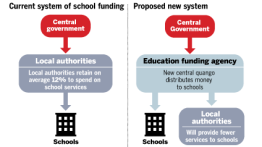
Local authorities are already doing their utmost to block the coalition's schools reforms, so just how will they respond to this story on the front of today's FT? It reveals how Michael Gove is planning to sideline local authorities from the funding of all state schools – not just free schools and academies. The idea is that state schools will get cash directly from the state, without any need for the council middlemen that currently control the system. Here's an FT graphic that captures the change: The money would be allocated to schools in proportion to the number of pupils they have, and headmasters would have much more freedom in how to spend it. This is the same simple but transformative dynamic that inspirits the rest of the Gove reforms.

BOOKENDS: Flesh and blood

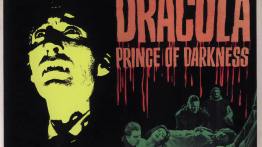
Flesh. Lots of flesh. That was the simple promise of a Hammer horror film. In this collection of classic Hammer posters (The Art of Hammer by Marcus Hearn, Titan, £24.99) we have cleavages, writhing torsos and shining thighs aplenty. But it’s not just that kind of flesh. Over most of our female subjects leers a monster (usually played by the magisterial Christopher Lee), threatening to butcher their curves and leave behind a carcass. Little wonder that the blood-red acrylic is applied so liberally. More interesting, although generally less striking, are the posters that don’t follow the formula. The horribly sensationalist advert for The Camp on Blood Island (1958) carries the tagline, ‘Jap war crimes exposed!

From the archives: The end of the First World War

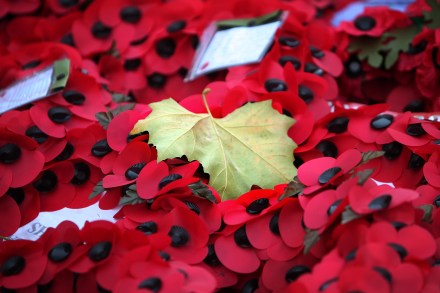
A blast of celebration – and of reflection – from The Spectator, written after the armistice in 1918. There is more than a touch of foresight in the warning that, "True peace and valid reconstruction demand … as much time, renunciation and self-sacrifice as the winning of the war." Thanks be to God, The Spectator, 16 November, 1918 The thought that has filled the mind of the nation on Monday, and has possessed it ever since, is the thought, Thanks be to God. Under a thousand names and forms, consciously and unconsciously, realised fully or only half realised, this it is that has given unity to the nation and made the moment mighty. Not to have recorded this fact, and to have left unsaid what we have just said, would have been impossible.

Bookends: Flesh and blood

Every Friday, on the Spectator Book Blog, we'll be publishing the latest Bookends column from the magazine. For those who haven't come across the column before, it's a 250-word review of a recent book – somewhat shorter than the rest of the reviews in the print edition – and well-suited to the blog format. Anyway, here's the latest: Flesh and blood Flesh. Lots of flesh. That was the simple promise of a Hammer horror film. In this collection of classic Hammer posters (The Art of Hammer by Marcus Hearn, Titan, £24.99) we have cleavages, writhing torsos and shining thighs aplenty. But it’s not just that kind of flesh.

Ten things you need to know about the welfare White Paper

I've sifted through yesterday's welfare White Paper, and thought CoffeeHousers might appreciate a ten-point guide to its contents. This is by no means the entire picture – and some of it will be familiar from past Coffee House posts – but hopefully it should capture the broad sweep of IDS's reforms: 1) The problem. Fundamentally, the issue is that there are a lot of people stuck on out-of-work benefits: around 5 million at the last count. This means different things for different groups. For the Treasury and taxpayers it contributes towards an unwieldy working-age welfare budget that has increased by 45 percent, in real terms, over the past decade – to around £80 billion.

Johnson’s deceptions and out-of-date figures

Oh, how Labour enjoy misleading the public about their record on the public finances. Ed Miliband did it a couple of weeks ago, with some very loose rhetoric about how the previous government had "paid down the debt". And now Alan Johnson's at it, with a fiery speech at the RSA which reheated many of the themes in his recent New Statesman article. The passage that struck me was this: "In 2007/08 as the crisis hit, we have the second lowest debt level in the G7 reduced by 14 percent in the 10 years we'd been in office... …The year before the crisis hit we were borrowing 2.4 percent of GDP compared to the 3.4 percent we inherited from Ken Clarke." Some points: 1) Second lowest debt level in the G7.

A considerable achievement

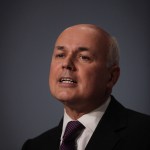
This morning's welfare event was one of the great "Who'da thunk it?" moments of this government so far. Here we had the Lib Dem leader providing backing vocals for a former Tory leader who has not only become a minister, but who is implementing an agenda that only a few months ago was little more than an idea in a think-tank report. Reviewing that Centre for Social Justice report for Coffee House at the time, I said it deserved to influence welfare policy for years to come. Now, it looks as though it will do just that. The immensity of Iain Duncan Smith's achievement should not be underestimated. No doubt, the path to a Universal Credit and a more robust version of workfare will be one that meanders into controversy.

The politics of the student protests

The student protests really are throwing up some extraordinary images. Who'd have thought that they'd end up smashing their way in to the lobby of Tory HQ, setting fire to placards, hurling bricks and other objects – and all as news helicopters buzz insistently overhead? It's not Paris '68, but it's certainly not traditional British reserve either. I'd be tempted to say that this is the fury of a generation which, as I've written before, has generally been excluded from the political conversation – if, like Iain Dale, I didn't suspect that this demonstration had been overtaken by a bunch of dubious fringe groups. So, instead, I'll refer CoffeeHousers to this argument made by the Guardian's Julian Glover a few months ago, and which I've highlighted before.

PMQs live blog | 10 November 2010

VERDICT: Earlier today, I wrote that the coalition "has few better defenders of its cause than Nick Clegg". You wouldn't have guessed it from this PMQs performance. Harman had him on the back foot over tuition fees from the off, and he struggled to give concise, clear answers in return. A pity, because Clegg is right when he says that the coalition has a better policy than Labour's messy graduate tax – yet there was too much waffle, and too little directness, from him today. The deputy Prime Minister was better when he blazed with anger over Labour's hypocrisy. But, on the whole, this was a bout to cheer the Labour benches. 1233: And that's it. My verdict shortly.

Ten more highlights from the Bush serialisation

You know the drill: the second part of the Times's Bush serialisation (£) is out today, so here are ten more highlights from their coverage. The book is also out today, so we can, as the former President suggests, draw our own conclusions. 1) Watching the towers collapse. "I caught enough fleeting glimpses of the coverage to understand the horror of what the American people were watching. Stranded people were jumping to their deaths from the World Trade Center towers. I felt their agony and despair. I had the most powerful job in the world, yet I felt powerless to help them. At one point, the television signal held steady long enough for me to see the south tower of the World Trade Center collapse. The north tower fell less than 30 minutes later.

The coalition pins a number on its welfare reforms

The coalition has few better defenders of its cause than Nick Clegg. And if you need proof, then I'd point you in the direction of his article for the FT when the IFS first called the Budget "regressive"; his article on welfare reform for the Times in September; or his summertime speech on social mobility, which, along with his 2009 conference speech, is perhaps the defining statement of his politics. I mention all this now, because there's another effective Clegg article in the papers this morning – again on welfare reform, and again dripping with punchy arguments in the coalition's defence.