Peter Hoskin

Back to the start on a military covenant

I suppose you could call it an O-turn. First, the Prime Minister declared, in a speech aboard HMS Ark Royal last year, that a new military covenant would be enshrined "into the law of our land." Then, there seemed to be a U-turn, with the government committing only to review the covenant annually, not to lend it legal force. Yet, now, a U-turn on the U-turn, with the news that it will be etched into the staute books after all. The defence minister Andrew Robathan tells today's Telegraph that, "we are putting the military covenant on a statutory basis for the first time." The formal announcement is expected in the House on Monday, pending the outcome of some "final discussions".

PMQs live blog | 11 May 2011

VERDICT: An inconclusive sort of PMQs, where neither leader particularly triumphed, nor particularly sank. Ed Miliband was persistent, and more aggressive than usual, with his questions on the NHS — but failed, really, to properly discomfort the PM. Cameron dwelt lazily on the extra money going into the service, but it was enough to carry him through the session. Perhaps the most striking moment was when, during the backbench questions, Cameron pointed out that "[the Tories] were the only party at the last election to promise [real-terms spending increases for health]. If it wasn't for us, it wouldn't be happening." This is, I suspect, all part of the new drive to distinguish the two parties of government. But it will have jarred with some listening Lib Dems nonetheless.

Today’s lesson for David Willetts

What a knotty problem David Willetts has created for himself today. Speaking to the Guardian this morning, he floated an idea to help the universities make a bit of cash: they could, he suggested, sell extra places to students who were prepared to pay exaggerated fees up front. This isn't yet government policy, and the students needn't do the paying themselves (they could be sponsored by charities or employers, for instance), but the Guardian pounced nevertheless. "Extra places at university for rich students," blared its front page headline. Not a good look for the coalition, at a time when access to university is such a general concern. Not a good look for David Willetts, who might have avoided the pitfall before him.

Breaking Laws | 10 May 2011

When David Laws resigned from government last year, his return was thought to be only a matter of time. Today, it is looking considerably more indefinite. Not only has Cameron been talking down the prospect of a reshuffle any time soon, but the Evening Standard is reporting that Laws has been found guilty of breaching six — six! — Commons rules related to his expense claims. No word, yet, on the details, or whether there will be any formal punishment for the former Chief Sec. But it doesn't look good for him, nor for his ministerial prospects in the short-term. Sky's Sophy Ridge tweets that certain Lib Dems are "still keen" to transfer Laws back to government "within weeks". Perhaps so — but I'd be surprised were they to pull it off.

The press becomes the story

The power of the press has, almost from nowhere, become one of the defining leitmotifs of this Parliament. Only two years ago, the Telegraph exerted that power to (partially) clean out British politics, and won general acclaim in the process. But now, it seems, the media is more likely to have its actions attacked, or at least questioned and contained. Whether it is the Press Complaint Commissions's censure today for those clandestine Cable tapes, or the continuing hoo-hah over super-injunctions and their infraction, there is a question hanging unavoidably in the air: how much does the public have a right to know? This is a precarious political issue, not least because of the immediate problems it has thrust upon the coalition.

Cameron sets out the bounds of Lib Dem assertiveness

Our coalition government was forged one year ago tomorrow — and we shall have more on that then. But the Sun has already marked the occasion by publishing an interview with David Cameron today. It is a wide-ranging sort of conversation, touching on everything from the Prime Minister's workload ("every day feels like a week") to the shelf life of the government ("five years"), although much of it is unsurprising. It does, however, contain one or two useful insights into how the coalition's game of give-and-take is going to operate from now on. First up, Cameron's insistence — contra Clegg — that the Lib Dems should not be portrayed as a "moderating influence" on his party.

It’s all in the cost

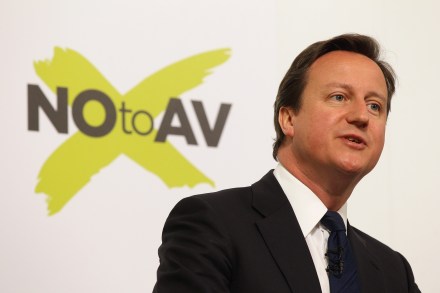
I've just caught up with Tim Montgomerie's exhaustive and tremendously insightful account of the successful No to AV campaign. For those CoffeeHousers who haven't yet had their fill of last week's referendum and its implications, I'd heartily recommend it. Numerous points stand out, of which Paul Waugh has already highlighted one of the most vivid. But here is another: "Lesser individuals would have crumbled before Fleet Street’s pens but the battle-tested Labour figures in the No campaign and Cameron’s Political Secretary, Stephen Gilbert, gave [Matthew] Elliott the reassurance he needed to stay on course. They were right to do so. The cost arguments against AV moved voters more than any of the other 33 messages that were tested.

Another European mess for the coalition to deal with

Financial meltdown. As Ben Brogan says this morning, it tends to concentrate the mind. And so it is with the coalition, after days of infighting and spiteful diversion. The meltdown is not our own, of course, but that of the Greeks. And although much will be said by Conservative and Liberal Democrat politicians about how "there, but for the grace of George Osborne," etc., the real issue for them is simply this: how much are we in for? If Greece requires another bail-out, how much British money might be involved? Osborne himself – speaking across the news channels yesterday – has set out out a firm line. "We certainly don't want to be part of any bail-out of Greece," stresses the Chancellor.

Huhne on the rack

It may not be reflected in the popular vote, but politics is still mostly about the Liberal Democrats this morning. We have Ed Miliband's latest sally for their affections. We have the usual veiled threats and dread innuendo from Vince Cable. And then there's the weird, but piercing, accusation on the cover of the Mail on Sunday: Chris Huhne pressurised others – and, specifically, a constituency aide – to take speeding points on his behalf, as he didn't want to lose his driving licence. The accusation, it is said, is inspired by rumours spread across Westminster – and now by testimony from Huhne's former wife. While, for his part, the Energy Secretary is denying it all. Whomever you believe, the story has flared up at an intriguing time.

Osama bin Laden at home

They may be mostly silent, and their content is rather mundane, but the five Osama bin Laden "home videos" released by the Pentagon today are still some of the most astonishing documents to emerge during the past week. The deceased al-Qaeda leader is shown watching himself on television; preparing his ranting-head diatribes against America and the West; and even with his greying beard dyed black all over. You can watch the full selection, with Al Jazeera commentary, above.

Weapons-grade Cable

Which Lib Dem can be rudest about the Tories? Chris Huhne, you must admit, gave it a decent shot yesterday, describing his parties' "extraordinary anger" with their coalition stablemates. Even Nick Clegg had a go, with a little swipe at Thatcherism. But I reckon Vince Cable's remarks this morning will take some beating. The Tories – on his utterly unscheming, non-partisan account – are "ruthless, calculating and very tribal". Although he did add that, "that doesn't mean to say we can't work with them." How very broadminded of him. The trick of the next few days will be sifting out the Lib-Con separations that have Downing Street's blessing from those that are simply vicious attacks by one coalition partner on the other.

It’s official: Britain says NO to AV

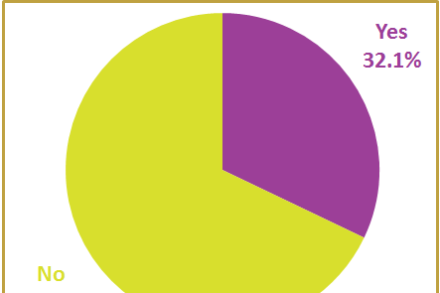
The count hasn't quite finished yet, but the Noes already have it – having crossed the threshold for victory only a few minutes ago. The official Electoral Commission website is lagging a bit behind, but it captures just how comfortable this win has been for the defenders of FPTP. So comfortable, in fact, that you imagine we're done with major voting reform for at least a generation. And for the Lib Dems, Ed Miliband and the Yes campaign, the recriminations that were simmering away earlier can now come to a boil. What joy. We will update this post as soon as the final tallies are available. UPDATE: Final results shown in the pie chart above.

From the archives: Nick Clegg and Margaret Thatcher

Here's a game of Spot the Difference for you. Compare Nick Clegg's comments today — "…there are some very strong memories of what life was like under Thatcherism in the 1980s, and somehow a fear that that's what we're returning to…" — with the latest shot from The Spectator archives: Can Nick Clegg sing the blues? Fraser Nelson, The Spectator, 13 March 2010 Nick Clegg’s office already has a Downing Street feel to it. Since becoming leader of the Liberal Democrats, he has had it redecorated so that portraits of old party leaders hang on the staircase up to his room, as portraits of former prime minsters do in No. 10. It starts plausibly enough, with portraits of Palmerston, Gladstone and Asquith.

Another disappointment for Ed Miliband

The final tally from Wales is just in — and it's a minor disappointment, on a day of many disappointments, for Ed Miliband. There was a time when Labour looked set for a comfortable overall majority in the country. But it isn't to be. They did gain four seats, yet that leaves them one short of an overall majority. Now, with thirty seats — exactly half of those in the Welsh Assembly — they will have to make do with a tighter, working majority. Far from terrible, but not the red groundswell that Miliband might have hoped for. The problem for Miliband is the overall picture: a precarious sort of victory in Wales; solid, but unspectacular, results in England; an evisceration in Scotland; and, most likely, defeat for AV.

Surprise, surprise … the Lib Dems are taking a battering

If you fell asleep expecting heavy losses for the Lib Dems, then you will not have been disappointed upon waking up. At time of writing, around 100 English councils, comprising roughly 2,400 councillors, have declared their results – and the yellow brigade have already lost four of them, along with 270 councillors. There's some way to go yet, so the picture could alter, but Labour appear to making sweeping gains, while the Tory vote is holding unexpectedly firm. As it stands, the local wing of Cameron's party has actually gained a council, along with 22 councillors in the process. Stir in the likely result of the AV referendum, and the Tory leader is looking like a net winner on the night.

Boris takes on Dave over London’s strikes

The Telegraph's James Kirkup has already highlighted Boris's suggestion, yesterday, that the coalition is being "lily-livered" over strike laws. But, as there has been no let up in the Mayor's rhetoric today, we really ought to mention it here too. "The government needs to get a move on," is how he put it this morning, in reference to the sort of legislation that might hinder the RMT and their persistent Tube strikes. Boris's latest broadsides against the coalition are all the more notable because he and Cameron were united, arm in arm, against the unions only a few months ago. In a joint piece for the Sun in January, they raged that, "you can try to drag this country back to the 1970s, to a time when militants held our country to ransom, but you will not succeed.

The ghost of David Miliband hovers over Ed’s election results

While the focus remains fixed on the dramas of Coalitionville, it's worth remembering that today's votes are meaningful for Ed Miliband too. The Labour leader may not be facing the prospect of resignations, nor even outcry, at their various outcomes. But this is, nonetheless, the first major electoral moment of his leadership. He might well be judged on it. In which case, much will depend on the extent to which Labour advances in England have already been priced into the electoral calculus. If the party's footsoldiers regard sweeping gains — of perhaps around 1,000 seats — as some sort of default, then attention may turn instead to the turnaround in favour of the SNP in Scotland, and to the likely defeat for Yes to AV.

Claude Choules RIP

As the nation heads for the ballot boxes today, it might spare a moment of reflection for Claude Stanley Choules. The last surviving combat veteran of the first world war, born 110 years ago in Worcestershire, died earlier this morning at his residence in Australia. It leaves Florence Green — who served in a non-combat role as a mess-waitress — as the only remaining veteran of that great and terrible conflict. No doubt, our collective memory is weaker for Mr Choules' death. But our country is stronger, more secure, for his life. An election, by whatever voting system, seems an apt sort of memorial to his passing.

Election day is here at last

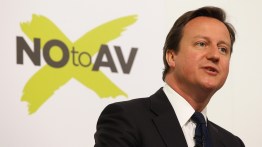
The usual form, on mornings such as these, is to put up a post setting the scene for the elections ahead – although, really, there's not much more to add than was said yesterday. Apart from a readers' survey in the Metro this morning, the only poll to hit after yesterday's ICM bombshell is a YouGov one for the Sun, and it gives No a 20-point lead. Even given the complications of turnout and geography, it looks as though Team No are heading for a straightforward victory. As if to underline his increased personal involvement in the campaign, and perhaps tie himself that little bit closer to the eventual result, David Cameron has not one, but two, comment pieces in the papers today – in the Mail and in the Sun.

PMQs live blog | 4 May 2011

VERDICT: A sedate sort of PMQs today, particularly in comparison to the fizz and fire of recent sessions. The reason is simply the date: with the local elections tomorrow, much of the emphasis was on making a straightforward pitch for votes. Miliband's was to attack the "broken promises" of the coalition — a charge that, if not exactly new, is one he is deploying more and more. Whereas Cameron's was to emphasise that councils can make cuts while improving services — and that Tory councils have been particularly successful in doing so. Both men broadcast their messages today, without really scarring the other. The winners and losers will be better judged on Friday morning. 1231: And that's it. My short verdict soon.