Peter Hoskin

Lansley offers reassurance

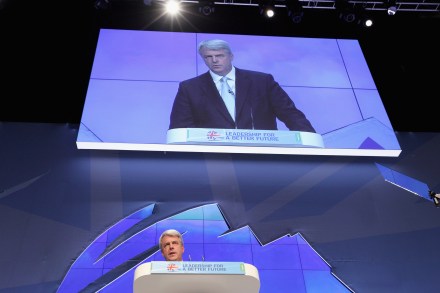
After Gove, a minister whose agenda has gone less smoothly — and it showed. Andrew Lansley's speech to Tory conference was part re-re-restatement of the case for reform, part massage for any residual tensions left over from the summer. Here's a five-point summary of the things that stood out to me: i) An appeal to NHS workers. Lansley began not just by paying extended tribute to NHS staff, but by encouraging everyone else to do the same. "I want to thank them," he said, "and I know we all want to thank them" — to which the audience duly responded with applause. Although this was designed to sweeten some of the less romantic rhetoric later on, it was still telling that Lansley should be quite so effusive at the start.

Gove: the Tories are the party of state schooling

Apologies for my recent, extended absence, CoffeeHousers — Vietnam and my immune system just didn't get on. But I'm back now, and firmly embedded in Manchester, where Michael Gove has just given his address to the Tory conference. Although, I must say, "address" doesn't really cover it. This was more a political variety show, short on new policy (because Gove's existing policy is going quite well enough, thank you very much), and big on spectacle and optimism. It started off with a video conversation between Gove and David Cameron, who was in a local school that is on the verge of becoming an academy. There was nothing surprising in what they said, although it was a revealing exchange nonetheless.

Cameron’s energy price headache

The list of things that will be Big Politics when Parliament returns from its summer break is growing all the time: growth, the post-riot clean-up, the undeserving rich, multiple squeezes, and so on. But few will have has much everyday resonance as another item on the list: rising energy prices. This has been a problem for some time, of course, thanks to a toxic combination of trickle-down green measures, oil price spikes, and financial effrontery from the energy companies. But it looks only to get worse. This morning's Telegraph reports on an internal Downing Street document — entitled "Impact of our energy and climate policies on consumer energy bills" — which suggests that the coalition's policies will add £300 a year to Joe Public's bills by 2020.

The quiet man barks

Almost exactly a year ago, Tony Blair's memoirs wafted into bookshops to cause a stir ahead of conference season. Now it it seems that Alistair Darling's, due out next Wednesday, will do exactly the same. Judging by the extracts published over at Labour Uncut, the quiet man of the last Labour government will splash his simmering frustrations and enmities right across the page. Gordon Brown, he will say, became increasingly "brutal and volcanic". Mervyn King was "amazingly stubborn and exasperating". And Ed Balls and Shriti Vadhera will be accused of "running what amounted to a shadow treasury operation within government".

Vince being Vince

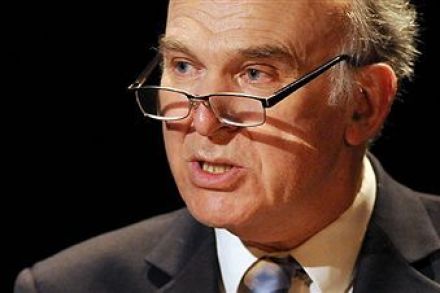
A sweeping and utterly typical performance from Vince Cable in his interview with the Times (£) today. Not only does he plunge his teeth into the exposed flesh of the bankers (criticising them for their "special pleading" over banking reforms), but he also offers another overarching diagnosis of the British economy (there won't be a repeat of 2008's financial crisis, he says, in case you were wondering, but slow growth could be a problem). I feel like a spoilsport for pointing out that, only four months ago, the Business Secretary was actually warning that "you can see" another financial crash happening. But aside from Cable's fiery rhetoric, it's worth noting that his demands are now more restrained than they have been.

Gove versus Harman

The Guardian's Nick Watt already has a detailed and insightful post on last night's Newsnight bout between Michael Gove and Harriet Harman.

Cameron gets forceful

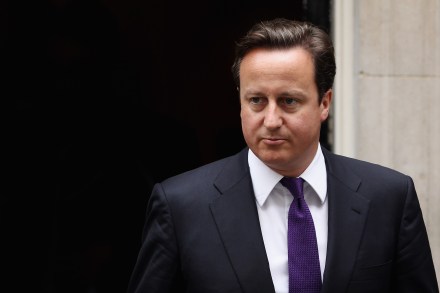
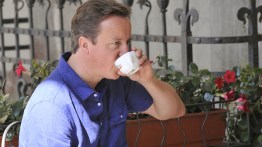
So far as words matter, David Cameron has just delivered one of the most forceful statements of his political career. It contained all the anger of his address yesterday, but went much further in its diagnosis. "There are pockets of our society that are not only broken, but frankly sick," he said, adding that, "the one word I would use to sum it up is irresponsibility." His most memorable line was that, "It is as much a moral problem as it is a political problem." This was the campaigning Cameron that we have glimpsed only briefly, most notably during his conference speech in 2009. Tim Montgomerie is saying that Cameron has found his mission — but I'd disagree.

The politics of police cuts

Wow, that was a howitzer of a performance from Boris Johnson on the Today Progamme earlier. And all his shells were aimed at Downing St. Not only did the Mayor of London slander Cameron’s Broken Society thesis, not only did he support Diane Abbott against the jibes of Tory HQ, but he also committed the gravest act of all, given the current climate. He lined up with Labour in attacking the coalition's police cuts. "This is not a time to think about making substantial cuts in police numbers," said BoJo. "I think it would be a good thing if the government had another look," he added, for emphasis.  There's little doubt that Boris has hit upon a potent attack here.

Cameron announces that Parliament will be recalled

So far as its tone went, David Cameron's statement just now was firm and unyielding. He did express his sympathy for the victims of the riots; the emergency services, the shopkeepers, the fearful. But the major emphasis was on bringing the culprits to book. His "clear message" for the perpetrators of this destruction was that "you will feel the full force of the law". He preceded that by describing their actions as "criminality, pure and simple — and it has to be confronted and defeated". There were no excuses nor prevarications, and rightly so. As for the content, it seems that the government is eager to keep this a police matter, but to ramp it up nonetheless. "We need more," said Cameron, which included "more police on the streets" and "more arrests".

The Met is struggling to cope — it needs support

It's a gloomy sort of morning ritual, posting on the riots of the previous night. I'm sure CoffeeHousers have seen and heard the specifics already: further burning and looting in parts of London such as Ealing, Croydon and Hackney, as well as bursts of violence in Birmingham, Liverpool and elsewhere. Businesses and livelihoods have been obliterated, areas set back years. Among the few mercies is that no-one, so far as we know, has yet been killed as a result. One thing that's becoming clearer through the smoke is that the Met Police are overrun, unable to properly deal with criminality at hand. The arrest figures tell a story by themselves.

Cameron to return to London as the riots spread

There we have it: David Cameron is to return to London tonight, and chair a meeting of Cobra in the morning. There was an inevitability to the decision even earlier today, with the news that both Theresa May and Boris Johnson had curtailed their own holidays. But the fact that the riots have spread — starting in Hackney this evening, and erupting even in Birmingham — served to underline the point. It is the right decision, in any case. Cameron's ability to control the situation may be limited, but his continued absence might only have inflamed things further. There are a lot of people scrabbling around for a grievance to bare and exploit tonight. The Prime Minister's holiday can no longer be one.

Diamond pushes back

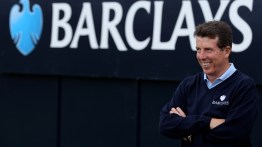
The question of what to do with the banks is a sore point in Westminster — and the Barclays boss Bob Diamond has just aggravated it. According to Sky's Mark Kleinman, he suggested to a meeting of Barclays investors last week that the bank might move its headquarters away from London as a result of the Banking Commission's proposed changes for the sector. "It's not a question of whether Barclays wants to stay in the UK," quoth Diamond Bob, "but whether the UK wants Barclays to be here." In rhetorical terms, it's a significant escalation of his previous statement, in March, that Barclays had an obligation to consider moving if doing so would boost returns for its shareholders — not least because he added, back then, that "London is where we want to be.

Osborne’s debt dilemma

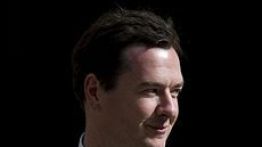
If there's one sentiment that defines George Osborne's article for the Telegraph today, it’s that there is no need for us Brits to panic. The economic convulsions of the past few days, contends the Chancellor, serve to prove that the coalition was right to approach deficit reduction as it has. "The alternative of more spending and yet more borrowing is now frankly ludicrous," he says, "and places those who advocate it on the outer fringes of the international debate." He has a point. As I blogged on Saturday, there are reasons to believe that we'd be hurtling towards a credit downgrade and higher borrowing costs were it not for the fact that our debt-GDP ratio is set to decline by 2015.

The politics of our discontent

Even by the normal standards of Monday mornings, this one reeks. Just sniff around you. That burning smell, it's either coming from the global stock markets as they strain against the US downgrade, or from those places in London where the rioting spread last night. Although the destruction in Brixton, Enfield, Walthamstow and Waltham Forest didn't match up to that on Saturday in Tottenham, it still involved fires, missiles and clashes between rioters and the police. Reading the reports and watching the footage online, looting appears to have been one of the most popular sports of the evening. In terms of the short-term politics — as opposed to the slightly more medium-term politics of what can be done to properly fix these problems — two issues stand out.

Voters back the death penalty in polls — but will they petition for it?

Really, I expected a tidal rush of new opinion polls on the death penalty after Guido launched his campaign for its restoration last week — but, strangely, that hasn't happened yet. There is one poll today, though, by Survation for the Mail on Sunday. It suggests that 53 per cent of people support the death penalty being reintroduced for "certain crimes", against 34 per cent who don't. So far as the supplementary findings go, the death penalty is more popular among older people and among Tory and UKIP voters. Almost half of all respondents believe that serious crimes would decline were the penalty reintroduced. And the three crimes deemed most deserving of the rope (or alternatives) are: mass murder, murder of a child, and serious terrorism offences.

Tottenham smoulders

London has become used to protest recently, but there was still something terrible and unexpected in the images emerging from Tottenham last night. Here we had firebombs, missiles, riot police, burning vehicles, smashed-in shops, looting and other criminality — and it has left eight policemen injured, as well as others in hospital. The cause of the rioting was, apparently, the fatal shooting of Mark Duggan by police on Thursday. The effect was scenes reminiscent of Brixton or Broadwater Farm in the 1980s. There will be fresh attention paid to Tottenham — one of the poorest areas of one of London's poorest boroughs — by politicians now, and rightly so.

China bears down on the “debt-ridden” US

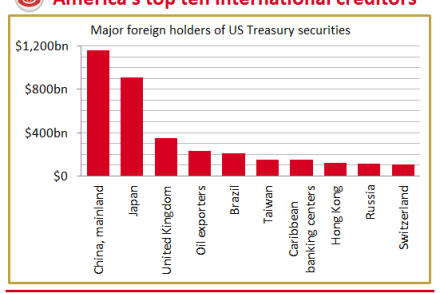
From esteemed economists to Ed Balls, everyone is wading into the Great Credit-Rating Debate today. But I doubt that anyone's words will resonate so much as those of the official Chinese news agency, Xinhua. Through its editorials and reports, Beijing has become more and more strident about America's debt problem over the past few weeks; yet today they go even further in making new demands of the White House. "The days when the debt-ridden Uncle Sam could leisurely squander unlimited overseas borrowing appeared to be numbered," starts Xinhua's latest editorial — and it doesn't get any kinder from there.

Would the Darling Plan have satisfied the credit rating agencies?

Why have we retained our AAA credit rating despite, by S&P's figures, suffering a larger debt-GDP ratio than America? The Taxpayers' Alliance's Matthew Sinclair answers the question in some detail here, but one passage from S&P's own analysis stands out. They explain that: "When comparing the U.S. to sovereigns with ‘AAA’ long-term ratings that we view as relevant peers–Canada, France, Germany, and the U.K.–we also observe, based on our base case scenarios for each, that the trajectory of the U.S.’s net public debt is diverging from the others. Including the U.S., we estimate that these five sovereigns will have net general government debt to GDP ratios this year ranging from 34% (Canada) to 80% (the U.K.), with the U.S.

The markets wax and wane

CoffeeHouser 'Ben G' had it right in his comment underneath my earlier post: 24 hour news really does struggle in the face of economic crisis. This morning, all the talk was of a debt-induced apocalypse. Earlier this afternoon, the headlines were about the markets "rallying" after better-than-expected data on the US labour market. And now the BBC website's main headline is that "turmoil in the stock market persists," despite those very same labour market figures. Oh yes, it's difficult to present a consistent front as the money merchants sway and buckle in the breeze. That said, the economic fundamentals remain discouraging. It shouldn't be forgotten that yesterday's losses were extraordinary; in many cases, the worst since the early days of the Credit Crunch.